

In This Article
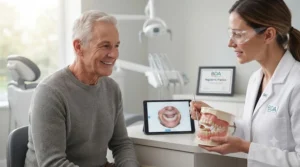
There’s a particular kind of dread that comes with a denture slipping mid-sentence, or clicking against your palate the moment you bite into something you actually wanted to enjoy. If that’s been happening more often lately, you’re not imagining it, and you’re certainly not alone. Denture looseness is one of the most common complaints dentists hear, and for most wearers it isn’t a sign anything has gone wrong with the denture itself. It’s simply your jaw quietly changing shape underneath it.

At-home reline kits have become a genuinely popular stopgap for exactly this problem, letting you refit the underside of a denture yourself between dental visits rather than living with adhesive paste or a fit that never feels quite secure. Done properly, a good kit can restore comfortable suction for weeks or months. Done carelessly, or relied on indefinitely instead of seeing a dentist, they can mask a bigger problem developing underneath.
This guide compares seven real, currently available UK reline kits, from simple hot-water moldable discs through to longer-lasting silicone systems, with honest analysis of what each one actually does and doesn’t fix. We’ll also cover why dentures loosen in the first place, what bone loss has to do with it, and, importantly, when a home kit is the right call versus when it’s time to book an appointment instead. Every product claim here reflects genuine specifications and aggregated review sentiment, not invented testing, because the last thing anyone managing a denture problem needs is marketing dressed up as expertise.
None of this replaces professional dental advice. Think of it as the honest, well-researched primer you’d want before deciding whether a home kit is even the right tool for what’s going on in your mouth.
What Is a Denture Reline?
A denture reline is the process of adding new material to the fitting surface of a denture, the side that touches your gums, to restore a snug fit as your jawbone and gum tissue change shape over time. At-home reline kits let you do a temporary version of this yourself, using a mouldable or self-curing material rather than the lab-cured acrylic a dentist would use for a permanent reline.
Why Do Dentures Loosen Over Time?
The honest answer is bone loss, and it happens to virtually every denture wearer eventually. According to dental professionals writing on the topic, once natural teeth are removed the jawbone no longer receives the stimulation it needs to maintain its density, so it gradually shrinks — a process called resorption that continues, at a slowing rate, for as long as someone wears dentures. It’s not something you did wrong, and it isn’t a flaw in your particular denture. It’s simply anatomy.
This matters for how you think about home reline kits. They address the symptom, the gap between your gum and the denture surface, but they don’t and can’t address the underlying bone change. That distinction is the single most important thing to understand before reaching for any product on this list.
Quick Comparison Table
| Kit | Type | Best For | Price Range |
|---|---|---|---|
| Instant Smile The Disk Denture Reliner | Hot-water moldable disc | Quick, non-permanent top-up | Under £10 |
| Dentemp Reline-It | Soft self-cure paste | Two relines, upper & lower | £10-£18 range |
| Perma Soft Denture Reliner Kit | Semi-soft self-cure | Comfort-focused wearers | £15-£25 range |
| ProSoft Denture Reliner | Powder & liquid soft reline | Sensitive gums | £15-£22 range |
| Hard Reline (Boil & Fit) Kit | Boil-and-fit hard puck | Firmer, remoldable fit | £12-£20 range |
| Orbright DIY Denture Reline Kit | Boil-and-fit gum strip | UK-made budget option | £10-£16 range |
| E&E Fast Set Pro Denture Soft Reline Kit | Fast-set silicone | Longest-lasting comfort | £20-£30 range |
Looking across the table, the clearest split is between the hot-water moldable products (Instant Smile, the Hard Reline puck, and Orbright) and the mixed or self-curing pastes (Dentemp, Perma Soft, ProSoft, and E&E). The moldable discs and pucks are more forgiving for a first attempt since you can reheat and reshape them if you get it wrong, while the self-curing pastes generally produce a closer, longer-lasting fit but leave less room for error once the material starts to set.
💬 Just one click — help others make better buying decisions too!😊
Top 7 At-Home Denture Reline Kits: Expert Analysis
1. Instant Smile The Disk Denture Reliner — cheapest way to test the idea
The Instant Smile The Disk Denture Reliner is a single moldable disc that softens in boiling water and is pressed onto the fitting surface of the denture, giving you a non-permanent cushion that can be reshaped repeatedly.
The process is genuinely simple: soften the disc in hot water, mould it onto the arch of the denture with a utensil while it’s pliable, then bite down gently to set the fit against your own gum contour. What most buyers overlook about this style of product is that its biggest strength, being fully removable and reheatable, is also its main limitation; because it never chemically cures, it won’t hold a precise fit as reliably as a self-curing paste over weeks of normal chewing and speaking.
Based on the product design, this is best understood as a trial product rather than a long-term solution: a way to find out whether relining genuinely improves your comfort before committing to a paste-based kit that involves more preparation and can’t easily be undone if the result isn’t quite right.
Aggregated customer sentiment for this style of hot-water reliner consistently highlights how easy it is to use straight out of the box, with the main criticism being that the fit softens and needs remoulding sooner than paste-based alternatives, particularly for anyone who chews firmer foods regularly.
Pros:
- ✅ Fully reheatable and reshapeable, hard to get permanently wrong
- ✅ No mixing, curing time, or specialist tools required
- ✅ Genuinely low-cost way to trial relining before committing further
Cons:
- ❌ Fit tends to soften sooner than self-curing pastes
- ❌ Single disc only, no spare material if you want a second attempt
At under £10, the Instant Smile The Disk Denture Reliner is the sensible starting point for anyone unsure whether a reline kit will actually help before spending more on a paste-based system.
2. Dentemp Reline-It — best value for two full relines
The Dentemp Reline-It kit uses a self-curing soft paste formula and, based on the spec sheet, includes enough material for two separate relines, making it usable on both an upper and lower denture or as a backup when the first attempt needs redoing.
Dentemp positions this explicitly as a temporary refitting solution rather than a permanent fix, and reviewers consistently note that following the instructions precisely, particularly the mixing ratio and setting time, makes the difference between a smooth, comfortable result and a lumpy one. Here’s what the packaging won’t spell out clearly: like most self-curing paste reliners, the working window is short once mixed, so reading through the full process before you start rather than mid-application avoids the most common mistake first-time users make.
What stands out about this kit compared with single-use disc reliners is the two-application capacity, which genuinely changes the value proposition; getting it slightly wrong the first time doesn’t mean starting from scratch with a whole new purchase.
Reviewers consistently describe the instructions as detailed but easy to follow once read properly, with several long-term users noting the kit pays for itself quickly against the ongoing cost of denture adhesive paste.
Pros:
- ✅ Two relines included, covers upper and lower or a redo
- ✅ Detailed instructions reduce first-attempt mistakes
- ✅ Genuinely cost-effective against repeated adhesive spend
Cons:
- ❌ Short working time once mixed, little room for hesitation
- ❌ Strictly a temporary refit, not a permanent solution
Priced in the £10-£18 range, the Dentemp Reline-It is a strong all-round budget pick for anyone comfortable following a careful mixing process.
3. Perma Soft Denture Reliner Kit — best for comfort-focused wearers
The Perma Soft Denture Reliner Kit is a semi-soft, self-curing liner designed to reline two denture plates, positioned by the manufacturer as a comfort-first product for wearers dealing with sore spots or pressure points rather than pure looseness.
Aggregated review sentiment for this kit consistently flags an initial unpleasant taste and smell during and shortly after application, something the manufacturer doesn’t hide and that genuinely fades within days rather than persisting indefinitely; several long-term users report soaking the denture in a baking soda solution helps speed this along. On paper this means a slightly rougher first-week experience than some rivals, but reviewers who stuck with it consistently describe genuinely lasting comfort once the taste settles, with re-relining typically needed roughly every few months rather than weeks.
What most buyers overlook about semi-soft liners like this one is that the softer material cushions pressure points more effectively than a firmer hard reline, which matters if your looseness comes with soreness rather than just gaps and movement. The trade-off is that semi-soft material generally doesn’t hold as precise or long-lasting a fit as a hard reline puck.
Reviewers consistently note the product genuinely works as described once you push through the initial taste, with several describing it as more effective than adhesive-only approaches for immediate or transitional dentures specifically.
Pros:
- ✅ Semi-soft material cushions sore spots effectively
- ✅ Relines two plates, useful for upper and lower
- ✅ Reviewers report a genuinely lasting fit for several months
Cons:
- ❌ Noticeable taste and odour during the first few days
- ❌ Softer material means a less precise long-term fit than hard reline
At around £15-£25, the Perma Soft Denture Reliner Kit suits anyone prioritising gum comfort over an ultra-precise fit, provided you’re prepared for a short adjustment period.
4. ProSoft Denture Reliner — gentlest option for sensitive gums
The ProSoft Denture Reliner uses a powder-and-liquid mixed formula, supplied as two separate applications, and is marketed specifically around being non-irritating to sensitive gum tissue rather than around maximum hold or longevity.
The mixed powder-and-liquid format gives a smoother, lower-odour result during application compared with some paste-based rivals, according to the product’s own description, which is a genuine point of difference for anyone who found other kits’ smell or texture unpleasant during the curing process. What that means in practice is a formula pitched less at people chasing the longest-lasting hold and more at people whose gums are genuinely tender, whether from recent extractions, thinning tissue, or general sensitivity that makes firmer reline materials uncomfortable to bite down on while curing.
Based on the spec comparison with firmer hard-reline pucks, ProSoft trades some durability for comfort during the curing process itself, which is worth weighing carefully if the discomfort of the application process has been putting you off relining altogether.
Because this is a smaller, less widely reviewed brand than Dentemp or Perma Soft, verified review volume is thinner; what’s available consistently describes it as genuinely gentler than firmer alternatives, with the main caveat being it may need reapplication sooner than harder reline materials.
Pros:
- ✅ Low-odour, low-irritation formula for sensitive gums
- ✅ Two separate applications included
- ✅ Smooth mixed texture, no lumps reported
Cons:
- ❌ Smaller review base than more established brands
- ❌ Likely needs reapplication sooner than a hard reline
Sitting in the £15-£22 range, the ProSoft Denture Reliner is worth prioritising if gum sensitivity, rather than pure looseness, is your main complaint.
5. Hard Reline (Boil & Fit) Denture Reliner Kit — firmest at-home fit
The Hard Reline (Boil & Fit) Denture Reliner Kit uses a boil-and-fit puck system, supplying two pucks per kit, and is explicitly formulated without zinc, a detail worth flagging given some denture adhesives have drawn scrutiny over zinc content in recent years.
Unlike the soft and semi-soft pastes covered above, this kit produces a firmer, more rigid fitting surface once cooled and set, closer in feel to what a dentist’s hard reline achieves, though still using a home-remoldable material rather than lab-cured acrylic. What stands out here is the ability to remold and adjust the puck multiple times if the initial fit isn’t quite right, addressing one of the main drawbacks of firmer materials generally, that mistakes are harder to correct once set.
Here’s what to weigh: a firmer reline typically holds its precise shape longer than a soft liner, making it a reasonable pick for anyone who has already tried a soft or semi-soft kit and found the fit too cushioned or imprecise for their liking. The trade-off is reduced cushioning for anyone dealing with sore spots on the gum, where a softer material genuinely performs better.
Reviewers of boil-and-fit style hard reline kits consistently highlight the zinc-free formulation as a specific reason for choosing this over some rival brands, alongside general satisfaction that the firmer fit holds up well to normal daily use.
Pros:
- ✅ Zinc-free formulation, a genuine point of difference
- ✅ Firmer, longer-holding fit than soft liner alternatives
- ✅ Remoldable multiple times if the first attempt needs adjusting
Cons:
- ❌ Less cushioning for sore or sensitive gum areas
- ❌ Firmer material less forgiving of minor bite adjustments
Priced around £12-£20, the Hard Reline (Boil & Fit) Denture Reliner Kit suits wearers who want the closest at-home approximation of a dentist’s hard reline.
6. Orbright DIY Denture Reline Kit — UK-made budget option
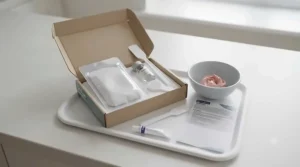
The Orbright DIY Denture Reline Kit uses pink gum-coloured strips of thermoplastic material that soften in boiling water within seconds, giving a boil-and-fit process similar in concept to the hard reline puck but styled and coloured to blend more naturally with the denture’s existing gum-shade base.
Orbright markets the material as non-toxic and fully reusable, meaning it can be reheated and reshaped repeatedly rather than being a single-attempt product, a genuinely useful feature for anyone new to relining who expects to need a few tries to get the fit right. Based on the spec comparison with the imported hard reline puck kits above, being a UK-based supplier is a modest but real point of difference for buyers who prefer supporting a domestic company or want more predictable delivery timescales than some imported alternatives.
What most buyers overlook about pink gum-strip products like this is that the colour-matching, while a nice cosmetic touch, has no bearing on function; the material properties, softening point, and hold, matter far more than shade matching for anyone whose priority is comfort and stability rather than appearance under close inspection.
Direct verified review volume for this specific UK product is more limited than for larger international brands, though the reusable, remoldable format lines up with generally positive sentiment reported for similar boil-and-fit gum-strip products elsewhere.
Pros:
- ✅ Reusable and reshapeable, forgiving for first-time users
- ✅ Pink gum shade blends visually with existing denture base
- ✅ UK-based supplier, straightforward domestic delivery
Cons:
- ❌ Colour-matching is cosmetic only, doesn’t affect fit quality
- ❌ Smaller verified review base than major international brands
At roughly £10-£16, the Orbright DIY Denture Reline Kit is a sensible budget-friendly pick, particularly for UK buyers who’d rather order from a domestic supplier.
7. E&E Fast Set Pro Denture Soft Reline Kit — longest-lasting option
The E&E Fast Set Pro Denture Soft Reline Kit uses a silicone-based soft reline formula with a notably fast working process, roughly one minute of working time followed by a two-minute setting time according to the product specification, and is positioned around long-lasting comfort rather than a quick temporary top-up.
That rapid set time is a genuine practical advantage over pastes with longer curing windows: less time holding an uncomfortable bite position while material cures means a more comfortable application process overall, and less risk of the material shifting before it sets. Separately marketed E&E reline products in this silicone category cite a three-to-six month usable lifespan, which, if accurate for this formula too, would make it the longest-lasting option on this list by a meaningful margin, though as with any soft liner, actual longevity depends heavily on how much pressure your bite puts through it day to day.
On paper this means a product aimed squarely at wearers who’ve already decided relining is a genuinely useful part of their routine and want to minimise how often they have to repeat the process, rather than someone testing the concept for the first time. What most buyers overlook about silicone reline formulas generally is that they tend to resist compression and flattening better than acrylic-based soft liners over weeks of continuous wear, which is the underlying reason for the longer quoted lifespan.
Aggregated sentiment around fast-set silicone reline kits in this category consistently highlights the quick application process as the standout benefit, with softness and comfort holding up well through the claimed multi-month window for most users.
Pros:
- ✅ Fast one-minute working time, two-minute set
- ✅ Silicone formula resists compression better than acrylic liners
- ✅ Longest quoted usable lifespan on this list
Cons:
- ❌ Highest price point among the seven kits compared
- ❌ Fast set time leaves very little room to reposition once placed
In the £20-£30 range, the E&E Fast Set Pro Denture Soft Reline Kit is worth the extra spend for anyone who wants to reline less frequently and is confident placing the denture correctly on the first attempt.
Top 7 Kits: Full Specification Comparison
| Kit | Material Type | Reusable/Remoldable | Applications Included | Best For |
|---|---|---|---|---|
| Instant Smile The Disk | Thermoplastic disc | Yes | 1 | First-time trial |
| Dentemp Reline-It | Self-cure paste | No | 2 | Value, two relines |
| Perma Soft | Semi-soft self-cure | No | 2 | Sore spot comfort |
| ProSoft | Powder & liquid | No | 2 | Sensitive gums |
| Hard Reline (Boil & Fit) | Thermoplastic puck | Yes | 2 | Firmer, precise fit |
| Orbright DIY | Thermoplastic strip | Yes | Multiple strips | UK-made budget |
| E&E Fast Set Pro | Silicone | No | 1-2 (kit dependent) | Longest-lasting comfort |
The clearest pattern here is the split between reusable thermoplastic products, which forgive mistakes but generally hold a less precise long-term fit, and self-curing pastes and silicones, which commit to a shape immediately but tend to last longer and fit more accurately once set. If you’ve never relined a denture before, starting with a reusable option and moving to a self-curing kit once you understand your own fit is a reasonable, low-risk way to approach it.
Practical Usage Guide: Doing an At-Home Reline Properly
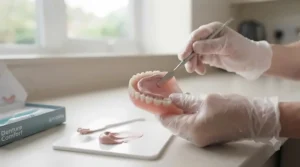
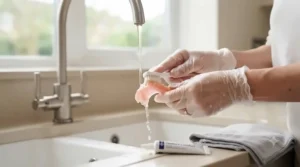
Preparation matters more than most kits’ instructions let on. Before applying any reline material, thoroughly clean the denture and remove any old adhesive residue with a soft brush and lukewarm water, since curing material won’t bond evenly over leftover paste or debris. Dry the fitting surface completely; several manufacturers note that moisture on the surface is the single most common cause of a lumpy or uneven cure.
A common first-30-days mistake is rushing the bite-and-hold stage. Most self-curing pastes need a firm but gentle bite, not a hard clamp, held for the full duration specified in the instructions, typically a few minutes, before the denture is removed and the excess trimmed. Trim any overflow material carefully with a clean pair of scissors or a nail file once it’s fully set, working slowly, since removing too much is much harder to fix than removing too little.
For maintenance, inspect the relined surface weekly for the first month for any lifting at the edges or a return of looseness, which can signal either an imperfect first application or bone changes progressing faster than the reline can accommodate. If a reline that should reasonably be lasting weeks starts failing within days, that’s a signal worth mentioning to your dentist rather than simply reapplying repeatedly.
Real-World Scenario: Which Kit Suits Your Situation?
Someone relining for the first time, unsure whether it’ll even help, is best served starting with the Instant Smile The Disk Denture Reliner or the Orbright DIY Denture Reline Kit. Both are reusable and low-cost, so a mistake or an unsatisfying result costs little and can be redone immediately without buying a whole new kit.
Someone managing sore spots alongside looseness, rather than pure gap-filling, is better matched to the Perma Soft Denture Reliner Kit or ProSoft Denture Reliner. The softer, cushioning materials in both genuinely reduce pressure on tender areas in a way firmer relines don’t, even if the fit itself is slightly less precise as a result.
Someone who has already relined successfully before and wants a firmer, more durable, longer-lasting result should look at the Hard Reline (Boil & Fit) Denture Reliner Kit for maximum precision, or the E&E Fast Set Pro Denture Soft Reline Kit if comfort and a multi-month lifespan matter more than absolute rigidity. Both assume enough prior experience to place the denture accurately without much room for repositioning once the material sets.
How to Choose an At-Home Denture Reline Kit
- Decide whether you’re testing the concept or committing to a routine. Reusable, remoldable kits suit first-timers; self-curing pastes and silicones suit people who already know relining helps them.
- Match the material to your main complaint. Looseness alone often responds well to a firmer reline; looseness combined with soreness usually benefits more from a softer, cushioning material.
- Check the working and setting time before you start. Fast-set silicone kits leave little room for repositioning, which matters if you’ve struggled with placement before.
- Consider how many applications you get per kit. A two-application kit is better value if you expect to need a redo, which is common on a first attempt.
- Check for zinc-free formulations if you’re a regular denture adhesive user too. Cumulative zinc exposure across multiple products has drawn attention in dental literature, so it’s worth checking labels generally.
- Be honest about how long the fit has been off. A gap that’s developed gradually over a year or more is more likely to need a genuine dental assessment than a quick home fix will resolve.
- Set a mental deadline for seeing a dentist regardless. Even a kit that works perfectly is a bridge to a professional check-up, not a permanent substitute for one.
At-Home Reline Kits vs a Dentist’s Professional Reline
The honest comparison here matters more than with most product categories, because the two options aren’t really solving the same problem in the same way. A home kit adjusts the fitting surface using a material you apply and shape yourself, typically lasting weeks to a few months depending on the product. A professional reline, whether a soft reline done chairside or a hard reline sent to a dental laboratory, uses precision-fitted, lab-cured acrylic based on an actual impression of your current gum contour, and dental professionals generally expect a hard reline to last two to three years under normal conditions.
Where home kits genuinely win is cost, speed, and convenience for a minor or recent change in fit, particularly if you’re between dental appointments or managing a temporary situation like healing after an extraction. Where professional relines win decisively is precision, durability, and, critically, a dentist’s ability to check whether looseness reflects normal, manageable bone change or something that needs a different intervention altogether, such as a rebase or a new denture. Relying on repeated home relines instead of ever booking a professional check-up risks masking a developing problem rather than genuinely managing it.
Common Mistakes When Relining Dentures at Home
The most frequent mistake is treating a home reline as a permanent fix rather than a temporary bridge, reapplying kit after kit for months or years without ever getting a professional assessment of why the denture keeps loosening. A close second is rushing the curing or setting stage, biting down too hard or releasing too early, which produces an uneven surface that can feel worse than the original loose fit.
Skipping proper cleaning before application is another common error; leftover adhesive or denture cleaner residue prevents an even bond and is a frequent cause of lumpy, short-lived relines. Finally, plenty of people apply reline material without checking the denture itself for cracks, thinning acrylic, or badly worn teeth first; a structurally compromised denture isn’t a good candidate for any home reline regardless of how well the material itself is applied, and using one risks the base failing outright.
Long-Term Cost and Comfort Considerations
Home reline kits are genuinely inexpensive relative to professional dental work, typically a fraction of the cost of a chairside soft reline and considerably less than a laboratory hard reline. Over a year of managing gradual looseness, several home kits used in sequence can still cost meaningfully less than a single professional visit, which explains their popularity as a stopgap.
That said, the calculation changes once looseness becomes a recurring, worsening pattern rather than an occasional top-up. Dentists generally recommend having a denture reassessed for relining every one to two years as bone and gum tissue continue to change, and repeatedly patching an increasingly ill-fitting denture at home, rather than getting it properly reassessed, can end up costing more in the long run if it delays catching a structural issue or accelerating bone changes that a proper reline or new denture would address more effectively.
Safety and When to See a Dentist Instead
At-home reline kits are widely sold and generally safe when used exactly as directed, but they are not a substitute for dental oversight, and there are specific situations where a home kit is the wrong tool entirely. If your denture has visible cracks, if a tooth on the denture has come loose or fallen out, or if the looseness has developed suddenly rather than gradually, these all warrant a dental visit rather than a reline attempt.
More importantly, the NHS advises that poorly fitting or worn dentures left unaddressed can lead to mouth sores, infections, or problems eating and speaking, and recommends continuing to see a dentist regularly even once you have dentures, specifically so they can check for these kinds of developing problems. If you notice persistent sore spots that don’t resolve after a reline, unusual mouth pain, bleeding, or a denture that needs relining again within days rather than weeks or months of a home application, treat that as a signal to book an appointment rather than reapplying another kit.
Frequently Asked Questions
❓ How long does an at-home denture reline last?
❓ Can I reline my dentures myself instead of seeing a dentist?
❓ Why do dentures get loose in the first place?
❓ Are zinc-free reline kits genuinely better?
❓ Is a soft or hard reline better for a loose denture?
Conclusion
A loose denture is frustrating, but it’s rarely a sign anything has gone catastrophically wrong, it’s usually just your jaw doing what jaws do after tooth loss. At-home reline kits genuinely help manage that gradual change between dental visits, and as this comparison shows, there’s a real kit for most situations, from the low-commitment Instant Smile The Disk Denture Reliner for a first attempt through to the longer-lasting E&E Fast Set Pro Denture Soft Reline Kit for wearers who’ve already found relining works for them.
What matters most, whichever kit you choose, is treating it as a genuinely useful bridge rather than an indefinite substitute for professional care. Reline it, get comfortable again, and use that comfort to actually book the check-up rather than putting it off further. Your dentist can tell you whether what you’re managing is normal, gradual bone change or something that needs a different approach altogether, and that peace of mind is worth more than any kit on this list.
✨ Don’t Miss These Exclusive Deals!
🔍 Take the discomfort out of a loose denture with these carefully compared reline kits. Click on any highlighted product to check current pricing and availability, and get back to eating and speaking with confidence!
Recommended for You
- 7 Best Denture Bond Repair Kits 2026: Fix Broken Dentures Fast
- Emergency Denture Repair Kit UK: 7 Trusted Fixes for 2026
- Denture Repair Kit UK: 7 Best Options Compared 2026
Disclaimer: This article contains affiliate links. As an Amazon Associate, I earn from qualifying purchases. If you purchase products through these links, we may earn a small commission at no additional cost to you. This article is for general information only and is not a substitute for professional dental advice; please consult a dentist about any persistent denture fit issues.
✨ Found this helpful? Share it with your friends! 💬🤗
