
In This Article
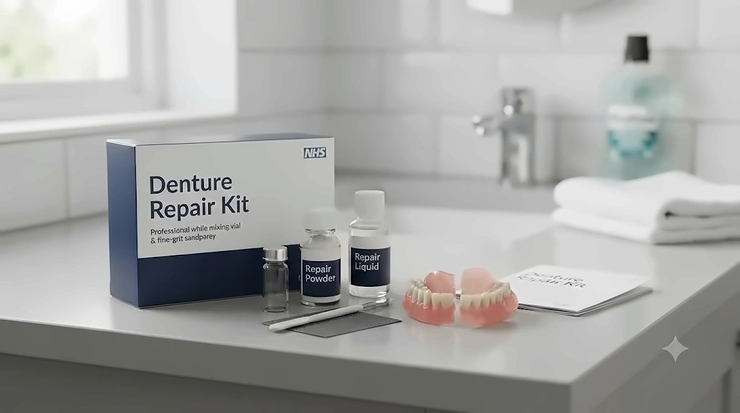
There’s a very particular kind of panic that arrives at 9pm on a Sunday when your denture snaps clean in half over the kitchen sink. An emergency denture repair kit exists precisely for that moment — a small, unglamorous box of resin or reline material designed to get you back to eating, speaking and smiling with confidence until a dentist can take a proper look. Given how stretched NHS dentistry currently is, with hundreds of thousands of patients on waiting lists across the country, it’s little wonder more denture wearers are keeping one of these kits in a drawer, just in case.
This isn’t a substitute for professional dentistry, and we’ll say that plainly throughout. But when a fracture happens on a bank holiday, a wedding weekend, or three days into a Cornwall caravan trip, a genuinely good kit can mean the difference between a temporary, wearable fix and going without your teeth entirely. Over the next few thousand words we’ll walk through seven real products sold in the UK, explain honestly what the specs mean in practice, and show you how to use one properly, safely and without making a bad break worse. According to NHS guidance on dentures, any broken parts should be brought to your dentist once the immediate emergency has passed, and everything below is written with that principle front and centre.
Quick Comparison Table
| Kit | Type | Best For | Set Time | Price Range |
|---|---|---|---|---|
| Dentemp Denture Repair Kit | Acrylic resin repair | Budget crack fixes | 5–10 mins | under £10 |
| CLICADENT Repair Kit | Dentist-formulated resin | Strongest bond, colour matching | Under 5 mins | £15–£20 range |
| DenTek Temparin Max | Multi-purpose repair paste | Loose caps, crowns and small breaks | Sets on contact | £5–£10 range |
| Dentemp Reline-It | Reline (loose fit) | Slipping, ill-fitting dentures | 3–5 mins per side | £10–£15 range |
| Cushion Grip | Thermoplastic reline | Sore gums, sensitive ridges | Softens in warm water | £8–£12 range |
| Polident Corega Ultra Powder | Adhesive powder | All-day extra hold | Instant | under £10 |
| Instant Smile Reline Disk | Remouldable reline | Repeated home adjustments | Hot water re-soften | £15–£20 range |
The table splits the field into two honest camps: kits that actually mend a physical break (Dentemp Denture Repair Kit, CLICADENT Repair Kit, DenTek Temparin Max), and kits that fix a fit problem rather than a fracture (Dentemp Reline-It, Cushion Grip, Instant Smile Reline Disk, Polident Corega Ultra Powder). Mixing these two categories up is the single most common mistake buyers make, and we’ll unpack why that matters further down. For a genuine crack running through the acrylic plate, only the first three will do anything useful.
💬 Just one click — help others make better buying decisions too! 😊
Top 7 Emergency Denture Repair Kits: Expert Analysis
1. Dentemp Denture Repair Kit — cheapest genuine crack-repair resin on the market
The standout here is price: this is the resin kit most UK pharmacies and Amazon sellers reach for first when someone needs a same day denture repair kit without spending much. Each pouch mixes a powder and liquid resin that cures in roughly five to ten minutes, and the box is rated for three separate repairs, with some listings bundling two boxes for six total fixes.
In practice, that means you get enough material to attempt a repair, redo it if your first attempt sets at an odd angle, and still have a spare for next time. The tooth-coloured resin blends reasonably well with the surrounding acrylic, though an exact colour match on older, slightly yellowed dentures is unlikely — this is cosmetic dentistry adjacent, not cosmetic dentistry.
Who it suits: anyone on a tight budget who needs one clean break mended and isn’t precious about a perfect colour match. Reviewers on Amazon UK consistently describe it as a reliable stopgap that bought them time before a dental appointment, though a recurring theme in feedback is that mixing the resin to the right consistency takes a bit of practice — rushing the ratio is the most common reason a first attempt fails.
Pros:
- ✅ Lowest price point of any genuine repair-resin kit
- ✅ Straightforward two-part mixing process
- ✅ Multiple repairs per box, useful for repeat mishaps
Cons:
- ❌ Colour match is approximate, not exact
- ❌ Small mixing window means practice helps
Price sits comfortably under £10 for the standard pack, making it the entry point for anyone who wants a genuine acrylic repair without committing to a premium kit. Given the low outlay, it’s a sensible first purchase to simply have on hand.
2. CLICADENT Repair Kit — developed by a dental surgeon for stronger, faster bonds
CLICADENT Repair Kit, made by Laboratoire Medident, distinguishes itself by having actually been engineered by a practising dental surgeon rather than a general adhesives company, and that pedigree shows in the finish quality. The resin sets in under five minutes and is designed specifically to handle fractures and to reattach a dislodged tooth to the plate — two of the most common denture emergencies.
What most buyers overlook about this kit is that the shade-matching options are noticeably better than budget alternatives, because the formula was built around cosmetic outcomes from the outset rather than pure structural bonding. Based on the spec comparison with cheaper resins, this one trades a higher price for a repair that’s genuinely harder to spot once cured and polished.
Aggregated customer feedback is unusually detailed and positive for a product in this category — several long-form reviews describe it succeeding where multiple superglues and cheaper repair kits had already failed on the same denture, with the bond holding firm well beyond the first few days. That said, a handful of reviewers note the instructions assume a reasonably steady hand and good lighting.
Pros:
- ✅ Dentist-developed formula with cosmetic-grade colour matching
- ✅ Fast, sub-five-minute cure time
- ✅ Strong reputation among repeat buyers on tricky repairs
Cons:
- ❌ Sits at the premium end of this category
- ❌ Precision required; not the most forgiving for first-timers
Expect to pay in the £15–£20 range, which puts it firmly in premium territory for a repair kit — but if this is your only viable denture and a professional appointment is weeks away, that premium buys real peace of mind.
3. DenTek Temparin Max — the multi-repair generalist for caps, crowns and small breaks
DenTek Temparin Max isn’t marketed purely as a denture kit — it’s a broader temporary dental repair paste designed to reseat loose caps, crowns and inlays as well as patch small denture chips. That versatility is exactly why it earns a spot here: many households have more than one dental appliance in play, and a single tube that handles several problem types is genuinely useful.
The paste sets on contact with saliva rather than needing a timed mix, which lowers the skill barrier considerably compared with two-part resins. Reviewers frequently mention using it to secure a wobbling crown one week and a small denture tooth the next, getting well beyond the “single emergency” value most kits offer — some packs are rated for 24 or more individual repairs.
The trade-off is structural strength: this paste is not intended for a full-thickness crack straight through a denture plate. Based on the spec sheet, it’s better understood as a precision filler than a plate-mending resin, and honest use means matching the tool to the actual damage rather than assuming one product does everything.
Pros:
- ✅ Handles multiple appliance types, not just dentures
- ✅ No timed mixing — sets on contact
- ✅ High repair count per tube extends its lifespan
Cons:
- ❌ Not rated for full plate fractures
- ❌ Less cosmetic colour blending than dedicated resins
Typically priced in the £5–£10 range, it earns its place through sheer flexibility rather than raw bonding strength, making it a smart addition to a household first-aid drawer alongside a proper resin kit.
4. Dentemp Reline-It — the go-to fix for a denture that’s simply gone loose
Not every denture emergency is a crack. Gums shrink, jawbones remodel with age, and a denture that fitted perfectly a year ago can start rocking, trapping food, or rubbing sore spots. Dentemp Reline-It addresses this by adding a thin layer of reline material to the fitting surface, effectively recreating some of the snugness the denture has lost.
The zinc-free formula sets in a matter of minutes per arch, and value packs bundling several applications have become common, which matters because a reline typically needs redoing every few months rather than lasting indefinitely. What the spec sheet won’t tell you, but reviewers note repeatedly, is that the smell during application is fairly strong — working in a ventilated room, as several long-term users advise, makes the process considerably more pleasant.
This product solves a genuinely different problem to the repair-resin kits above it, and it’s worth being clear-eyed about that distinction before buying: it will not mend a crack, but it will often solve the slipping and soreness that sometimes gets mistaken for a “broken” denture in the first place.
Pros:
- ✅ Tightens a loose fit without a dentist visit
- ✅ Multiple applications included in value packs
- ✅ Reduces soreness caused by movement and rubbing
Cons:
- ❌ Strong odour during application, ventilation recommended
- ❌ Does nothing for actual cracks or breaks
Expect a price somewhere in the £10–£15 range depending on pack size, with the per-application cost dropping noticeably on the multi-pack versions.
5. Cushion Grip — a gentler, non-glue alternative for sensitive gums
Cushion Grip takes a different route entirely: rather than a hard-set resin, it’s a thermoplastic material that softens when warmed and then moulds directly to the contours of both the denture and the gum. It behaves more like a temporary soft reliner than a rigid repair, and a single application can reportedly last several days before needing to be redone.
Here’s what to weigh with this one: because it’s zinc-free and doesn’t rely on strong adhesive chemistry, it tends to suit people with more sensitive gum tissue or those who’ve had irritation from cream adhesives in the past. Reviewers consistently frame it as gentler day-to-day, which lines up with the non-glue, mouldable design.
It won’t repair a structural crack, and buyers expecting it to behave like a resin kit are often disappointed. Used correctly — as a cushioning reline rather than a repair — it’s well regarded, particularly among longer-term denture wearers managing gradual gum recession rather than a sudden accident.
Pros:
- ✅ Gentle, zinc-free formula suited to sensitive gums
- ✅ No strong adhesive smell during use
- ✅ Mouldable fit that adapts to gum shape
Cons:
- ❌ Not a structural repair for cracks or breaks
- ❌ Comfort improvements are temporary, not permanent
Priced around £8–£12, it sits in the mid-range and is best thought of as a comfort product rather than an emergency crack fix.
6. Polident Corega Ultra Adhesive Powder — the trusted name for extra grip, not repair
Some denture emergencies aren’t about the denture at all — they’re about confidence in a hold that suddenly feels weaker than it used to. Polident Corega Ultra Adhesive Powder is one of the UK’s most recognisable adhesive brands, and the zinc-free powder format is designed to be sprinkled onto a moistened denture for an all-day, secure grip.
The practical difference between a powder and a cream, as several independent denture-care guides note, is mess and control: powder activates on contact with saliva and tends to leave less visible residue, while creams can ooze if slightly over-applied. Reviewers who’ve switched from cream adhesives to a powder format frequently cite easier cleanup as the deciding factor.
It’s worth being honest that this is not a repair kit in any structural sense — it’s an adhesive, full stop. We’ve included it here because “my denture keeps coming loose” is one of the most common searches that lands people on repair-kit pages, and for many of those cases, the actual fix is better adhesion rather than resin at all.
Pros:
- ✅ Trusted, widely available UK brand
- ✅ Zinc-free formula suitable for daily use
- ✅ Less residue and easier cleanup than cream adhesives
Cons:
- ❌ Provides hold only, no repair function whatsoever
- ❌ Needs reapplying daily, unlike a reline
At under £10 for a standard tin, it’s an inexpensive first thing to try before assuming a denture needs a structural fix at all.
7. Instant Smile Reline Disk — the remouldable premium option for repeat home adjustments
Rounding out the list, the Instant Smile Reline Disk takes the boil-and-fit approach: the material softens in hot water, is pressed against the fitting surface to take an impression, then hardens again as it cools. Crucially, it can typically be re-softened and reshaped multiple times, which sets it apart from single-use reline kits.
Based on the spec comparison, this remouldability is the whole value proposition — if your first attempt at getting the fit right isn’t quite there, you can simply reheat and try again rather than opening a second pouch. Several independent denture-product reviewers highlight this flexibility as the standout feature, describing the ability to “start over” as genuinely useful for first-time users still learning the technique.
It sits at the premium end of the reline category, and the boiling step adds a small amount of faff compared with the mix-and-apply resins earlier on this list. For someone who wants to get the fit precisely right without buying multiple single-use kits, though, the reusability argument is a strong one.
Pros:
- ✅ Remouldable — reheat and retry if the first fit isn’t perfect
- ✅ No timed chemical mixing involved
- ✅ Good value over multiple adjustment attempts
Cons:
- ❌ Requires boiling water and careful handling
- ❌ Premium pricing compared with single-use relines
Priced in the £15–£20 range, it’s positioned as an investment reline solution rather than a one-off emergency purchase, and reviewers who’ve bought it tend to view the reusability as justifying the higher upfront cost.
Practical Usage Guide: Getting Your First Repair Right
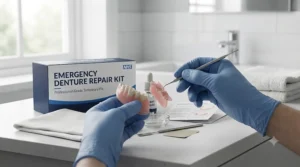
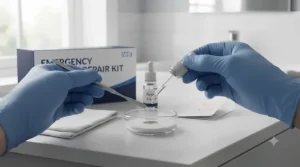
Nobody enjoys their first attempt at DIY dental work, and that’s fine — a little preparation goes a long way. Start by thoroughly cleaning and drying the broken denture; any trace of moisture, saliva or leftover adhesive will weaken the bond of both resin and reline products. Lay the broken pieces together dry first, without any product, to confirm they fit like a jigsaw before you commit to mixing anything — this single step prevents most of the misaligned repairs reviewers complain about.
When mixing a two-part resin, work in small batches and resist the urge to overfill the crack; a thin, even layer that you can trim back is far easier to finish neatly than a thick blob you have to sand down later. Most kits recommend applying the resin, holding the pieces in position for the stated cure time, then trimming excess with a nail file or the tool provided before it fully hardens. Once cured, a final gentle polish with the piece of abrasive paper often included in the box removes any rough edges that could otherwise irritate your gums or tongue.
The most common mistake in the first 30 days of owning one of these kits isn’t the repair itself — it’s storage. Resin and reline materials degrade once opened, so reseal any unused pouches tightly and keep the kit somewhere cool and dry, away from bathroom humidity, so it’s actually usable next time you need it.
Real-World Scenarios: Matching the Kit to the Situation
Consider three different people with three different denture emergencies. First, a retired teacher on a two-week touring holiday in Wales whose lower plate snaps clean in half on a Tuesday, with no dentist appointment possible until she’s home. For her, a compact, genuinely portable resin kit like the Dentemp Denture Repair Kit or CLICADENT Repair Kit is the sensible travel companion — light, cheap enough to buy “just in case,” and capable of a real structural fix if the worst happens.
Second, a 68-year-old who’s noticed his lower denture has grown noticeably looser over the past six months as his gums have gradually changed shape. Nothing is broken; the fit has simply drifted. He doesn’t need a repair kit at all — a reline product like Dentemp Reline-It or a thermoplastic option like Cushion Grip solves the actual problem, and he should book a proper dentist assessment when he can, since ongoing looseness can sometimes signal it’s time for a new denture rather than a repeated home fix.
Third, someone managing several appliances at once — a partial denture, a crown that occasionally works loose — who wants one flexible product rather than a cupboard full of single-purpose kits. DenTek Temparin Max fits this household best, precisely because its multi-repair, multi-appliance design trades peak bonding strength for everyday versatility.
How to Choose an Emergency Denture Repair Kit
- Identify the actual problem first. A crack needs resin; a loose fit needs a reline or adhesive. Buying the wrong category is the single biggest waste of money in this product space.
- Check the repair count per box. Kits offering three to six repairs give you room for a failed first attempt without needing to reorder immediately.
- Weigh cure time against your patience. Fast-setting pastes like DenTek Temparin Max suit those who want minimal fuss, while two-part resins reward careful, unhurried mixing.
- Consider colour matching if the repair is visible. Front-tooth breaks benefit from a premium, cosmetic-grade resin such as CLICADENT Repair Kit; a hidden rear-plate crack is far more forgiving.
- Factor in gum sensitivity. If cream adhesives have irritated you before, a zinc-free thermoplastic like Cushion Grip is worth trying ahead of standard powders.
- Read the small print on “temporary.” Every kit on this list is explicitly a stopgap, not a permanent fix — plan a follow-up dental appointment regardless of how well the repair holds.
- Buy before you need it. Emergency repairs are, by definition, badly timed. Keeping a kit in the house means you’re never caught out at 9pm on a Sunday.
Cracked Denture Plate Repair: What to Expect in Real-World Performance
A specification sheet will tell you a resin cures in five minutes; it won’t tell you what that actually feels like holding two halves of your denture together with slightly trembling hands. In practice, most users report the process takes closer to fifteen or twenty minutes start to finish once you factor in cleaning, dry-fitting the break, mixing carefully, and trimming the cured resin afterwards.
The finished repair, done well, is usually strong enough for normal eating within a day, though most manufacturers advise sticking to softer foods for the first 24 hours while the bond fully cures. What reviewers describe less often, but is worth knowing, is that a repair along a hairline crack tends to hold considerably better and for longer than one across a jagged, multi-piece break — the more surface area the resin has to grip, the more durable the outcome. If your denture has shattered into several fragments rather than split cleanly in two, that’s a strong signal to see a dentist rather than attempt a home repair at all.
Same Day Denture Repair Kit vs Professional Dental Repair
| Factor | Home Repair Kit | Professional Dental Repair |
|---|---|---|
| Best For | Immediate, temporary fix outside opening hours | Permanent, laboratory-grade repair |
| Typical Turnaround | Minutes | Same day to several days |
| Cost | under £20 | Varies; NHS band charges or private pricing apply |
| Durability | Weeks to months | Designed to last the life of the denture |
| Cosmetic Match | Approximate | Precise, colour-matched in a lab |
The honest takeaway from this comparison is that a same day denture repair kit and a professional repair aren’t really competing products — one buys you time, the other is the actual solution. The British Dental Association has warned that access to NHS dentistry remains under serious strain, which is precisely why so many denture wearers now keep a repair kit as a first line of defence. A home kit is genuinely excellent at getting you through a weekend, a holiday, or the wait for an appointment, but the bond strength and cosmetic finish of a properly relined or repaired denture in a dental lab will reliably outlast anything mixed at a kitchen table. Given how difficult NHS appointments can be to secure, treating the kit as a bridge rather than a destination is the safest mindset to adopt.
✨ Don’t Miss These Exclusive Deals!
🔍 Keep a resin repair kit and a reline kit together in one drawer, so whichever type of denture emergency strikes, you’re already covered. Click through to check current availability and pricing on the options above.
Denture Bond Adhesive Strength: Features That Actually Matter
Marketing copy on adhesive packaging loves the word “strong,” but strength alone isn’t the full picture. What actually determines whether a bond holds is threefold: how well the surfaces were cleaned and dried beforehand, how thin and even the resin or adhesive layer is, and how much surface area the material has to grip onto. A thick, poorly mixed blob of resin is often weaker than a thin, carefully applied layer, because air bubbles and uneven curing create hidden weak points.
Zinc content is another detail worth understanding rather than ignoring. Older-style adhesive powders sometimes contained zinc to boost hold, but prolonged, heavy use of zinc-containing adhesives has been linked to health concerns in some studies, which is why most current UK products — including Polident Corega Ultra Adhesive Powder and Cushion Grip — are formulated zinc-free. If you’re comparing adhesive strength between products, checking for a zinc-free label is a genuinely useful filter, not just a marketing tick-box.
Set time is the feature that doesn’t matter nearly as much as people assume. A slower-curing resin isn’t weaker; it typically just gives you a longer working window to position the pieces correctly, which for a nervous first-timer can actually produce a better result than a fast-set paste.
Acrylic Denture Repair at Home: A Safety and Compliance Guide
Any product you buy for acrylic denture repair at home sold legitimately on Amazon UK should carry UKCA or CE marking, confirming it meets the relevant safety requirements for medical devices placed on the Great Britain market. Under gov.uk guidance on regulating medical devices, the Medicines and Healthcare products Regulatory Agency oversees this market and manufacturers are required to register accordingly, so it’s worth checking for that marking on the packaging before you buy, particularly from smaller or unfamiliar sellers.
Beyond regulatory marking, a few practical safety habits matter. Never attempt a repair with materials not designed for oral use — household superglues are a common but genuinely risky shortcut, since they aren’t formulated to be safe if residue is ingested and can bond unevenly to acrylic. Work in a ventilated space given the fumes some resins produce, keep repair materials away from children, and always allow the full recommended cure time before putting the denture back in your mouth, even if it looks and feels solid sooner.
Most importantly, treat every home repair as temporary. If a denture has broken more than once in the same spot, or the plate itself feels weakened or flexible, that’s a sign the appliance needs proper dental assessment rather than another round of resin — repeated fractures in the same location often indicate the denture is nearing the end of its usable life.
Common Mistakes When Buying an Emergency Denture Repair Kit
The most frequent error, as covered above, is buying a reline product to fix a crack, or vice versa — always match the kit to the actual damage. A close second is assuming any repair kit will perfectly colour-match an older, stained denture; realistic expectations here prevent disappointment. Buyers also commonly under-buy, purchasing a single-repair kit when a three-to-six-repair box costs only marginally more and provides a safety margin for a failed first attempt.
Another overlooked mistake is delaying the follow-up dental visit because the home repair “worked.” A successful temporary fix is a reason to relax, not a reason to skip the appointment — the underlying cause of the break, whether wear, an ill fit, or grinding habits, still needs addressing by a professional.
Long-Term Cost and Maintenance Considerations
Buying one £10 resin kit that sits unused in a drawer for two years, ready for the day it’s actually needed, is genuinely good value compared with the cost, stress and lost time of an emergency without one. Over a typical denture’s lifespan, most wearers will use a repair kit only once or twice, but a reline product is more of a recurring cost — expect to reapply every three to six months as gum shape gradually changes, which over several years can add up to more than the price of an occasional professional reline. Weighing the frequency of use against the unit price is the clearest way to judge real value here, rather than simply comparing sticker prices between products.

FAQ
❓ Can you fix a broken denture yourself?
❓ How long does an emergency denture repair kit last?
❓ Is superglue safe for denture repair?
❓ What's the difference between a repair kit and a reline kit?
❓ Do emergency denture repair kits work on partial dentures?
Conclusion
A broken or loose denture rarely happens at a convenient time, which is exactly why an emergency denture repair kit earns its place in a bathroom cabinet long before you actually need one. Across the seven products here, the honest picture is that no single kit does everything — resin kits like the Dentemp Denture Repair Kit and CLICADENT Repair Kit mend genuine cracks, while reline and adhesive products like Dentemp Reline-It, Cushion Grip and Polident Corega Ultra Adhesive Powder solve fit and comfort problems instead. Matching the right kit to your actual situation, applying it carefully, and treating the result as a bridge to proper dental care rather than a permanent solution, is the combination that gets people through a denture emergency safely and with the least fuss. The Oral Health Foundation continues to push for wider reform of NHS dental access, and until that improves, a well-chosen kit in the cupboard remains a genuinely sensible piece of preparation.
✨Ready to be prepared for your next denture emergency?
🔍Check current prices and availability on the kits above before you need them in a hurry.
Recommended for You
- Denture Repair Kit UK: 7 Best Options Compared 2026
- 7 Best Discreet Denture Storage Box Picks for 2026 (UK)
- Denture Case With Mirror: 7 Brilliant Picks for 2026
Disclaimer: This article contains affiliate links. As an Amazon Associate, I earn from qualifying purchases. If you purchase products through these links, we may earn a small commission at no additional cost to you.
✨ Found this helpful? Share it with your friends! 💬🤗
