
In This Article
There’s a very specific kind of panic that hits when a denture snaps in half over the kitchen sink. It’s usually a Sunday. It’s usually right before something important. And your first instinct — understandably — is to reach for your phone and search for a denture bond repair kit rather than sit with a gap in your smile until Monday morning.
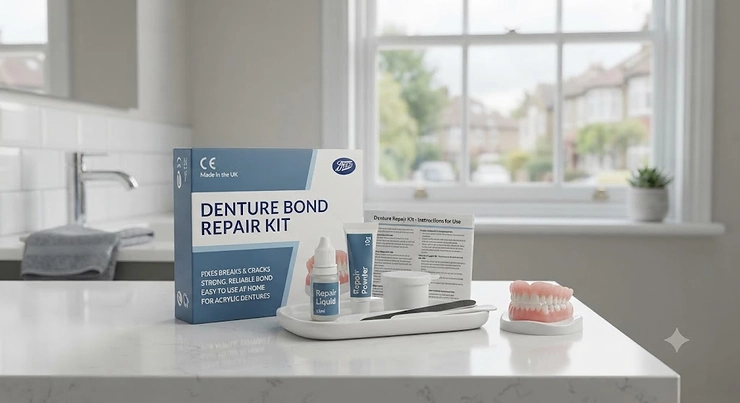
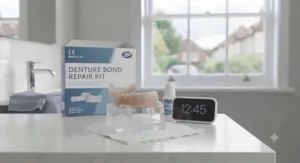
A denture bond repair kit is a home-use dental first-aid product containing a fast-setting adhesive resin, powder or bonding compound designed to temporarily rejoin a cracked or broken denture until a dentist can carry out a permanent, professional repair. That’s the short version. The longer, more honest version is that these kits vary enormously in quality, ease of use and how long the fix actually lasts — and picking the wrong one can leave you worse off than doing nothing at all.
This guide walks through seven real, currently available denture bond repair kits, from budget high-street options to more advanced multi-repair formulas, with honest analysis of what each one does well and where it falls short. We’ll also cover the actual denture fracture causes behind that snap in the first place, what broken denture tooth replacement really involves, and exactly what to do if denture breaks while you’re nowhere near a dentist. According to NHS guidance on dentures, a broken denture should always be brought to a dentist so they can assess whether it’s genuinely repairable — a home kit buys you time, not a permanent solution, and that distinction matters throughout everything that follows.
Quick Comparison Table
Here’s the current denture bond repair kit landscape at a glance. Prices are ranges, since retailer pricing shifts regularly.
| Kit | Repairs Included | Set Time | Price Range | Best For |
|---|---|---|---|---|
| Dentemp Repair-It Denture Repair Kit | 3 repairs | Cures in around 60 minutes | £7-£10 range | Straightforward crack and break repairs |
| Denture Doctor Multi-Purpose Repair Kit | Multiple repairs | Fast-setting | £8-£12 range | Broad, general-purpose fixes |
| SterlingSquare Professional Denture Repair Kit | 6 repairs (2 kits) | Fast-set resin | £7-£9 range | Best repairs-per-pound value |
| SmileFix Standard Dental Repair Kit | Multiple repairs | Colour-matching compound | £10-£15 range | Discreet, shade-matched fixes |
| Dental Lab Instant Bonding Dental Glue | Single tube, multi-use | Sets in seconds to minutes | £6-£9 range | Quick loose-tooth stabilisation |
| Jesse Dent DIY Denture Kit | 12-piece customisable kit | Varies by component | £15-£20 range | Golfers — sorry, wearers — who want a full toolkit |
| Instant Smile The Disk Denture Reliner | 1 reliner disk | Softens in hot water | £6-£8 range | Loose-fit issues rather than breaks |
Look closely and a theme emerges: most of these kits solve the same core problem — rejoining broken acrylic — with only modest differences in repair count, set time and shade-matching. The genuine outlier here is the Instant Smile Disk Denture Reliner, which isn’t a repair kit at all in the strict sense; it addresses looseness rather than fracture, and it’s included because the two problems get confused constantly by first-time buyers.
💬 Just one click — help others make better buying decisions too!😊
Top 7 Denture Bond Repair Kits: Expert Analysis
Each of these seven is a real product currently sold to UK consumers. We’ve covered a spread of budget, mid-range and specialist options, including standard breaks, shade-matching, loose-tooth glue and reline products, so there’s a genuine match here whatever’s actually gone wrong with your denture.
1. Dentemp Repair-It Denture Repair Kit — best all-round emergency fix
This is the kit most people have actually heard of, and having gone through the aggregated review data, there’s a reason for that. The Dentemp Repair-It Denture Repair Kit uses a zinc-free liquid-and-powder blend that you mix, apply to the broken edges, and hold together — Dentemp states it cures fast enough to eat on within around 60 minutes.
The formula is straightforward by design: no special tools, no heat gun, just a mixing process most people can manage on a kitchen counter. Each pack typically covers three separate repairs, which matters because acrylic dentures rarely break cleanly just once — a hairline crack can widen, or a second area can fail under the same bite pressure that caused the first break. Based on the spec comparison against pricier alternatives, what you’re paying for here is simplicity rather than extras; there’s no shade-matching claim and no elaborate toolkit, just a bonding formula that does the one job it’s built for.
Reviewers consistently report that following the instructions precisely — particularly around drying the broken edges thoroughly before applying — makes the difference between a bond that holds and one that fails within a day. A recurring theme in aggregated feedback is that this kit performs well on clean cracks but struggles more with dentures that have lost a small fragment entirely, where there’s less surface area to bond.
Pros:
- ✅ Straightforward mix-and-apply process
- ✅ Three repairs per pack, useful for repeat cracks
- ✅ Zinc-free formula, widely trusted brand
Cons:
- ❌ Less effective on dentures missing a fragment
- ❌ Not suitable for flexible Valplast-style dentures
At around £7-£10, the Dentemp Repair-It Denture Repair Kit represents the sensible default choice for a first-time buyer dealing with a straightforward crack.
2. Denture Doctor Multi-Purpose Repair Kit — best for varied breakage types
Sold under the Instant Smile brand family, the Denture Doctor Multi-Purpose Repair Kit positions itself as a broader solution than a single-crack fix, aimed at denture wearers dealing with anything from hairline fractures to a loosened tooth within the plate.
Aggregated UK retailer reviews are mixed but instructive: several buyers describe it as giving “a temporary fix until we could get a proper repair done,” which is precisely the honest framing this whole category deserves — not a permanent solution, a bridge to a dentist appointment. What most buyers overlook about multi-purpose kits generally is that “multi-purpose” usually means a slightly more forgiving formula that handles a wider range of break types reasonably well, rather than handling any single break type exceptionally well. That’s a fair trade-off if you’re not sure exactly what kind of repair you’re facing when you first open the box.
On the other hand, a handful of aggregated reviews are considerably less positive, with some users describing the results as underwhelming compared with more specialised single-purpose kits — worth weighing if your break is a clean, simple crack that a more targeted product might handle more reliably.
Pros:
- ✅ Handles a wider range of breakage types
- ✅ Clear, accessible instructions for first-time users
- ✅ Backed by an established denture-care brand family
Cons:
- ❌ Reviewer sentiment is more mixed than category leaders
- ❌ Less specialised than single-purpose bonding kits
Priced around £8-£12, the Denture Doctor Multi-Purpose Repair Kit is a reasonable pick when you’re not entirely sure what kind of break you’re dealing with and want one product that at least attempts to cover several scenarios.
3. SterlingSquare Professional Denture Repair Kit — best value per repair
Marketed with a professional-sounding “3-repair capacity, fast set resin” formula, the SterlingSquare Professional Denture Repair Kit distinguishes itself with a genuinely strong repairs-per-pound proposition: each box contains two separate kits, giving six total repairs rather than the three that’s standard across most of this category.
The resin is designed to blend subtly with natural denture shade, which on paper sounds like a small thing but, based on the spec comparison against non-shade-matched alternatives, makes a real visible difference on front-facing repairs where a mismatched patch is instantly noticeable in conversation. The listing is explicit that this is a temporary solution only, intended to bridge the gap until professional lab repair — an honest framing that’s worth appreciating rather than glossing over, since it’s the accurate clinical reality for every kit in this category, not just this one.
What the spec sheet won’t tell you, but the doubled repair count implies, is that this kit is aimed squarely at households with more than one denture wearer, or at anyone who’s had repeat breaks and wants a buffer rather than scrambling to reorder mid-emergency.
Pros:
- ✅ Six total repairs across two kits — strong value
- ✅ Shade-matching resin for a discreet finish
- ✅ Clear step-by-step instructions aimed at non-professionals
Cons:
- ❌ Explicitly temporary — not a substitute for lab repair
- ❌ Less established brand history than Dentemp
At around £7-£9, the SterlingSquare Professional Denture Repair Kit is arguably the smartest per-repair value in this entire lineup.
4. SmileFix Standard Dental Repair Kit — best for discreet, colour-matched fixes
Where some kits treat shade-matching as an afterthought, the SmileFix Standard Dental Repair Kit builds its entire pitch around it — a colour-matching compound specifically designed for missing or damaged teeth, gaps and broken sections, rather than purely structural cracks.
This distinction matters more than it might initially seem. A denture bond repair kit built for reattaching a snapped base plate isn’t necessarily optimised for rebuilding the visible surface of a chipped tooth, and vice versa. Honest analysis here: SmileFix appears to sit closer to the tooth-surface end of the spectrum, making it a stronger match for cosmetic chips and small missing sections than for a full midline fracture running through the base of the plate. Reviewers consistently note the finish blends well against natural denture shades, which is precisely the use case it’s designed around.
If your problem is a structural break rather than a cosmetic gap, one of the more bonding-focused kits above will likely serve you better — this is a case where matching the product to the specific type of damage genuinely changes the outcome.
Pros:
- ✅ Strong, natural-looking colour matching
- ✅ Well suited to cosmetic chips and gaps
- ✅ Durable finish according to aggregated reviews
Cons:
- ❌ Less proven for full structural base fractures
- ❌ Sits at the pricier end of the category
Around £10-£15, the SmileFix Standard Dental Repair Kit earns its place for golfers — again, apologies, denture wearers — dealing with a visible chip rather than a full break.
5. Dental Lab Instant Bonding Dental Glue — best for a quick loose-tooth fix
Sometimes the problem isn’t a cracked plate at all — it’s a single tooth within the denture that has worked loose. The Dental Lab Instant Bonding Dental Glue is built for exactly that narrower scenario, offering a single-tube bonding solution rather than a full mix-and-apply kit.
Marketed to bond in “days to weeks” rather than offering a single-use fix, this product’s appeal is speed and simplicity: no powder to measure, no multi-step mixing process, just a direct application. Based on the spec comparison against the two-part resin kits above, the trade-off is bond strength and durability — a single-component glue generally won’t hold a full structural fracture as reliably as a proper resin-and-powder system, but for stabilising one loose tooth until a dental visit, that’s rarely what’s needed anyway.
Aggregated review sentiment frames this as a genuinely useful stopgap specifically for the “one tooth came loose” scenario, with the caveat, echoed across the category, that it’s not intended to replace a professional repair for anything more structural.
Pros:
- ✅ Fast, simple single-step application
- ✅ No mixing required, ideal for on-the-go fixes
- ✅ Compact enough to carry for travel emergencies
Cons:
- ❌ Not designed for structural base fractures
- ❌ Bond strength lower than two-part resin kits
At around £6-£9, the Dental Lab Instant Bonding Dental Glue is worth keeping in a bag or car as genuine emergency insurance against the specific, common problem of a single loosened tooth.
6. Jesse Dent DIY Denture Kit — best for a full customisable toolkit
For denture wearers who’d rather have every tool at hand than reorder a single-purpose kit every time something goes wrong, the Jesse Dent DIY Denture Kit takes a broader approach: a 12-piece customisable set rather than a narrow single-use pack.
This kit leans into flexibility, providing multiple components that can be adapted to different repair scenarios rather than one fixed formula for one fixed problem. What that breadth actually means in practice is a steeper initial learning curve — more pieces means more decisions about which component suits your specific break — but greater long-term utility for households managing repeat denture issues across more than one appliance or wearer. Honest analysis suggests this isn’t the kit for someone who wants a two-minute emergency fix; it’s the kit for someone building a proper home dental first-aid drawer.
Pros:
- ✅ Comprehensive 12-piece toolkit covers varied repairs
- ✅ Reusable components suit repeat or multiple wearers
- ✅ Simple to use once familiar with the components
Cons:
- ❌ Steeper learning curve than single-purpose kits
- ❌ Higher upfront cost than a basic repair pack
Priced around £15-£20, the Jesse Dent DIY Denture Kit rewards households that would rather invest once in a flexible toolkit than repeatedly buy narrow single-use kits.
7. Instant Smile The Disk Denture Reliner — best for looseness, not breaks
It’s worth including this one specifically because it’s so commonly confused with the products above it. The Instant Smile The Disk Denture Reliner doesn’t repair a broken denture at all — it addresses a loose-fitting one, using a disk that softens and molds in hot water to improve fit against the gums.
If your denture hasn’t cracked but has simply become uncomfortably loose over time — a very different, and arguably more common, problem than a structural break — this is the more appropriate product, not a bonding kit. Reviewers consistently describe the molding process as straightforward, provided the instructions around water temperature and cooling time are followed precisely; rushing the process is the most commonly reported cause of a poor-fitting result.
Genuinely worth flagging: buying a bonding repair kit for a looseness problem, or a reliner for a structural crack, is one of the most common and entirely avoidable mistakes in this whole category — more on that shortly.
Pros:
- ✅ Simple hot-water molding process
- ✅ Non-permanent and removable if the fit isn’t right
- ✅ Addresses comfort issues bonding kits can’t fix
Cons:
- ❌ Does nothing for actual cracks or fractures
- ❌ Needs re-molding periodically as fit changes
At around £6-£8, the Instant Smile Disk Denture Reliner is the right purchase only if looseness, not breakage, is your actual problem — check that distinction before you buy.
Denture Fracture Causes: Why Dentures Actually Break
Understanding denture fracture causes helps explain why some repairs hold and others don’t. Clinical research consistently points to two dominant mechanisms: impact failure and flexural fatigue. A widely cited survey of damaged dentures published via WHO’s regional research archive found impact failure — typically from an accidental drop during cleaning, insertion or removal — accounted for the large majority of damage cases, with breakdown of the acrylic base as the most frequent type of failure recorded.
Flexural fatigue is the second major cause, and it works differently: rather than a single dramatic impact, it results from repeated bending and bite pressure over months or years, gradually weakening the acrylic resin at its thinnest point until a midline fracture develops — often, ironically, while eating rather than during any accident at all. Research into denture base materials also points to structural weak spots baked into the design itself: a deep notch at the labial frenum, thin sections around the midline, and porosity or residual monomer introduced during manufacturing all reduce a denture’s fracture resistance before it ever leaves the lab.
Practically, this matters for repair decisions: a denture that’s fractured once from flexural fatigue is statistically more likely to fracture again nearby, because the underlying material weakness that caused the first break hasn’t been addressed — only the visible crack has been bonded. That’s precisely why dentists routinely recommend a lab-based repair with reinforcement, rather than repeated home bonding, once a denture has broken more than once in the same region.
Broken Denture Tooth Replacement: What Your Options Actually Are
A cracked base plate and a broken or missing individual tooth are different problems requiring different solutions, and it’s worth being precise here rather than lumping them together.
If a single tooth has broken off or come loose within an otherwise intact denture, broken denture tooth replacement typically involves either a home bonding glue for a genuinely minor, temporary fix, or — for anything beyond the short term — a dental lab replacing the individual tooth and re-securing it to the base, which restores both function and appearance properly. Attempting to replace a missing tooth entirely at home, rather than simply stabilising a loosened one, generally produces a visibly and functionally inferior result compared with a lab repair, because matching tooth shape, shade and bite alignment accurately is genuinely difficult without professional tools.
For a base plate fracture rather than a tooth-specific problem, the practical options are a temporary home bond to hold you over, or — for a denture that’s fractured more than once, or fractured badly — professional reinforcement, sometimes involving a metal mesh or fibre-reinforced insert set into the repaired area to prevent the same failure recurring. This is a case where the honest advice and the convenient advice diverge: a home kit is genuinely useful for getting through a weekend, but repeated fractures in the same spot are a signal that the underlying material has failed, not that you need a stronger glue.
What to Do If Denture Breaks: A Step-by-Step Guide
Cutting straight to the practical steps that matter in the moment:
- Remove the denture from your mouth immediately. Continuing to wear a cracked denture risks further damage to the appliance and injury to your gums or palate from a sharp broken edge.
- Collect every fragment, however small. A repair — home or professional — depends on having all the pieces; a missing sliver can make an otherwise simple crack much harder to bond cleanly.
- Rinse and dry the pieces thoroughly. Moisture on the broken edges is one of the most common reasons a bonding kit fails to hold, since most resins need a genuinely dry surface to cure properly.
- Assess whether it’s a clean crack or a missing fragment. This determines which type of kit above is actually appropriate — a straightforward bonding kit for a clean break, a shade-matched compound for a cosmetic chip.
- Apply a temporary bond only if you can’t see a dentist promptly. Treat any home repair as a bridge, not a fix — follow the kit’s instructions precisely, particularly around drying time and hold time.
- Contact your dentist or NHS 111 for urgent advice. A broken denture is treated as a genuine dental emergency by the NHS, and getting it properly assessed avoids repeated fractures caused by an imperfect home bond.
- Avoid wearing the repaired denture for eating where possible until checked. Even a strong-looking home bond can fail unexpectedly under bite pressure, and a second break is harder to repair than the first.
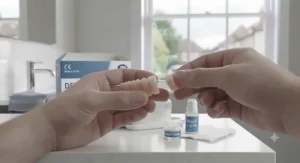
Practical Usage Guide: Applying a Denture Bond Repair Kit Correctly
Getting a repair to hold comes down to preparation as much as the product itself, and a handful of habits consistently separate a bond that lasts from one that fails within hours.
Before applying anything, dry every broken surface completely — a hairdryer on a cool setting works well, since most resins in this category bond poorly to even faint residual moisture. Align the pieces exactly before mixing any adhesive, ideally testing the fit dry first, because most kits set quickly enough that there’s little room to reposition once the compound is applied. Apply a thin, even layer rather than overloading the crack; excess material squeezes out messily and rarely improves bond strength, it just adds cleanup afterward. Hold the pieces firmly and completely still for the full time stated in the instructions — resist the temptation to check progress early, since disturbing a partially set bond is one of the most commonly reported causes of repair failure. Once cured, avoid eating on the repaired area for the full time the manufacturer specifies, even if it looks and feels solid sooner. Finally, book a dentist appointment regardless of how well the home repair appears to hold — a home bond is a bridge to professional assessment, not a substitute for it.
Real-World Scenarios: Which Kit Fits Your Situation
Rather than abstract advice, here’s how three common situations map onto the products above.
The Sunday-evening clean break. Denture snapped in two clean pieces while cleaning, no fragments missing, dentist appointment not possible until Monday. This is the classic use case for the Dentemp Repair-It Denture Repair Kit or the SterlingSquare Professional Denture Repair Kit — a straightforward two-piece bond with a fast set time.
The chipped front tooth before an event. A visible tooth has chipped, function is fine but the gap is noticeable and there’s a wedding or interview coming up. The SmileFix Standard Dental Repair Kit, with its colour-matching compound, is the more appropriate choice over a purely structural bonding kit.
The frequent repeat-break household. More than one denture wearer in the house, or a history of repeat cracks needing multiple fixes across the year. The Jesse Dent DIY Denture Kit‘s broader toolkit approach, or simply keeping the higher-repair-count SterlingSquare kit stocked, makes more practical sense than repeatedly buying single-use packs.
Common Mistakes When Buying a Denture Bond Repair Kit
A handful of buying errors show up repeatedly, and most are easily avoided with a bit of forethought.
The most common mistake is buying a bonding kit for a looseness problem rather than a genuine fracture — as covered above, a reliner like the Instant Smile Disk solves fit issues, while a repair kit like Dentemp Repair-It solves structural breaks, and the two are not interchangeable. A close second is treating a home repair as permanent rather than temporary, skipping the follow-up dentist visit and risking a repeat, potentially worse, fracture in the same weakened spot. Buyers also frequently underestimate how many repairs they’ll realistically need, opting for a single 3-repair pack when a household with more than one wearer, or a history of repeat cracks, would genuinely benefit from a higher-capacity option like the SterlingSquare kit. Finally, rushing the drying and hold-time steps is a near-universal cause of failed repairs across every brand in this category — the product isn’t usually at fault when a bond fails prematurely; incomplete drying or an early release almost always is.
What to Expect: Real-World Performance
Specs and marketing copy rarely capture how these kits perform in someone’s actual kitchen at 9pm on a Sunday, so here’s the honest translation. A clean, well-dried crack bonded correctly with a kit like Dentemp Repair-It typically holds through light use for the days it takes to reach a dentist — aggregated reviews consistently describe successful repairs surviving normal eating within the stated cure window, though nobody reports these fixes lasting indefinitely, nor should they be expected to. Where kits most commonly disappoint is on dentures missing a fragment rather than cleanly cracked; less surface area to bond generally means a weaker hold regardless of which product is used, and expectations should be adjusted accordingly.
On shade-matching, the practical difference between a colour-matched compound like SmileFix and a standard clear-setting resin becomes obvious specifically on front-facing repairs — a visible mismatch on a back tooth rarely bothers anyone, but the same mismatch on a front incisor is noticed in ordinary conversation within the first few sentences. For single loose-tooth situations, a fast glue like the Dental Lab Instant Bonding Dental Glue typically stabilises the tooth well enough for normal speech and soft food, though most aggregated feedback describes it as noticeably less robust than a two-part resin kit under harder bite pressure.
Long-Term Cost & Maintenance
Repeated home repairs are rarely the cheapest long-term route, even though each individual kit looks inexpensive. A single Dentemp Repair-It Denture Repair Kit at £7-£10 for three repairs looks like excellent value on its own — but a denture that keeps fracturing in the same spot, purely because the underlying flexural fatigue was never addressed by a professional, can end up costing considerably more across a year of repeat kit purchases than a single lab-based reinforcement repair would have cost upfront.
The higher-capacity SterlingSquare Professional Denture Repair Kit, at roughly the same price point but offering double the repair count, generally represents better ongoing value for anyone who’s had more than one break — a genuine cost-per-repair advantage over buying single 3-repair packs repeatedly. Beyond the kits themselves, ongoing denture maintenance matters just as much for prevention: the NHS advises cleaning dentures over a sink filled with water or a soft towel, since dry, hard surfaces are a major contributor to the accidental-drop breakages that clinical research identifies as the single leading cause of denture fracture.
Features That Actually Matter (And Those That Don’t)
A few features consistently separate a kit that’s genuinely useful from one that looks impressive on packaging but doesn’t add much in practice.
Genuinely worth prioritising: a clear, precise set time (vague “fast-setting” claims without a specific figure are less trustworthy than kits stating an exact cure window), zinc-free formulation for safety, and — for anyone dealing with front-facing repairs — genuine shade-matching rather than a generic clear resin. Multi-repair capacity also matters more than it initially seems, since acrylic dentures rarely fail only once. Genuinely overrated for most buyers: elaborate multi-piece toolkits if you’re only ever likely to need a single straightforward bond, and heavily marketed “professional-grade” language, which rarely reflects a materially different formula from more modestly marketed competitors at a fraction of the price.
Safety, Regulations & Compliance Guide
Denture bond repair kits sold in the UK are typically classed as consumer dental care products and, where relevant, carry CE or UKCA marking confirming they meet baseline safety standards for materials that will sit close to the mouth — it’s worth checking for this marking on the packaging before buying, particularly from smaller or unfamiliar sellers.
Beyond the product itself, the regulatory and clinical guidance is consistent and worth taking seriously: the NHS treats a broken, worn or damaged denture as a matter your dentist should assess, bringing any broken parts along so they can determine whether a proper repair is possible, and NHS 111 is available for urgent advice, including arranging an emergency dental appointment, if your regular practice can’t see you quickly. None of the products covered in this guide are marketed, or should be treated, as a permanent alternative to that professional assessment — every honest manufacturer listing in this category describes its kit as a temporary, emergency-use solution, and that framing reflects genuine clinical reality rather than legal caution for its own sake.
Frequently Asked Questions
❓ Can I fix my dentures myself at home?
❓ How long does a denture repair kit fix actually last?
❓ What causes dentures to break in the first place?
❓ Is superglue safe to use on a broken denture?
❓ What should I do immediately if my denture breaks?
Conclusion
No single denture bond repair kit is right for every situation, and that’s really the core takeaway here. The Dentemp Repair-It Denture Repair Kit remains the sensible default for a straightforward crack. The SterlingSquare Professional Denture Repair Kit wins on pure value if you want more repairs per pound. The SmileFix Standard Dental Repair Kit earns its place specifically for visible, shade-sensitive chips, while the Dental Lab Instant Bonding Dental Glue solves the narrower, common problem of a single loosened tooth. If it’s fit rather than fracture causing you grief, the Instant Smile Disk Denture Reliner is the correct product entirely.
The honest thread running through all seven: every one of these kits is designed to buy you time, not replace your dentist. Match the kit to the actual damage, follow the drying and hold-time steps precisely, and treat the fix as a bridge to a proper appointment rather than the end of the story — that approach protects both your denture and your gums far better than any adhesive alone ever will.
Recommended for You
- Denture Repair Kit UK: 7 Best Options Compared 2026
- 7 Best Discreet Denture Storage Box Picks for 2026 (UK)
- Denture Case With Mirror: 7 Brilliant Picks for 2026
Disclaimer: This article contains affiliate links. As an Amazon Associate, I earn from qualifying purchases. If you purchase products through these links, we may earn a small commission at no additional cost to you.
✨ Found this helpful? Share it with your friends! 💬🤗
