
In This Article
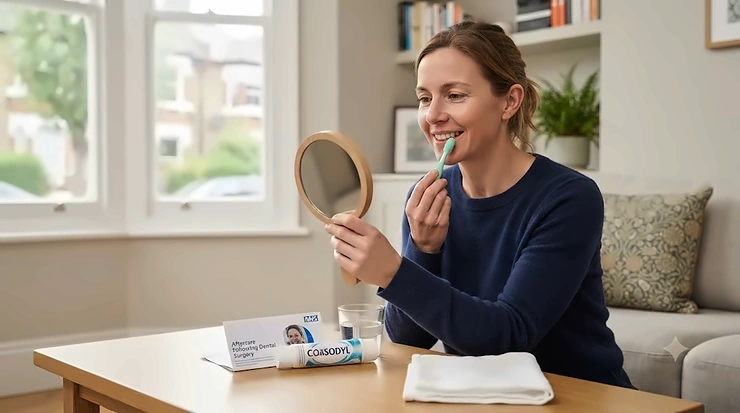
There’s a particular kind of panic that sets in about four days after a wisdom tooth comes out, somewhere between “the swelling’s gone down” and “wait, am I meant to be doing something to this gum now?” You brush around the site like it’s made of glass, you Google things you probably shouldn’t at 11pm, and you end up with seventeen browser tabs and zero clarity. That’s usually the moment someone starts hunting for a gum massage tool for post-dental-surgery care — something gentler than a normal toothbrush that won’t undo the healing your body’s been quietly getting on with.
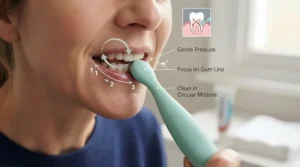
A gum massage tool for post-dental-surgery care is a soft, low-pressure device — a rubber-tip stimulator, an ultra-soft brush, or a low-setting water flosser — used once your dentist confirms it’s safe, to encourage circulation and clean gently around (never inside) a healing site. It’s not a substitute for professional advice, and every one of the picks below is meant to sit alongside your dentist’s own instructions, not replace them. According to NHS aftercare guidance from Wirral Community Health and Care, you shouldn’t rinse or disturb the extraction area for the first 24 hours, and normal brushing resumes “that evening” only with real care taken around the wound — which tells you everything about why timing matters more than the tool itself.
This guide walks through seven real, currently available options on amazon.co.uk, roughly split across budget, mid-range and premium, plus the practical stuff — how to actually use these things without setting your recovery back a week, who should reach for which type, and where the genuine value sits once you strip away the marketing copy.
Quick Comparison Table
| Product | Type | Price Range | Best For |
|---|---|---|---|
| GUM Stimulator Bundle | Rubber-tip stimulator | Around £13 | Everyday gum circulation once healing allows |
| TePe Special Care Toothbrush | Ultra-soft manual brush | Under £10 | First brush back after oral surgery |
| Curaprox CS Surgical Mega Soft | Ultra-soft manual brush | £10-£15 range | Maximum gentleness on fresh tissue |
| Waterpik Cordless Advanced | Cordless water flosser | £45-£65 range | Low-pressure irrigation around implants and grafts |
| GUM End Tuft Toothbrush | Single-tuft precision brush | Under £10 | Tight spots near wisdom-tooth sites |
| VeriFresh Gum Care Kit | Massager plus gum gel | £35-£45 range | Combined massage and soothing aftercare |
| 6-Pack Gum Stimulator (Covers) | Rubber-tip stimulator, budget | Under £20 | Trying the format cheaply, or sharing across a household |
Looking at the spread here, there’s no single “best” option — a GUM Stimulator Bundle and an ultra-soft brush like the TePe Special Care Toothbrush solve different problems even though they sound similar on paper. The pricier Waterpik Cordless Advanced earns its place through adjustable pressure rather than raw power, which matters far more than PSI figures suggest once you’re dealing with tender tissue. Budget shoppers shouldn’t feel short-changed either — the 6-Pack Gum Stimulator covers the same basic mechanism as premium rivals, just without the refined handle ergonomics.
💬 Just one click — help others make better buying decisions too!😊
Top 7 Gum Massage Tools for Post-Dental-Surgery Care: Expert Analysis
Every product below is a real, currently listed item on amazon.co.uk. Prices shift constantly, so treat every figure as a rough range rather than gospel — always check the current price on the listing itself before buying.
1. GUM Stimulator Bundle — dental-professional-designed rubber tip
The GUM Stimulator Bundle from Sunstar is about as close to an industry standard as this category gets, and it’s worth starting here precisely because it’s unglamorous. The permanent handle comes with a latex-free rubber tip plus two refill packs, so you’re not rebuying the whole unit every few months.
The rubber tip is designed to be run gently along and between the gumline to stimulate blood flow and dislodge trapped debris, rather than scrub anything. In practice that means a light, deliberate stroke rather than the back-and-forth motion you’d use with a brush — a subtlety the packaging doesn’t spell out but that reviewers consistently mention as the thing that took them a few uses to get right. Based on the spec comparison with pricier rivals, the main thing you’re paying less for here is handle ergonomics, not gentleness — the rubber tip itself performs the same core job.
Reviewers consistently report that the latex-free tip feels genuinely soft against sensitive tissue, and a recurring theme in aggregated feedback is that the handle occasionally feels a touch flimsy under firmer grips — worth noting if you tend to press harder than instructed. This makes it a solid pick for anyone who’s been told by their dentist that gentle stimulation, not brushing, is what their recovering gums need right now.
Pros:
- ✅ Refillable system keeps ongoing costs low
- ✅ Latex-free rubber tip suits sensitive, latex-allergic users
- ✅ Designed specifically for gum stimulation, not scrubbing
Cons:
- ❌ Handle can feel less sturdy than premium alternatives
- ❌ Requires a light touch that takes practice to master
At around £13 for the bundle, this sits comfortably in the mid-range and represents strong value precisely because the refills stretch the cost over many months of use.
2. TePe Special Care Toothbrush — 12,000 bristles built for post-surgery mouths
Swedish oral care brand TePe designed the TePe Special Care Toothbrush specifically for the “second stage” of recovery — after the very first days, once light brushing is permitted but a normal brush still feels like sandpaper. With 12,000 ultra-soft filaments packed into a small head, it’s engineered to clean without the mechanical pressure that a standard 500-800 bristle brush applies.
What most buyers overlook about this brush is that bristle count, not just softness rating, is what actually determines gentleness — more filaments spread the same contact pressure across a wider surface, so no single bristle digs in. The ergonomic handle also bends without heat, letting you angle it around a tender area rather than forcing your wrist into an awkward position. TePe positions it as suitable for “adults and older children,” with the explicit caveat that a dental professional should decide when you’re ready to start using it.
Aggregated review sentiment is strongly positive on the gentleness front, with users recovering from oral surgery and radiotherapy both citing it as the only brush that didn’t hurt. A smaller but consistent complaint is that the compact head, while great for reach, means slower overall brushing sessions than a full-size brush.
Pros:
- ✅ 12,000 ultra-soft bristles minimise pressure on healing tissue
- ✅ Bendable neck allows careful angling around sore spots
- ✅ Recommended by dental professionals for post-surgery use
Cons:
- ❌ Small head means longer brushing time
- ❌ Not intended for long-term daily use once healing completes
Priced under £10 in most listings, it’s an easy, low-commitment addition to a recovery kit rather than a long-term daily driver.
3. Curaprox CS Surgical Mega Soft — the world’s softest bristle head
If the TePe brush is gentle, the Curaprox CS Surgical Mega Soft is gentler still. Developed with input from Professor N. Lang at the University of Bern, it packs an extraordinary 12,000 Curen filaments at just 0.06mm diameter each — roughly double the density of Curaprox’s own standard 5460 model, which is already considered soft by most dental standards.
That filament thickness is the whole story here: thinner bristles flex rather than dig in, so the brush head can move across a suture line or graft site without the “scratchy” sensation ordinary soft brushes produce. Based on the spec comparison, this is the brush most dentists reach for immediately after implant placement, periodontal surgery or radiotherapy — not tooth extraction alone, where something like the TePe or GUM End Tuft might suffice. The small, flexible head also copes well with limited jaw opening, a genuinely common problem in the first week after wisdom-tooth removal.
Reviewers consistently describe it in near-identical language — “the only brush that didn’t hurt” comes up again and again in aggregated feedback — though a fair few also note the tiny head means it’s a poor choice once you’re back to normal brushing, since it simply takes too long to cover a full mouth.
Pros:
- ✅ Highest filament density of any brush on this list
- ✅ Developed with university dental research input
- ✅ Small flexible head suits limited jaw opening
Cons:
- ❌ Premium price for what is, mechanically, a single-use-phase brush
- ❌ Too slow for everyday full-mouth brushing long term
Expect to pay in the £10-£15 range, which puts it at the top of the manual-brush tier here — justified if your dentist has specifically flagged surgical-grade softness as necessary.
4. Waterpik Cordless Advanced Water Flosser (WP-580UK) — adjustable pressure gum massage on tap
Water flossers occupy an odd space in post-surgical care: brilliant for some situations, actively risky in others, and entirely dependent on your dentist’s green light. The Waterpik Cordless Advanced offers three distinct pressure settings, letting you start on the lowest and work up only once tissue has toughened, rather than being locked into one intensity.
The unit is USB-rechargeable, waterproof enough for shower use, and ships with four interchangeable tips — useful because a standard jet tip is a poor choice around a fresh socket, while an orthodontic or plaque-seeker tip aimed away from the site can help elsewhere in the mouth without disturbing anything. As the scientific advisor to the British Dental Association put it in a recent Which? review of water flossers, the general dental preference is still mechanical interdental cleaning where anatomy allows, with water flossers as “an additional aid” rather than a replacement — a distinction that matters even more in the weeks after surgery.
Aggregated reviews are largely positive on comfort and grip, with the raised-dot handle texture singled out repeatedly as easier to control one-handed than rival cordless units. The most common complaint is reservoir size — at roughly 210ml, you’ll be refilling mid-session more often than with a full-size countertop model.
Pros:
- ✅ Three pressure settings for a genuinely gradual approach
- ✅ Waterproof and cordless for shower or travel use
- ✅ Four tips cover multiple cleaning needs in one device
Cons:
- ❌ Small tank means more frequent refilling
- ❌ Never appropriate for direct use on a fresh extraction socket
Sitting in the £45-£65 range depending on retailer promotions, it’s the priciest item here — reasonable given it’s a multi-year device rather than something you’ll retire once your gums heal.
5. GUM End Tuft Toothbrush — precision access for wisdom-tooth sockets
The GUM End Tuft Toothbrush solves a problem the other brushes on this list can’t: reaching the awkward, far-back corner where a wisdom tooth used to be, or navigating around an implant post, without the wider head of a standard brush bumping into everything nearby. Its extra-small tapered head holds a single cluster of soft bristles, essentially functioning like a scalpel where a full brush is a butter knife.
Dental professionals commonly recommend this style of brush for exactly this scenario — implants, back teeth and post-extraction sites where the surrounding anatomy makes a normal brush head genuinely impractical rather than just uncomfortable. What the spec sheet won’t tell you, but reviewers note, is that the learning curve is real: because the head is so small, it’s easy to under-clean an area out of caution, so a slow, deliberate technique matters more here than with any other brush in this guide.
Feedback aggregated across similar GUM End Tuft listings consistently praises the reach into hard-to-access spots, while a recurring niggle is that the soft bristles wear down faster than a standard brush head given how concentrated the bristle cluster is.
Pros:
- ✅ Extra-small head reaches tight, awkward post-surgical spots
- ✅ Widely recommended by dental professionals for implants and back teeth
- ✅ Complements rather than replaces a main toothbrush
Cons:
- ❌ Bristles wear faster due to concentrated tuft design
- ❌ Not suitable as a sole toothbrush for the rest of the mouth
Typically under £10 for a multipack, it’s one of the cheapest genuinely specialised tools on this list, and arguably the one most people overlook.
6. VeriFresh Gum Care Kit — massager plus natural gum gel combo
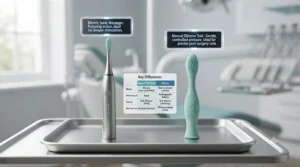
The VeriFresh Gum Care Kit pairs a gum stimulator/massager with an all-natural gum gel, aiming to combine mechanical stimulation with a soothing topical step rather than leaving you to source a separate gel elsewhere. For anyone assembling a full aftercare routine rather than a single tool, that bundling has genuine convenience value.
The massager component works on the same rubber-tip principle as the GUM Stimulator Bundle, gently encouraging circulation along the gumline once your dentist confirms it’s appropriate. The gum gel is positioned as a natural complement rather than a medicated treatment — worth flagging honestly, since it means it’s a comfort-and-routine product rather than anything with the clinical backing of a prescribed antiseptic gel your dentist might separately recommend.
Aggregated customer sentiment sits solidly in positive territory, with the two-in-one format cited most often as the appeal, though some reviewers note the overall kit costs noticeably more than buying a stimulator and a gel separately, which is worth weighing if budget is tight.
Pros:
- ✅ Combines massage tool and gum gel in one purchase
- ✅ Streamlines routine for anyone new to aftercare products
- ✅ Natural gel formulation avoids harsher ingredients
Cons:
- ❌ Costs more than buying components separately
- ❌ Gel is a comfort product, not a medicated treatment
At roughly £35-£45, it’s a premium pick best suited to people who want a ready-made routine rather than piecing one together themselves.
7. 6-Pack Gum Stimulator with Covers — budget multipack for receding gums
Rounding out the list is the 6-Pack Gum Stimulator with Covers, a straightforward, no-frills set of individually wrapped rubber-tip stimulators with an ergonomic handle. It’s aimed squarely at value — six units for less than the price of some single premium tools elsewhere on this list.
Mechanically, it does the same job as the pricier GUM Stimulator Bundle: a soft rubber tip designed to massage the gingival tissue and help clear food debris along the gumline. The individually wrapped format and included covers make it genuinely practical for travel or for a household sharing tools between several people recovering at different stages, since each stimulator stays hygienic until first use. Here’s what to weigh, though — because it’s a lightweight, mass-produced format, build quality is noticeably more basic than the branded alternatives, and the handle flexes more under pressure.
Aggregated review sentiment is generally favourable for the price point, with buyers specifically calling out the value for money, while a consistent complaint is that the rubber tips feel less durable over repeated use than GUM’s own branded version.
Pros:
- ✅ Six individually wrapped units at a low per-unit cost
- ✅ Covers keep unused stimulators hygienic
- ✅ Good for households sharing tools across users
Cons:
- ❌ Build quality trails branded alternatives
- ❌ Tips wear out faster with regular use
At under £20 for the full pack, this is the easiest entry point on the list if you’re not yet sure whether the rubber-tip format works for you.
Practical Usage Guide: Getting Started Safely
Buying the right tool is only half the job — using it at the right time, in the right way, is what actually protects your recovery. The single most important rule, echoed across every NHS aftercare leaflet reviewed for this guide, is that timing is set by your dentist or surgeon, not by a product box. Nothing in this section overrides specific instructions you’ve been given after your own procedure.
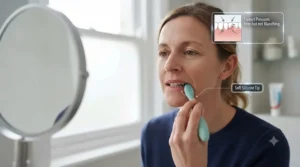
Once you’ve got the go-ahead, technique matters more than enthusiasm. Hold a stimulator or ultra-soft brush the way you’d hold a pen rather than a scrubbing brush — light contact, short strokes, no pressure. If you’re using a water flosser, start on the lowest pressure setting and point the stream away from, not directly into, any healing socket; a jet aimed straight at a fresh extraction site can dislodge the blood clot that’s doing the actual healing work. Common first-week mistakes include switching straight to a “normal” pressure setting out of impatience, brushing in the usual back-and-forth motion instead of gentle dabbing strokes, and skipping the warm salt-water rinse your dentist likely recommended for after meals once rinsing is permitted.
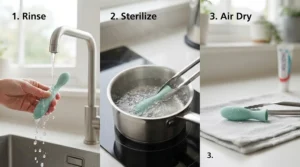
A simple maintenance habit worth adopting early: rinse any rubber-tip stimulator or brush head under warm water after each use and let it air-dry fully before storing it, since damp bristles or rubber tips left in a closed case are a genuine bacteria risk right when your mouth can least afford one.
Real-World Recovery Scenarios
Picture three very different people, all searching for the same thing. First, there’s a university student who’s just had a lower wisdom tooth out and needs something small enough to navigate around the socket in a few days’ time — the GUM End Tuft Toothbrush or TePe Special Care Toothbrush fits that brief far better than anything with a full-size head.
Then there’s someone recovering from implant placement, months into a routine where gentle daily maintenance around the implant site matters long after the initial soreness fades. Here, the Waterpik Cordless Advanced, used on its lowest setting with a tip angled well clear of the site, alongside the Curaprox CS Surgical Mega Soft for direct contact, becomes a more sustainable long-term pairing than a single-use post-surgical brush.
Finally, consider someone managing receding gums generally, not from a single surgical event but as an ongoing condition their dentist is monitoring. For this group, daily stimulation with something like the GUM Stimulator Bundle or the budget-friendly 6-Pack Gum Stimulator becomes a genuine habit rather than a short recovery phase — frequency and consistency matter more than any single tool’s premium features.
Buyer’s Decision Framework
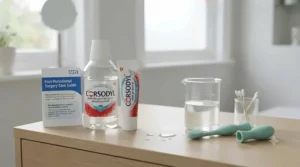
If you’re in the first 24-48 hours after surgery, the honest answer is: don’t reach for any tool yet — follow your dentist’s specific instructions on when brushing and rinsing resume. If you’ve been cleared for gentle brushing but the area still feels tender, choose an ultra-soft manual brush like the TePe Special Care Toothbrush over anything mechanical or pressurised. If your dentist has specifically mentioned implant or graft aftercare involving irrigation, the Waterpik Cordless Advanced on its lowest setting is worth discussing with them directly.
If your concern is ongoing gum health rather than a single surgical event — general recession, mild gum disease monitoring, post-orthodontic maintenance — a rubber-tip stimulator such as the GUM Stimulator Bundle fits daily use better than a surgical-grade brush designed for short-term recovery. And if budget is the deciding factor while you work out what actually suits your mouth, start with the 6-Pack Gum Stimulator before committing to a pricier branded version.
How to Choose a Gum Massage Tool for Post-Dental-Surgery Care
- Confirm timing with your dentist first. No tool on this list should be introduced before you’ve been explicitly told it’s safe — this single step matters more than any spec.
- Match bristle or tip softness to your healing stage. Ultra-soft brushes like the Curaprox suit the earliest permitted brushing; standard stimulators suit later, ongoing maintenance.
- Consider reach and access. A small, tapered head matters far more than raw cleaning power around a wisdom-tooth socket or implant post.
- Weigh pressure control if considering irrigation. Only choose a water flosser with multiple, clearly low pressure settings, and only with professional sign-off.
- Think about hygiene and storage. Individually wrapped or capped tips reduce contamination risk while tissue is still healing.
- Factor in long-term versus short-term use. Surgical-grade brushes are often a short recovery-phase purchase; stimulators and flossers tend to earn their keep over years.
- Don’t over-index on price alone. The budget six-pack and the premium branded stimulator share the same core mechanism — the difference is mostly build quality, not gentleness.
Common Mistakes When Buying and Using These Tools
The most frequent mistake isn’t picking the wrong product — it’s picking the right product and using it too soon. A gum massage tool for post-dental-surgery care is only as safe as the timing behind it, and buying ahead of your recovery timeline can create a temptation to “test it out” before you’re actually cleared to.
A second common error is assuming softer always means better for every stage. Ultra-soft brushes like the TePe or Curaprox are excellent early on, but reviewers who kept using them long-term after full healing often found they simply didn’t clean as thoroughly as a standard soft brush — gentleness and everyday effectiveness are a trade-off, not a permanent upgrade. A third mistake is buying a water flosser expecting it to replace mechanical cleaning entirely; as the British Dental Association’s guidance in the Which? review makes clear, irrigation is generally positioned as a supplement, not a substitute, for interdental brushing.
Gum Massage Tools vs Traditional Aftercare Methods
Before dedicated tools existed, aftercare largely meant salt-water rinses, careful finger contact (against most modern dental advice), and simply waiting things out with a standard soft toothbrush kept well away from the site. That traditional approach still has a place — salt-water rinsing remains a core NHS recommendation after the first 24 hours — but it does little for the specific job of gentle mechanical stimulation once healing progresses.
Dedicated tools like the GUM Stimulator Bundle or TePe Special Care Toothbrush exist precisely because a standard toothbrush, even used carefully, applies more localised pressure than most people can consistently control by feel alone. Purpose-built softness and precision-shaped heads remove some of that guesswork. That said, none of these tools replace the fundamentals — salt-water rinsing, avoiding smoking, and simply resting — which remain, per NHS guidance, the actual backbone of a smooth recovery regardless of which product sits in your bathroom cabinet.
What to Expect: Real-World Healing Performance
Specs describe filament counts and pressure settings; what you’ll actually notice is more mundane and more useful. In the first week with an ultra-soft brush like the Curaprox or TePe, expect noticeably less discomfort during brushing compared with your usual toothbrush, but also expect brushing sessions to take a little longer given the smaller head. With a rubber-tip stimulator, most people report a mild, almost pleasant tingling sensation along the gumline within the first couple of weeks of consistent use — a sign of the increased blood flow the tool is designed to encourage, not a cause for concern on its own.
With low-pressure water flossing, once cleared for it, expect a gentler sensation than pre-surgery flossing habits might suggest, and a genuinely useful ability to clear debris from spots a brush simply can’t reach around healing tissue. What none of these tools will do is speed up biological healing time itself — per NHS guidance from University College London Hospitals, a typical extraction site heals over roughly two weeks under normal circumstances, and no gum massage tool changes that underlying biological timeline.
Gentle Oral Hygiene for Sensitive Recovery Groups
Not every recovering mouth has the same needs. Older adults managing multiple extractions or dentures often benefit most from the GUM End Tuft Toothbrush‘s precision head, since broader dexterity changes can make careful, small-area cleaning easier than manoeuvring a full-size brush. Younger adults recovering from wisdom-tooth removal, typically the largest group searching for this category of product, tend to do well starting with an ultra-soft brush and graduating to a rubber-tip stimulator once their dentist confirms healing is well underway.
People managing chronic gum sensitivity alongside a recent procedure — rather than the procedure being an isolated event — often find the most value in combination products like the VeriFresh Gum Care Kit, since ongoing gentle oral hygiene becomes a permanent routine rather than a temporary recovery phase. Whatever the group, the common thread is patience: rushing back to “normal” oral hygiene habits is consistently flagged, across NHS aftercare literature, as a leading contributor to avoidable complications.
Safety, Regulations and Aftercare Instructions Compliance
This is worth stating plainly: the aftercare instructions your own dentist gives you always take precedence over anything in this article, including specific timings for when brushing, rinsing or stimulation can safely begin. General NHS guidance is consistent on the core points — avoid rinsing, spitting or touching the surgical site for the first 24 hours, avoid smoking and alcohol in that same window because both meaningfully raise the risk of dry socket, and only resume gentle brushing around the area from the next day onward, carefully avoiding the socket itself.
Dry socket — where the protective blood clot is lost too early, exposing bone and causing persistent throbbing pain — is the complication every product in this guide is designed to help you avoid triggering, which is exactly why none of them should be used directly on a fresh socket without explicit clearance. If you experience worsening pain, swelling, or a raised temperature at any point, that’s a signal to contact your dentist directly rather than adjusting your tool or technique, per the aftercare guidance reviewed for this article.
None of the products discussed here are marketed or intended as medical devices for treating complications; they’re gentle maintenance tools for use once your clinician confirms it’s appropriate.
Long-Term Cost and Maintenance
Thinking beyond the recovery period, cost-per-use tells a more useful story than sticker price. A GUM Stimulator Bundle at around £13 for a handle plus two refill packs works out to pennies per week if you keep using it for ongoing gum health rather than retiring it once healing completes. The Waterpik Cordless Advanced, despite its higher upfront cost in the £45-£65 range, amortises well over several years of use, particularly if it replaces a habit of buying disposable interdental picks regularly.
Ultra-soft surgical brushes like the TePe Special Care Toothbrush and Curaprox CS Surgical Mega Soft are, by contrast, best budgeted as short-term recovery purchases rather than long-term daily drivers — their total cost of ownership is genuinely low precisely because you’re not meant to rely on them indefinitely once a standard soft brush becomes comfortable again.
Features That Actually Matter (And Those That Don’t)
Pressure settings, bristle count and head size genuinely matter — they directly determine how much control you have over contact force on sensitive tissue. What matters far less, despite the marketing emphasis, is brand-name battery life claims on water flossers or elaborate handle colour options on stimulators; neither affects the core job of gentle, controlled gum contact. Reservoir capacity on a flosser is a real convenience factor, but it’s a minor one compared with the actual pressure-setting range, which is the feature that determines whether the device is appropriate for sensitive post-surgical use at all.
FAQ
❓ How soon after tooth extraction can I use a gum stimulator?
❓ Can I use a water flosser after wisdom teeth removal?
❓ What's the softest toothbrush for sensitive gums after surgery?
❓ Do gum massagers actually help gum recession?
❓ Is it normal for gums to bleed slightly when using a gum stimulator?
Conclusion
Recovery from any dental procedure rewards patience far more than it rewards the right gadget, but once your dentist has given the go-ahead, the difference between a standard toothbrush and something purpose-built — an ultra-soft head, a controlled rubber tip, a low-pressure irrigation setting — is genuinely noticeable to anyone who’s tried both. Whether that’s the everyday reliability of the GUM Stimulator Bundle, the surgical-grade gentleness of the Curaprox CS Surgical Mega Soft, or the adjustable control of the Waterpik Cordless Advanced, the right gum massage tool for post-dental-surgery care is really just the one that matches where you actually are in healing, not where you wish you already were.
Keep your dentist’s specific instructions as the final word on timing, lean on NHS guidance for the general principles, and treat every product here as a supporting player rather than the main event. Healing is doing the real work — these tools just make it a little more comfortable along the way.
Recommended for You
- Gum Stimulator for Periodontal Disease: 7 UK Picks (2026)
- Rubber Tip vs Electric Gum Stimulator: 7 Top UK Picks (2026)
- Waterpik Gum Stimulator Review: 7 Picks That Actually Work (2026)
Disclaimer: This article contains affiliate links. As an Amazon Associate, I earn from qualifying purchases. If you purchase products through these links, we may earn a small commission at no additional cost to you.
✨ Found this helpful? Share it with your friends! 💬🤗
