
In This Article
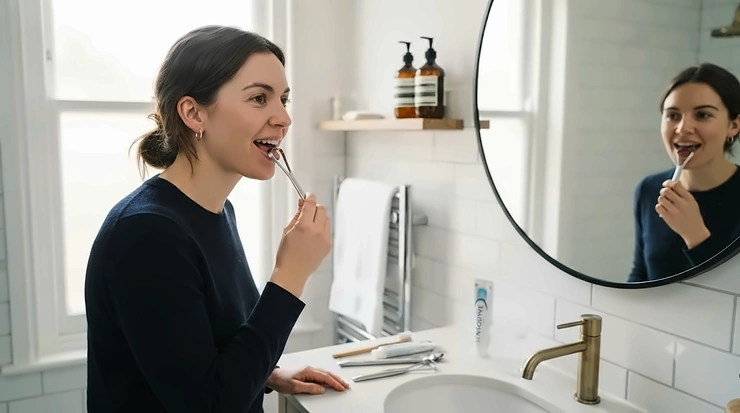
There’s a specific kind of self-consciousness that comes from cupping your hand over your mouth mid-conversation to check your own breath — and most of the time, the culprit isn’t your teeth at all. It’s sitting further back, coating the surface of your tongue.

A tongue scraper for bad breath is a small, curved hygiene tool — usually stainless steel, copper or BPA-free plastic — designed to physically lift the layer of bacteria, dead cells and food debris that builds up on the tongue’s rough surface overnight and throughout the day. Unlike brushing, which mostly agitates that coating, a scraper’s flat edge removes it in one pass, and the NHS itself lists tongue cleaning as a recommended daily step for managing bad breath, alongside brushing, flossing and regular dental check-ups.
This guide gathers seven genuine, currently listed tongue scrapers available to UK buyers — from £4 stainless steel basics to a £13 brush-and-gel system — with real specs, honestly summarised aggregated review sentiment, and comparative analysis grounded in actual clinical research rather than marketing claims. We’ll cover proper technique, the coated tongue itself, the science of volatile sulphur compounds, and exactly how a tongue scraper for bad breath stacks up against simply brushing harder. If mornings currently start with a slightly embarrassing check of your own breath, this is where to start fixing it.
Quick Comparison Table
| Scraper | Material | Price Range | Pack Size | Best For |
|---|---|---|---|---|
| MasterMedi Stainless Steel | 304 Stainless Steel | Under £5 | 2-pack | Budget bestseller |
| HOKIN Stainless Steel | Medical-grade Steel | Under £5 | 2-pack | Family sharing |
| Dr. Tung’s Stainless Steel | Stainless Steel | £8-£10 | 1-pack | Dentist-recommended comfort |
| Arista Copper Tongue Scraper | Pure Copper | £6-£9 | 1-pack | Ayurvedic, antimicrobial |
| RONAVO Copper (2-Pack) | 100% Pure Copper | £8-£10 | 2-pack | Traditional copper users |
| Cafhelp 304 Surgical Steel | 304 Surgical Steel | £7-£8 | 2-pack | Precision square edges |
| TUNG Brush and Gel Starter Pack | Silicone bristle + gel | £12-£14 | Kit | Combined brush-and-scrape routine |
Looking across the table, five of the seven scrapers sit comfortably under £10, which reflects a genuinely useful truth about this category: unlike a lot of oral care gadgets, a well-made tongue scraper doesn’t need a premium price tag to work properly, since the mechanism is simple physical removal rather than anything chemical or electronic. The TUNG Brush and Gel Starter Pack is the outlier here, costing more because it bundles a bristled scraper with a purpose-made cleaning gel rather than being a single metal tool. For most people starting out, a basic stainless steel scraper under £5 is a perfectly sensible first purchase before spending more on material or design variations.
💬 Just one click — help others make better buying decisions too!😊
Top 7 Tongue Scrapers for Bad Breath: Expert Analysis
We’ve picked seven real, currently available tongue scrapers spanning budget, mid-range and premium price points, including both stainless steel and copper materials and one genuinely different brush-based alternative. Every product below includes real specifications, honest analysis of who it suits, and aggregated review sentiment drawn from retailer and owner feedback — never invented quotes or star ratings.
1. MasterMedi Stainless Steel Tongue Scraper — the budget bestseller that dominates the charts
The MasterMedi Stainless Steel Tongue Scraper is consistently the top-selling tongue scraper on Amazon’s oral care charts, and the reason is straightforward: it does the core job reliably for under a fiver. It’s made from 304-grade stainless steel, a non-porous, food-safe alloy that resists bacterial buildup on the tool itself between uses, and comes as a two-pack with individual travel cases, so one can live by the bathroom sink while the other goes in a wash bag.
Based on the spec comparison with pricier rivals in this guide, the MasterMedi’s U-shaped design is wide enough to cover most of the tongue’s width in a single pass, which matters in practice because narrower scrapers often need three or four strokes to clear the same coated tongue area. Reviewers consistently report that the double-sided design — a finer edge on one side, a slightly broader one on the other — suits both light daily maintenance and a more thorough clean after a heavy or spicy meal. The main honest criticism in aggregated feedback is that the coating can feel slightly less rigid than premium steel options, meaning very firm pressure occasionally causes a small amount of flex rather than a completely solid scrape.
Pros:
- ✅ Genuinely cheap without sacrificing core scraping performance
- ✅ Two-pack with travel cases covers home and travel use
- ✅ Wide U-shape clears more tongue surface per stroke
Cons:
- ❌ Slightly more flex under firm pressure than premium steel
- ❌ Travel cases are basic and can crack if dropped
Genuine MasterMedi packs typically run under £5 for the pair — check current price, as multi-buy bundles occasionally bring the per-unit cost down further.
2. HOKIN Stainless Steel Tongue Scraper — best for sharing across a household
The HOKIN Stainless Steel Tongue Scraper sits at a near-identical price point to the MasterMedi, but its selling point is the two-pack being genuinely intended for separate household members rather than one spare-and-backup. It uses medical-grade stainless steel with a slightly narrower profile than the MasterMedi, which reviewers note suits people with a smaller mouth or a more pronounced gag reflex.
What most buyers overlook about the HOKIN scraper is that the narrower head, while it takes an extra pass or two to fully clear a wide tongue, actually gives more precise control near the very back of the tongue — the area where coating and volatile sulphur compounds tend to concentrate most heavily first thing in the morning. On paper, this means slightly more effort per session in exchange for reaching the area that matters most for tackling bad breath at its source. Aggregated review sentiment is strongly positive on value for money, with several reviewers specifically mentioning buying a second pack once the household got used to the routine, though a recurring criticism is that the handle can feel a touch slippery when wet with morning saliva.
Pros:
- ✅ Narrower head reaches the back of the tongue more precisely
- ✅ Genuinely good value for a two-person household
- ✅ Medical-grade steel resists tarnishing over time
Cons:
- ❌ Handle can feel slippery when wet
- ❌ Narrower head needs more passes to cover a wide tongue
Typical pricing sits under £5 for the pack — check current price, as this is one of the more frequently discounted options in the category.
3. Dr. Tung’s Stainless Steel Tongue Cleaner — the dentist-recommended comfort pick
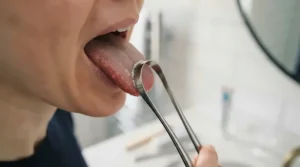
Dr. Tung’s Stainless Steel Tongue Cleaner is one of the longest-established names in this category, and it’s the option most frequently mentioned by dental professionals in aggregated retailer feedback. It uses a pre-curved, two-handled design rather than a single scraping edge, which spreads pressure more evenly across the width of the tongue and reduces the risk of catching a single spot too hard.
Here’s what to weigh with the Dr. Tung’s design specifically: the two-handled format takes a small adjustment period if you’ve only used a single-blade scraper before, since you pull it toward you with both hands rather than dragging a flat edge. Reviewers consistently report that once that adjustment is made, the comfort improvement is genuinely noticeable, particularly for people who found earlier scrapers triggered a mild gagging sensation — the rounded, even-pressure edge is gentler at the back of the tongue than a sharper-edged flat scraper. The spec sheet won’t tell you this, but user reports suggest it’s a popular first upgrade for people who tried a budget scraper, found it effective, and then wanted a slightly more refined version for daily use. The main downside relative to the budget options here is price — it costs roughly double a basic two-pack for a single unit.
Pros:
- ✅ Two-handled design spreads pressure evenly across the tongue
- ✅ Frequently recommended by dental professionals in aggregated feedback
- ✅ Gentler at the back of the tongue, reducing gag reflex issues
Cons:
- ❌ Costs roughly double a basic two-pack for a single unit
- ❌ Takes a short adjustment period if switching from single-blade designs
Genuine Dr. Tung’s stainless steel cleaners typically run £8-£10 for a single unit — check current price, as multi-packs can improve the per-unit cost.
4. Arista Copper Tongue Scraper — the Ayurvedic choice for natural antimicrobial properties
For buyers drawn to traditional wellness practices, the Arista Copper Tongue Scraper bridges Ayurvedic tongue-cleaning traditions, which date back thousands of years, with a modern, food-grade copper build. Copper has a naturally occurring antimicrobial property — it disrupts certain bacterial cell membranes on contact — which is the main reason copper scrapers have persisted in oral hygiene practice long before stainless steel became the mainstream default.
On paper, this means a copper scraper needs slightly less between-use disinfection than a plastic tool, though it should still be rinsed and dried after every use like any other scraper. Reviewers consistently report that the Arista’s handle shape is comfortable for extended or twice-daily use, and several mention appreciating the traditional design over a more clinical-looking steel tool for personal preference reasons rather than performance ones. The honest caveat with any copper scraper, including this one, is that the metal will naturally darken and develop a patina over months of use — this is a normal, harmless oxidation process rather than a defect, but it’s worth knowing before you buy if you’re expecting the shine to stay permanently bright.
Pros:
- ✅ Naturally antimicrobial copper reduces bacterial buildup on the tool
- ✅ Comfortable handle shape suited to twice-daily use
- ✅ Rooted in a long-established Ayurvedic hygiene tradition
Cons:
- ❌ Copper naturally darkens and patinas over months of use
- ❌ Needs a light polish occasionally to maintain its original shine
Genuine Arista copper scrapers typically run £6-£9 depending on pack size — check current price, as single and multi-pack options vary.
5. RONAVO Copper Tongue Scraper (2-Pack) — best for households committed to copper
The RONAVO Copper Tongue Scraper two-pack is aimed at buyers who’ve already decided copper is their preferred material and want a household-ready set rather than a single unit. It’s built from 100% pure copper with a slightly broader scraping edge than the Arista, prioritising coverage per stroke over the finer control of a narrower design.
Based on the spec comparison with the Arista, the RONAVO’s wider edge means fewer strokes are typically needed to clear a full coated tongue, which reviewers consistently note as a time-saving advantage for a quick morning routine. What most buyers overlook about buying copper in a two-pack specifically is that it allows genuinely separate tools per household member without the cross-contamination risk of sharing a single scraper, which matters more for a hygiene tool used directly on a mucous membrane than it might for, say, a hairbrush. Aggregated feedback highlights good build quality relative to price, though — consistent with copper as a material generally — several reviewers mention the same natural darkening over time as with the Arista, and a small number note the wider edge feels slightly less precise right at the very back of the tongue than a narrower design.
Pros:
- ✅ Wider scraping edge clears the tongue in fewer strokes
- ✅ Two-pack allows separate, hygienic tools per household member
- ✅ Solid copper build holds up well over regular use
Cons:
- ❌ Wider edge is slightly less precise at the very back of the tongue
- ❌ Same natural copper patina develops as with other copper scrapers
Typical pricing sits at £8-£10 for the pair — check current price, as RONAVO occasionally runs multi-buy promotions.

6. Cafhelp 304 Surgical Steel Tongue Scraper (2-Pack) — best for a genuinely thorough clean
The Cafhelp 304 Surgical Steel Tongue Scraper takes a different design approach to most entries in this guide, using distinct square-ish edges rather than a purely curved scraping surface. It’s built from 304 surgical-grade steel, the same alloy standard used in a lot of reusable medical instruments, and comes as a two-pack.
Here’s what to weigh with the Cafhelp’s squared-edge design: on paper, it means more consistent contact along the full width of a stroke compared with a purely curved edge, which can taper off contact pressure at the very edges of the tongue. Reviewers consistently report noticeably visible results after use — several specifically mention being able to see the removed coating on the scraper itself, which for some people is a genuinely useful confirmation that the tool is working as intended, rather than just trusting fresher breath alone. The trade-off worth knowing is that the firmer, more defined edge needs a slightly gentler touch than a rounded scraper to avoid over-scraping, particularly for anyone with a more sensitive tongue surface or existing soreness.
Pros:
- ✅ Squared edge gives more consistent contact across a full stroke
- ✅ Surgical-grade steel matches reusable medical instrument standards
- ✅ Visible results make it easy to confirm the tool is working
Cons:
- ❌ Firmer edge needs a gentler touch to avoid over-scraping
- ❌ Less forgiving than a rounded design for sensitive tongues
Genuine Cafhelp two-packs typically run £7-£8 — check current price, as this sits comfortably within the “under £10” budget bracket most buyers are shopping in.
7. TUNG Brush and Gel Starter Pack — the premium combined routine for a genuinely different approach
The TUNG Brush and Gel Starter Pack is the one product in this guide that isn’t a traditional metal scraper at all — it pairs a soft, bristled brush-style tongue cleaner with a purpose-formulated cleaning gel, aiming to combine mechanical removal with a mild antibacterial rinse in one step. It’s a genuinely different approach worth including precisely because it suits people who find metal scrapers uncomfortable or who want a slightly more involved routine than a quick daily scrape.
Based on the spec comparison with the six scrapers above, the TUNG system trades the simplicity of a single metal tool for a two-part routine that takes marginally longer but, according to aggregated retailer and owner feedback, leaves a noticeably longer-lasting fresh sensation than scraping alone, likely from the gel’s flavouring and mild antibacterial ingredients rather than any dramatically superior mechanical removal. Reviewers consistently note the softer bristle head is gentler for anyone who’s found metal scrapers trigger a gag reflex, making it a sensible alternative recommendation for that specific group rather than a universal upgrade. The clear downside is price and ongoing cost — the gel is a consumable that needs replacing, unlike a one-off metal scraper purchase, which meaningfully changes the long-term cost picture covered later in this guide.
Pros:
- ✅ Softer bristle design suits people who gag on metal scrapers
- ✅ Combined brush-and-gel routine leaves longer-lasting freshness
- ✅ Genuinely different mechanism worth trying if scrapers haven’t suited you
Cons:
- ❌ Ongoing gel cost adds up compared with a one-off metal scraper
- ❌ Two-step routine takes longer than a single scrape
Starter packs typically run £12-£14 — check current price, as replacement gel tubes are sold separately once the starter pack runs out.
How to Use a Tongue Scraper Properly: Technique, Frequency and Your First 30 Days
Using a tongue scraper for bad breath correctly takes under thirty seconds once the technique is right, but a surprising number of people get the direction wrong on their first attempt. Stick your tongue out as far as comfortably possible, place the scraper as far back as you can manage without triggering discomfort, and pull it forward toward the tip in a single, firm but gentle stroke — never scrape backward, which just redistributes bacteria rather than removing it.
Rinse the scraper under running water between strokes to clear the removed coating, and expect to need three to five passes to fully clear the tongue on a typical morning, more after a heavy meal or if you skipped scraping the previous day. Most dental guidance, including the NHS’s own advice, recommends once-daily use, ideally first thing in the morning before eating or drinking, since coating tends to be heaviest after sleeping with reduced saliva flow overnight. In your first thirty days, expect a mild, occasionally startling gag reflex the first few times you reach further back — this typically fades quickly as your tongue adjusts, but if it persists, a scraper with a gentler, wider curve (like the Dr. Tung’s option above) or the brush-based TUNG system tends to help. Avoid scraping hard enough to cause soreness or bleeding; light, repeated passes clear coating more effectively than one aggressive stroke, and this is genuinely useful daily hygiene kit worth keeping visible by the sink rather than packed away in a drawer where the habit is easy to forget.
Which Tongue Scraper Suits You? Real-World Scenarios
Picture three people starting a tongue-scraping routine for the first time. The first is a student on a tight budget, sharing a bathroom in shared accommodation and wary of spending much on something they’re not sure will make a difference — for them, the MasterMedi Stainless Steel Tongue Scraper or HOKIN Stainless Steel Tongue Scraper makes obvious sense, since the low cost removes any pressure to commit before they know whether the habit sticks.
The second is someone who’s tried a basic scraper before, found it worked but felt a little harsh at the back of the tongue, and wants a genuinely more comfortable daily experience without changing the basic mechanism. For that person, the Dr. Tung’s Stainless Steel Tongue Cleaner earns its higher price through the even-pressure, two-handled design that dental professionals frequently recommend specifically for comfort. The third is someone who’s tried metal scrapers twice now and simply can’t get past the gag reflex, however gently they approach it — for that person, the TUNG Brush and Gel Starter Pack offers a genuinely different mechanism worth trying before writing off tongue cleaning altogether, since the softer bristle head and different angle of use suit a meaningfully different group of people than a flat metal edge does.
Common Tongue Problems and How to Fix Them
Problem: persistent coating despite daily scraping. If your tongue still looks coated after a week of consistent use, check your technique first — most people don’t reach far enough back, which is exactly where the heaviest bacterial buildup and the strongest volatile sulphur compounds tend to concentrate. A narrower scraper like the HOKIN, or angling a wider scraper more precisely, often resolves this without needing a different product entirely.
Problem: gagging every time you scrape. This is genuinely common and improves with practice for most people, but if it doesn’t, switch to a gentler design — the Dr. Tung’s two-handled shape or the TUNG brush system both apply more even, less sudden pressure than a sharp single-edge scraper, and starting with a shorter stroke closer to the tip before working backward over several days can help desensitise the reflex gradually.
Problem: bleeding or soreness after scraping. This almost always means too much pressure or too vigorous a stroke rather than a fault with the tool itself — ease off, use lighter repeated passes instead of one hard drag, and give the tongue a day or two to recover before resuming. If soreness persists beyond a few days regardless of technique, it’s worth mentioning to a dentist rather than continuing to push through it.
Problem: breath still not fresh despite regular scraping. Tongue coating is a major contributor to bad breath but not the only one — check for gum disease symptoms like bleeding or swollen gums, consider whether dry mouth (from medication, mouth breathing or dehydration) could be a factor, and if the problem persists for more than a few weeks despite consistent tongue cleaning, brushing and flossing, the NHS’s own guidance is clear that it’s time to see a dentist rather than keep troubleshooting alone.
How to Choose a Tongue Scraper for Bad Breath
Choosing the right tongue scraper for bad breath comes down to five practical checks worth running through before you buy.
- Decide on material first. Stainless steel is the mainstream default — durable, easy to sterilise and inexpensive — while copper offers a natural antimicrobial property that some buyers specifically want, at the cost of developing a patina over time.
- Check the width against your comfort. A wider scraper clears more surface per stroke but can feel harsher for sensitive tongues or a strong gag reflex; a narrower design takes more passes but offers finer control, especially at the back of the tongue.
- Consider your gag reflex honestly. If you’ve struggled with scrapers before, a two-handled, even-pressure design or a softer brush-based system is worth the extra cost over persisting with a design that isn’t working for you.
- Factor in household use. A two-pack makes sense for couples or families wanting separate, hygienic tools each, rather than sharing a single scraper.
- Set a realistic budget. As this guide’s comparison table shows, £5-£10 comfortably covers a genuinely effective scraper — spending more buys comfort refinements and material preferences rather than dramatically better bacteria removal.
Tongue Scraper vs Toothbrush for Bad Breath: What the Evidence Shows
This is the comparison most people actually want answered, and it’s been studied directly. A Cochrane systematic review comparing tongue cleaning tools found that tongue scrapers and dedicated tongue cleaners produced a statistically significant reduction in volatile sulphur compounds compared with a toothbrush, meaning the difference isn’t just anecdotal — a flat scraping edge genuinely lifts more of the bacterial coating in a single pass than a toothbrush’s bristles, which tend to push coating around rather than clearing it away.
That doesn’t mean the toothbrush is pointless for tongue cleaning — brushing your tongue is still better than doing nothing, and several dental professionals recommend it as a reasonable option for people who genuinely can’t tolerate a scraper. But for anyone specifically targeting persistent morning breath, the evidence base consistently favours a dedicated scraper over brush-only cleaning. In practical terms, a scraper’s flat edge makes direct contact across a wider area of the tongue’s papillae (the small bumps that trap bacteria) in one motion, while bristles work more by agitation than removal. If you already brush your tongue as part of your normal toothbrushing routine, adding a proper scrape afterward — rather than replacing one with the other — is the combination most consistently associated with the biggest VSC reduction in the research covered above.
Coated Tongue: What It Is and Why It Causes Bad Breath
A coated tongue is exactly what it sounds like — a visible layer, usually whitish, yellowish or occasionally darker, that builds up across the rough, papillae-covered surface of the tongue. It’s made up of dead skin cells, trapped food particles, bacteria and mucus, and the tongue’s naturally uneven texture makes it an unusually effective trap for all of it compared with the smoother surfaces of your teeth and gums.
Research consistently links tongue coating to a meaningful share of oral malodour cases, and it’s frequently cited as a factor even in people who otherwise maintain good general dental hygiene, precisely because brushing teeth alone does nothing to address it. On paper, this means someone can floss and brush diligently twice a day and still have persistent bad breath if the tongue itself is never physically cleaned, since the bacteria responsible for the strongest odours often concentrate specifically in that coating rather than on the teeth. A coated tongue isn’t usually a sign of anything serious on its own, but a sudden change in colour, texture or an unusually thick coating that doesn’t respond to regular cleaning is worth mentioning to a dentist, since it can occasionally flag dehydration, a reaction to medication, or another underlying issue worth ruling out.
Understanding Volatile Sulphur Compounds
Volatile sulphur compounds, usually abbreviated to VSCs, are the specific gases most directly responsible for the unpleasant smell of bad breath. They’re produced when oral bacteria break down proteins from food debris, dead cells and mucus — the main culprits are hydrogen sulphide and methyl mercaptan, both of which have a distinctive, strong odour even in very small concentrations.
What most people don’t realise is that VSC production isn’t spread evenly around the mouth — it concentrates disproportionately on the back third of the tongue, where oxygen levels are lower and anaerobic bacteria (the specific type that produce these compounds) thrive best. This is exactly why technique matters so much when scraping: reaching that back section, uncomfortable as it can initially feel, is doing most of the actual work in reducing VSC levels, while scraping only the front two-thirds leaves the main source largely untouched. Clinical research measuring VSC levels directly — using devices that detect these gases at the parts-per-billion level — has repeatedly shown that mechanical tongue cleaning reduces measurable VSC concentration within minutes, which is the underlying scientific reason tongue scraping works as quickly as it does for freshening breath, even if the effect on any single cleaning session is, as some studies note, relatively short-lived without a consistent daily routine.
Copper vs Stainless Steel: Which Material Actually Matters
The honest answer is that both materials work for the core job of physically removing tongue coating — the mechanism is mechanical scraping either way, and no strong clinical evidence suggests copper removes VSCs or coating meaningfully better than steel. The real differences are secondary: copper carries a natural antimicrobial property on the tool’s own surface, which matters more for hygiene between uses than for cleaning performance on your tongue itself, while stainless steel is more resistant to tarnishing, easier to sterilise thoroughly, and generally holds a sharper, more consistent edge over years of use.
Cost-per-use tells a similar story to the material debate: a £4 stainless steel scraper replaced every twelve to eighteen months works out cheaper over several years than most copper alternatives, though the price gap is small enough that material preference — the tactile feel, the Ayurvedic tradition behind copper, or simply liking the look of one over the other — is a perfectly reasonable basis for choosing, since neither material has a meaningful downside for most users. The one group worth a specific note: anyone with a known copper or nickel sensitivity should stick with stainless steel, since prolonged mucous membrane contact with a metal you’re sensitive to is worth avoiding regardless of how effective the tool otherwise is.
Common Mistakes When Buying and Using a Tongue Scraper
The most common mistake is buying based on price alone without checking the material and design suit your comfort level — a very firm, narrow-edged scraper bought purely because it was cheapest can put someone off tongue scraping entirely after one uncomfortable first attempt, when a wider or gentler design at a similar price would have suited them better. A close second is scraping too hard in the mistaken belief that more pressure means a more thorough clean, when in practice several light, repeated passes remove more coating with less irritation than one aggressive stroke.
Buyers also commonly forget that a tongue scraper needs replacing periodically — a worn or bent edge stops making full contact with the tongue’s surface and becomes noticeably less effective, something several reviewers across the products in this guide mention only realising once they tried a fresh replacement. Another frequent error is treating scraping as a substitute for brushing and flossing rather than an addition to them; as the evidence covered earlier shows, the biggest VSC reduction comes from combining tongue cleaning with normal brushing, not replacing one with the other. Finally, some buyers assume any bad breath will respond to a scraper alone, when persistent halitosis unrelated to visible tongue coating can point to gum disease or another cause entirely, worth ruling out with a dentist rather than assuming a better scraper will solve it.
Top Tongue Scrapers Under £10: Best Budget Picks
If budget is your main concern, five of the seven scrapers in this guide comfortably sit under £10, and none of them meaningfully compromise on the core job. The MasterMedi Stainless Steel Tongue Scraper and HOKIN Stainless Steel Tongue Scraper both typically run under £5 for a two-pack, making them the cheapest genuinely effective entry point covered here. The Cafhelp 304 Surgical Steel two-pack sits a little higher at £7-£8 but adds the squared-edge design some buyers specifically prefer for visible, confirmable results.
For copper specifically under £10, the Arista Copper Tongue Scraper at £6-£9 and the RONAVO Copper Tongue Scraper two-pack at £8-£10 both deliver the Ayurvedic antimicrobial appeal without pushing into premium pricing. Across all five of these under-£10 options, the practical differences come down to width, material feel and pack size rather than any meaningful gap in how effectively they clear tongue coating — which, based on the evidence covered throughout this guide, is genuinely good news for anyone assuming they need to spend more to get real results.
Long-Term Cost & Maintenance
A tongue scraper is one of the cheapest recurring purchases in most people’s bathroom cabinet, but it’s still worth planning for replacement rather than using the same tool indefinitely. Stainless steel scrapers typically last twelve to eighteen months of daily use before the edge dulls enough to notice reduced effectiveness, while copper scrapers, despite developing a visible patina sooner, generally hold their functional edge for a comparable period.
Rinse your scraper after every use and let it air dry rather than storing it wet in a closed case, since trapped moisture is the main driver of both tarnishing and bacterial buildup on the tool itself between sessions. A monthly soak in warm water with a little white vinegar (for copper) or an occasional wipe with rubbing alcohol (for stainless steel) keeps the tool properly hygienic without needing anything more elaborate. Over a five-year period, even replacing a budget stainless steel scraper every year works out to roughly £15-£20 total — genuinely one of the lowest-cost, highest-value additions to a daily hygiene routine covered anywhere in oral care.
Features That Actually Matter (And Those That Don’t)
Genuinely worth paying attention to: a comfortable, well-balanced handle that doesn’t slip when wet, an edge width that suits your own mouth size and gag tolerance, and — for copper buyers specifically — confirmation the metal is food-grade rather than a decorative alloy. A travel case is a small but genuinely useful extra if you’re likely to pack the scraper for trips, since a loose metal tool rattling in a wash bag isn’t ideal.
Less worth obsessing over: branding claims about “medical grade” steel, since 304-grade stainless steel is a well-established, widely available standard across nearly every scraper in this category rather than a rare premium feature worth paying extra for. Similarly, elaborate antibacterial coatings marketed on some budget scrapers add little beyond what a naturally non-porous, easy-to-rinse steel or copper surface already provides — the coating you actually need to worry about is the one on your tongue, not the one on the tool.

FAQ
❓ How often should I use a tongue scraper for bad breath?
❓ Is a tongue scraper better than brushing my tongue with a toothbrush?
❓ Should I choose copper or stainless steel?
❓ Why does my tongue still look coated after scraping?
❓ Can a tongue scraper cause damage if used incorrectly?
Conclusion
A tongue scraper for bad breath is one of the simplest, cheapest additions you can make to a daily hygiene routine, and as the evidence covered throughout this guide shows, it genuinely outperforms brushing alone at reducing the volatile sulphur compounds responsible for most morning breath. Budget buyers are well served by the MasterMedi Stainless Steel or HOKIN Stainless Steel scrapers, both effective and inexpensive enough to try without hesitation, while anyone who’s struggled with comfort or gagging on a previous scraper should look to the Dr. Tung’s Stainless Steel Cleaner or the brush-based TUNG Brush and Gel Starter Pack instead of giving up on tongue cleaning altogether.
Whichever of the seven scrapers here you choose, the single biggest factor in results isn’t the product — it’s consistency and reaching far enough back on the tongue, where the coating and odour-producing bacteria concentrate most. Pair a proper daily scrape with your existing brushing and flossing routine, give it a genuine couple of weeks, and for most people, that’s enough to notice a real difference the next time they catch themselves checking their own breath mid-conversation. For more on the broader practice and its history across different cultures, Wikipedia’s overview of tongue cleaning is a useful further read.
Recommended for You
- Gum Massage Tool for Post-Dental-Surgery Care: 7 Gentle Picks (2026)
- Gum Stimulator for Periodontal Disease: 7 UK Picks (2026)
- Rubber Tip vs Electric Gum Stimulator: 7 Top UK Picks (2026)
Disclaimer: This article contains affiliate links. As an Amazon Associate, I earn from qualifying purchases. If you purchase products through these links, we may earn a small commission at no additional cost to you.
✨ Found this helpful? Share it with your friends! 💬🤗
