
In This Article
Somewhere between “my dentures felt fine last month” and “my dentures now slide about like a bar of soap in the shower,” most denture wearers hit the same wall. A gap opens up between visits to the dentist, the gums shrink a little, and suddenly a denture relining kit starts looking like the sensible stopgap rather than an impulse buy. It’s a fair instinct — these kits are cheap, they’re on Amazon in two clicks, and nobody fancies eating soup through a wobbly plate for six weeks while they wait for an NHS appointment.
This guide takes that instinct seriously and interrogates it properly. We’ve dug into the real products actually sold in the UK, cross-referenced the aggregated review sentiment where it exists, and weighed the honest pros and cons of soft liners, hard relines, and the disk-style options in between. You’ll get a proper look at seven genuine products spanning budget to premium, a breakdown of when a denture relining kit is a smart bridge and when it’s genuinely the wrong tool for the job, and practical guidance on using one safely if you decide to go ahead. According to NHS guidance, dentures can become loose as gums and the jawbone shrink or change shape over time, and they may also become worn or damaged — which is exactly the gap these kits try to fill. For the full official advice, see the NHS guide to dentures.
Nothing here is dressed up as personal experience with a product we haven’t used, and nothing here pretends a £15 tube is a substitute for a dentist who can actually examine your mouth. It’s just a clear-eyed comparison to help you make a decision you won’t regret.
What Is a Denture Relining Kit?
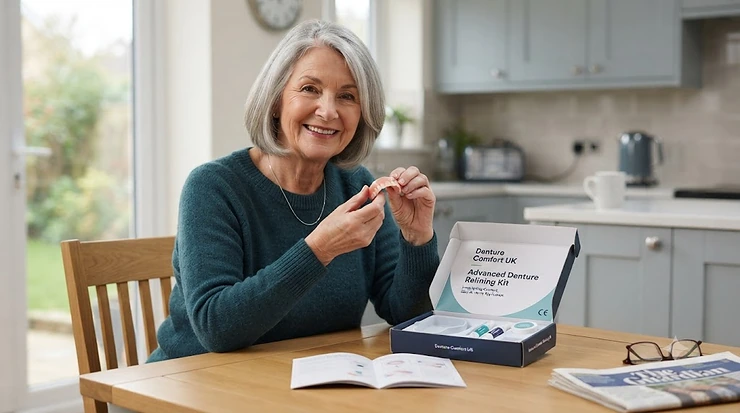
A denture relining kit is a home-use product that adds a new layer of material — soft, semi-soft, or hard — to the fitting surface of an existing denture, temporarily restoring a snugger fit after gum shrinkage has made it loose. It’s a stopgap measure, not a permanent fix, and it differs from denture adhesive because it changes the physical shape of the denture base rather than simply gluing it in place for the day.
Professionally, this same idea is called “relining” — and it’s a recognised dental procedure, not just a marketing term borrowed for a retail product. The at-home versions are a simplified, lower-precision take on what a dentist or clinical dental technician does chairside or in a lab, using pharmacy-grade resins and liners instead of professional dental-grade materials.
Quick Comparison Table
| Kit type | Typical wear time | Best for | Price range |
|---|---|---|---|
| Dentemp Reline-It, ProSoft Denture Reliner) | Days to a few weeks | Sensitive gums, quick temporary comfort | Under £15–£25 |
| Perma Soft Denture Reliner Kit) | Several weeks | Reducing daily adhesive use | £15–£25 range |
| Instant Smile The Disk Denture Reliner) | Days | Beginners wanting zero mixing | Under £15 |
| Cushion Grip Thermoplastic Denture Adhesive) | Daily reapplication | Light cushioning plus grip in one step | Under £15 |
| D-C Reline Hard Reline Kit) | Months, remouldable | Long-term stability, no gum sensitivity | £15–£25 range |
| Denture Care Clear Comfort Denture Liner) | Up to a few weeks per application | Mess-free daily comfort | £20 and above |
| Professional chairside or lab reline | 1–3 years | Genuine, lasting fit correction | Varies by practice |
Looking at the table, the pattern is fairly clear: soft and semi-soft kits buy you comfort for weeks rather than months, hard relines last considerably longer but only suit denture wearers without sore or sensitive gums, and nothing sold in a home kit competes with a professional reline for genuine longevity. The right choice really depends on whether you’re solving a comfort problem, a stability problem, or both — which is exactly what the product breakdown below untangles.
💬 Just one click — help others make better buying decisions too!😊
Top 7 Denture Relining Kits: Expert Analysis
1. Dentemp Reline-It Denture Reliner Kit — best budget soft reline for a same-day fix
Dentemp Reline-It Denture Reliner Kit is the sort of product you reach for when a dental appointment is weeks away and your denture has just started slipping mid-sentence. The kit pairs a powder and a liquid that you chill briefly, mix, and press into the denture before biting down for around six minutes — no lab, no dentist, no fuss.
That short setting window matters in practice: it’s fast enough to use before you leave the house, but the trade-off is that precision mixing counts for a lot here, and getting the ratio slightly wrong tends to show up as a lumpy or uneven fit. Based on the formulation and application process, this kit works best as an emergency bridge rather than a long-term reline, and it’s suited to wearers who are reasonably confident handling a fiddly two-part mix under time pressure.
Reviewers consistently report that the reliner sets quickly and genuinely tightens a loose plate, though some also mention a mild tingling sensation on the gums during the biting-down stage, which typically settles once the material cures. It’s one of the longer-established names in this category, backed by a company with decades in home oral-care products, which counts for something when you’re trusting a mixture in your mouth.
Pros:
- ✅ Sets in around six minutes for same-day relief
- ✅ Works on both upper and lower dentures
- ✅ Backed by a long-running, established oral-care brand
Cons:
- ❌ Some users report a mild tingling sensation while it sets
- ❌ Getting the powder-to-liquid ratio right takes a careful first attempt
Priced under £15, Dentemp Reline-It Denture Reliner Kit earns its place as the value pick for anyone who just needs their denture wearable again by dinner time.
2. ProSoft Denture Reliner — best cushioned soft liner for sensitive gums
ProSoft Denture Reliner takes a noticeably gentler approach than thermoplastic-style reliners, which matters if your gums are already tender from an ill-fitting plate. The two-box kit gives you enough material for two full relines, using a powder-and-liquid mix that cures into a cushiony, flexible layer rather than a rigid one.
What most buyers overlook about this type of reline is that the softness is a genuine functional trade-off, not just a comfort perk — a pliable liner absorbs pressure across the gum ridge more evenly than a hard resin, which is exactly why dentists reach for soft materials on patients with sore spots. On the spec sheet that means less pinpoint pressure, but it also means the liner won’t correct a badly warped denture base the way a hard reline can.
Aggregated reviewer sentiment is largely positive on comfort, with several buyers noting the liner sticks well to itself for touch-ups and holds its shape better over time than cheaper thermoplastic alternatives, though a minority mention it can pick up staining from tea, coffee or red wine if not cleaned promptly.
Pros:
- ✅ Genuinely gentler on tender or irritated gums
- ✅ Two full reline applications in one kit
- ✅ Holds shape well rather than deforming with wear
Cons:
- ❌ Mixing a half-batch accurately needs a proper scale
- ❌ Can discolour from tea, coffee or wine over time
In the £15–£25 range, ProSoft Denture Reliner is a strong mid-tier pick if comfort is your priority over raw durability.
3. Perma Soft Denture Reliner Kit — best semi-soft DIY reline for cutting down on adhesive
Perma Soft Denture Reliner Kit relines two denture plates from a single box, using a powder-and-liquid formula designed to take an impression of your gums rather than just sitting as a generic cushion. The idea is that the material moulds closer to your actual gum contours than a one-size liner can, which in turn reduces how much daily adhesive you need to keep things in place.
Based on the spec comparison with simpler disk-style reliners, this semi-soft chemistry sits in an unusual middle ground — soft enough to be comfortable, but designed to hold its custom shape rather than staying endlessly pliable. That’s a genuine point of difference, and it’s why several reviewers mention needing little to no separate denture adhesive once it’s properly fitted.
Real user feedback is more mixed than the marketing suggests, and honesty matters more than a tidy narrative here: some reviewers report an unpleasant taste for the first couple of days that fades with wear, and a smaller number describe a gritty texture that irritated their gums enough to need dental removal. That split is worth taking seriously — this is a product where a careful first mix and full curing time seem to separate the good experiences from the bad ones.
Pros:
- ✅ Takes a custom impression rather than a generic shape
- ✅ Two applications from a single kit stretch the value
- ✅ Cuts down on daily denture adhesive for many users
Cons:
- ❌ Some reviewers report an unpleasant taste for the first few days
- ❌ A minority describe a gritty texture causing gum irritation
At around £15–£25, Perma Soft Denture Reliner Kit rewards patience with the mixing process — rush it, and the reviews suggest you’ll notice.
4. Instant Smile The Disk Denture Reliner — best hot-water disk for total beginners
Instant Smile The Disk Denture Reliner strips the process down to almost nothing: soften the disk in hot water, mould it into the denture, fit it in your mouth, done. There’s no powder, no liquid, no timing a six-minute bite-down window — which makes it the obvious starting point for anyone who’s never touched a reline product before and isn’t confident mixing chemicals near their gums.
Here’s what the spec sheet doesn’t spell out clearly: because the material only softens with heat, it’s fully removable and re-mouldable if the first attempt doesn’t sit right, which is a genuine advantage over the cure-and-commit chemistry of powder-liquid kits. The flip side is durability — a disk reliner isn’t designed to survive daily hot drinks without softening again, so it’s better suited to short-term comfort than weeks of continuous wear.
Reviewers frame it consistently as an easy, low-risk entry point rather than a long-term solution, with several noting it’s genuinely reversible if the fit isn’t quite right — a rare quality in this category.
Pros:
- ✅ No mixing at all — just hot water and moulding
- ✅ Fully removable and re-mouldable if the first fit is off
- ✅ Lowest-risk option for reline first-timers
Cons:
- ❌ Softens again with hot drinks, limiting daily durability
- ❌ Shorter effective wear time than mixed reline kits
Sitting under £15, Instant Smile The Disk Denture Reliner is the sensible “try this first” pick before committing to a mixed formula.
5. Cushion Grip Thermoplastic Denture Adhesive — best non-glue reline-adhesive hybrid
Cushion Grip Thermoplastic Denture Adhesive sits in an odd but genuinely useful category of its own: it’s marketed as an adhesive, but it behaves more like a thin, reapplied soft reliner, forming a cushioned layer between the denture and the gum rather than a sticky glue bond. That distinction matters for anyone who’s tried traditional denture cream and hated the mess.
What most buyers overlook is that this thermoplastic approach means no goopy paste residue to scrub off at the end of the day, and because it’s heat-reshapable, an imperfect first application can simply be warmed and adjusted rather than scraped off and started again. On paper, that’s a meaningful usability edge over glue-based adhesives for anyone with limited dexterity.
Aggregated reviews describe it consistently as a comfortable, mess-free alternative to traditional cream, with the caveat that it’s applied thin — so it’s genuinely better suited to light day-to-day grip and cushioning than to correcting a denture that’s badly loose from gum shrinkage.
Pros:
- ✅ No sticky glue residue to clean off at the end of the day
- ✅ Reshapable with warm water if the first go isn’t right
- ✅ Doubles as light cushioning and adhesive in one product
Cons:
- ❌ Too thin to fix a significantly worn or loose denture base
- ❌ Needs reapplying more often than a true soft reline
Priced under £15, Cushion Grip Thermoplastic Denture Adhesive is best thought of as an upgrade on traditional adhesive cream rather than a full reline substitute.
6. D-C Reline Hard Reline (Boil & Fit) Denture Reliner Kit — best hard reline for long-term stability
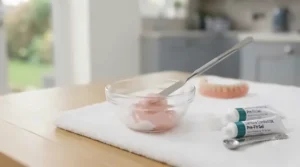
D-C Reline Hard Reline (Boil & Fit) Denture Reliner Kit takes a completely different approach from every soft option on this list. Instead of a pliable, cushioning material, it uses a zinc-free thermoplastic puck that’s boiled for 30 seconds, pressed into the denture, and bitten into shape — producing a rigid, longer-lasting reline rather than a soft one.
Here’s what the marketing undersells: this material can be reheated and remoulded repeatedly, which means if your gums continue to change shape over the following months, you’re not locked into a single ill-fitting attempt the way you are with a cure-and-set powder kit. Manufacturer guidance suggests the reline is built to last the working life of the denture itself, which for a hard reline in this category typically means many months rather than weeks. That said, a hard, rigid material is the wrong choice for anyone with tender, receding, or easily irritated gums — soft options on this list will serve those users far better.
Because it’s a newer product to the wider market, verified UK aggregated review data is thinner than for the longer-established soft kits above; what feedback does exist focuses on the boil-and-mould process being genuinely straightforward for a first attempt, provided you’re careful with the hot water stage.
Pros:
- ✅ Zinc-free formula sidesteps a known denture-adhesive safety concern
- ✅ Remouldable multiple times by reboiling if the fit needs tweaking
- ✅ Designed to outlast soft reline kits by several months
Cons:
- ❌ Not suitable for sensitive, sore or receding gums
- ❌ The boiling step requires care to avoid burns or a warped denture
In the £15–£25 range, D-C Reline Hard Reline (Boil & Fit) Denture Reliner Kit is the pick for denture wearers who want longevity over cushioning.
7. Denture Care Clear Comfort Denture Liner — best premium UK-made peel-and-press liner
Denture Care Clear Comfort Denture Liner is the outlier on this list in the best way: it’s developed in the UK in partnership with dental professionals and Sheffield Hallam University, rather than being a US import repackaged for the UK market. Each pack contains two pre-formed liners you measure, cut, and press into place — no mixing, no powders, no boiling water.
What stands out on the spec sheet is that it’s described as tasteless and odourless, addressing the single most common complaint about mixed powder-liquid kits — that unpleasant taste during the first couple of days of wear. The manufacturer states it’s comfortable for up to three weeks of continuous use, though one independent product round-up clocked closer to a week of comfortable wear per application in practice, so treat “three weeks” as an upper estimate rather than a guarantee.
Review sentiment is genuinely mixed rather than uniformly glowing, which is worth being upfront about: several buyers praise the mess-free application and all-day comfort, while at least one reported that the added thickness of the liner threw off their bite when first fitted, taking a few days to adjust to. That’s a useful reminder that even a well-engineered liner is still changing the internal shape of your denture, which your mouth needs time to adapt to.
Pros:
- ✅ Developed with UK dental professionals and university research input
- ✅ No mixing, powders or boiling water required
- ✅ Tasteless and odourless for genuinely all-day comfort
Cons:
- ❌ A cushioning liner rather than a true fit-correcting reline
- ❌ At least one buyer needed a few days to adjust to the added thickness
At £20 and above, Denture Care Clear Comfort Denture Liner commands a premium price, but the UK development pedigree and mess-free format make a reasonable case for it.
Hard vs Soft Denture Reline: Which Should You Choose?
The hard vs soft denture reline decision genuinely comes down to what’s causing the loose fit, not personal taste. A hard reline — like D-C Reline Hard Reline (Boil & Fit) Denture Reliner Kit — adds a rigid layer that restores a snug, stable fit and holds its shape under biting pressure, which makes it the better option when your gums themselves are healthy and comfortable but the denture base has simply become loose from bone changes.
A soft reline, on the other hand, is the right call when the gums themselves are the problem — sore spots, tender ridges, or thin tissue that can’t tolerate a rigid surface pressing against it. Products like ProSoft Denture Reliner and Perma Soft Denture Reliner Kit distribute pressure more evenly across the gum, trading some longevity for comfort. Dentists typically apply the same logic professionally: soft liners for patients with sensitive tissue, hard relines or full rebases when the base itself needs strengthening.
The honest answer for most home users is that soft relines are the safer default choice, precisely because you can’t diagnose bone loss versus gum sensitivity yourself the way a dentist can. If you’re not sure which category your problem falls into, a soft, reversible option limits how much damage a wrong guess can do.
Denture Reline Material Types Explained
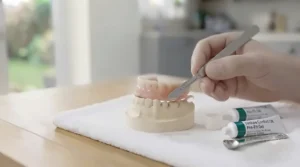
Denture reline material types generally split into three families, and knowing which one you’re buying changes what to expect from it. Acrylic-based hard relines, like the boil-and-fit puck in D-C Reline Hard Reline (Boil & Fit) Denture Reliner Kit, are rigid resins that set firm and mimic the strength of the original denture base — durable, but unforgiving on sore gums.
Soft, resilient liners — the category covering ProSoft Denture Reliner and Perma Soft Denture Reliner Kit — use flexible polymers that stay pliable after curing, cushioning the gum ridge but wearing down faster under daily chewing forces. Thermoplastic materials, used in both Instant Smile The Disk Denture Reliner and Cushion Grip Thermoplastic Denture Adhesive, soften with heat and re-harden as they cool, which is what makes them reshapable without a fresh mix each time.
There’s a fourth category worth knowing about even though it’s not sold direct to consumers: professional soft liners such as PEMA-formulated materials, which dentists use for patients needing a prolonged adjustment period after new dentures. None of the seven home kits above use this exact chemistry — it’s restricted to clinical use — which is one more reason a DIY reline is a bridge rather than a substitute for the real thing.
How to Choose a Home Denture Reline Kit
- Identify the actual problem first. A denture that’s loose but comfortable points toward a hard reline; one that’s loose and causing sore spots points toward a soft reline.
- Check how long you need it to last. A disk-style reliner like Instant Smile The Disk Denture Reliner suits a two-week emergency bridge; a hard reline suits several months.
- Be honest about your dexterity and confidence. Two-part mixed kits reward a steady hand — beginners are usually better served by a peel-and-press liner or a disk reliner.
- Factor in taste and texture sensitivity. If you gag easily or dislike strong tastes, aggregated reviews suggest peel-and-press liners cause fewer complaints than mixed powder formulas.
- Consider your gum health, not just the denture. Sore, red or bleeding gums are a sign to see a dentist before reaching for any reline kit, home or otherwise.
- Weigh cost against frequency. A £15 kit used every six weeks costs more over a year than it first appears — run the maths against a single professional reline.
- Never treat any home kit as a permanent decision. Every product on this list is designed as an interim fix, and all of them explicitly recommend follow-up dental care.
DIY Denture Reline Kit: A Practical Usage Guide
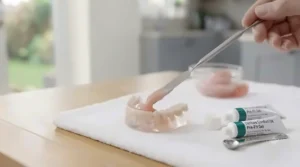
Using a DIY denture reline kit successfully starts well before you open the box. Clean the denture thoroughly and let it dry completely — any residual moisture or old adhesive is the single most common reason a home reline fails to bond properly, according to aggregated user feedback across multiple products in this category. Room temperature matters too: several Perma Soft Denture Reliner Kit reviewers specifically noted that trying to apply the material straight after it arrived cold in the post produced a poor result, and that letting both the denture and the kit warm up first solved the problem.
Read the full instructions before you start mixing anything, not while your hands are covered in reline paste. Timing is often the difference between a smooth, custom fit and a lumpy one, and most kits give you a narrow window to position the denture correctly before the material begins to set. Bite down gently but firmly in your natural bite position — biting too hard can squeeze excess material out to the edges and leave thin patches.
In the first 30 days, the most common mistake isn’t the initial application — it’s over-trimming afterwards. Excess material at the edges can usually be trimmed back gradually with clean nail scissors or an emery board, a little at a time, rather than removed all at once. And if the reline ever causes persistent soreness, remove it and book a dentist rather than persisting through the discomfort — dental services consistently note that poorly fitting dentures left unaddressed can lead to mouth sores, infections, or problems eating and speaking.
Chairside Denture Relining: What Actually Happens at the Dentist
Chairside denture relining is the professional equivalent of what these kits attempt at home, and understanding the difference clarifies exactly what you’re trading off for convenience. At a dental practice, the dentist or clinical dental technician takes a fresh functional impression of your current gum shape using dental-grade material, adds it directly to your existing denture base, and cures it under controlled conditions — often with equipment that produces a far more even, bubble-free result than a hand-mixed home kit can manage.
The material itself differs too. Professional reline resins are typically higher-grade and more biocompatible than the pharmacy versions sold in home kits, and a dentist can check for underlying issues — decay under a partial denture, an infection, or bone changes — that no reline kit, home or otherwise, is capable of diagnosing. This is precisely the gap that dental professionals flag repeatedly: DIY kits can mask a symptom without addressing what’s actually causing it.
The trade-off is obvious — cost and waiting time. A chairside reline typically takes one appointment, whereas a home kit takes minutes and costs a fraction of the price. For anyone weighing the two, the sensible middle ground is to treat a home kit as a bridge to your next appointment, not a replacement for one.
Real-World Scenarios: Who Actually Needs a Soft Denture Reline Kit
Picture three different denture wearers, because the “right” product genuinely depends on who’s asking. First, a 68-year-old whose lower denture has started rocking slightly after a recent bout of flu-related weight loss — her gums are otherwise healthy, so a hard reline like D-C Reline Hard Reline (Boil & Fit) Denture Reliner Kit makes sense as a bridge until her routine check-up in six weeks.
Second, a denture wearer recovering from a recent extraction whose gums are still tender and prone to sore spots — for her, a soft denture reline kit such as ProSoft Denture Reliner or the peel-and-press Denture Care Clear Comfort Denture Liner is the more sensible choice, prioritising cushioning over rigidity while the tissue settles.
Third, someone travelling for several weeks who’s noticed their denture loosening but doesn’t have dental access until they’re home — here, a low-commitment option like Instant Smile The Disk Denture Reliner offers reversible, no-mixing relief that won’t complicate things for the dentist who eventually does the proper job. In each case, the decision hinges on gum condition and how long the fix needs to hold — not on price or brand recognition alone.
Problem → Solution: Fixing Common Denture Fit Issues at Home
Problem: The denture rocks slightly when chewing but doesn’t cause pain. Solution: A hard reline kit restores rigidity and stability without the cushioning you don’t need — D-C Reline Hard Reline (Boil & Fit) Denture Reliner Kit fits this scenario well.
Problem: Sore spots have developed where the denture edge presses on the gum. Solution: Stop wearing the denture where possible and consult a dentist first — but a soft liner such as ProSoft Denture Reliner can reduce pressure points as a genuine short-term measure.
Problem: The denture feels loose only occasionally, such as later in the day. Solution: A light, reapplicable option like Cushion Grip Thermoplastic Denture Adhesive addresses intermittent looseness without committing to a full reline.
Problem: You need a fix while travelling with no dental access. Solution: A no-mix, fully removable option such as Instant Smile The Disk Denture Reliner avoids locking in a poor fit until you’re home.
Problem: You want to reduce daily dependence on denture adhesive. Solution: A custom-moulding semi-soft kit like Perma Soft Denture Reliner Kit is specifically designed to reduce how much separate adhesive you need.
Common Mistakes When Buying a Denture Reline Kit
The most common mistake is buying based on price alone rather than matching the material type to the actual problem — a hard reline on sore gums, or a soft reline on a denture that just needs rigidity, both produce disappointing results regardless of how good the individual product is. A close second is skipping the instructions and assuming “reline is reline,” when curing times, mixing ratios, and bite-down positions genuinely differ between products.
Buyers also frequently underestimate how much drying and cleaning matters beforehand — residual denture adhesive or moisture is a repeat culprit in poor-bond complaints across multiple products reviewed here. Another overlooked mistake is treating a home reline as permanent maintenance rather than a bridge, and simply reapplying kit after kit for months without ever booking the dental check-up that would catch an underlying issue.
Finally, some buyers assume a more expensive kit automatically means a better result — but as the comparison above shows, the premium Denture Care Clear Comfort Denture Liner and the budget Dentemp Reline-It Denture Reliner Kit solve genuinely different problems, and price doesn’t substitute for matching the product to your situation.
Safety, Regulations and When to See a Dentist Instead
It’s worth being direct here: UK dental professionals have repeatedly raised concerns about home denture repair and reline products, warning that materials not cured under professional, temperature-controlled conditions can become an irritant in the mouth, and that DIY fixes can sometimes make a proper professional repair more complicated afterwards. That’s not a reason to dismiss every home kit outright, but it is a reason to treat them as bridging measures rather than fixes, and to stop immediately if a reline causes pain, swelling, or a persistent bad taste.
Dentists and dental technicians in the UK are regulated by the General Dental Council, which sets the standards professionals must meet — a level of oversight that simply doesn’t extend to a tube bought online. If you experience bleeding gums, a denture that no longer seats properly even after a reline, or any sore that hasn’t healed within two weeks, book a dental appointment rather than trying a second home fix. The Oral Health Foundation offers further, independently produced guidance on denture care for anyone wanting a second opinion beyond product packaging.
Regulation-wise, denture reline kits sold as cosmetic comfort products in the UK aren’t classed or regulated as medical devices, and most manufacturers explicitly state this on their packaging — worth reading closely, since it means the product hasn’t been assessed to the same standard as materials your dentist uses.
Long-Term Cost & Maintenance: Reline Kits vs Professional Relines
Run the numbers honestly and the picture shifts a little from “DIY is obviously cheaper.” A single home reline kit costs somewhere in the £10–£25 range and typically lasts weeks to a few months depending on the material. Used two or three times a year as a genuine bridge between check-ups, that’s a modest £30–£60 annual cost — sensible value for the convenience.
Used as a repeated substitute for professional care, though, the maths flips. Reapplying a kit every few weeks because the underlying fit problem was never actually addressed can rack up a similar cost to a single chairside reline within a year, without ever solving the root cause. According to guidance echoed by the American College of Prosthodontists, dentures should generally be relined or replaced every five to ten years to protect the health of the underlying bone and gum — a professional reline is working toward that timeline, whereas a repeated home fix isn’t.
The sensible long-term approach treats home kits as a cost-effective bridge, not a maintenance strategy — genuinely good value when used occasionally and honestly, poor value when used as a permanent workaround.
Frequently Asked Questions
❓ How long does a home denture reline kit last?
❓ Can I do a soft denture reline myself?
❓ What's the difference between a hard and soft denture reline?
❓ Is a DIY denture reline kit safe?
❓ How much does chairside denture relining cost at a dentist?
Conclusion
There’s no single “best” denture relining kit, because the honest answer depends on what’s actually gone wrong with your fit. If it’s a straightforward loosening with otherwise healthy gums, a hard reline like D-C Reline Hard Reline (Boil & Fit) Denture Reliner Kit offers genuine longevity. If your gums are tender or you’re recovering from recent dental work, a soft option such as ProSoft Denture Reliner or the mess-free Denture Care Clear Comfort Denture Liner is the more comfortable route. And if you just need a no-commitment bridge until your next appointment, Instant Smile The Disk Denture Reliner does exactly that without locking in a poor fit.
What all seven of these products share is a ceiling: none of them replace a proper dental assessment, and all of them work best as a temporary measure rather than an ongoing habit. Used thoughtfully — clean denture, careful mixing, realistic expectations, and a dental appointment booked rather than avoided — a denture relining kit is a genuinely useful bridge. Used as a permanent substitute for professional care, it’s a false economy that can mask a problem worth catching early.
Whichever kit you choose, match the material to the actual problem, follow the instructions properly, and treat comfort as a signal rather than a guarantee that everything underneath is fine.
✨ Don’t Miss These Exclusive Deals!
🔍 Take a closer look at today’s pricing and availability on the picks above before your next denture check-up rolls around. A little research now could save you a very uncomfortable week later!
Recommended for You
- Emergency Denture Repair Kit UK: 7 Trusted Fixes for 2026
- Denture Repair Kit UK: 7 Best Options Compared 2026
- 7 Best Discreet Denture Storage Box Picks for 2026 (UK)
Disclaimer: This article contains affiliate links. As an Amazon Associate, I earn from qualifying purchases. If you purchase products through these links, we may earn a small commission at no additional cost to you.
✨ Found this helpful? Share it with your friends! 💬🤗
