
In This Article
Spit pink into the sink often enough and you stop being surprised by it — which is exactly the problem. That small, forgettable moment of blood in the basin is usually the first sign of gingivitis, and it’s also the moment most people reach for whatever tube happens to be nearest the taps rather than a toothpaste for gingivitis built to actually deal with it. That’s an understandable mistake, not a careless one; supermarket shelves rarely explain why one paste targets gum health and another just chases whiter enamel.

Here’s the more hopeful part. Gingivitis, unlike its more advanced cousin periodontitis, is genuinely reversible. Catch it early, brush properly, and choose the right formula, and you can undo the damage rather than just manage it. The right toothpaste won’t replace a trip to the dentist, but it does the daily heavy lifting between appointments — breaking down plaque before it irritates the gum line, calming inflammation, and, in the better formulas, actually helping tissue repair itself.
This guide walks through seven real, currently available toothpastes for gingivitis sold on amazon.co.uk, from budget-friendly supermarket staples to specialist German imports. We’ll look at what’s actually in each tube, what real buyers report after weeks of use, and — because a spec sheet alone tells you nothing useful — what each ingredient means for your gums in practice. Expect honest comparisons, not marketing copy recycled from the packaging.
What Is Toothpaste for Gingivitis?
Toothpaste for gingivitis is a fluoride toothpaste formulated with antibacterial or astringent ingredients — typically stannous fluoride, chlorhexidine, or aluminium lactate — designed to reduce the plaque bacteria that cause gum inflammation, bleeding, and swelling, rather than simply cleaning and whitening teeth.
Ordinary toothpaste isn’t useless against gingivitis, but it’s built for a different job. Most everyday formulas use sodium fluoride purely to protect enamel against decay, with little to no antibacterial action along the gum line, which is precisely where gingivitis starts. According to NHS guidance on gum disease, the condition develops when plaque is allowed to build up at the point where teeth meet gums, triggering an immune response that shows up as redness, swelling, and bleeding.
Quick Comparison Table
| Toothpaste | Key Active Ingredient | Best For | Price Range |
|---|---|---|---|
| Parodontax Complete Protection | Stannous fluoride | All-round gum protection | £4-£6 |
| Corsodyl Daily Gum Care | Plant extracts + mineral salts | Confirmed bleeding gums | £4-£6 |
| Sensodyne Sensitivity & Gum | Stannous fluoride | Sensitive teeth + gum problems | £4-£7 |
| Oral-B Gum & Enamel Pro-Repair | Stannous fluoride + zinc lactate | Gum and enamel repair together | £3-£5 |
| Colgate Total Advanced Gum Health | Stabilised stannous fluoride | Whole-mouth antibacterial care | £4-£7 |
| Lacalut Aktiv | Aluminium lactate + chlorhexidine | Persistent, stubborn bleeding | £7-£10 |
| Beverly Hills Formula Dentists Choice | Sodium fluoride | Budget-friendly daily care | £3-£5 |
Looking at this table, a pattern emerges quickly: most of the genuinely effective options for gum health lean on stannous fluoride rather than the plain sodium fluoride found in whitening-focused pastes. The exception, Lacalut Aktiv, takes a different chemical route entirely with astringent aluminium salts, which explains both its higher price and its cult following among people with genuinely stubborn bleeding. If budget is your main constraint, Beverly Hills Formula Dentists Choice is the only one here that regularly dips under £4, though as we’ll see, that comes with a trade-off in clinical backing.
💬 Just one click — help others make better buying decisions too!😊
Top 7 Toothpastes for Gingivitis: Expert Analysis
Coverage below spans budget, mid-range, and premium options, alongside variants worth knowing about, so you can match the right formula to your specific gum situation rather than guessing.
1. Parodontax Complete Protection — best all-round pick for daily gum health
Parodontax Complete Protection has built its reputation as one of the most recognisable gum-specific toothpastes on UK shelves, and the formula justifies the recognition rather than just riding on brand awareness. It’s built around stannous fluoride, an ingredient research from Queen Mary University of London found to be roughly three times more effective than standard sodium monofluorophosphate at removing plaque. In practical terms, that means less bacterial film sitting against your gum line by the end of the day, which is the single biggest factor in whether inflammation improves or worsens.
Based on the spec comparison against other entries here, Parodontax Complete Protection stands out for breadth rather than a single standout feature — it targets bleeding, whitening, enamel strength, and bad breath in one formula, making it a sensible default for anyone who hasn’t identified a more specific gum issue. Reviewers consistently note a distinctive, slightly salty-mineral taste that takes some adjustment, alongside genuine reports of reduced bleeding within a few weeks of twice-daily use.
Pros:
- ✅ Broad-spectrum formula tackles multiple gum issues at once
- ✅ Widely available in UK supermarkets and pharmacies
- ✅ Backed by university-conducted plaque-removal research
Cons:
- ❌ Distinctive taste that some new users dislike
- ❌ Whitening claims are modest compared to dedicated whitening pastes
In the £4-£6 range for a standard 75ml tube, this sits firmly in mid-market territory, and given the research backing behind the formula, it represents solid value for a first gingivitis toothpaste.

2. Corsodyl Daily Gum Care Toothpaste — best for confirmed bleeding gums
Corsodyl Daily Gum Care Toothpaste comes from a brand most UK households already associate with treating active gum problems, thanks to its long-standing mouthwash range, and the toothpaste extends that antibacterial positioning into daily brushing. Rather than stannous fluoride, it leans on a combination of plant extracts and mineral salts alongside 1400ppm sodium fluoride, aimed specifically at locking the seal between gum and tooth tight enough to keep bacteria out.
What most buyers overlook about this one is that it’s genuinely formulated as a treatment-phase product rather than a lifelong daily paste — Corsodyl themselves position it for periods when gums are actively bleeding, then suggest reassessing use afterwards. That matters because the unusual mineral-salt flavour is polarising enough that a handful of reviewers mention it’s not something they’d want to use indefinitely. Aggregated review sentiment on Amazon is largely positive for effectiveness, with a recurring theme in the reviews describing the toothpaste as working well despite an unusual, slightly salty aftertaste that takes adjustment.
Pros:
- ✅ Strong brand pedigree in active gum-disease treatment
- ✅ Contains 1400ppm fluoride for solid decay protection too
- ✅ Frequently bundled with matching mouthwash for combined use
Cons:
- ❌ Distinctive salty taste reported by a notable share of reviewers
- ❌ Best suited to a treatment phase rather than indefinite daily use
Priced around £4-£6 for a 75ml tube, it’s competitively positioned against Parodontax, and the choice between them often comes down to taste tolerance more than formula quality.
3. Sensodyne Sensitivity & Gum — best for sensitive teeth with gum problems
Sensodyne Sensitivity & Gum solves a specific overlap problem that a lot of single-purpose toothpastes ignore: gum inflammation and tooth sensitivity frequently show up together, since receding or irritated gums expose more of the sensitive dentine underneath. This formula uses 0.454% stannous fluoride to address both simultaneously, rather than making you choose between a sensitivity paste and a gum paste.
Clinical data cited by the manufacturer shows a 63% improvement in sensitivity relief compared with fluoride-only toothpaste after eight weeks of use, alongside measurable improvements in gum bleeding index over a 24-week period. On paper this means the stannous fluoride is doing double duty — forming a protective layer over exposed dentine while simultaneously reducing the plaque bacteria responsible for gum inflammation. Reviewers consistently note that the sensitivity relief arrives faster than the gum improvements, which tracks with how the ingredient physically works on each issue.
Pros:
- ✅ Addresses sensitivity and gum inflammation in a single formula
- ✅ Backed by published clinical trial data on both fronts
- ✅ Gentle, low-abrasion texture suited to sore gum tissue
Cons:
- ❌ Premium pricing compared with single-purpose gum toothpastes
- ❌ Full gum benefits take longer to appear than the sensitivity relief
Expect to pay in the £4-£7 range depending on pack size, which is reasonable given you’re effectively buying two specialist toothpastes’ worth of function in one tube.
4. Oral-B Gum & Enamel Pro-Repair — best for combined gum and enamel repair
Oral-B Gum & Enamel Pro-Repair takes a slightly different angle from the rest of this list by pairing stannous fluoride with zinc lactate under what Oral-B calls ActivRepair technology, marketed as helping rejuvenate gums and repair weakened enamel within two weeks. That two-front approach is worth understanding rather than dismissing as marketing flourish: gum inflammation and early enamel erosion often coexist, particularly in people who brush too hard trying to compensate for gum problems.
The spec sheet won’t tell you this, but user reports suggest the texture is notably smoother and milder-flavoured than more clinical-tasting rivals like Corsodyl or Parodontax, which matters if taste has previously been the reason you abandoned a gum toothpaste halfway through the tube. Reviewers frequently mention it as an easy substitute for a regular daily toothpaste rather than something that feels medicinal, which supports long-term compliance — arguably the single biggest factor in whether any gingivitis toothpaste actually works.
Pros:
- ✅ Dual gum-and-enamel repair claims backed by ActivRepair technology
- ✅ Milder flavour profile than most antibacterial gum pastes
- ✅ Pairs well with Oral-B electric toothbrush routines
Cons:
- ❌ Enamel repair claims are harder to verify independently than plaque data
- ❌ Less widely stocked in smaller UK pharmacies than Parodontax or Corsodyl
At around £3-£5 for a 75ml tube, this is one of the more accessible stannous fluoride options on the list, particularly if you’re already invested in the Oral-B ecosystem.
5. Colgate Total Advanced Gum Health — best for whole-mouth antibacterial protection
Colgate Total Advanced Gum Health approaches gingivitis from a wider angle than most rivals, built around the idea that only around a fifth of the bacteria in your mouth actually live on your teeth — the rest sit on your tongue, cheeks, and gums, areas most toothpastes barely touch. Its patented stabilised stannous fluoride technology is designed to stay active for a full 24 hours after brushing, rather than losing potency quickly the way some earlier stannous formulas historically did.
Here’s what to weigh with this one: Colgate holds the position of the most dentist-recommended brand in the UK for gum problems and plaque control according to a 2023 dentist survey the company commissions, which carries real weight even accounting for the obvious commercial interest in that statistic. Reviewers report a smooth, refreshing texture and note that long-standing loyal Colgate Total users appreciate the reformulated version, though a few longtime users mention missing the discontinued triclosan-based formula that preceded this one.
Pros:
- ✅ Antibacterial action extends to tongue, cheeks and gums, not just teeth
- ✅ Most dentist-recommended UK brand for gum problems per industry survey
- ✅ Smooth, familiar texture that’s easy to stick with long-term
Cons:
- ❌ Reformulation since dropping triclosan disappoints some long-term users
- ❌ Whole-mouth claims are harder for a buyer to verify at home
In the £4-£7 bracket depending on size and pack count, it sits comfortably in mid-range territory, with the brand recognition making it a low-risk first purchase for anyone new to gum-specific toothpaste.
6. Lacalut Aktiv — best for persistent, stubborn bleeding gums
Lacalut Aktiv is the outlier on this list, and deliberately so. Rather than relying on stannous fluoride, this German import built since 1925 uses aluminium lactate as its primary active ingredient — an astringent compound that physically tightens gum tissue and helps close the small gaps where bacteria establish themselves, working alongside chlorhexidine digluconate for additional antibacterial action.
Reviewers consistently describe it as noticeably more effective for genuinely stubborn bleeding than mainstream UK brands, with several long-term users on Amazon specifically mentioning it resolved bleeding and gum infections that other toothpastes hadn’t touched. What most buyers overlook is that this intensity is a double-edged sword — the astringent, tingly sensation is stronger than milder formulas, and it’s generally recommended as a shorter-course treatment rather than an indefinite daily paste, similar in spirit to Corsodyl. Aggregated review sentiment does flag one recurring theme: value for money receives mixed feedback, with buyers frequently noting it’s expensive but effective enough to justify the cost.
Pros:
- ✅ Astringent aluminium lactate formula tackles stubborn bleeding directly
- ✅ Nearly a century of German dental-care brand heritage
- ✅ Strong anecdotal results where mainstream brands underperformed
Cons:
- ❌ Noticeably more expensive than UK supermarket alternatives
- ❌ Intense tingling sensation isn’t comfortable for everyone
Expect to pay in the £7-£10 range for a 75ml tube, making it the premium choice here — one best reserved for genuinely persistent cases rather than mild, occasional gum sensitivity.
7. Beverly Hills Formula Dentists Choice Gum & Whitening — best budget-friendly option
Beverly Hills Formula Dentists Choice Gum & Whitening rounds out this list as the accessible entry point, and it’s worth being upfront about the trade-off: it doesn’t carry the same depth of published clinical data as the stannous fluoride heavyweights above it. What it does offer is a low-abrasion, non-overpowering formula that a long-running base of UK reviewers describe as gentle enough for daily use without the burning or overly intense mint flavour some rivals bring.
Based on the spec comparison, this sits closer to a well-formulated everyday fluoride toothpaste with gum-friendly positioning than a dedicated antibacterial treatment, which makes it a sensible entry point for mild, early-stage gum sensitivity rather than confirmed active gingivitis. Reviewers consistently note the gentle, non-burning sensation as the standout feature, with several long-time users specifically switching from Sensodyne and reporting fewer side effects like stomach discomfort some associate with stronger formulas.
Pros:
- ✅ Gentle formula suited to sensitive mouths and mild irritation
- ✅ Noticeably cheaper than the stannous fluoride specialist brands
- ✅ Non-overpowering mint flavour praised by repeat UK buyers
Cons:
- ❌ Less peer-reviewed clinical backing than stannous fluoride rivals
- ❌ Not marketed or formulated for advanced or confirmed gingivitis
At roughly £3-£5 for a 125ml tube, it undercuts most of this list on a per-use basis, making it a reasonable starting point before stepping up to a more targeted formula if symptoms persist.
Practical Usage Guide: Getting the Best Results from Gum Toothpaste
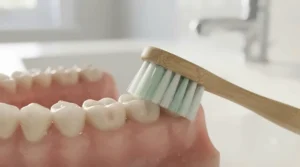
Buying the right toothpaste for gingivitis solves maybe half the problem — technique and consistency do the rest, and this is the part most product listings skip entirely. Start by brushing for a full two minutes, twice daily, angling the bristles at roughly 45 degrees toward the gum line rather than straight down onto the tooth surface, since that’s where plaque actually accumulates and where these specialist formulas need direct contact to work.
In the first fortnight of switching to a gum-specific toothpaste, expect some adjustment. Stronger formulas like Corsodyl or Lacalut Aktiv often carry an unfamiliar taste, and it’s genuinely common to see slightly more bleeding in the first few days as inflamed tissue reacts to a more active brushing routine — this typically settles rather than worsens if you stick with it. A common early mistake is brushing harder to compensate for bleeding gums, which actually irritates already-inflamed tissue further; a soft-bristled brush and gentle pressure achieve more than force ever will.
For maintenance beyond the first month, pair your chosen toothpaste with daily interdental cleaning — floss or interdental brushes reach the roughly 40% of tooth surface a toothbrush alone can’t touch, and that’s frequently where gingivitis quietly persists despite a good toothpaste routine. Most dental sources suggest reassessing progress after four to six weeks, since clinical improvements from antibacterial toothpastes typically don’t show meaningfully before that point.
Real-World Scenarios: Which Toothpaste Fits Your Gums?
Consider Sarah, a 34-year-old office worker who noticed her gums had started looking puffier than usual and bled slightly during her twice-daily brushing, with no other symptoms. For general toothpaste for swollen gums at this early stage, something broad-spectrum like Parodontax Complete Protection or Colgate Total Advanced Gum Health makes sense — she doesn’t yet need the intensity of a specialist astringent formula, just consistent antibacterial action while she also tightens up her flossing habit.
Now picture Tom, a 58-year-old who’s dealt with sensitive teeth for years and has recently noticed his gums bleeding more than usual when he eats anything cold. His situation calls for a dual-action formula rather than treating each symptom separately, which is exactly the gap Sensodyne Sensitivity & Gum was built to fill — addressing exposed dentine and gum inflammation without needing two separate tubes competing for space on the sink.
Finally, consider Priya, who’s tried two mainstream gum toothpastes over several months with only modest improvement and still sees consistent bleeding most mornings. That’s a case where a milder approach clearly isn’t cutting it, and stepping up to something with a fundamentally different mechanism — like the astringent aluminium lactate in Lacalut Aktiv — is worth trying before assuming toothpaste alone can’t help. That said, persistent bleeding after several months of proper technique with a good formula is also a clear signal to book an actual dental appointment rather than keep switching tubes indefinitely.
Problem → Solution: Common Gum Issues Solved
Problem: Gum inflammation that won’t calm down despite regular brushing. This usually points to insufficient antibacterial action reaching the gum line rather than a brushing frequency issue. Switching to a stannous fluoride formula such as Parodontax Complete Protection or Colgate Total Advanced Gum Health, combined with angling the brush toward the gum margin, typically shows improvement within three to four weeks.
Problem: Bleeding that’s isolated to one or two specific teeth. Localised bleeding often signals trapped plaque or food debris that brushing alone isn’t reaching, rather than a toothpaste failure. Adding interdental brushes or floss to the routine, alongside your existing gum toothpaste, usually resolves this faster than switching products entirely.
Problem: Toothpaste for swollen gums that also causes stinging or discomfort. Some antibacterial formulas, particularly stronger ones like Corsodyl or Lacalut Aktiv, can feel intense on already-irritated tissue. Dropping to a gentler option like Beverly Hills Formula Dentists Choice for a week while inflammation settles, then reintroducing the stronger formula, often solves this without abandoning treatment altogether.
Problem: Sensitivity that’s worsened since starting a new gum toothpaste. This is occasionally a genuine reaction to a specific formula rather than an expected side effect. If it persists beyond two weeks, Sensodyne Sensitivity & Gum specifically addresses both issues together and is worth trying as a direct swap.
Problem: No visible improvement after a month of consistent use. At this point, the issue may extend beyond what any toothpaste can resolve alone — hardened tartar below the gum line typically requires professional removal. This is the clearest signal that a dental check-up, not another product swap, is the next right step.
How to Choose a Gingivitis Toothpaste
Picking the right formula comes down to matching the ingredient profile to your specific symptoms rather than grabbing whichever tube has the boldest packaging claims. Here’s a practical framework:
- Identify your primary symptom first. Bleeding, swelling, sensitivity, and bad breath each respond slightly differently to specific ingredients, so pin down what’s actually bothering you before comparing products.
- Check for stannous fluoride on the ingredients list. It’s the most consistently researched active ingredient for reducing gum-related plaque bacteria, and it should appear explicitly rather than being implied by vague “gum health” marketing.
- Match intensity to severity. Mild, occasional bleeding rarely needs an astringent specialist formula like Lacalut Aktiv; save the stronger options for genuinely persistent symptoms.
- Factor in taste tolerance honestly. The most effective toothpaste in the world does nothing if the taste puts you off using it consistently, so don’t ignore this when choosing.
- Consider dual-purpose needs. If sensitivity and gum problems overlap for you, a combined formula avoids juggling two products and improves the odds you’ll stick with either.
- Set a realistic timeline for reassessment. Give any new formula four to six weeks before judging results, since gum tissue simply doesn’t respond overnight.
- Treat toothpaste as one part of a routine, not a standalone fix. Interdental cleaning and regular dental check-ups remain essential alongside any toothpaste, however well-formulated.
Stannous Fluoride Explained: The Ingredient That Matters Most
If there’s one ingredient worth understanding before buying any toothpaste for gingivitis, it’s stannous fluoride. Unlike the sodium fluoride found in most everyday toothpaste, which focuses almost entirely on strengthening enamel against decay, stannous fluoride carries a genuine antibacterial action alongside its fluoride benefits — it disrupts the cell membranes of the bacteria responsible for plaque formation, rather than simply hardening the tooth surface against them.
What the marketing rarely explains clearly is why this specific ingredient took decades longer to become mainstream than sodium fluoride: stannous fluoride is chemically less stable and historically degraded faster in storage, occasionally leaving a metallic taste and, in some early formulas, minor surface staining. Manufacturers like Colgate and Sensodyne have invested specifically in stabilisation technology to solve this, which is part of why their more recent stannous fluoride formulas taste noticeably better than older generations of the same ingredient. On paper this means the newest stannous fluoride toothpastes genuinely outperform their predecessors, not just their marketing copy.
✨ Compare Your Shortlist Before You Buy!
🔍 Narrow things down to two or three toothpastes from this list based on your specific symptoms, then check current pricing and availability before committing. Getting this choice right now saves weeks of trial and error — and gets you back to a healthier smile faster!
Antibacterial Toothpaste for Gums: How It Works
Antibacterial toothpaste for gums earns its name by targeting the bacterial biofilm — plaque — that triggers the immune response responsible for gingivitis in the first place, rather than simply scrubbing surface staining away. The mechanism generally falls into one of two camps: ingredients like stannous fluoride and triclosan that chemically disrupt bacterial cell function, or astringent compounds like the aluminium lactate in Lacalut Aktiv that physically tighten gum tissue to reduce the space bacteria can colonise.
Reviewers consistently note that antibacterial formulas take noticeably longer to show visible results than whitening toothpaste does for stain removal, and that’s an expectation worth setting from the outset. Where whitening effects can be visible within days, meaningful reductions in gum bleeding typically take three to six weeks of twice-daily use, because you’re waiting on inflamed tissue to actually heal rather than just removing surface residue. Patience, more than any single ingredient, tends to separate people who see real improvement from those who give up and switch products prematurely.

Gingivitis Toothpaste vs Regular Toothpaste
| Factor | Gingivitis Toothpaste | Regular Toothpaste |
|---|---|---|
| Primary active ingredient | Stannous fluoride, chlorhexidine, or aluminium lactate | Sodium fluoride |
| Antibacterial action at gum line | Strong, specifically formulated | Minimal to none |
| Best For | Bleeding, swollen, or inflamed gums | General cavity prevention |
| Typical taste profile | Often stronger, mineral or metallic notes | Standard mint, widely liked |
| Price range | £4-£10 | £1-£4 |
The core difference isn’t marketing spin — it’s genuinely about where each formula focuses its chemistry. Regular toothpaste does a perfectly good job protecting enamel but was never designed to fight the specific bacteria responsible for gum inflammation, which is why switching brands of ordinary toothpaste rarely resolves bleeding gums on its own. Gingivitis-specific formulas cost more partly because the active ingredients involved, particularly stabilised stannous fluoride, are more expensive to manufacture reliably than plain sodium fluoride, and partly because you’re paying for the clinical research behind the antibacterial claims.
Common Mistakes When Buying Gum Toothpaste
The most frequent mistake is chasing whitening claims over gum-health credentials — a toothpaste can legitimately whiten while doing almost nothing for inflamed gums, and the two goals aren’t automatically linked despite how often they’re bundled together on packaging. Reading past the front-of-tube claims to check for stannous fluoride, chlorhexidine, or another genuinely researched active ingredient avoids this trap.
A second common error is switching formulas too quickly. Because meaningful gum improvement takes several weeks, people frequently abandon an effective toothpaste after ten days of unchanged symptoms, when the formula may simply need more time to work. Related to this, buyers sometimes assume a stronger, more expensive option like Lacalut Aktiv is automatically better for mild symptoms, when a gentler formula would achieve the same result with less discomfort along the way. Finally, treating toothpaste as a complete solution rather than one part of an oral hygiene routine — skipping interdental cleaning or delaying a dental check-up because “the toothpaste is working” — remains the single most damaging assumption buyers make.
Long-Term Cost & Maintenance
Cost-per-use is where the premium options on this list start to look more reasonable than their shelf price suggests. A 75ml tube of any of the mid-range formulas here typically lasts four to six weeks with twice-daily brushing, which puts even the pricier Lacalut Aktiv at roughly £1.50-£2.50 per week — comparable to a cup of coffee, and considerably cheaper than the professional deep-cleaning appointments that untreated gingivitis can eventually require.
The real long-term value calculation isn’t really about toothpaste price at all, though. According to Oral Health Foundation guidance, gum disease left untreated is one of the leading causes of adult tooth loss in the UK, and periodontitis — the advanced, non-reversible stage gingivitis can progress into — requires ongoing professional maintenance for life once it develops. Viewed against that backdrop, an extra few pounds a month on a properly formulated gum toothpaste is a genuinely small investment against a much larger long-term cost, both financial and physical.
Safety, Regulations & UK Compliance
All the toothpastes covered here are sold as cosmetic products under UK regulations, meaning they carry CE or UKCA marking requirements around ingredient safety and labelling accuracy rather than being classed as medicines, even where manufacturers describe them as “clinically proven.” That distinction matters because it means claims must be substantiated but the products themselves haven’t gone through the same regulatory pathway as prescription treatments.
Fluoride content is worth checking regardless of brand — UK dental guidance generally recommends toothpaste containing 1,350 to 1,500ppm fluoride for adults, and every product reviewed here falls within or close to that range. If you’re pregnant, immunocompromised, or managing a condition like diabetes that’s linked to increased gum disease risk, it’s worth mentioning your toothpaste choice at your next dental check-up rather than assuming any gum-specific formula is automatically appropriate for your circumstances. The NHS inform gum disease guidance is a solid starting point if you want a plain-English refresher on when symptoms warrant a dental visit rather than a toothpaste swap.
For anyone managing genuinely persistent symptoms, the British Society of Periodontology publishes clinical guidelines that inform much of the professional treatment referenced throughout this guide, and it’s a useful resource if you want to understand what a referral to a periodontist might actually involve.
FAQ
❓ Can toothpaste alone cure gingivitis?
❓ How long does gingivitis toothpaste take to work?
❓ Is stannous fluoride better than sodium fluoride for gums?
❓ What's the best toothpaste for swollen gums that's also gentle?
❓ Do I still need mouthwash if I use antibacterial toothpaste?
Conclusion
Gingivitis is stubbornly common, genuinely reversible, and — unlike most dental issues — largely manageable with a smarter daily routine rather than expensive intervention. The seven toothpastes covered here span a real range of approaches, from the broad-spectrum reliability of Parodontax Complete Protection to the specialist intensity of Lacalut Aktiv, and the right pick really does depend on matching formula to symptom rather than defaulting to whichever brand has the most recognisable name.
What matters most isn’t which single tube you choose today, though — it’s consistency. Twice-daily brushing with proper technique, paired with interdental cleaning and a formula that actually targets gum-line bacteria, will do more for your gums over six weeks than switching products every fortnight ever could. And if symptoms persist despite doing everything right, that’s not a toothpaste failing you — it’s simply the point where a dentist needs to take over.
✨ Ready to Give Your Gums the Care They Deserve?
🔍 Take your gum health seriously with a toothpaste actually built for the job. Check current pricing and availability on the options above, and give your chosen formula the four-to-six-week window it needs to show what it can really do!
Recommended for You
- 7 Best Gingivitis Toothpaste Under £10 (2026 UK Guide)
- 7 Best Dental Filling Repair Kits for UK Emergencies (2026)
- Loose Denture Reline at Home 2026: 7 Kits That Actually Work
Disclaimer: This article contains affiliate links. As an Amazon Associate, I earn from qualifying purchases. If you purchase products through these links, we may earn a small commission at no additional cost to you.
✨ Found this helpful? Share it with your friends! 💬🤗
