
In This Article
Here’s a grim little stat to chew on while you brush: most adults in the UK will deal with some form of gum inflammation at some point, and a shocking number won’t even notice until their toothbrush comes back pink. That’s gingivitis for you — sneaky, painless at first, and easy to write off as “just a bit of blood, probably brushed too hard.” It wasn’t. The right mouthwash for gingivitis can turn that tide within a fortnight, but only if you pick a formula that actually matches what’s happening in your mouth rather than whatever bottle looked prettiest on the shelf at Boots.
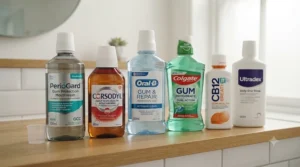
This guide cuts through the marketing fog. We’ve dug into real product specifications, genuine aggregated review sentiment, and the clinical reasoning behind chlorhexidine, cetylpyridinium chloride, and the newer bioflavonoid blends now appearing in UK pharmacies. You’ll find seven products spanning budget, mid-range, and premium, an honest look at how a daily use gingivitis mouthwash differs from a short-course treatment rinse, and practical advice on using an alcohol-free gingivitis mouthwash if your gums are already sore and sensitive. Whether you’re managing early plaque buildup or a dentist has already flagged bleeding on probing, there’s a rinse here that fits.
One thing worth saying upfront: mouthwash is a supporting player, not the star. Brushing and interdental cleaning do the heavy lifting; a good oral rinse simply reaches the bits your brush skips and keeps bacterial load down between visits. With that framing sorted, let’s get into what actually works.
What Is Mouthwash for Gingivitis?
Mouthwash for gingivitis is an antiseptic or therapeutic oral rinse formulated to reduce the bacterial plaque that causes gum inflammation, redness, and bleeding. Active ingredients typically include chlorhexidine, cetylpyridinium chloride (CPC), or essential oils, used alongside — never instead of — twice-daily brushing.
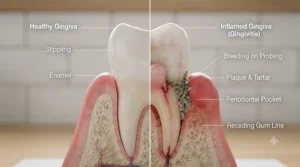
Gingivitis itself is the mildest, fully reversible stage of gum disease. According to the NHS overview of gum disease, it’s a common condition where gums become red, swollen, sore, and prone to bleeding, and it should always be checked by a dentist rather than self-managed indefinitely. Left alone, it can progress into periodontitis, which isn’t reversible and can eventually threaten tooth stability. That’s the entire reason this category of mouthwash exists: catch it early, rinse consistently, and you can usually undo the damage before it becomes structural.
Quick Comparison Table
| Product | Active Ingredient | Alcohol-Free | Price Range | Best For |
|---|---|---|---|---|
| Corsodyl Original 0.2% | Chlorhexidine 0.2% | No | £9-£13 | Active gingivitis treatment |
| Listerine Advanced Defence Gum Treatment | LAE 0.147% | No | £6-£9 | Fast 2-week gum repair |
| Corsodyl Daily Gum Care | Chlorhexidine 0.06% | Yes | £5-£7 | Long-term daily maintenance |
| Dentyl Dual Action | CPC + IPM | Yes | £4-£6 | Budget-friendly plaque control |
| Colgate FluoriGard Daily Rinse | Sodium Fluoride | Yes | Under £4 | Budget cavity + gum basics |
| Curaprox Perio Plus+ Regenerate | Chlorhexidine 0.09% + CITROX | Yes | £11-£15 | Premium post-treatment care |
| Gengigel Hyaluronic Acid Mouthrinse | Sodium Hyaluronate | No | £8-£11 | Sensitive, sore, or healing gums |
Look closely and a pattern jumps out: chlorhexidine strength drops as you move from “active treatment” products toward “daily maintenance” ones, and that’s by design, not accident. Higher concentrations work faster on inflamed tissue but come with trade-offs like staining and taste disturbance with prolonged use, which is why Corsodyl Original 0.2% is positioned for short courses while Corsodyl Daily Gum Care dilutes the same active ingredient for everyday, months-on-end use. If your gums are actively bleeding right now, start higher up this table; if you’re maintaining gains you’ve already made, the gentler end suits you better.
💬 Just one click — help others make better buying decisions too!😊
Top 7 Mouthwash for Gingivitis: Expert Analysis
Picking a mouthwash isn’t really about brand loyalty — it’s about matching an active ingredient to the stage your gums are actually at. Below, all seven get the full treatment: what’s in the bottle, what it means for you, and where reviewers consistently land on it.
1. Corsodyl Original Mouthwash 0.2% — the gold-standard treatment rinse
If a dentist has ever handed you a mouthwash prescription, there’s a strong chance it looked like this bottle. Corsodyl Original Mouthwash 0.2% is built around chlorhexidine digluconate at 0.2% concentration, alongside a small amount of ethanol, and it’s the formula most UK dental research references when discussing chemical plaque control.
Here’s what that specification means day to day: chlorhexidine binds to the soft tissue in your mouth and keeps releasing its antibacterial effect for hours after you’ve spat it out, which is why twice-daily use over a one-month course tends to outperform rinses that clear the mouth in minutes. A one-month course typically needs around 600ml, so the bottle size maps directly onto the recommended treatment window rather than being an arbitrary retail decision.
Based on the spec comparison, this is squarely a treatment product rather than a forever-mouthwash — dentists rarely recommend using it beyond a month at a stretch because of the well-documented staining risk on teeth and tongue with sustained use. Reviewers consistently report visible gum improvement within one to two weeks, with several UK buyers specifically mentioning their hygienist noticed the difference at a follow-up appointment. The most common complaint in user reviews centres on taste — chlorhexidine has a distinctive bitterness that some find hard to get past, and a handful of reviewers note temporary staining exactly as the label warns.
Pros:
- ✅ Clinically established gold-standard antiseptic for active gum disease
- ✅ Visible improvement reported within one to two weeks of use
- ✅ Dual-purpose — also supports healing after dental surgery
Cons:
- ❌ Can stain teeth and tongue with extended daily use
- ❌ Strong, medicinal taste that takes adjustment
At around £9-£13 for a 300ml bottle, Corsodyl Original Mouthwash 0.2% sits in the mid-range, but given it’s typically used for a defined one-month course rather than indefinitely, the value case is strong for anyone tackling an active flare-up rather than general maintenance.
2. Listerine Advanced Defence Gum Treatment — best for fast, visible gum repair
Where Corsodyl leans on chlorhexidine, Listerine Advanced Defence Gum Treatment takes a different chemical route entirely, built around Ethyl Lauroyl Arginate HCl (LAE) at 0.147%, an antimicrobial derived from naturally occurring amino acids rather than the older chlorhexidine class.
In practice, this means the formula works by forming what the brand describes as an invisible protective shield across the tooth surface, physically disrupting plaque germs’ ability to attach and irritate the gum line, rather than simply killing bacteria on contact. That’s a meaningfully different mechanism from a standard antiseptic rinse, and it’s why Johnson & Johnson markets this specifically as a two-week treatment product designed to let already-inflamed gums repair themselves rather than just preventing future inflammation.
What most buyers overlook about this one is the dosing: it calls for 20ml per rinse — noticeably more than the 10ml typical of chlorhexidine products — which changes how far a 500ml bottle actually stretches. Reviewers consistently note real reductions in bleeding within the marketed two-week window, and several mention it as a softer-tasting alternative to chlorhexidine rinses for people who found Corsodyl’s flavour hard to tolerate. A recurring theme in user feedback is that results plateau once gums stabilise, which tracks with its positioning as a repair product rather than a lifelong daily rinse.
Pros:
- ✅ Clinically proven results in as little as two weeks
- ✅ Milder taste profile than chlorhexidine-based treatments
- ✅ Can be used long-term to prevent gingivitis recurring
Cons:
- ❌ Larger 20ml dose means the bottle empties faster
- ❌ Contains alcohol, which some sensitive mouths find stinging
Priced around £6-£9 for 500ml, Listerine Advanced Defence Gum Treatment is a genuinely competitive mid-range pick, especially for anyone who wants a fast-acting treatment without committing to the strongest chlorhexidine concentration on the market.
3. Corsodyl Daily Gum Care — best alcohol-free daily maintenance rinse
Once active gum disease has calmed down, the goal shifts from treatment to prevention, and that’s precisely the gap Corsodyl Daily Gum Care fills. It carries the same trusted chlorhexidine backbone as its stronger sibling, but diluted to 0.06% and reformulated as an alcohol-free, fluoride-enhanced daily rinse rather than a short-course medicine.
The lower concentration matters more than the number suggests. On paper this means a gentler antibacterial effect, but the practical upshot is a mouthwash you can use every single day, indefinitely, without the staining risk that comes with the 0.2% treatment strength. Add the 250ppm fluoride content and you’re getting daily cavity protection bundled in alongside gum maintenance — a genuinely useful two-in-one for anyone who wants a single rinse to cover both bases.
Here’s what the spec sheet won’t tell you, but reviewers note: the alcohol-free formula is noticeably gentler on the mouth than older Corsodyl products, making it a sensible next step for anyone who’s just finished a month of the 0.2% treatment and needs something less aggressive to maintain results. Aggregated feedback is largely positive on the taste, describing it as far more palatable than the original formula, though a small but consistent minority of reviewers report the classic chlorhexidine sourness lingers slightly even at this lower strength.
Pros:
- ✅ Alcohol-free, so it’s gentler on sensitive or healing gums
- ✅ Combines gum care with 250ppm fluoride cavity protection
- ✅ Suitable for genuinely long-term, everyday use
Cons:
- ❌ Weaker antibacterial action than the 0.2% treatment strength
- ❌ Some reviewers still detect a mild chlorhexidine aftertaste
At roughly £5-£7 for 500ml, this is one of the strongest value picks on this list precisely because it’s designed to be used continuously rather than for a single one-month course — the cost per rinse works out sensibly low over a year of daily use.
4. Dentyl Dual Action CPC Mouthwash — best budget pick with visible plaque removal
Dentyl Dual Action CPC Mouthwash does something no other product on this list attempts: it separates into two visible layers in the bottle — an oil phase and a water phase — that you shake together before rinsing, and the plaque you dislodge is genuinely visible in the sink afterwards.
The active chemistry here is cetylpyridinium chloride (CPC) combined with isopropyl myristate (IPM), an oil that helps the formula physically lift plaque from the tooth and gum surface rather than relying purely on chemical antibacterial action. What most buyers overlook about this mechanism is that it’s doing two jobs at once: CPC neutralises bacteria while the oil phase mechanically carries loosened plaque away, which is a genuinely different approach from either the chlorhexidine or LAE products above it on this list.
A clinical study cited by the brand, run on a small cohort of volunteers, found plaque reduced by more than 60% after 28 days of twice-daily use — a figure worth treating as brand-sponsored rather than independently peer-reviewed, but broadly consistent with what CPC-based formulas typically achieve. Reviewers consistently praise the “instant results you can see” effect as genuinely motivating for sticking with a routine, and the alcohol-free formula gets repeated approval from people with sensitive mouths. The most common gripe is the shaking step itself — a few reviewers find it an annoying extra step compared to a straight pour-and-rinse product.
Pros:
- ✅ Visibly removes plaque, which reinforces consistent use
- ✅ Alcohol-free dual-phase formula suitable for sensitive mouths
- ✅ One of the most affordable CPC options on the UK market
Cons:
- ❌ Requires shaking before every use, an extra step
- ❌ Contains added fragrance components some find strong
At around £4-£6 for 500ml, Dentyl Dual Action CPC Mouthwash is the budget-conscious buyer’s pick on this list, and the visible-results gimmick genuinely does double as a compliance tool — you’re more likely to keep using something when you can watch it work.
5. Colgate FluoriGard Daily Rinse (Alcohol-Free) — best budget everyday basics rinse
Not every gingivitis journey needs a specialist antiseptic. For people whose gums are only mildly irritated, or who simply want fluoride reinforcement alongside their general oral care routine, Colgate FluoriGard Daily Rinse (Alcohol-Free) is a sensible, unfussy entry point.
The formula centres on 0.05% sodium fluoride (225ppm), delivering what Colgate frames as triple-action protection: reducing plaque acid formation, preventing mineral loss, and promoting remineralisation of early tooth decay. In practical terms, this means the product is doing more for enamel resilience than it is for aggressive antibacterial gum treatment — a meaningfully different job to the chlorhexidine-based options higher up this list, and worth being clear-eyed about before you buy.
What most buyers overlook here is that this isn’t a gingivitis treatment in the clinical sense; it’s a maintenance-level fluoride rinse that supports the gum-friendly habits already doing the real work — brushing, interdental cleaning, and regular check-ups. Reviewers consistently describe it as a pleasant, mild, everyday rinse that doesn’t sting, which makes sense given the alcohol-free formulation, and several specifically mention it as a good option for switching kids or sensitive adults onto once acute gum issues have settled. A recurring theme in feedback is that buyers expecting Corsodyl-level antibacterial punch are disappointed, simply because that was never this product’s job.
Pros:
- ✅ Genuinely budget-friendly at under £4 a bottle
- ✅ Gentle, alcohol-free formula suitable for daily long-term use
- ✅ Strong fluoride content supports enamel alongside gum health
Cons:
- ❌ Minimal direct antibacterial action against gum disease
- ❌ Not a substitute for a proper gingivitis treatment rinse
Priced under £4 for 400ml, this is easily the most wallet-friendly product here, and it earns its place as a sensible daily basics rinse for mild cases or as a long-term follow-on once a stronger treatment course has done its job.

6. Curaprox Perio Plus+ Regenerate — best premium formula for sensitive, healing gums
Swiss oral care brand Curaprox brings something genuinely distinct to this list. Curaprox Perio Plus+ Regenerate pairs chlorhexidine at a moderate 0.09% concentration with Citrox, a bioflavonoid complex extracted from bitter oranges, plus added hyaluronic acid — a combination not found in any mainstream UK supermarket mouthwash.
The 0.09% chlorhexidine strength sits deliberately between Corsodyl’s two products, aiming to strike a balance between meaningful antibacterial power and everyday tolerability. On paper this means it’s positioned for short-to-medium courses — up to one month, morning and night — much like other chlorhexidine-based treatments, but the addition of Citrox bioflavonoids is where things get interesting: independent research into Citrox suggests it enhances chlorhexidine’s antibacterial effect while also carrying its own antimicrobial properties, essentially working as a natural booster rather than filler.
Here’s what the spec sheet won’t tell you, but reviewers note: the hyaluronic acid addition specifically targets tissue regeneration, which makes this formula stand out for people recovering from dental surgery or dealing with treatment-related dry mouth, not just routine gingivitis. Reviewers consistently praise the taste as noticeably more pleasant than standard chlorhexidine rinses — a direct result of the Citrox flavour profile — and several highlight the reduced staining compared to higher-strength chlorhexidine products. The main criticism in aggregated feedback is price relative to the smaller 200ml bottle size, which some UK buyers feel undermines the value proposition versus Corsodyl.
Pros:
- ✅ Boosted antibacterial effect from the Citrox bioflavonoid complex
- ✅ Noticeably milder taste and less staining than standard chlorhexidine
- ✅ Hyaluronic acid supports tissue regeneration after treatment
Cons:
- ❌ Smaller 200ml bottle means a higher effective cost per use
- ❌ Premium price point compared with mainstream UK brands
At around £11-£15 for 200ml, Curaprox Perio Plus+ Regenerate is unambiguously the premium option here, and it earns that positioning through a genuinely more sophisticated formula rather than packaging alone — worth the spend if you’ve had dental surgery, struggle with dry mouth, or simply can’t stomach standard chlorhexidine’s taste.
7. Gengigel Hyaluronic Acid Mouthrinse — best natural option for sore, sensitive gums
The odd one out on this list, and deliberately so. Gengigel Hyaluronic Acid Mouthrinse contains no chlorhexidine, no CPC, and no strong antiseptic at all — its principal ingredient is sodium hyaluronate, the same substance your gum tissue naturally produces to stay hydrated and resilient.
Rather than killing bacteria, this formula works by forming a protective film over irritated gum tissue, which the brand and multiple UK pharmacy listings describe as a biological “bandage” that reduces discomfort, helps control minor bleeding, and supports the tissue’s own repair process. What most buyers overlook about this mechanism is that it’s fundamentally complementary rather than competing with antiseptic rinses — many dental professionals suggest layering it alongside, not instead of, a chlorhexidine or CPC product during an active flare-up, using it at a different time of day.
Based on the spec comparison, this makes Gengigel less of a standalone gingivitis treatment and more of a soothing companion product, particularly suited to people managing gum irritation from braces, dentures, aligners, or dry mouth alongside garden-variety gingivitis. Reviewers consistently describe noticeable comfort within days for sore or bleeding gums, and it’s a repeated favourite among people who’ve had implant or periodontal surgery. A fair number of aggregated reviews note it doesn’t deliver the same dramatic “before and after” feeling that a chlorhexidine treatment does, simply because soothing and healing aren’t the same sensation as an antiseptic sting.
Pros:
- ✅ Gentle enough for daily long-term use on sensitive gums
- ✅ Actively supports tissue healing, not just bacterial control
- ✅ Well suited to irritation from braces, dentures, or aligners
Cons:
- ❌ No meaningful antibacterial action against plaque
- ❌ Best used alongside, not instead of, an antiseptic rinse
At approximately £8-£11 for 150ml, Gengigel Hyaluronic Acid Mouthrinse occupies a genuinely different niche to everything else on this list — pair it with an antiseptic product for active disease, or use it alone once things have calmed down and comfort is the priority.
How to Choose Mouthwash for Gingivitis
Picking the right one from that lineup comes down to answering a handful of honest questions about your own mouth. Here’s the decision logic dental professionals tend to follow:
- Check severity first. If your dentist has diagnosed active gingivitis with visible bleeding, start with a chlorhexidine treatment like Corsodyl Original Mouthwash 0.2% or Listerine Advanced Defence Gum Treatment rather than a maintenance rinse.
- Respect the time limit on strong chlorhexidine. A one-month course is standard; using 0.2% strength indefinitely risks staining without added benefit — switch to a daily-strength formula afterwards.
- Prioritise alcohol-free if your gums sting easily. Products like Corsodyl Daily Gum Care, Dentyl Dual Action, and Colgate FluoriGard Daily Rinse all skip alcohol, which matters for anyone with dry mouth or sensitive tissue.
- Factor in what else you need. Fluoride for cavity protection, hyaluronic acid for healing, or Citrox for a natural antibacterial boost — the “best” mouthwash depends on your secondary priorities, not just gum health alone.
- Think about taste tolerance honestly. A perfect formula you stop using after three days does nothing; if chlorhexidine’s bitterness puts you off, a CPC or LAE-based product will still get meaningful results.
- Match the bottle to the routine. A 500ml bottle used twice daily at 10-20ml a rinse lasts roughly two to three weeks — buy accordingly rather than running out mid-course.
- Never treat mouthwash as a substitute for brushing. Every formula on this list is designed to supplement, not replace, mechanical plaque removal with a toothbrush and interdental brushes.
Daily Use Gingivitis Mouthwash: Building a Routine That Sticks
Buying the right bottle is the easy part; actually using it consistently for the two to four weeks it takes to see real change is where most people fall down. A daily use gingivitis mouthwash only earns its keep with proper technique and timing.
Start by rinsing at a different time to brushing where the label suggests it — some fluoride rinses like Colgate FluoriGard Daily Rinse specifically recommend this to avoid washing away toothpaste fluoride before it’s had time to work. For chlorhexidine products, measure the dose properly using the cap rather than eyeballing it; too little dilutes the antibacterial effect, too much wastes product and increases staining risk. Swish for the full recommended time — usually 30 seconds to a minute — reaching right along the gumline where plaque actually accumulates, not just around the front teeth.
Common first-30-days mistakes worth avoiding: eating or drinking immediately after rinsing (most labels ask you to wait 15-30 minutes so the active ingredient stays in contact with the tissue), skipping the evening dose because you’re tired, and stopping the moment bleeding reduces rather than completing the full recommended course. A simple optimisation trick many dental hygienists suggest is pairing your rinse with your existing bedtime brushing habit — bolt it on as the very last step, so it becomes automatic rather than an extra decision each night.
Real-World Scenarios: Who Should Use Which Mouthwash
Abstract advice only goes so far, so here are three genuinely common profiles and the reasoning behind each recommendation.
The busy professional with mild, occasional bleeding. Brushes twice daily but skips flossing most days, notices pink in the sink maybe once a week. This profile suits Corsodyl Daily Gum Care or Colgate FluoriGard Daily Rinse — gentle enough for indefinite use, low commitment, no course to remember to finish.
The recently diagnosed patient with visible gingivitis. A dentist has flagged bleeding on probing and recommended a proper course. This is the textbook case for Corsodyl Original Mouthwash 0.2% or Listerine Advanced Defence Gum Treatment, used precisely as directed for a full month, then stepped down to a daily-strength product afterwards.
The post-surgical or dry-mouth patient. Recovering from an extraction, implant, or periodontal treatment, and dealing with soreness or reduced saliva flow. Curaprox Perio Plus+ Regenerate or Gengigel Hyaluronic Acid Mouthrinse — sometimes both, used at different times of day — address healing and comfort rather than just bacterial load, which is exactly what this situation calls for.
Mouthwash for Gum Inflammation vs Traditional Antiseptics
It’s worth understanding how a modern mouthwash for gum inflammation actually differs from the traditional antiseptic mouthwashes many of us grew up with — mostly alcohol-heavy formulas designed primarily for breath freshening rather than therapeutic gum care.
| Factor | Traditional Antiseptic (e.g. classic Listerine) | Gingivitis-Targeted Mouthwash |
|---|---|---|
| Primary goal | Kill bacteria broadly, fresh breath | Reduce plaque specifically at the gumline |
| Alcohol content | Usually high | Often alcohol-free by design |
| Active ingredient focus | Essential oils, broad antibacterial | Chlorhexidine, CPC, LAE, or hyaluronic acid |
| Typical use case | Daily, indefinite | Often course-based, then maintenance strength |
| Best For | General freshness | Corsodyl, Curaprox, Listerine Advanced Defence for targeted gum treatment |
The practical takeaway from that table is straightforward: a traditional antiseptic mouthwash isn’t doing anything wrong, but it also isn’t specifically engineered to reduce the bacterial load that causes gum inflammation the way a targeted formula is. If your only goal is fresh breath, either category works; if you’re dealing with actual gingivitis symptoms, the targeted products consistently outperform generic antiseptics in the research this article draws on.
Alcohol-Free Gingivitis Mouthwash: Why It Matters
An alcohol-free gingivitis mouthwash isn’t just a nicer-tasting option — it solves a genuine clinical problem. Alcohol-based mouthwashes can dry out oral tissue, and dry mouth reduces the natural protective effect of saliva, which ironically can work against the very gum health you’re trying to improve.
This matters most for three groups: anyone with naturally reduced saliva flow (a common side effect of many medications), people whose gums are already inflamed and therefore more sensitive to stinging, and children or teenagers who shouldn’t be using alcohol-containing rinses at all. Reviewers consistently note that alcohol-free formulas like Corsodyl Daily Gum Care, Dentyl Dual Action, and Colgate FluoriGard Daily Rinse feel noticeably gentler for sustained daily use, which — practically speaking — makes people more likely to stick with the habit long enough to see real results. What most buyers overlook is that alcohol content has nothing to do with antibacterial strength; an alcohol-free chlorhexidine rinse is every bit as effective against plaque bacteria as an alcohol-containing one, so there’s rarely a therapeutic reason to choose the harsher option.
Plaque Buildup: What’s Actually Happening in Your Mouth
Understanding plaque buildup helps explain why mouthwash timing and consistency matter as much as which bottle you choose. Plaque is a colourless, sticky biofilm of bacteria that forms continuously on tooth surfaces — it isn’t something that happens occasionally, it’s happening right now, and it starts reforming within hours of a thorough clean.
Left undisturbed for roughly 24-48 hours, soft plaque begins hardening into calculus (tartar), which no mouthwash or toothbrush can remove once it’s mineralised — only a dental professional’s scaling tools can shift it at that point. This is precisely why the timing advice throughout this guide keeps circling back to twice-daily, consistent use rather than occasional rinsing: mouthwash works by disrupting the bacterial colony before it has the chance to mature and calcify, not by dissolving buildup that’s already hardened. According to a detailed overview of gingivitis on Wikipedia, plaque-induced inflammation is the most common trigger for the condition, and it remains reversible with good oral hygiene, though without treatment it can progress toward periodontitis and eventual tissue destruction. That reversibility is genuinely good news — it just depends on consistent daily disruption of the biofilm, which is the entire job description of every product on this list.

Common Mistakes When Using an Oral Rinse for Gingivitis
Even a good oral rinse underperforms when used incorrectly. These are the pitfalls dental hygienists mention most often.
Rinsing instead of brushing, not alongside it. Mouthwash removes some loose bacteria but does nothing for the mechanical disruption a toothbrush and interdental brush provide — it’s a supplement, never a substitute.
Diluting the product with water. Rinsing your mouth with water immediately before or after using a treatment mouthwash reduces the active ingredient’s contact time and concentration; most labels specifically warn against this.
Stopping the course early. Bleeding often improves within a week, which tempts people to quit — but the full recommended course (typically a month for chlorhexidine treatments) is what actually resolves the underlying inflammation rather than just masking symptoms temporarily.
Ignoring the “don’t eat or drink after” instruction. Several products, including chlorhexidine and LAE formulas, need 15-30 minutes of uninterrupted contact time to work properly; eating or rinsing with water straight after undermines the whole point of using them.
Using a strong treatment rinse indefinitely. As covered earlier, 0.2% chlorhexidine isn’t designed for permanent daily use — step down to a maintenance-strength product once symptoms resolve.
What Dental Hygienists Actually Recommend
Beyond the marketing claims on any given bottle, it’s worth grounding this in what dental hygienist advice actually looks like in practice, based on published UK clinical guidance rather than brand messaging.
The Healthy Gums Do Matter toolkit, developed by dental professionals and hosted by the British Society of Periodontology, distils specialist guidance on periodontal prevention and treatment into practical care pathways for primary care, and the consistent theme across this kind of professional guidance is that mouthwash sits third in the hierarchy — after brushing technique and interdental cleaning, never before them. Hygienists typically recommend a targeted antiseptic rinse specifically when bleeding on probing is already present, rather than as a blanket recommendation for everyone, and they generally favour a defined course over indefinite use of strong formulas. What most patients overlook is that hygienists also emphasise consistency of technique over brand choice — a correctly used budget rinse like Colgate FluoriGard Daily Rinse used every single day will typically outperform a premium product used sporadically.
Long-Term Cost & Value: Price Range & Value Analysis
Cost-per-use tells a rather different story than shelf price alone, so it’s worth running the numbers before assuming the cheapest bottle is automatically the best value.
| Product | Bottle Size | Price Range | Approx. Daily Dose | Relative Cost Per Use |
|---|---|---|---|---|
| Colgate FluoriGard Daily Rinse | 400ml | Under £4 | 10ml once daily | Lowest |
| Dentyl Dual Action | 500ml | £4-£6 | 20ml twice daily | Low |
| Corsodyl Daily Gum Care | 500ml | £5-£7 | 20ml twice daily | Low-Moderate |
| Listerine Advanced Defence | 500ml | £6-£9 | 40ml twice daily | Moderate |
| Corsodyl Original 0.2% | 300ml | £9-£13 | 20ml twice daily | Moderate-High |
| Gengigel Mouthrinse | 150ml | £8-£11 | Variable, alternate to brushing | High |
| Curaprox Perio Plus+ Regenerate | 200ml | £11-£15 | 20ml twice daily | Highest |
Looking at the table above, the real value story isn’t which bottle costs least at the till — it’s how long that bottle needs to last you. Corsodyl Original 0.2% looks pricier per millilitre, but since it’s designed for a defined one-month course rather than ongoing use, its total annual cost can actually undercut a premium daily rinse used all year round. Meanwhile, Curaprox Perio Plus+ Regenerate‘s smaller 200ml bottle and premium positioning make it the most expensive per-use option here, which is easier to justify if you’re using it short-term after dental treatment rather than as a daily habit indefinitely.
Problem → Solution: Fixing Common Gum Issues
Five recurring problems, and the specific fix each one calls for.
Problem: Gums bleed every time you brush. This is the textbook early gingivitis sign. Solution: a one-month course of Corsodyl Original Mouthwash 0.2% or Listerine Advanced Defence Gum Treatment, alongside gentler brushing technique with a soft-bristled brush.
Problem: Mouthwash stings and makes gums feel worse. Usually an alcohol sensitivity issue. Solution: switch to an alcohol-free formula like Corsodyl Daily Gum Care, Dentyl Dual Action, or Gengigel Hyaluronic Acid Mouthrinse.
Problem: Persistent bad breath alongside gum irritation. Often a bacterial load issue rather than purely cosmetic. Solution: Dentyl Dual Action specifically targets both plaque bacteria and breath odour through its dual-phase CPC formula.
Problem: Sore, sensitive gums after dental treatment. Standard antiseptics can feel harsh on healing tissue. Solution: Curaprox Perio Plus+ Regenerate or Gengigel Hyaluronic Acid Mouthrinse, both formulated with tissue-supportive ingredients.
Problem: Tight budget but genuine gum concerns. Solution: Colgate FluoriGard Daily Rinse for mild cases, or Dentyl Dual Action if plaque control is the priority — both deliver meaningful results without the premium price tag.
✨ Don’t Miss These Exclusive Deals!
🔍 Take your gum health to the next level with these carefully selected mouthwashes. Click on any highlighted product to check current pricing and availability. These formulas will help you build the healthier, more confident smile your gums deserve!
Safety, Regulations & Compliance Guide
Mouthwash is generally low-risk, but a few UK-specific safety points genuinely matter. Chlorhexidine-based products, including Corsodyl Original 0.2% and Curaprox Perio Plus+ Regenerate, aren’t recommended for continuous long-term use without dental guidance, largely due to staining and the risk of altered taste perception with prolonged exposure. Fluoride-containing rinses like Colgate FluoriGard Daily Rinse aren’t suitable for young children who might swallow them, and most labels specify a minimum age — typically six or above — for that exact reason.
If you’re pregnant, breastfeeding, or managing an existing medical condition, it’s worth a quick chat with your dentist or GP before starting any new antiseptic mouthwash, particularly at chlorhexidine treatment strength. And regardless of which product you choose, the government’s Delivering Better Oral Health toolkit is clear that prevention of both gingivitis and periodontitis relies on the same core self-care habits, so persistent bleeding, swelling, or soreness beyond a couple of weeks of consistent home care should always prompt a dental check-up rather than a stronger bottle. Mouthwash sold in the UK falls under medical device or cosmetic regulations depending on its claims, and reputable brands will display CE or UKCA marking along with clear directions for use — always worth a glance before you buy.
FAQ
❓ Can mouthwash alone cure gingivitis?
❓ How long does it take for gingivitis mouthwash to work?
❓ Is alcohol-free mouthwash better for gingivitis?
❓ Can I use gingivitis mouthwash every day long-term?
❓ What's the difference between chlorhexidine and CPC mouthwash?
Conclusion
Gum health rarely announces itself loudly until it’s already a problem, which is exactly why the right mouthwash for gingivitis earns its place in a daily routine rather than sitting unused in a bathroom cabinet. Whether that’s the clinical strength of Corsodyl Original Mouthwash 0.2% for an active flare-up, the everyday gentleness of Corsodyl Daily Gum Care or Colgate FluoriGard Daily Rinse for ongoing maintenance, or the soothing support of Gengigel Hyaluronic Acid Mouthrinse after dental treatment, the seven products covered here span every genuine need a UK buyer is likely to have.
The honest bottom line: no mouthwash replaces a toothbrush, interdental cleaning, or an actual dental check-up, and any bleeding that persists beyond a couple of weeks of consistent home care deserves a professional look rather than a stronger bottle. Used correctly, though, the right rinse genuinely accelerates healing and makes maintaining healthy gums a far less fragile, far less bloody business.
✨ Ready to Give Your Gums the Care They Deserve?
🦷 Compare current prices on the mouthwashes above and pick the one that matches where your gums are right now — treatment strength for active symptoms, daily strength for long-term upkeep. Your future dental check-up will thank you!
Recommended for You
- Corsodyl Mouthwash vs Listerine: 7 Picks Compared (2026)
- Toothpaste for Gingivitis: 7 UK Picks That Actually Work (2026)
- 7 Best Gingivitis Toothpaste Under £10 (2026 UK Guide)
Disclaimer: This article contains affiliate links. As an Amazon Associate, I earn from qualifying purchases. If you purchase products through these links, we may earn a small commission at no additional cost to you.
✨ Found this helpful? Share it with your friends! 💬🤗
