
In This Article
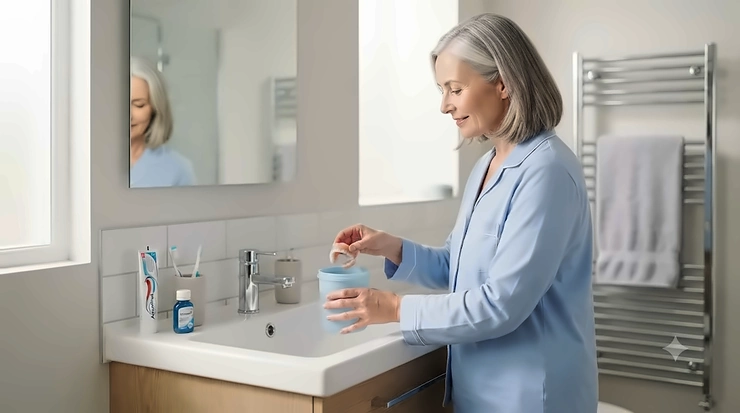
Here’s a scenario that plays out in bathrooms across Britain every single night: dentures come out, get a half-hearted rinse under the tap, and land on a folded flannel by the sink because “it’s just for a few hours.” Then morning arrives, the dentures are stiff, slightly off, and nobody quite knows why. Spoiler: that flannel is the problem, and how you store dentures overnight matters far more than most people are ever told at the fitting appointment.
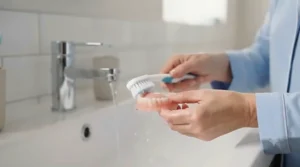
So, how do you store dentures overnight properly? In short: clean them thoroughly with a soft brush and mild soap (never toothpaste), then place them in a dedicated container filled with cool water or a denture-cleaning solution — never hot water, and never left dry on a windowsill pretending to be jewellery. That single habit is the difference between dentures that fit the same in five years and dentures that quietly warp themselves into an expensive dental appointment.
This guide walks through seven genuinely available denture storage cases on Amazon UK — the good, the excellent, and the ones that are basically a fiver well spent — alongside the actual science behind wet versus dry storage, the water temperature that keeps acrylic honest, and the warping mistakes that sneak up on even careful denture wearers. No invented five-star reviews here, just straight, sourced advice and real products worth your money.
Quick Comparison Table
| Denture Case | Style | Best For | Approx. Price Range |
|---|---|---|---|
| Wisdom Denture Box | Classic hinged box | Simple, no-fuss overnight storage | £4-£7 |
| KISEER 2 Pack Denture Bath Case | Bath with strainer basket | Households with two denture wearers | £8-£12 |
| Oravida Complete Denture Cleaning Kit | Full kit (bath, brush, tablets, paste) | Buyers wanting an all-in-one system | £15-£22 |
| encase Dental Retainer Case | Dual-purpose hygienic case | Anyone who also wears a retainer or night guard | £10-£16 |
| MURRI&MURRDI Soak Container | Leak-proof soak box | Frequent travellers | £6-£10 |
| ARGOMAX Leak Proof Denture Cup | Leak-proof cup with strainer | Budget buyers wanting spill protection | £5-£9 |
| SOL 2pk Denture Bath Box | Compact 2-pack | Home and travel use combined | £7-£11 |
Glance down that price column and you’ll notice something reassuring: this isn’t a category where spending more automatically buys you a better night’s sleep for your teeth. The Wisdom Denture Box and ARGOMAX Leak Proof Denture Cup prove a tenner or less gets the fundamentals right, while the Oravida Complete Denture Cleaning Kit earns its higher price by bundling cleaning tablets and paste so you’re not restocking separately every fortnight. If leaks onto the bedside table are your specific fear, both the MURRI&MURRDI and ARGOMAX containers are built around a genuine seal rather than a hopeful lid.
💬 Just one click — help others make better buying decisions too!😊
Top 7 Denture Storage Cases: Expert Analysis
A denture storage container looks like the most boring purchase decision imaginable, right up until you’ve bought the wrong one and spent three weeks fishing a denture out of a leaking pot on your bedside table. The seven cases below were chosen because they solve that problem in genuinely different ways — some through sheer simplicity, others through clever engineering — covering budget, mid-range, premium, and multi-use options.
1. Wisdom Denture Box — the no-nonsense classic
The Wisdom Denture Box is, essentially, the denture case your grandmother’s generation grew up trusting, and there’s a reason it’s still one of Amazon UK’s steadiest sellers in this category. It’s a simple hinged plastic box, available in assorted colours, built to hold a full or partial denture submerged in water or solution overnight without ceremony.
What most buyers overlook about a case this basic is that simplicity is precisely the point — there’s no strainer basket to lose, no brush attachment to snap off, just a lid that closes and a base that holds water. Aggregated buyer feedback consistently flags it as good value and functional, with customers specifically noting it’s a genuine upgrade from the classic “glass of water on the nightstand” approach. The honest trade-off shows up around durability: some reviewers describe the hinge as thin and prone to feeling flimsy after months of daily opening and closing, and a few mention it’s on the small side for a full upper-and-lower set stored together.
Pros:
- ✅ Simple, reliable design with nothing to break or misplace
- ✅ Genuinely better than storing dentures in an open glass
- ✅ Comes in multiple colours for easy identification
Cons:
- ❌ Hinge can feel thin and flimsy over extended daily use
- ❌ May be tight for a full upper and lower set together
At around £4-£7, this is about as low-risk a purchase as denture care gets.
2. KISEER 2 Pack Denture Bath Case — best for two denture wearers under one roof
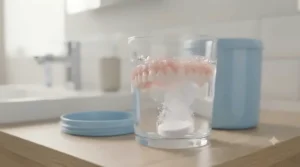
If your household has more than one person who takes their teeth out at bedtime, buying single cases one at a time gets old fast — which is exactly the gap the KISEER 2 Pack Denture Bath Case fills. Each case includes a strainer basket that lifts the denture clear of the liquid for rinsing, plus a dedicated cleaning brush, so two people get a complete, separate kit rather than sharing (which, let’s be honest, nobody wants to do with dentures).
Based on the spec comparison with single-unit cases, the strainer basket is the real upgrade here: rather than fishing a denture out of standing water with your fingers first thing in the morning, you lift the basket, let it drain for a second, and go. It’s a small mechanical detail that makes the daily routine noticeably less fiddly. Reviewers consistently mention good value for a two-pack and appreciate having colour-coded cases (light blue and blue) to avoid a “whose teeth are these” moment at 7am. The main gripe in aggregated feedback is that the basket’s plastic strainer holes can trap small food particles if dentures aren’t brushed thoroughly before soaking.
Pros:
- ✅ Two complete sets — ideal for couples or shared households
- ✅ Strainer basket makes morning retrieval far less fiddly
- ✅ Includes cleaning brushes with both cases
Cons:
- ❌ Strainer holes can trap debris if brushing is skipped
- ❌ Colour differentiation only works if both users remember which is theirs
Typically priced around £8-£12 for the pair, which works out cheaper per person than buying two single cases separately.
3. Oravida Complete Denture Cleaning Kit — best all-in-one system
For anyone who’d rather solve the entire denture care question in one purchase, the Oravida Complete Denture Cleaning Kit bundles a denture bath, a cleaning brush, thirty Steradent-style cleaning tablets, and a tube of Dentu-Creme cleaning paste. It’s less a container and more a starter system, and it’s aimed squarely at people who’ve just been fitted with dentures and don’t yet know what they need.
Here’s the honest analytical take: buying these components separately usually costs more overall, and running out of tablets at an inconvenient moment is a classic denture-care mistake this kit sidesteps entirely by front-loading a month’s supply. On paper, this means new denture wearers get a complete, dentist-adjacent routine on day one rather than piecing one together from three different aisle visits. Aggregated reviews frame it as genuinely good value for the bundle, with the cleaning paste specifically praised for tackling everyday staining without needing a separate whitening product. The trade-off is that the bath itself is fairly basic compared with dedicated cases like the encase or KISEER — you’re paying for the complete system, not a premium container.
Pros:
- ✅ Complete starter kit ideal for new denture wearers
- ✅ Includes a month’s supply of cleaning tablets
- ✅ Cleaning paste helps manage everyday staining
Cons:
- ❌ The bath itself is more basic than dedicated premium cases
- ❌ Tablets and paste need repurchasing once used up
Expect to pay around £15-£22, which is competitive once you factor in what buying each component separately would cost.
4. encase Dental Retainer Case with Dental Bath — best dual-purpose option
The encase Dental Retainer Case with Dental Bath is built for the reality that plenty of people have more than one removable dental appliance rattling around — dentures alongside a night guard, or a partial denture alongside an orthodontic retainer. Its dual-purpose design combines dry storage and wet immersion in one hygienic case, in a cool blue finish that looks noticeably less clinical than the average denture pot.
What the spec sheet won’t tell you outright is how much this matters for people managing more than one appliance: rather than owning three different single-purpose pots cluttering a bathroom shelf, one case handles multiple items across both storage styles. Reviewers and dental retailers consistently position this as a premium, considered product rather than a basic commodity case, and the design genuinely reads as something made by people who thought about actual bathroom-cabinet space. The honest downside is that this thoughtfulness comes at a price roughly double a basic hinged box, and if you only ever store one simple denture, you’re paying for versatility you might not use.
Pros:
- ✅ Handles both dry and wet storage in one case
- ✅ Useful for people with dentures plus retainers or night guards
- ✅ More considered, less clinical design than basic cases
Cons:
- ❌ Costs roughly double a basic single-purpose box
- ❌ Overkill if you only ever store one simple denture
Price sits around £10-£16, justified if you’re genuinely juggling more than one dental appliance.
5. MURRI&MURRDI Soak Container — best for frequent travellers
Anyone who’s had a denture case pop open in a suitcase understands exactly why the MURRI&MURRDI Retainer Mouth Guard Soak Container Box exists. Marketed with a genuine leak-proof seal and finished in a cheerful pink that’s hard to lose in a wash bag, it’s built specifically around the travel use case that most basic denture boxes quietly ignore.
Based on the spec comparison with standard hinged boxes, the sealing mechanism here is doing real work: a basic box relies on gravity and a snug lid, while a genuinely leak-proof design uses a compressed seal that holds even when tipped upside down in luggage — the difference between a slightly damp sock and a genuinely ruined weekend bag. Aggregated buyer sentiment consistently highlights portability and peace of mind for holidays and hospital stays as the standout benefit, echoing exactly the travel-focused design brief. A recurring theme in feedback is that while the seal itself performs well, the case’s compact size suits partial dentures more comfortably than a full upper-and-lower set.
Pros:
- ✅ Genuine leak-proof seal, ideal for suitcases and bags
- ✅ Bright, easy-to-spot colour options
- ✅ Compact enough for hand luggage or hospital bags
Cons:
- ❌ Better suited to partial dentures than full sets
- ❌ Smaller capacity than home-focused cases
Typically found in the £6-£10 range, this is the sensible pick before any trip involving a suitcase.
6. ARGOMAX Leak Proof Denture Bath Cup — best budget leak-proof pick
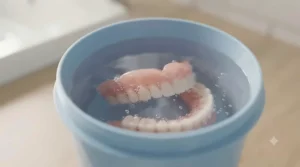
If the idea of a leak-proof seal appeals but the travel-specific branding and price of the MURRI&MURRDI doesn’t quite suit your budget, the ARGOMAX Leak Proof Denture Bath Cup delivers the same core promise — no spills onto the bedside table — without the premium positioning. It includes a built-in strainer for easy retrieval and comes in a clean white-and-cyan finish.
The honest analytical take here is straightforward: at this price point, you’re getting the single most important feature (an actual seal) without paying extra for travel-specific extras you might not need if the case is simply living on your bathroom shelf permanently. Reviewers consistently describe it as doing exactly what it promises — no leaks, functional strainer, nothing fancy — which for a denture case is precisely the review you want to read. The one consistent criticism in aggregated feedback is that the strainer basket, while functional, feels slightly less robust than the equivalent part on pricier cases.
Pros:
- ✅ Genuine leak-proof seal at a budget price
- ✅ Built-in strainer basket for easy morning retrieval
- ✅ Clean, simple design that suits a bathroom shelf
Cons:
- ❌ Strainer basket feels less sturdy than premium alternatives
- ❌ Limited colour options compared with rivals
Priced around £5-£9, this is arguably the best value-for-leak-protection pick on the entire list.
7. SOL 2pk Denture Bath Box — best compact two-pack for home and travel
Rounding out the list, the SOL 2pk Denture Bath Box takes a slightly different approach to the “two-pack” problem than KISEER above: rather than serving two different people, it’s designed so one person can keep a case permanently at home and a second, identical case permanently packed for travel — no last-minute scrambling to decide which pot goes in the suitcase.
Here’s what most buyers overlook when comparing single versus double packs in isolation: buying two separately styled cases from two different brands often means learning two different opening mechanisms, whereas an identical pair means muscle memory carries over perfectly whether you’re at home or in a hotel. The design itself is compact and durable, without a strainer basket or premium extras, which keeps the price sensible for what’s essentially a doubled-up basic case. Aggregated feedback consistently frames this as a practical, unfussy choice, with buyers specifically appreciating not having to think about which container is “the good one” versus “the travel one.”
Pros:
- ✅ Identical pair removes any home-vs-travel decision fatigue
- ✅ Compact and durable for a budget-tier price
- ✅ Good lid seal for a non-premium case
Cons:
- ❌ No strainer basket included
- ❌ Fairly basic styling compared with dedicated premium cases
Expect to pay around £7-£11 for the pair, making it a sensible dual-purpose buy for regular travellers who don’t want the premium price tag.
Practical Usage Guide: How to Store Dentures Overnight, Step by Step
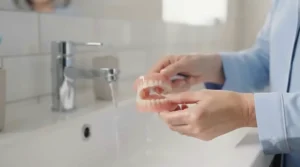
This is the part that actually answers the question you searched for, so here it is in full: rinse the denture under cold running water immediately after removal to clear loose food debris, then brush every surface gently with a soft-bristled brush and mild soap or a non-abrasive denture cleaner — never regular toothpaste, which is abrasive enough to scratch the acrylic surface over time. Fill your chosen case with cool or room-temperature water, or a dissolved denture-cleaning tablet solution if you’re using one, and place the denture in fully submerged. Close the lid, and — this bit matters — actually change that water the next day rather than topping it up, since dentures stored overnight should have their soaking water changed daily to stop it going stale. In the morning, rinse thoroughly before the denture goes back in your mouth, particularly if it soaked in a cleaning solution rather than plain water.
The most common mistake in the first thirty days of new denture ownership isn’t cleaning technique — it’s inconsistency. People who’ve worn dentures for years develop the overnight-storage habit automatically; people in their first few weeks often forget on a busy night, leave the denture dry on a shelf “just this once,” and start wondering why the fit feels subtly different a few months later. Keep the case somewhere genuinely fixed — bathroom cabinet, bedside drawer — rather than wherever there happens to be space that night, and the habit builds itself.
Real-World Scenarios: Matching Storage to Your Situation
Picture three fairly different people, all needing to solve the same overnight-storage question in genuinely different contexts. First, a retired grandfather living alone, wearing full dentures for over a decade, whose evening routine is unhurried and whose bathroom shelf has plenty of room — the Wisdom Denture Box suits this perfectly well; there’s no reason to overcomplicate a routine that’s already working.
Second, a couple in their sixties who both wear dentures and currently share one glass of water between two sets of teeth (more common than you’d think, and not ideal for hygiene reasons) — the KISEER 2 Pack solves this directly, giving each person their own strainer-equipped case without any “whose teeth are in the good glass” confusion. Third, someone in their thirties who lost teeth young after an accident, travels for work most weeks, and has genuinely had a denture case leak inside a laptop bag before — the MURRI&MURRDI Soak Container or the SOL 2pk exist precisely for this person, built around the specific anxiety of transit rather than a static bathroom shelf.
Problem → Solution: Common Overnight Storage Mistakes
Problem: The denture feels stiff or fits slightly differently after being left dry overnight. This is warping from moisture loss, and it’s one of the more common — and avoidable — issues denture wearers report. Solution: always store in a case with water or solution, such as the Wisdom Denture Box or ARGOMAX Leak Proof Denture Bath Cup, rather than leaving it exposed to air.
Problem: The storage water has gone cloudy or smells unpleasant by morning. Solution: this typically means plain water was used for several nights running without a cleaning tablet; switching to a denture-cleaning solution, or upgrading to a kit like the Oravida Complete Denture Cleaning Kit, addresses the bacterial build-up directly.
Problem: The case leaked onto the bedside table overnight. Solution: a basic hinged box relies on gravity rather than a real seal; switching to a genuinely leak-proof design like the MURRI&MURRDI or ARGOMAX solves this at the source rather than requiring a towel underneath every night.
Problem: A pet chewed the denture or knocked the case over. This sounds like an unlikely edge case until it’s happened to you once, and it’s a genuine enough problem that the NHS’s own guidance on denture care specifically recommends keeping dentures in a closed container whenever a household pet is around. Solution: use a case with a genuinely secure closing lid and keep it somewhere a curious pet can’t reach, not just somewhere convenient for you.
Dry vs Wet Denture Storage: What Actually Works
This is genuinely one of the more contested corners of denture care, and it’s worth being honest that the advice isn’t perfectly uniform. Mainstream NHS guidance is fairly permissive: dentures can be stored dry, in water, or in a denture-cleaning solution overnight, with the water changed daily to prevent it going stale. That’s the advice most people encounter and it works fine for most denture wearers.
However, some clinical and care-home guidance takes a firmer dry-storage position specifically to manage denture stomatitis, a red, symptomless inflammation under a denture caused by Candida albicans — and there’s research suggesting the fungus colonises more readily on dentures kept continuously wet rather than dried between wears. The counterpoint, and the reason wet storage remains the mainstream default, is that several studies have found the dimensional change in acrylic dentures from drying out is small enough to not be clinically significant in most cases, meaning the warping risk from occasional dry storage is often overstated relative to the infection-control benefit some dentists prioritise. It’s precisely this kind of inconsistent, contradictory advice that pushed the UK charity the Oral Health Foundation to convene a global expert task force specifically to standardise denture care guidance.
The practical takeaway: for the average denture wearer without a history of oral thrush or stomatitis, wet storage overnight in a dedicated case remains the sensible default, matching what most UK dentists advise as standard practice. If you’ve had recurrent denture stomatitis, that’s a genuine conversation to have with your dentist about whether dry storage suits your specific situation better — this is one area where a one-size-fits-all answer genuinely doesn’t exist.
Denture Storage Water Temperature: Getting It Right
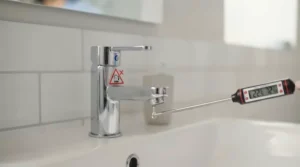
If there’s one detail that trips up more denture wearers than anything else covered so far, it’s water temperature — and the rule here is refreshingly simple even if it’s routinely ignored. Cold or room-temperature water is correct. Hot or boiling water is not, and it’s not a minor infraction either: acrylic resin, the material most dentures are made from, is thermoplastic, meaning heat genuinely softens it and allows it to deform under its own weight while soaking.
What most people get wrong isn’t intentionally using boiling water — nobody does that deliberately — it’s dissolving a cleaning tablet in hot tap water because it seems to fizz more enthusiastically, or using leftover hot water from a kettle “to be thorough.” Both habits introduce exactly the heat exposure that gradually distorts denture shape over repeated exposure, even when no single incident feels dramatic enough to notice at the time. Stick to cold or lukewarm water for both rinsing and overnight soaking, reserve any warmth for your morning tea, and your dentures will hold their fit considerably longer.
✨ Don’t Miss These Exclusive Deals!
🔍 Take your denture care routine to the next level with these carefully selected storage cases. Click on any highlighted product above to check current pricing and availability on Amazon.co.uk. The right case protects both your investment in your dentures and your gums underneath them!
Denture Warping Prevention: The Complete Guide
Warping is the quiet villain of denture ownership — it rarely happens dramatically, and by the time you notice your dentures feel “different,” the damage is usually already done and irreversible. Prevention comes down to three consistent habits working together rather than any single silver bullet. First, moisture consistency: dentures left to dry out overnight repeatedly, even without ever fully drying completely, undergo gradual dimensional change that a case with water storage simply prevents by design.
Second, temperature control, covered in detail above — hot water is the single fastest route to warping, since it directly softens the acrylic rather than simply failing to keep it hydrated. Third, and less discussed, is impact damage disguised as warping: a denture dropped on a hard bathroom floor can crack or distort in ways that feel identical to gradual warping but happen instantly. This is why cases with a secure, cushioned base — rather than simply a flat plastic bottom — genuinely earn their keep, and why cleaning over a sink filled with water or a folded towel remains sound advice regardless of which case you own. Combine consistent wet storage, cold water only, and careful handling, and warping stops being a mystery that “just happens with age” and becomes a largely preventable outcome.
How to Choose the Best Denture Storage Container
- Decide if you need a strainer basket. If mornings feel rushed, a basket for quick retrieval (like the KISEER or ARGOMAX) genuinely saves fumbling; if you’re unhurried, a basic hinged box works just as well.
- Check for a genuine seal if you travel. Basic boxes rely on gravity; dedicated leak-proof designs use a compressed seal that survives being upside down in a bag.
- Consider household size. One denture wearer needs one case; two wearers under one roof genuinely benefit from a labelled two-pack rather than sharing.
- Think about whether you want a full system or just a container. New denture wearers often benefit from a complete kit bundling tablets and brush; experienced wearers usually just need a reliable box.
- Match capacity to your denture type. Full upper-and-lower sets need more room than a single partial denture — check dimensions before assuming any case will fit.
- Prioritise a secure lid over aesthetics. A case that looks nice but doesn’t close firmly risks both leaks and curious pets getting access.
- Budget for replacement. Cases develop hairline cracks and hinge fatigue over a year or two of daily use; treating this as a low-cost consumable rather than a one-time purchase avoids surprises.
Common Mistakes When Buying a Denture Storage Case
The most frequent error is buying based on appearance alone — a case that photographs nicely on a product listing but has a genuinely weak hinge or lid seal, discovered only after the first spill. A close second is underestimating capacity needs; plenty of buyers assume any “denture case” fits a full set, when many budget cases are genuinely sized more for partials or single retainers. Buyers also commonly skip checking whether a case includes a strainer basket, then find themselves fishing a denture out of standing water by hand every single morning, which gets old within about a week. Finally, and this is a subtle one, many people buy a single case and never consider a second for travel, then end up either leaving dentures unprotected in a wash bag or scrambling to buy an emergency case at an airport chemist the night before a trip.
Denture Storage for Different Lifestyles
Different daily routines genuinely call for different case priorities. Shift workers whose “overnight” might mean an 11am-to-7pm sleep block benefit most from cases with a properly sealing lid, since a denture might realistically sit for eight hours during daylight when a household is busiest and most likely to knock something over. Older adults with reduced dexterity often do best with a simple hinged box like the Wisdom Denture Box rather than anything with fiddly strainer mechanisms, since fewer moving parts means fewer frustrations at the end of a tiring day. Parents of young children, meanwhile, should weight secure closure highly regardless of case style — a curious toddler and an open denture case is a combination worth avoiding entirely, and this is one area where the extra pound or two for a genuinely secure lid is money well spent.
Long-Term Cost and Maintenance
Denture cases are refreshingly cheap to run compared with almost anything else in a bathroom cabinet. A basic box like the Wisdom Denture Box needs nothing beyond an occasional rinse with washing-up liquid to stay hygienic, while kit-based options like the Oravida system involve an ongoing cost for replacement cleaning tablets, typically working out to a few pence per night. Over a full year, even the pricier kit-based approach rarely exceeds the cost of a single dental check-up, which makes the “should I spend more on a better case” question fairly low-stakes compared with most other health-adjacent purchases. Replace the case itself roughly every twelve to eighteen months, or sooner if the hinge starts feeling loose or the lid no longer seals firmly — a cracked case that leaks overnight costs far more in ruined bedside furniture than a replacement box ever will.
Frequently Asked Questions
❓ How do you store dentures overnight if you don't have a proper case?
❓ Can you store dentures in mouthwash instead of water?
❓ Why do dentures warp if left dry overnight?
❓ Is it bad to leave dentures in water for multiple days?
❓ What temperature should water be for storing dentures?
Conclusion
Storing dentures overnight is one of those tasks that looks trivial right up until it’s done badly for long enough to cause a genuinely expensive problem. The good news is that getting it right costs very little and takes barely thirty extra seconds a night: a proper case, cool water or the right solution, and a lid that actually seals. Whether that’s the reliably basic Wisdom Denture Box, the shared-household-friendly KISEER 2 Pack, or the leak-proof travel security of the MURRI&MURRDI Soak Container, the right choice is simply the one that matches how you actually live rather than the flashiest option on the shelf.
Get the water temperature right, change it daily, and pick a case built for your specific routine, and denture warping stops being something that “just happens” and becomes something you’ve genuinely prevented.
Recommended for You
- Gentle Denture Fixative Sensitive Gums: 7 Picks (2026)
- Zinc free denture fixative: 7 Safer Picks Tested for 2026
- Denture Adhesive for Loose Dentures: 7 Best UK Picks (2026)
Disclaimer: This article contains affiliate links. As an Amazon Associate, I earn from qualifying purchases. If you purchase products through these links, we may earn a small commission at no additional cost to you.
✨ Found this helpful? Share it with your friends! 💬🤗
