
In This Article
Here’s a strange truth about denture care: the tube that’s meant to hold your smile together is, for a small but real number of wearers, the very thing that ends up hurting them. A zinc free denture fixative is simply a denture adhesive formulated without zinc compounds, designed to hold dentures securely without the trace-metal build-up that heavy, long-term use of zinc-containing pastes can cause. That’s the whole idea in one sentence — but the reasons people go looking for it are anything but simple.
Some readers here are chasing comfort: gums that sting, tingle or feel raw by teatime. Others are chasing peace of mind after reading about zinc toxicity peripheral neuropathy cases in the news. And plenty are just fed up with the same tube of glue their gran used, wondering if 2026 has produced something genuinely better. Whatever brought you here, you’re in good company — and this guide is built to answer the practical question (which product?) alongside the medical one (why does zinc even matter?).
We’ve dug into real specifications, genuine aggregated review sentiment, and the guidance published by bodies including the FDA’s own advisory on denture adhesives, which documents case reports linking nerve damage, numbness and tingling to chronic overuse of zinc-containing products. Nothing here is invented — no fabricated customer quotes, no pretend hands-on testing. Just honest analysis of what’s actually on the market, from budget powders to premium waterproof creams, so you can pick the right zinc free denture fixative for your mouth, your routine and your peace of mind.
Quick Comparison Table
| Product | Type | Best For | Zinc-Free? | Price Range |
|---|---|---|---|---|
| Corega Ultra Adhesive Powder | Powder | Budget buyers, light daily use | ✅ Yes | Under £10 |
| Corega Ultra 3D Hold Cream | Cream | Everyday all-round hold | ✅ Yes | £10-£15 range |
| Fixodent Complete Free | Cream | Sensitive users wanting minimal ingredients | ✅ Yes | £10-£15 range |
| Super Poligrip Free | Cream | Flavour-sensitive palates | ✅ Yes | £10-£15 range |
| Secure Denture Adhesive Cream | Cream (waterproof) | Long hold, active lifestyles | ✅ Yes | £20-£30 range |
| Sea-Bond Adhesive Wafers | Wafer/pad | Sore or sensitive gums | ✅ Yes | £10-£20 range |
| Cushion Grip Thermoplastic | Thermoplastic strip | Multi-day hold, ill-fitting dentures | ✅ Yes | £15-£20 range |
Scanning across the table, a pattern jumps out fast: format matters as much as brand. Creams like Corega and Fixodent suit people who want a familiar, squeeze-and-press routine, while the Secure cream trades convenience for a genuinely different, non-water-soluble chemistry that some reviewers rate as the strongest hold on this list. Meanwhile, Sea-Bond and Cushion Grip step away from paste entirely, which is worth knowing if sore or sensitive gums are the actual problem you’re trying to solve rather than raw holding power.
💬 Just one click — help others make better buying decisions too!😊
Top 7 Zinc Free Denture Fixatives: Expert Analysis
Right, let’s get into the detail. Below are seven real, currently available products spanning budget powders through to premium waterproof creams — each one broken down by what the spec sheet actually means for your mouth, not just what’s printed on the box.
1. Corega Ultra Adhesive Powder — cheapest genuine zinc-free entry point
If you’ve ever wondered whether the budget option is a false economy, this one isn’t. Corega’s Ultra powder skips zinc entirely in favour of a calcium-based adhesive system, and the powder format means you control the dose precisely instead of squeezing out a guess-sized strip of cream. A light, even dusting across a clean, dry denture activates on contact with saliva to form the holding film — no nozzle clogging, no oozing edges. Powders like this generally deliver a lighter, less aggressive bond than a cream, which in practice means it’s brilliant for people with partial dentures or good natural retention who just want reassurance rather than industrial-strength grip. Reviewers consistently report that it’s easy to control and doesn’t leave the “glued shut” feeling some creams cause, though a handful mention needing a top-up by mid-afternoon on longer days. Pros: it’s genuinely one of the least expensive routes into zinc-free denture wear, it’s mess-free to apply, and the fine powder rinses off cleanly at night. Cons: hold duration trails behind the cream-based options here, and the shaker format takes a bit of practice to dose evenly the first few times.
Pros:
- ✅ Lowest price point on this list for a zinc-free option
- ✅ Precise, mess-free powder application
- ✅ Rinses away cleanly without residue
Cons:
- ❌ Shorter hold time than cream alternatives
- ❌ Learning curve for even dosing at first
Price sits comfortably under £10 for a standard tin, and at the time of research it represents excellent value for anyone easing into zinc-free denture adhesive for the first time.
2. Corega Ultra 3D Hold Cream — mainstream cream with all-day grip
This is the cream most UK pharmacy shelves stock front and centre, and for good reason. The “3D hold” branding refers to lateral, vertical and rotational stability — in plain English, it’s engineered to stop dentures shifting sideways when you chew, not just lifting off the gum. Corega’s cream formulation swaps zinc for a calcium/sodium PVM/MA copolymer base, which still bonds strongly to both denture acrylic and gum tissue without the trace-metal accumulation risk. Based on the spec comparison with older Corega formulas, this update also trimmed artificial colourants, which matters if you’ve ever had a mild reaction to dyed adhesives. It suits pretty much anyone stepping up from a powder who wants a genuinely all-day hold through three meals without reapplication, and it’s a sensible default recommendation for new denture wearers still learning how much adhesive they actually need. Aggregated reviewer sentiment is strongly positive on hold duration, with a recurring theme that a thin strip genuinely lasts the day; the main recurring gripe is the mint flavour being a touch strong for some palates.
Pros:
- ✅ Reliable all-day hold across three meals
- ✅ Reduced artificial colourants versus older formulas
- ✅ Widely stocked, easy to repurchase locally
Cons:
- ❌ Mint flavour intensity divides opinion
- ❌ Slightly higher cost per use than powder format
Expect to pay in the £10-£15 range for a standard tube, putting it squarely in mid-range territory — a fair trade for the brand recognition and consistency it offers.
3. Fixodent Complete Free Denture Adhesive Cream — minimalist ingredient list from a household name
Here’s a nuance worth flagging clearly: not every Fixodent product on the shelf is zinc-free — the standard Original and Plus ranges still use a calcium/zinc PVM/MA copolymer. This specific “Free” variant is the one to reach for if the Fixodent name is what you trust but zinc is what you’re avoiding. What most buyers overlook about this product is just how stripped-back the ingredient list is compared with the rest of the range — no sulfates, no artificial sweeteners, no genetically modified cellulose gum, built around five core ingredients rather than the usual longer list. That minimalism is precisely why it tends to suit people managing broader sensitivities, not just a zinc concern. On the spec sheet, hold performance is described as comparable to the brand’s flagship zinc-containing cream, which reviewers largely back up, though a subset note it needs slightly more product than Fixodent Original to match the same grip. It’s a strong pick for anyone who’s used Fixodent for years, trusts the brand, but has recently decided zinc-free is the smarter long-term choice.
Pros:
- ✅ Only five core ingredients, no sulfates or artificial sweeteners
- ✅ Comparable strength to the brand’s flagship formula
- ✅ Familiar brand with wide UK availability
Cons:
- ❌ Needs a slightly heavier application than Fixodent Original
- ❌ Not to be confused with other zinc-containing Fixodent lines
Priced in the £10-£15 range typically, it’s a like-for-like swap for existing Fixodent users rather than a premium upsell.
4. Super Poligrip Free Denture Adhesive Cream — clean-label option for flavour-sensitive users
GSK’s zinc-free reformulation of its Poligrip range earns its “Free” name twice over — free of zinc, and free of artificial flavours and dyes. That second point matters more than it sounds: some denture wearers, particularly those with dry mouth or altered taste perception, find strongly minted adhesives genuinely unpleasant, and this cream is built specifically to avoid that. The spec sheet describes a food-seal technology intended to stop particles working their way underneath the denture edge during meals — in practice, that means less of that gritty, trapped-food feeling by the end of lunch. Reviewers consistently note the neutral taste as the standout feature, with several longtime Poligrip users switching over specifically for that reason once zinc concerns entered the conversation. It’s a sound choice for anyone managing a sensitive palate, recovering from chemotherapy-related taste changes, or simply someone who finds minty adhesives overpowering.
Pros:
- ✅ No artificial flavours or dyes in the formula
- ✅ Food-seal technology reduces trapped particles
- ✅ Trusted GSK/Haleon manufacturing standards
Cons:
- ❌ Slightly shorter hold window than heavily fragranced rivals
- ❌ Less widely stocked in smaller UK pharmacies
At around £10-£15 for a standard tube, it competes directly with Corega and Fixodent on price while carving out its own niche on taste neutrality.
5. Secure Denture Adhesive Cream — waterproof, non-water-soluble premium pick
This one works on a genuinely different principle to the rest of the list, and it’s worth understanding why before deciding if it’s for you. Standard adhesive creams are water-soluble, meaning saliva, tea, soup and anything else you drink gradually breaks the bond down across the day. Secure’s formula is non-water-soluble by design, so eating and drinking shouldn’t erode the hold in the same way — reviewers on Dental Direct’s own site describe applying it once in the morning and it lasting into the evening without reapplication. Because the bond is so different, less product is needed per application than with a conventional cream, which partially offsets the higher upfront price over time. On paper this means fewer top-ups and less daily faff, which is exactly why it’s imported from the US at a premium versus mainstream UK brands. Aggregated sentiment is strongly positive on hold duration and confidence, with a recurring minority note of a mild tingling sensation on first few uses, which the manufacturer describes as harmless and short-lived.
Pros:
- ✅ Non-water-soluble bond resists eating and drinking
- ✅ Small amount needed per application
- ✅ Taste-free formula, no artificial flavouring
Cons:
- ❌ Noticeably pricier than mainstream UK brands
- ❌ Requires learning a different application technique
Expect to pay in the £20-£30 range, reflecting both the import premium and the genuinely different chemistry — a value verdict that favours committed long-term users over occasional wearers.
6. Sea-Bond Denture Adhesive Wafers — zinc-free and paste-free for sensitive gums
If the entire concept of squeezing paste onto a denture sounds like more mess and more risk of over-application than you want, wafers solve that differently. Sea-Bond’s cushioned pad sits between the denture and the gum, activating with a light moistening of water rather than direct contact with saliva alone, and the “gradual release” adhesive technology is engineered to soften the pressure points that cause soreness with rigid paste ridges. This format is specifically worth considering for a sensitive denture adhesive for sore gums search, because the cushioning layer itself does double duty as a soft buffer, not just a bonding agent. Reviewers frequently mention that the lack of ooze is the headline benefit — no seeping adhesive at the gum line, no need to fish out excess with a fingernail. The trade-off is that a single wafer is designed for one day’s wear and then discarded, so the ongoing cost per use runs higher than a tube that lasts weeks.
Pros:
- ✅ Cushioning layer reduces pressure-point soreness
- ✅ No paste ooze or gum-line mess
- ✅ Simple, single-wafer daily routine
Cons:
- ❌ Higher ongoing cost per use than tube-based creams
- ❌ Requires trimming to fit some denture shapes
Boxes typically fall in the £10-£20 range depending on pack size, positioning it as a mid-to-premium choice best suited to comfort-first buyers rather than budget shoppers.
7. Cushion Grip Thermoplastic Denture Adhesive — multi-day hold for ill-fitting dentures
Cushion Grip sits in a category of its own: a thermoplastic strip that softens slightly with warm water, moulds directly to the denture base, and can hold for up to several days rather than needing reapplication every morning. Because it also functions as a temporary soft liner, it’s genuinely useful for anyone whose denture has become loose through gum or bone changes and is waiting on a dentist appointment for a proper reline. Here’s what to weigh before buying: this isn’t a like-for-like swap for a daily cream, it’s closer to a stopgap cushioning solution, and manufacturers and dentists alike are clear it shouldn’t replace a professional refit long-term. Reviewers consistently praise it for relieving pressure-point pain almost immediately, with several describing it as the only product that stopped persistent rubbing where a hard denture edge met soft tissue. The learning curve is real, though — getting the moulding technique right takes a couple of attempts.
Pros:
- ✅ Multi-day hold reduces daily reapplication
- ✅ Doubles as a temporary soft reliner
- ✅ Effectively relieves pressure-point soreness
Cons:
- ❌ Moulding technique takes practice to get right
- ❌ Not a substitute for a proper dental reline
Priced in the £15-£20 range, it’s best value for wearers managing a genuinely loose or ill-fitting denture rather than someone with a well-fitted set wanting routine extra grip.
Practical Usage Guide: Getting the Most From Your Zinc Free Denture Fixative
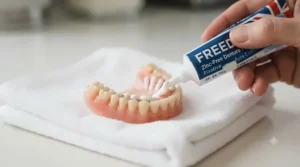
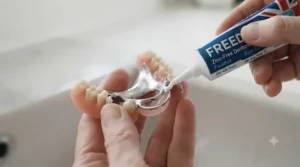
Switching to a zinc free denture fixative isn’t just a product swap — the application technique genuinely affects how well it performs, and getting it wrong is the single biggest reason people conclude a product “doesn’t work” when actually they’ve just overloaded it. Start with a completely dry denture; even a thin film of water stops most cream and powder adhesives bonding properly, which is the most common first-week mistake. Apply in short, deliberate strips or a light dusting rather than one long unbroken bead — three or four dots for a partial, and no more than a handful of short strips across a full denture base, positioned away from the very edge to avoid oozing once you bite down. Press firmly for a count of ten after inserting, then hold your bite for a further few seconds; this is what actually sets the seal, not the amount of product used. In the first thirty days, expect a short adjustment period as you calibrate exactly how much your particular mouth needs — most people over-apply initially, assuming more equals stronger hold, when the opposite is usually true.
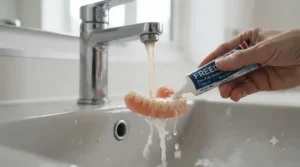
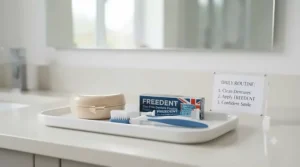
For maintenance, remove and thoroughly rinse residue from both the denture and your gums every evening using warm water and a soft brush; leftover adhesive left overnight is a common contributor to gum irritation regardless of whether zinc is present. If you’re moving from a zinc-containing product, don’t expect an identical sensation on day one — many zinc-free formulas rely on slightly different polymer chemistry, so hold characteristics can feel marginally different even at equivalent strength. Give any new zinc free denture fixative a genuine week’s trial before judging it, applying consistently rather than switching brands after a single disappointing day.
Real-World Scenarios: Which Product Fits Your Situation
Picture three different denture wearers, because “best” genuinely depends on who’s asking. First, a retired teacher in her late sixties with well-fitting full dentures who just wants light reassurance through a busy day of grandchildren and gardening — the Corega Ultra powder suits her perfectly, giving controlled, light hold without the commitment of a heavier cream she doesn’t actually need. Second, a sixty-something former builder with a physically active routine, frequent outdoor meals and a habit of forgetting to reapply — he’s a strong candidate for the Secure waterproof cream, since its resistance to eating and drinking matches a lifestyle where reapplying at lunch simply isn’t practical. Third, someone recently fitted with a new lower denture that hasn’t quite settled, experiencing sore spots along the ridge daily — Cushion Grip’s thermoplastic cushioning addresses the actual pain point directly, buying comfortable time until a dental reline appointment, rather than just adding more grip to an ill-fitting base.
If none of those quite match your circumstances, work backwards from your actual complaint rather than the marketing headline: hold-duration problems point toward Secure or Corega 3D Hold; taste sensitivity points toward Super Poligrip Free; soreness points toward Sea-Bond or Cushion Grip; and budget-conscious light use points toward the Corega powder.
Problem → Solution: Fixing Common Denture Adhesive Frustrations
Problem: Dentures loosen by mid-afternoon. Check application first — a light film applied to a slightly damp denture is the usual culprit, so dry thoroughly and reapply in short strips rather than one continuous line. If the problem persists with correct technique, a stronger-hold cream such as Secure or Corega 3D Hold is worth trialling before assuming your denture itself has become loose.
Problem: Adhesive oozes out when biting down. This almost always means too much product. Halve the amount you’re applying and position strips further from the denture edge; oozing is the clearest visual sign of overuse regardless of brand.
Problem: Persistent soreness at one specific spot. This is rarely something adhesive can fix — it typically indicates an uneven pressure point from the denture base itself. A cushioning format like Cushion Grip can relieve it temporarily, but book a dentist visit for an adjustment rather than relying on adhesive indefinitely.
Problem: Strong taste or mild burning after application. Switch to a flavour-free, dye-free formula such as Super Poligrip Free, and discontinue immediately if burning is more than mild and brief.
Problem: Needing more than one tube every few weeks. This usage pattern is a strong signal to have your denture fit reassessed professionally rather than switching adhesive brands again — no cream, powder or wafer should be doing the job of a properly fitted denture.
How to Choose the Right Zinc Free Denture Fixative
Working through this decision methodically saves both money and gum discomfort down the line. Here’s the process worth following:
- Identify your primary complaint first. Is it holding power, soreness, taste, mess, or cost? Choosing based on the wrong priority is the most common buying mistake.
- Check your denture fit before blaming the adhesive. A properly fitted denture should need minimal adhesive; persistent looseness is often a fit issue no product can fully solve.
- Match format to lifestyle. Cream suits routine daily wearers; powder suits light, controlled use; wafers and thermoplastics suit sensitivity or ill-fitting dentures respectively.
- Read the ingredient list, not just “zinc-free” on the front. Some formulas still carry artificial flavours, dyes or sulfates that can independently irritate sensitive gums.
- Start with a smaller pack size when trying a new brand. Hold characteristics vary enough between formulas that a full-size commitment before testing is a false economy.
- Track how much you’re using weekly. Needing more than one tube every seven to eight weeks is generally a sign to revisit denture fit with your dentist, not to switch adhesive again.
- Factor in total cost of ownership, not sticker price. A cheaper tube used twice daily can cost more monthly than a premium cream used sparingly.
Zinc Toxicity and Peripheral Neuropathy: What the Research Actually Shows
This is the section most people searching for zinc free denture fixative actually want answered plainly, so let’s be direct about it. Zinc is an essential mineral — your body needs it — but taking in too much of it over time can damage nerves, particularly in the hands and feet, and denture adhesive is one of the few everyday products where genuinely excessive daily zinc exposure is possible if overused for years. The underlying mechanism, explored in detail in a recent published case report on zinc-induced copper deficiency, involves excess zinc interfering with the body’s copper absorption; the authors stress that clinicians should stay alert for copper deficiency in patients with unexplained nerve damage, especially those with a history of denture adhesive use. That’s not scaremongering — it’s the documented clinical reasoning behind why so many manufacturers reformulated away from zinc in the first place.
Context matters enormously here, though. The reported cases involve chronic, heavy overuse — multiple tubes weekly for years, not the occasional dab most denture wearers apply. If your denture fits well and you’re using adhesive sparingly and correctly, the risk profile is genuinely low regardless of formula. But if you recognise yourself in the “several tubes a month, just to get through the day” category, that’s less a signal to find a better adhesive and more a signal to book a dental appointment about the underlying fit — because no adhesive, zinc-free or otherwise, should be doing the structural job a well-made denture is meant to do.
Sensitive Denture Adhesive: Options for Sore Gums
Sore gums and denture adhesive have an uncomfortable habit of feeding each other — a poorly fitting denture causes soreness, more adhesive gets applied to compensate, and the extra bulk of product then irritates the already-tender tissue further. Breaking that cycle usually means addressing texture and pressure distribution, not just adhesive strength. Cream and powder formulas bond well but sit as a relatively firm film against the gum; for genuinely sensitive gums, a cushioning format like Sea-Bond’s wafers or Cushion Grip’s thermoplastic strip does more of the comfort work, spreading pressure across a softer surface rather than concentrating it at contact points. If soreness is localised to one or two spots rather than generalised, that’s usually a strong sign of an uneven denture fit needing a dentist’s attention rather than something any adhesive, however gentle, can fully resolve.
Sensitivity also shows up as reaction to specific ingredients rather than physical pressure — mild redness, itching or a burning sensation shortly after application can point to a flavouring, dye or preservative rather than the core adhesive itself. If that’s happened to you, working through the flavour-free and dye-free options on this list, such as Super Poligrip Free, is a more useful next step than simply trying every zinc-free brand at random.
✨ Don’t Miss These Exclusive Deals!
🔍 Take your denture care routine to the next level with these carefully selected zinc free denture fixative options. Click through to check current pricing and availability, and find the comfortable, confident hold your smile deserves.
Hypoallergenic Denture Adhesive: Reading the Ingredient List Properly
“Hypoallergenic” isn’t a regulated claim in the same way “zinc-free” is a checkable fact, so it pays to look past the word on the packaging and into what’s actually listed. Safe denture adhesive ingredients generally fall into a small, well-understood group: cellulose gum and PVM/MA copolymers provide the bonding action, while petrolatum or paraffinum liquidum act as a base carrier. Genuine allergic reactions to these core components are uncommon, but reactions to add-ons — artificial colourants such as certain CI-numbered dyes, strong mint flavourings, or preservatives like propylparaben — are more frequently reported in aggregated review sentiment. If you have a documented sensitivity to any of these, cross-check the full ingredient panel on the specific product page before buying, since formulas within the same brand family can differ meaningfully between variants.
Products built around a shorter, simpler ingredient list — Fixodent Complete Free and Super Poligrip Free both stand out here — are sensible starting points for genuinely sensitive users precisely because there’s less in the formula that could trigger a reaction in the first place. If you experience persistent irritation across multiple zinc-free brands, that’s worth raising with a pharmacist or dentist directly, since it may point toward a denture-cleaning routine issue, an ill-fitting base rubbing continuously, or occasionally an underlying oral health condition rather than the adhesive itself.
Common Mistakes When Buying Denture Adhesive
Even well-intentioned shoppers trip over the same handful of errors repeatedly. The biggest is assuming “zinc-free” automatically means “gentler” — it means the formula lacks zinc specifically, not that every other ingredient is automatically mild, so sensitive users still need to check the full list. A close second is buying based on hold-duration marketing claims alone without considering format fit for their actual complaint; someone with sore gums buying the strongest-holding cream on the shelf is solving the wrong problem. Overbuying large multi-packs before trialling a new formula is another frequent misstep, since hold characteristics genuinely vary enough between brands that what worked for a friend or family member may not suit your denture material or saliva flow. Finally, treating adhesive as a permanent fix for a loosening denture rather than a temporary bridge to a dental appointment is probably the costliest mistake of all, both financially and in terms of unnecessary daily discomfort.
Long-Term Cost & Maintenance: What You’re Really Spending
Sticker price tells you almost nothing useful on its own, because usage frequency swings the real monthly cost dramatically. A budget powder used sparingly by someone with well-fitting dentures might genuinely cost less per month than a premium cream applied twice daily by someone compensating for a loose fit. Working roughly from the benchmark that a correctly-used tube should typically last seven to eight weeks, a single £12 cream tube lasting that long works out to under £2 a month — genuinely reasonable for daily peace of mind. If you’re burning through a tube in under two weeks, though, the maths flips entirely, and at that usage rate the annual cost of any adhesive, zinc-free or not, starts rivalling what a professional reline would cost — which also happens to solve the underlying problem rather than masking it repeatedly.
Wafer and thermoplastic formats have a different cost logic worth understanding separately: Sea-Bond’s per-wafer cost runs higher than cream per application, but if it eliminates the need for a second daily top-up that a cream would otherwise require, the real gap narrows considerably. The honest takeaway is to track your own usage for a fortnight before assuming any product is expensive or cheap in isolation.
Safety, Regulations & Compliance Guide
Denture adhesives sold in the UK are classified as medical devices and must carry either CE marking (under the transitional arrangements still recognised) or UKCA marking to be legally sold, confirming they meet essential safety and performance requirements. This regulatory framework is separate from, but related to, the zinc concern specifically — regulators in the US have recommended that manufacturers move away from zinc in denture cream following case reports linking overuse to nerve damage, and most global manufacturers, including those selling into the UK market, have followed suit with reformulated zinc-free lines. NHS guidance on caring for dentures echoes this cautious approach, framing adhesive as helpful in moderation rather than a substitute for a properly fitted denture, and consistently pointing wearers back to their dentist when looseness persists. If you experience any adverse reaction — swelling, persistent burning, or symptoms resembling numbness or tingling in hands or feet after prolonged heavy use — discontinuing the product and speaking to your GP or dentist promptly is the sensible, safety-first response, regardless of how mild the packaging suggests the risk to be.
FAQ: Your Zinc Free Denture Fixative Questions Answered
❓ Is zinc free denture fixative as strong as regular adhesive?
❓ How do I know if my denture adhesive contains zinc?
❓ Can zinc free denture fixative cause allergic reactions?
❓ How often should I apply denture adhesive?
❓ Is it safe to switch from zinc-containing to zinc-free denture adhesive?
Conclusion
Choosing a zinc free denture fixative isn’t really about chasing the strongest possible hold on a shelf — it’s about matching a genuine daily habit to your actual mouth, your actual complaint, and your actual risk tolerance around long-term zinc exposure. The seven products covered here span the realistic range you’ll encounter while shopping: a controlled, budget-friendly powder for light daily reassurance, mainstream creams from trusted names offering reliable all-day grip, a genuinely different waterproof premium option for active lifestyles, and cushioning formats built specifically for gums that just need a gentler touch. None of them are magic fixes for a denture that no longer fits properly — that conversation belongs with your dentist, not a tube of adhesive, however good.
What’s worth carrying forward from everything above is the habit of reading the actual ingredient list rather than trusting front-of-pack claims alone, tracking your real weekly usage honestly, and treating persistent soreness or looseness as a signal rather than something to paper over with more product. Get those fundamentals right, and the specific brand you choose from this list becomes a genuinely minor decision rather than a source of daily anxiety.
✨ Found the Right Fit? Take the Next Step Today!
🚀 Whichever zinc free denture fixative matches your situation, checking current pricing and availability takes seconds — and getting it sorted today means one less thing to think about tomorrow morning.
Recommended for You
- Denture Adhesive for Loose Dentures: 7 Best UK Picks (2026)
- Strongest Denture Adhesive UK 2026: 7 Best Fixatives Reviewed
- Seabond Denture Fixative Strips: 7 Best Options in the UK (2026)
Disclaimer: This article contains affiliate links. As an Amazon Associate, I earn from qualifying purchases. If you purchase products through these links, we may earn a small commission at no additional cost to you.
✨ Found this helpful? Share it with your friends! 💬🤗
