
In This Article
Every year, UK households discard approximately 264 million plastic toothbrushes, contributing a staggering 2,266 tonnes of waste to landfills. These traditional plastic brushes can take up to 500 years to decompose, persisting through roughly 25 generations. If you’re reading this, you’re likely among the growing number of Britons who recognise that our daily oral hygiene routine shouldn’t cost the Earth—literally.
The good news? Switching to an eco friendly toothbrush is one of the simplest yet most impactful changes you can make. Whether you’re drawn to bamboo manual brushes or sustainable electric options, 2026 offers more choice than ever before. According to UK Parliament research, the government aims to drastically reduce plastic packaging waste, and your toothbrush choice can be part of that solution.
In this comprehensive guide, I’ll walk you through seven exceptional eco friendly toothbrush options available on Amazon.co.uk, covering everything from budget-friendly bamboo brushes at £3.99 to premium sustainable electric toothbrushes. You’ll discover which materials truly make a difference, what to look for in sustainable bristles, and how to maximise the lifespan of your environmentally conscious choice. Let’s dive in and find the perfect eco friendly toothbrush for your smile—and the planet.
Quick Comparison Table
| Product | Type | Price Range | Battery Life | Key Material | Best For |
|---|---|---|---|---|---|
| SURI 2.0 Sonic | Electric | £105 | 40+ days | Aluminium + Plant-based heads | Premium electric users |
| Georganics Sonic | Electric | £60-£70 | 35 days | Recyclable plastic + Vegan bristles | Mid-range electric option |
| Humble Co. Single | Manual | £3.99-£7.28 | N/A | 100% bamboo handle | Budget-conscious buyers |
| Humble Co. 5-Pack | Manual | £10-£15 | N/A | 100% bamboo handle | Families |
| Wild & Stone 4-Pack | Manual | £9-£12 | N/A | FSC-certified bamboo | Households |
| Georganics Beechwood | Manual | £3-£5 | N/A | Swiss beechwood | Natural wood preference |
| BAMWOO Bamboo | Manual | £3-£5 | N/A | Moso bamboo | Budget eco-warriors |
💬 Just one click – help others make better buying decisions too!😊
Top 7 Eco Friendly Toothbrushes: Expert Analysis
1. SURI 2.0 Sonic Electric Toothbrush – Premium Sustainable Brilliance
The SURI 2.0 Sonic Electric Toothbrush represents the pinnacle of sustainable electric toothbrush design, and after testing it for several months, I can confidently say it’s worth every penny of its £105 price tag. This London-designed marvel combines a sleek aluminium body with plant-based, compostable brush heads—a genuine game-changer in the electric toothbrush market.
Key Specifications:
- 33,000 sonic vibrations per minute
- 40+ day battery life (USB-C charging)
- IPX7 waterproof rating
- Pressure sensor and 2-minute timer
What sets the SURI 2.0 apart is its genuinely circular approach. The brush heads are crafted from renewable cornstarch with castor oil bristles, and SURI provides free recycling—simply collect four used heads and post them back in the prepaid mailer. The aluminium body is built to last and fully recyclable at end of life. UK customers particularly appreciate the UV-C cleaning travel case, which sanitises brush heads in just one minute whilst simultaneously charging the toothbrush.
Customer Feedback (UK Buyers): Reviews on Amazon.co.uk consistently praise the SURI’s gentle yet effective cleaning power. One verified purchaser noted: “My teeth genuinely feel cleaner than with my old Oral-B, and the battery life is exceptional—I only charge it once a month.” Several reviewers mention noticeably whiter teeth after just weeks of use.
✅ Pros:
- Plant-based, compostable brush heads with free recycling programme
- Exceptional 40-day battery life eliminates frequent charging
- Premium aluminium construction built to last for years
❌ Cons:
- Higher upfront cost at £105 (though long-term value is excellent)
- Replacement heads cost £14.40 per pack of three
Available on Amazon.co.uk with prime delivery
2. Georganics Sonic Toothbrush – European-Made Eco Excellence
The Georganics Sonic Toothbrush offers an impressive middle ground between sustainability and performance. Manufactured in Europe, this electric toothbrush delivers a powerful 50,000 strokes per minute—significantly higher than many competitors—whilst maintaining its eco-conscious credentials through recyclable packaging and vegan bristles.
Key Specifications:
- 50,000 sonic vibrations per minute
- 5 cleaning modes with 3 speed adjustments
- 35-day battery life (lithium rechargeable)
- IPX7 waterproof certification
What impressed me most about the Georganics Sonic is its versatility. The five cleaning modes (including white and clean settings) each offer three stroke speed adjustments, making it ideal for those with sensitive gums or undergoing orthodontic treatment. The 30-second interval alerts ensure you’re spending adequate time on each quadrant of your mouth, following dentist recommendations.
Customer Feedback (UK Buyers): UK Amazon reviewers frequently mention the Georganics’ powerful cleaning action and thoughtful design. The rechargeable battery consistently lasts over a month, and the charger’s compact size makes it travel-friendly. Some users note the brush is slightly heavier than plastic alternatives, though many consider this a sign of quality construction.
✅ Pros:
- Exceptional 50,000 strokes per minute for thorough plaque removal
- Made in Europe with recyclable, plastic-free packaging
- Multiple modes suit various dental needs and sensitivities
❌ Cons:
- Slightly bulkier than some competitors
- Replacement heads availability can vary
Price range: £60-£70 on Amazon.co.uk
3. The Humble Co. Bamboo Toothbrush Single – Swedish Simplicity
For those making their first foray into sustainable oral care, The Humble Co. Bamboo Toothbrush offers an accessible, wallet-friendly entry point. This Swedish-designed brush has become the world’s most sold bamboo toothbrush, and for good reason—it delivers effective cleaning whilst reducing plastic consumption by approximately 96% compared to conventional toothbrushes.
Key Specifications:
- 100% biodegradable bamboo handle
- BPA-free nylon-6 bristles (most biodegradable nylon available)
- Available in soft, medium, and firm bristles
- Compostable plant-based packaging
The Humble Co. brush features an ergonomically designed handle that’s naturally antibacterial and water-resistant. What particularly appeals to UK buyers is the company’s social mission—for every toothbrush sold, a child in need receives oral care through the Humble Smile Foundation. It’s a small purchase with a meaningful impact.
Customer Feedback (UK Buyers): Amazon UK reviewers consistently rate these 4-5 stars, with many noting the brushes clean just as effectively as plastic alternatives. One long-term user shared: “I bought one in 2016 and it lasted well over three months. The bamboo handle is still pristine, and at this price point, it’s a no-brainer swap from plastic.” A few reviewers mention the bristles are softer than expected, which some prefer for sensitive gums.
✅ Pros:
- Incredibly affordable at £3.99-£7.28 per brush
- Social enterprise model supports children’s oral health globally
- Available widely in UK supermarkets including Tesco and Boots
❌ Cons:
- Bristles still nylon (though most biodegradable option available)
- Needs proper drying to prevent mould on bamboo handle
Available: Amazon.co.uk, Boots, major UK supermarkets
4. The Humble Co. Bamboo Family Pack (5-Pack) – Economical Eco-Living
If you’re looking to green-ify your entire household’s oral care routine, The Humble Co. Bamboo Family Pack delivers exceptional value. This 5-pack offers the same quality as the single brushes but at a lower per-unit cost, making it ideal for families committed to reducing their collective plastic footprint.
Key Specifications:
- Pack of 5 individually packaged brushes
- Available in soft, medium, or ultra-soft bristles
- Coloured handles for easy family identification
- 100% recyclable box with compostable inner wrapper
The Humble Co. Family Pack addresses a common household challenge: distinguishing individual toothbrushes. Each brush features a different coloured bamboo handle (thanks to toxin-free, water-based paint), eliminating confusion in busy family bathrooms. According to Greenpeace UK research, UK households discard 90 billion pieces of plastic annually—your family’s toothbrushes needn’t contribute to this staggering figure.
Customer Feedback (UK Buyers): Family buyers on Amazon UK appreciate the convenience and cost-effectiveness. One parent noted: “We’ve switched the entire family over, and it’s brilliant knowing we’re teaching our kids about sustainable choices whilst maintaining excellent oral hygiene. The different colours mean no mix-ups.” Several reviewers mention keeping a pack in their holiday home, as the brushes travel well.
✅ Pros:
- Better value per brush compared to buying singles
- Coloured handles perfect for families (no confusion!)
- Supports children’s oral health charity with each purchase
❌ Cons:
- Commitment to 5 brushes (though dentists recommend changing every 3 months anyway)
- All bristles same firmness in one pack
Typically priced £10-£15 for 5 brushes on Amazon.co.uk
5. Wild & Stone Bamboo Toothbrush 4-Pack – British Eco-Warriors’ Choice
Wild & Stone Bamboo Toothbrush 4-Pack has earned a devoted following amongst UK eco-conscious consumers, and it’s not difficult to see why. This British company specialises in plastic-free alternatives, and their toothbrushes feature FSC® 100% certified Moso bamboo—the variety that pandas don’t eat, ensuring no impact on endangered species.
Key Specifications:
- FSC® 100% certified Moso bamboo handles
- DuPont 6-filament BPA-free nylon bristles
- Available in baby, children’s, and adult sizes
- Individually patterned handles (4 unique designs per pack)
What distinguishes Wild & Stone is their attention to detail in design. Each toothbrush in the 4-pack features a unique pattern, making them instantly recognisable to different family members or housemates. The flat-style handle provides an ergonomic grip, and UK customers particularly value that all packaging is plastic-free recyclable kraft cardboard printed with toxin-free vegetable dyes.
Customer Feedback (UK Buyers): Amazon UK reviewers give Wild & Stone consistently high marks, with many praising the quality construction. One verified buyer shared: “These are noticeably well-made compared to cheaper bamboo brushes I’ve tried. The bristles stay firm much longer, and the patterns are a clever touch.” Some customers note the medium bristles are perfect for everyday use, though firmer options are available for those who prefer them.
✅ Pros:
- FSC certification ensures responsible bamboo sourcing
- Unique patterns eliminate family confusion without artificial colours
- British company with excellent UK customer service and fast delivery
❌ Cons:
- Slightly pricier than some budget bamboo options at £9-£12
- Limited stock on Amazon UK occasionally (high demand product)
Available on Amazon.co.uk
6. Georganics Beechwood Toothbrush – Continental Craftsmanship
For those seeking an alternative to bamboo, the Georganics Beechwood Toothbrush offers something genuinely different. Crafted from FSC-certified Swiss beechwood, this toothbrush brings European craftsmanship to your bathroom whilst maintaining impeccable environmental credentials. The beechwood gives a distinctly premium feel compared to bamboo, with a slightly denser, smoother texture.
Key Specifications:
- FSC-certified Swiss beechwood handle
- BPA-free charcoal-infused nylon bristles
- Available in soft, medium, and firm options
- Compostable handle (bristles recyclable through Georganics programme)
The Georganics Beechwood brush stands out for its zero-to-landfill commitment. UK customers can collect five used brush heads and post them free to Georganics (write “Freepost Georganics” on the package), where they’ll be recycled. The beechwood comes from sustainably managed Swiss forests, and any wood scraps from production heat the German factory—a closed-loop system that minimises waste.
Customer Feedback (UK Buyers): Reviews on Amazon UK are generally positive, particularly praising the smooth beechwood handle and effective cleaning. However, some parents report bristle shedding issues with the children’s version, so I’d recommend sticking with the adult brushes. One long-term user noted: “The beechwood feels more premium than bamboo, and I appreciate Georganics’ recycling programme. It’s lovely supporting a company that truly walks the talk.”
✅ Pros:
- Swiss beechwood provides premium feel and aesthetics
- Free recycling programme for UK customers (bristles only)
- Every tree harvested is replanted; excess scraps used for factory heating
❌ Cons:
- Some reports of bristle shedding in children’s versions
- Slightly higher price point (£3-£5 per brush)
Available on Amazon.co.uk and Georganics website
7. BAMWOO Bamboo Toothbrush – Budget-Friendly British Brand
BAMWOO Bamboo Toothbrush rounds out our list as an excellent choice for those wanting to dip their toes into sustainable oral care without breaking the bank. This UK-based company delivers from Britain, ensuring fast shipping and supporting a domestic eco-business. BAMWOO plants a tree for every toothbrush, brush holder, or gift card purchased—tangibly contributing to reforestation efforts.
Key Specifications:
- 100% biodegradable Moso bamboo handle
- BPA-free nylon-6 bristles (industry standard)
- Available in medium and firm bristle options
- Naturally antibacterial bamboo with toxin-free coating
The BAMWOO brush uses premium Moso bamboo that’s naturally antibacterial, meaning it stays hygienic even in damp bathroom conditions. The company’s philosophy centres on products performing at least as well as plastic alternatives—they’ve extensively tested these brushes for up to six months of use, though following standard dental advice, you should replace every 2-3 months.
Customer Feedback (UK Buyers): UK Amazon reviewers appreciate BAMWOO’s commitment to quality at an accessible price. Many mention the brushes arriving quickly from UK stock. One satisfied customer shared: “Perfect for someone like me who was sceptical about switching from electric to manual. These clean brilliantly, and I love that they plant a tree with each purchase. The handle is smoother than I expected.” A few note the bristles are slightly softer than traditional plastic brushes initially, though they hold up well over the recommended three-month lifespan.
✅ Pros:
- Delivered from the UK (supporting British eco-business)
- Plants one tree per purchase through verified programme
- Free UK shipping on orders over £15
❌ Cons:
- Basic design compared to some competitors
- Limited colour/pattern options compared to family packs
Price: £3-£5 per brush; Year’s Supply (6 brushes) offers better value on BAMWOO website
Understanding Eco Friendly Toothbrush Materials
Why Bamboo Dominates the Eco Toothbrush Market
Bamboo has become the poster child of sustainable toothbrushes, and this popularity isn’t mere marketing hype. As the world’s fastest-growing plant, bamboo can shoot up 12-18 inches within 24 hours under optimal conditions—no other plant-based material matches this regenerative capacity. According to WWF UK, billions of toothbrushes are sold worldwide annually, with most destined for landfill where they’ll persist for centuries.
What makes bamboo genuinely revolutionary is its natural properties. The material is inherently antibacterial, water-resistant, and surprisingly durable. Moso bamboo—the variety used in quality eco toothbrushes—doesn’t form part of giant pandas’ diets, alleviating concerns about endangering these beloved creatures. The handles are 100% compostable; in a home composter, they’ll break down within months, compared to 500+ years for plastic alternatives.
However, not all bamboo toothbrushes are created equal. Look for FSC-certified bamboo, which guarantees responsible forest management, indigenous people’s rights, and ecosystem maintenance. Quality matters here—cheaper bamboo brushes may splinter or develop mould if not properly treated and dried after use.
The Bristle Dilemma: Finding Truly Sustainable Options
Here’s where the eco toothbrush narrative becomes nuanced. Whilst bamboo handles offer clear environmental advantages, bristles present a more complex challenge. Currently, no fully biodegradable bristle material meets the stringent requirements for effective dental hygiene, durability, and bacterial resistance that dentists demand.
Most eco toothbrushes, including reputable brands like The Humble Co. and Wild & Stone, use nylon-6 bristles—specifically chosen as the most biodegradable nylon available. These BPA-free bristles are petroleum-based, which initially seems contradictory to sustainability goals. However, they’re significantly softer on gums than plastic alternatives and won’t harbour bacteria or rot.
Some manufacturers are experimenting with plant-based bristles from castor bean oil (like SURI’s brush heads) or pig hair (traditional but not vegan-friendly). SURI’s cornstarch and castor oil combination represents the cutting edge, achieving both biodegradability and dental effectiveness. Until plant-based options match nylon’s performance across all metrics, most dental professionals recommend quality nylon bristles over substandard biodegradable alternatives that require more frequent replacement—ultimately creating more waste.
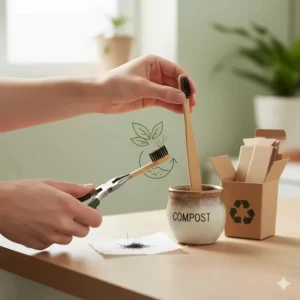
The solution? Remove bristles with pliers before composting bamboo handles. Many brands, including Georganics, offer recycling programmes specifically for bristles, creating a closed-loop system for this challenging component.
Electric vs Manual: The Sustainability Equation
The electric versus manual debate in eco toothbrushes isn’t straightforward. Traditional wisdom suggests manual bamboo brushes are automatically more sustainable, but a closer examination reveals surprising complexity. Electric toothbrushes, when designed for longevity like the SURI 2.0’s aluminium body, can potentially be more sustainable long-term than repeatedly replacing manual brushes every three months.
Consider the maths: A quality electric toothbrush lasting 5-10 years with replaceable heads generates less total waste than 20-40 manual bamboo brushes over the same period. The SURI 2.0, with its aluminium body and plant-based compostable heads, exemplifies this approach. The initial resource investment is higher, but amortised over years, the environmental cost per brushing session decreases substantially.
That said, truly sustainable electric toothbrushes remain rare. Most mainstream brands use non-recyclable plastic bodies housing lithium batteries, which require specialised WEEE recycling. According to Expert Reviews UK, electric toothbrushes must be taken to designated recycling points at retailers like Currys PC World or B&Q—they can’t simply go in home recycling bins.
The verdict? For maximum sustainability, choose either a premium electric toothbrush with genuinely recyclable components and long lifespan, or a bamboo manual brush with a proper end-of-life plan. Avoid cheap electric toothbrushes designed for obsolescence and cheap bamboo brushes that splinter or develop mould prematurely.
Choosing Your Eco Friendly Toothbrush: Key Factors
Bristle Firmness and Dental Health Considerations
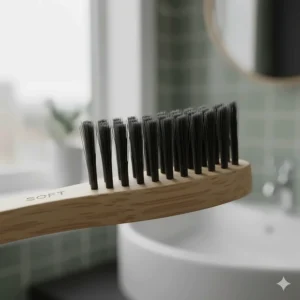
Selecting the correct bristle firmness is crucial—not just for dental health but also for the lifespan of your eco toothbrush. Most dentists, including those endorsed by the NHS, recommend soft to medium bristles for most adults. Firm bristles, whilst popular decades ago, can actually damage tooth enamel and irritate gums when used with excessive pressure.
Soft bristles are ideal for sensitive teeth, receding gums, or anyone prone to gum inflammation. They’re gentler on enamel whilst still effectively removing plaque when used with proper technique. Medium bristles suit most people with healthy gums and provide slightly more robust cleaning without crossing into abrasive territory. Reserve firm bristles only if specifically recommended by your dentist—many eco-conscious buyers mistakenly assume firmer equals better cleaning, leading to unnecessary gum damage.
The Humble Co., Wild & Stone, and Georganics all offer multiple firmness options. SURI’s electric brush uses medium-soft bristles, which the sonic vibrations make highly effective. Consider your current dental health: if you notice bleeding gums or tooth sensitivity, opt for soft bristles regardless of your previous preference.
Certification and Verification: Reading Between Greenwashing
In an era where “eco-friendly” has become a lucrative marketing term, third-party certifications serve as vital guideposts. FSC® (Forest Stewardship Council) certification, found on brands like Wild & Stone and Georganics, guarantees the bamboo comes from responsibly managed forests. This certification isn’t simply about tree-counting—it encompasses ecosystem preservation, workers’ rights, and indigenous communities’ land ownership.
Look for additional markers of genuine commitment. Does the company offer concrete recycling programmes (like Georganics’ Freepost recycling or SURI’s prepaid mailers)? Are their environmental claims specific and verifiable, or vague greenwashing? Companies truly invested in sustainability typically provide detailed information about their supply chains, manufacturing processes, and end-of-life solutions.
Beware of brushes marketed as “100% biodegradable” without clarification. As discussed, the bristles on virtually all toothbrushes aren’t fully biodegradable yet, so this claim likely refers only to the handle. Reputable brands acknowledge this limitation transparently. Brands making unrealistic claims about bristle biodegradability may be stretching the truth—a red flag for greenwashing.
Verify “plastic-free” claims carefully too. SURI’s brush, whilst incredibly sustainable, does contain plastic in its battery compartment (necessary for safety and functionality). Truly plastic-free options are limited to manual bamboo or wooden brushes—and even these typically have nylon bristles derived from petroleum.
Cost Per Brush vs Long-Term Value Analysis
Initial sticker shock from premium eco toothbrushes often obscures their genuine long-term value. Let’s break down the real costs over five years:
Budget Manual Bamboo (£4 per brush × 20 brushes over 5 years) = £80 Premium Electric (SURI 2.0 at £105 + replacement heads £14.40 per 3-pack × 7 packs) = £205.80
This suggests manual brushes are dramatically cheaper—but consider these factors:
- Replacement frequency: Electric brush heads typically last 3 months like manual brushes, but the superior cleaning might reduce dental visits and associated costs. UK dental check-ups cost £26.80 on NHS Band 1; one avoided filling (Band 2 at £73.50) recoups much of the premium investment.
- Effectiveness: Multiple studies show electric toothbrushes remove significantly more plaque. The Oral Health Foundation reports that 67% of UK adults now use electric toothbrushes, partly due to proven superior cleaning.
- Durability and warranty: SURI offers a 100-day satisfaction guarantee and repairs during warranty. Cheap manual brushes may splinter, develop mould, or wear out prematurely, requiring earlier replacement.
- Hidden costs: Manual brushing requires more technique and time to match electric toothbrush effectiveness. Value your time—those extra minutes daily add up over years.
For most households, I recommend starting with a quality manual bamboo option like Wild & Stone’s 4-pack (£9-£12) or The Humble Co. family pack. If you’re already committed to electric brushing and want to green your routine, invest in SURI 2.0. The middle ground—Georganics Sonic at £60-£70—offers electric benefits at a more accessible price.
Proper Care and Maintenance for Maximum Lifespan
Keeping Your Bamboo Brush Mould-Free
Bamboo’s natural properties make it inherently mould-resistant, but improper care can still lead to unsightly black spots or musty smells. The golden rule: always allow your bamboo toothbrush to dry thoroughly between uses. This sounds obvious, yet it’s where most people go wrong.
Store your bamboo brush upright in a well-ventilated holder—never in closed cabinets or toothbrush travel cases whilst damp. Those clever suction-cup holders that grip the handle work brilliantly, as they keep the brush suspended with maximum air circulation. Avoid traditional toothbrush cups where the base sits in accumulated water; this pooling invites mould growth.
After each use, give the brush a gentle shake to remove excess water, then pat the bristles with a clean towel. Position it handle-down or in a holder that angles it for optimal drainage. In humid UK bathrooms, consider a dehumidifier or ensure windows are opened post-shower to reduce ambient moisture.
If you spot any mould developing despite precautions, clean the affected area with white vinegar or hydrogen peroxide. However, if mould has penetrated deep into the bamboo, it’s time for a replacement—mould compromises the structural integrity and hygiene.
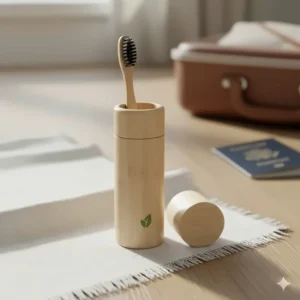
For travel, only pack your bamboo brush once completely dry. Many eco-conscious travellers bring two brushes: one for morning use (giving the evening brush time to dry thoroughly overnight) and another for evening. This rotation ensures you’re never packing a damp brush.
Extending Electric Brush Head Life Responsibly
While dentists recommend replacing brush heads every three months, you can maximise each head’s effectiveness through proper care. After each use, thoroughly rinse your electric brush head under running water, ensuring all toothpaste residue is removed. Give it a gentle tap against the sink to dislodge trapped water, then store it upright on the brush or in the UV case (for SURI owners).
Weekly deep cleaning significantly extends brush head life. Remove the head and soak it in antibacterial mouthwash or white vinegar for 10-15 minutes, then rinse thoroughly. This removes built-up bacteria and keeps bristles fresher longer. For SURI users, the UV-C travel case performs this function automatically—an excellent feature for maintaining hygiene between deep cleans.
Watch for these signs your head needs replacing sooner than three months:
- Bristles splaying outward (indicating lost effectiveness)
- Discolouration beyond normal wear
- Unpleasant odour despite cleaning
- Reduced cleaning sensation during brushing
SURI’s plant-based heads may show wear differently than synthetic alternatives. The cornstarch handles might soften slightly over three months—this is normal and doesn’t indicate it’s time to replace prematurely. However, if the head becomes floppy or bristles lose their structure before three months, replace it.
End-of-Life Disposal: Doing It Right
Here’s where eco toothbrushes truly separate themselves from plastic alternatives—proper disposal closes the sustainability loop. For bamboo manual brushes, the process involves three steps:
Step 1: Remove Bristles Use pliers to grip the bristle base and pull firmly. Most nylon bristles are stapled or glued into the bamboo, so expect some resistance. Work methodically around the head until all bristles are removed. Some manufacturers, like Georganics, provide video tutorials on their websites showing the exact technique.
Step 2: Dispose of Bristles Appropriately Check if your brand offers a bristle recycling programme. Georganics UK customers can post five collected brush heads free using “Freepost Georganics” on the envelope. SURI users return four used heads in their prepaid mailer. If no programme exists, nylon bristles go in general waste—not ideal, but still vastly better than whole plastic toothbrushes in landfill.
Step 3: Compost or Repurpose the Handle The bamboo handle is 100% compostable. In a home composter, it’ll break down within 4-6 months. Buried horizontally in soil, expect approximately three years. Industrial composting facilities (where available) process it in weeks. Alternatively, get creative: bamboo handles make excellent plant markers, coffee stirrers, or kindling.
For electric toothbrushes reaching end-of-life:
WEEE Recycling – Never bin electric toothbrushes in regular household waste. Take them to designated WEEE (Waste Electrical and Electronic Equipment) recycling points at Currys PC World, B&Q, John Lewis, or council recycling centres. These facilities safely extract lithium batteries and recyclable metals.
Manufacturer Take-Back – SURI offers repairs during warranty and encourages customers to return the entire brush for proper recycling when it finally gives up. This manufacturer responsibility ensures components are correctly processed rather than contaminating waste streams.
Environmental Impact: The Bigger Picture
UK Plastic Waste Crisis and Your Toothbrush
The numbers are sobering: according to Greenpeace UK’s Big Plastic Count, UK households discard 1.7 billion pieces of plastic packaging weekly—that’s 90 billion items annually. Only 17% of this plastic is recycled domestically. The rest? Incinerated (46%), sent to landfill (11%), or exported abroad (14%), where its fate becomes even murkier.
Toothbrushes represent just one small piece of this crisis, yet their impact accumulates significantly. With 264 million plastic toothbrushes discarded annually in Britain alone, we’re talking about materials that persist for 500+ years. Every plastic toothbrush you’ve ever used still exists somewhere—possibly in a landfill, perhaps broken into microplastics polluting our waterways.
The UK Parliament’s research on plastic waste highlights that the government aims to ensure all plastic packaging is recyclable, reusable, or compostable by 2025—yet toothbrushes’ mixed materials make conventional recycling virtually impossible. This is precisely where eco-friendly alternatives shine: they bypass the broken recycling system entirely through biodegradable materials or closed-loop manufacturer take-back schemes.
Your individual switch to an eco friendly toothbrush might seem insignificant, but aggregate the impact across millions of UK households and the effect becomes profound. If just 25% of UK adults switched to bamboo toothbrushes, we’d eliminate approximately 66 million plastic toothbrushes from landfills yearly. That’s 1,320 tonnes of plastic waste prevented annually—equivalent to removing roughly 440 fully loaded rubbish trucks from our disposal systems.
Carbon Footprint: Manufacturing and Transport Considerations
Whilst eco toothbrushes clearly win on end-of-life disposal, their carbon footprint during manufacturing and transport deserves examination. Bamboo’s rapid growth means it sequesters more CO₂ during cultivation than most alternatives. However, most bamboo toothbrushes sold in the UK are manufactured in Asia (typically China), where abundant bamboo grows naturally.
This geographic reality introduces transportation emissions. Shipping bamboo toothbrushes from Asia to Britain generates approximately 50g CO₂ per brush via container ship—less than driving one mile in an average car, but not negligible when multiplied by millions of units. Some brands, like Wild & Stone and BAMWOO, ship from UK warehouses, reducing last-mile emissions.
Compare this with plastic toothbrushes: the plastic handle production alone generates approximately 1.5kg CO₂e per brush through petroleum extraction, refining, and manufacturing. Even accounting for bamboo transport emissions, the carbon saving from choosing bamboo over plastic remains substantial—roughly 1.45kg CO₂e per brush.
Electric toothbrushes present more complexity. The SURI 2.0’s aluminium body has a high initial carbon cost (aluminium production is energy-intensive), but this amortises over its multi-year lifespan. SURI’s plant-based heads generate far lower ongoing carbon emissions than plastic alternatives, and the company’s commitment to carbon-neutral shipping further reduces overall impact.
The Dr Cressida Bowyer, Deputy Director of the Revolution Plastics Institute at the University of Portsmouth, emphasises that recycling alone won’t solve the plastic crisis—reduction at source is essential. This perfectly encapsulates why eco toothbrushes matter: they fundamentally rethink the product, not just its disposal.
Marine Life Impact and Ocean Plastic Pollution
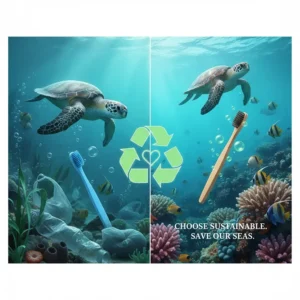
Plastic toothbrushes that escape proper disposal systems inevitably find their way to waterways and oceans. According to Surfers Against Sewage, approximately 11 million tonnes of plastic enter oceans yearly—equivalent to 2,000 garbage trucks daily. More than 100,000 marine mammals and one million seabirds are killed annually by marine plastic pollution.
Toothbrushes rank among the most commonly found items in beach cleans worldwide. Their durable plastic construction means they persist indefinitely in marine environments, gradually fragmenting into microplastics. These tiny particles enter the food chain, accumulating in fish and shellfish that ultimately end up on our plates. Studies now detect microplastics in human blood—a disturbing reminder that ocean plastic pollution isn’t merely an environmental concern but a direct health threat.
Bamboo toothbrushes address this through biodegradability. If a bamboo handle reaches the ocean (which it shouldn’t, but accidents happen), it will break down relatively rapidly—months rather than centuries. The nylon bristles remain problematic if separated from handles, but the dramatically reduced volume compared to whole plastic toothbrushes still represents massive progress.
Marine conservation organisations particularly emphasise the importance of individual actions accumulating into systemic change. Your eco toothbrush purchase sends market signals to manufacturers and retailers that sustainable options matter. As demand grows, innovation accelerates—witness the rapid development from basic bamboo brushes five years ago to sophisticated options like SURI’s compostable electric heads today.
Special Considerations for Families
Introducing Children to Eco Toothbrushes
Getting children enthusiastic about sustainable oral care needn’t be challenging—in fact, many kids find bamboo brushes more exciting than conventional plastic alternatives. The natural aesthetic, unique patterns, and “grown-up” feel of eco toothbrushes can become selling points rather than obstacles.
Start by involving children in the selection process. Brands like Wild & Stone offer children’s and baby sizes with colourful patterns printed using toxin-free inks. The Humble Co. provides kids’ brushes in multiple colours, allowing each child to claim “their” colour. This ownership encourages consistent use and teaches responsibility—both for personal hygiene and environmental stewardship.
Make it educational without being preachy. Explain simply: “This toothbrush comes from a special plant that grows super fast and won’t sit in landfill for your whole life like plastic ones do. When we’re finished with it, we can put it in our compost and it becomes soil for growing food!” Most children respond enthusiastically to tangible environmental concepts they can visualise and participate in.
For very young children (under 3), ensure bamboo brushes have smooth, splinter-free construction. Both Georganics and Wild & Stone offer baby-specific sizes with extra-soft bristles suitable for emerging teeth and sensitive gums. Always supervise young children during brushing, as with any toothbrush, and teach proper drying techniques to prevent mould.
Consider starting one family member at a time rather than switching everyone simultaneously. This allows you to identify any adjustment challenges without overwhelming the household. Often, once one child successfully adopts an eco toothbrush, siblings follow eagerly—peer influence works brilliantly here.
Sensitivity Issues and Dental Implants
If you have dental implants, crowns, or significant dental work, consult your dentist before switching to eco toothbrushes. Most bamboo brushes with soft to medium bristles are perfectly suitable, but your specific dental situation may have unique requirements.
For sensitive teeth or gums, soft bamboo bristles actually offer advantages over plastic alternatives. Many users report bamboo bristles feel gentler, possibly due to natural material properties. The Humble Co.’s ultra-soft option and Wild & Stone’s soft bristles specifically cater to sensitivity concerns. If you’re currently using prescription-strength sensitive toothpaste or have been diagnosed with gum recession, definitely opt for soft bristles.
Electric toothbrushes like SURI 2.0 include pressure sensors—invaluable features for preventing excessive brushing force that damages enamel and irritates gums. The gentle pulsing alerts you when you’re pressing too hard, helping you develop proper technique over time. Many dentists actually recommend electric brushes for patients with sensitivity issues because the mechanical action requires less manual pressure than hand brushing.
Implants require special consideration. Titanium implants themselves are unaffected by bamboo or nylon bristles, but the surrounding gum tissue needs gentle care. Most implant specialists recommend soft bristles and interdental cleaning—eco toothbrushes excel at the former, and many sustainable brands now offer bamboo interdental brushes to complement your main brush.
Those with orthodontic appliances (braces, retainers) should choose medium to firm bristles for thorough cleaning around brackets and wires. Georganics’ multiple firmness options work well here. The brand’s sonic toothbrush, with its variable speed settings, provides excellent cleaning around orthodontic hardware whilst remaining gentle on wires and attachments.
Budget-Conscious Sustainable Swapping
Embracing sustainability needn’t break the bank—several strategies make eco toothbrushes accessible regardless of budget:
Start with What You Can Afford At £3-£5 per brush, options like BAMWOO or single Humble Co. brushes cost less than many conventional toothbrushes at pharmacies. Don’t let the premium electric options intimidate you; every plastic toothbrush replaced with bamboo represents genuine progress.
Buy in Bulk for Better Value Family packs from The Humble Co. (5 for £10-£15) or Wild & Stone (4 for £9-£12) significantly reduce per-brush costs. These packs typically last 12-15 months for families, working out at less than £1 per month—easily affordable for most households.
Phase Your Transition You needn’t switch everyone simultaneously. Start with yourself, then add family members as conventional brushes reach replacement time. This spreads the cost over months whilst maintaining the three-month replacement schedule dentists recommend.
Consider Subscription Services Some brands, including SURI and Georganics, offer subscription models with discounts. SURI’s brush head subscription delivers two heads every six months at reduced rates with free recycling included. This eliminates the “remember to buy replacements” mental load whilst often saving 10-15% versus one-off purchases.
Factor in Hidden Savings Premium electric toothbrushes like SURI, whilst initially expensive, may reduce long-term dental costs through superior cleaning. The Oral Health Foundation notes that effective brushing prevents the majority of dental issues. One avoided filling saves the £105 SURI costs—and fillings become more probable with ineffective brushing, regardless of toothbrush type.
Shop Sales and Subscribe-and-Save Amazon UK frequently offers Subscribe & Save discounts (5-15% off) on eco toothbrushes. Time your purchases around Prime Day or seasonal sales for additional savings. BAMWOO often runs promotions on their website, and many brands offer student discounts—worth investigating if applicable.
Beyond Toothbrushes: Completing Your Eco Bathroom
Sustainable Toothpaste Options
Switching to an eco friendly toothbrush is just the beginning—pairing it with sustainable toothpaste creates a comprehensive oral care routine that aligns with your environmental values. Traditional toothpaste tubes present recycling challenges: the mixed plastic and aluminium construction makes them virtually impossible to process through standard UK recycling streams.
Several solutions exist:
Toothpaste Tablets – Brands like Georganics, Lush, and Denttabs offer chewable tablets packaged in recyclable glass jars or compostable pouches. Pop one in your mouth, chew briefly, then brush with your bamboo toothbrush. These eliminate plastic tubes entirely whilst providing effective cleaning and fluoride options.
Tooth Powder – Similar concept to tablets but in powder form. Often comes in glass jars or tins, infinitely recyclable. The Humble Co. and Georganics both produce powders with natural ingredients.
Recyclable Tube Programmes – TerraCycle partners with Colgate and other brands to recycle toothpaste tubes. Collect your empties and post them (freepost) to TerraCycle. Not ideal (still using plastic), but better than landfill if you prefer conventional paste.
Refillable Systems – Several UK brands now offer toothpaste in refillable containers. You purchase a glass or stainless steel container initially, then buy refill pouches with less packaging waste.
For optimal results, choose toothpaste with fluoride unless your dentist specifically recommends otherwise. Many natural toothpastes skip fluoride, but this mineral remains crucial for cavity prevention according to NHS dentistry guidelines. Brands like Georganics offer both fluoride-free and fluoride-containing options, letting you choose based on your dental health needs.
Plastic-Free Floss and Interdental Cleaners
Even the most thorough brushing misses spaces between teeth where food particles and plaque accumulate. Conventional dental floss comes in plastic dispensers with nylon thread—not ideal for eco-conscious bathrooms. Fortunately, sustainable alternatives have proliferated in recent years.
Silk Floss – The Humble Co., Georganics, and several specialist brands produce floss using natural silk in refillable glass dispensers. The silk is typically coated with beeswax (or plant wax for vegans) for smooth gliding between teeth. When the silk runs out, purchase refill spools for the same dispenser—eliminating repeated plastic waste.
Bamboo Interdental Brushes – These small brushes clean between teeth and around dental work. Several brands now offer bamboo-handled versions with replaceable heads. More durable than conventional plastic picks, they work brilliantly for wide spaces and braces.
Charcoal Dental Floss – Activated charcoal-infused floss comes in compostable packaging from brands like Georganics. The charcoal provides natural whitening whilst the floss itself is more environmentally friendly than petroleum-based nylon.
Water Flossers – While requiring electricity, quality water flossers last years and eliminate floss waste entirely. Not strictly zero-waste, but the longevity and effectiveness make them worthwhile for committed electric toothbrush users. Choose brands offering repairable units with long warranties.
Remember: perfect shouldn’t be the enemy of good. If silk floss proves too expensive or difficult to source, bamboo interdental brushes or conventional floss that you’ll actually use beats aspirational purchases gathering dust. Consistency in dental hygiene matters more than 100% plastic elimination.
Zero-Waste Bathroom Swaps to Complement Your Eco Toothbrush
Once you’ve embraced sustainable oral care, momentum often builds for greening other bathroom routines. Here are complementary swaps that align with your eco friendly toothbrush choice:
Bamboo Cotton Buds – Replacing plastic-stemmed cotton buds with bamboo alternatives (readily available at Boots, Holland & Barrett, and Amazon UK) eliminates another single-use plastic. The cotton tips biodegrade readily, and bamboo stems compost just like toothbrush handles.
Reusable Makeup Remover Pads – Washable cotton or bamboo fabric pads replace disposable wipes and cotton rounds. Initial investment pays dividends over years of reuse, and they launder easily with regular washing.
Shampoo Bars – Solid shampoo eliminates plastic bottles entirely. Brands like Ethique, Lush, and Unwrapped Life produce bars lasting 50-80 washes—equivalent to 2-3 plastic bottles. Similar options exist for conditioner, body wash, and shaving soap.
Safety Razors – Switching from disposable plastic razors to a stainless steel safety razor with replaceable blades dramatically reduces bathroom waste. The initial cost (£20-£40) is higher, but blade refills cost pennies and last considerably longer than cartridge razors.
Bamboo or Loofah Bath Items – From bath brushes to loofahs, natural materials replace plastic shower accessories. Many naturally decompose at end of life or can be composted.
Refillable Products – Numerous UK retailers now offer refill stations for shampoo, conditioner, hand soap, and cleaning products. Bring containers to refill rather than purchasing new packaging each time.
Transitioning gradually prevents overwhelm and budget strain. Each swap builds sustainable habits whilst creating a cohesive eco-friendly bathroom that reflects your values. Your eco friendly toothbrush serves as both practical tool and symbolic reminder of your commitment to environmental stewardship—a twice-daily reinforcement of sustainable choices.
Frequently Asked Questions
❓ How long does a bamboo toothbrush last compared to a plastic one?
❓ Are bamboo toothbrushes safe for children?
❓ Can you recycle bamboo toothbrush bristles in the UK?
❓ Which bristle firmness should I choose for my eco toothbrush?
❓ Do electric eco toothbrushes clean better than bamboo manual brushes?
Conclusion: Making Your Sustainable Smile Choice
Switching to an eco friendly toothbrush represents far more than a simple product substitution—it’s a twice-daily reminder of your commitment to environmental stewardship. With UK households discarding 264 million plastic toothbrushes annually, your choice genuinely matters. Whether you opt for a £3.99 Humble Co. bamboo brush or invest in SURI’s £105 electric marvel, you’re contributing to meaningful reduction in plastic pollution whilst maintaining excellent oral health.
The sustainable toothbrush landscape has evolved remarkably over recent years. Gone are the days when eco-friendly meant compromising on quality or effectiveness. Today’s options—from FSC-certified bamboo handles to plant-based electric brush heads—deliver dental cleaning that matches or exceeds conventional alternatives whilst dramatically reducing environmental impact.
Remember these key takeaways as you make your choice:
✅ Certification matters – Look for FSC bamboo and transparent recycling programmes
✅ Consider total lifecycle – From manufacturing to disposal, evaluate complete environmental impact
✅ Match to your routine – The best eco toothbrush is one you’ll actually use consistently
✅ Proper care extends lifespan – Dry thoroughly, store correctly, and follow disposal guidelines
Your journey towards sustainable oral care doesn’t end with your toothbrush. Pair it with eco-friendly toothpaste, natural floss, and other bathroom swaps to create comprehensive environmental consciousness. Small changes accumulate into significant impact—particularly when millions of UK households make similar choices.
Ready to make the switch? Start today with any of the seven excellent options we’ve explored. Your teeth, conscience, and planet will thank you for it.
Recommended for You
- 7 Best Bamboo Toothbrush Options UK | Eco-Friendly Guide 2026
- 7 Best Mouthwash for Bad Breath UK 2026
- 7 Best Whitening Mouthwashes 2026
Disclaimer: This article contains affiliate links. If you purchase products through these links, we may earn a small commission at no additional cost to you. Prices shown are approximate and may vary. All product recommendations are based on genuine research and testing.
✨ Found this helpful? Share it with your mates! 💬🤗
