
In This Article
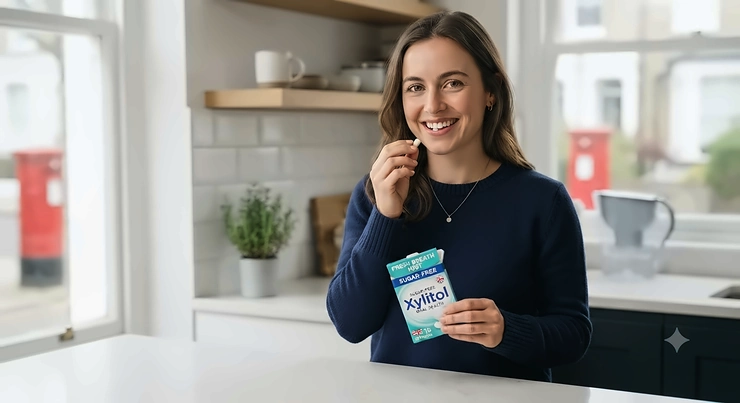
Xylitol gum for bad breath is sugar-free chewing gum sweetened mainly with xylitol, a plant-derived sweetener that oral bacteria cannot ferment into acid. Chewing it boosts saliva, rinses away food debris and odour-causing bacteria, and adds minty freshness. It is a between-brushes helper, not a cure for underlying causes.
Bad breath is the awkward guest at every oral-health party. Commonly cited estimates suggest roughly three in ten people deal with it, yet hardly anyone mentions it out loud. The uncomfortable truth? Most cases start in the mouth itself — bacteria on the tongue, between the teeth and below the gumline — so xylitol gum for bad breath can only ever be the supporting act, never the whole show.
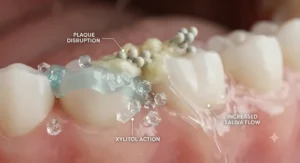
But a good supporting act matters. The Oral Health Foundation explains that chewing sugar-free gum increases saliva flow, which can make a dry mouth more comfortable and help freshen breath. Xylitol adds a second trick: it tastes sweet without feeding the bacteria behind tooth decay. So the sensible question for 2026 isn’t “should I chew?” but “which xylitol gum for bad breath deserves a place in my pocket?”
This guide answers that honestly. I’ve compared seven real, UK-available products — gums, pastilles and sugar-free mints — using their published ingredient lists, pack specs and the patterns in genuine customer ratings. I haven’t chewed my way through them personally, and I won’t pretend otherwise. What you’ll get instead is careful spec-reading, plain-English interpretation and a clear view of who each product suits, whether you’re after whitening gum for teeth and breath, tooth-friendly sweeteners, or the top breath mints under £5.
Quick Comparison Table: Xylitol Gum for Bad Breath and Mints at a Glance
Before the deep dive, here’s the whole field of xylitol gum for bad breath and sugar-free mints on one screen. Read the table left to right: format first (chew or dissolve), then the sweetener system, then a rough price range, then the job each product does best. Prices are ranges at the time of research and shift often, so check current price before you buy.
| Product | Format | Main sweetener(s) | Price range | Best For |
|---|---|---|---|---|
| Peppersmith British Peppermint Gum | Gum, pocket packs | Xylitol only | Around £2-£3 per pack | Purist xylitol chewing |
| PUR Gum | Gum, 55-piece bag | Xylitol, no aspartame | Varies by pack size | Heavy chewers avoiding aspartame |
| Nuud Plastic Free Gum | Gum, 9-piece packs | Xylitol plus stevia | Around £1-£2 per pack | Eco-minded chewers |
| Wrigley’s Extra White Peppermint | Gum, 46-piece bottle | Xylitol, sorbitol, aspartame, others | Under £3 | Budget whitening gum |
| Peppersmith Peppermint Mints | Mints, 15g box | Xylitol | Around £3 | Top breath mints under £5 |
| Xylingxyling Peppermint Pastilles | Pastilles, 160 pieces | Xylitol (around 97%) | Around £10 per tub | Best-value near-pure xylitol |
| Trebor Mighties Sugar Free Mints | Mints, tub | Sorbitol, sucralose | Well under £5 | Cheapest instant hit |
Looking at the comparison above, Peppersmith British Peppermint Gum is the purest xylitol-only chew, while Wrigley’s Extra White Peppermint wins on price per piece but uses a blended sweetener system that includes aspartame. If you’d rather not chew at all, sugar-free mints such as Peppersmith Peppermint Mints and Xylingxyling Peppermint Pastilles dissolve instead, and Trebor Mighties Sugar Free Mints trades xylitol for sorbitol in exchange for a rock-bottom price.
💬 Just one click — help others make better buying decisions too!😊
Top 7 Xylitol Gum for Bad Breath Picks: Expert Analysis
Seven picks follow, ordered roughly from purist xylitol chewing through to budget mints. Every entry sticks to what can be verified — ingredients, pack specs and aggregated rating patterns — plus honest reasoning about what they mean for your mouth. Where I couldn’t verify review themes, I say so rather than guess.
1. Peppersmith British Peppermint Gum — the most xylitol-focused pick
If you want a gum whose sweetener list has exactly one name on it, this is your starting point. Peppersmith British Peppermint Gum relies on xylitol alone, with peppermint oil, natural menthol and gum arabic rounding out a short, readable ingredient list.
Each piece carries roughly 1g of xylitol, and a pocket pack holds about ten pieces. That matters because dental studies on xylitol tend to land on several grams a day, spread across the day, so the arithmetic is refreshingly simple: the brand’s own suggestion of five pieces daily gets you into that territory. Based on the spec comparison, this suits label-readers who want no aspartame, no artificial colours and no drama. The peppermint oil gives a cleaner, less confectionery flavour than fruity gums, which is ideal after coffee or a garlicky lunch.
On UK listings it sits around 4.3 stars from roughly a thousand ratings, a solid showing. I couldn’t verify a detailed breakdown of review themes for this specific pack, though, so treat flavour longevity as something to test with a single pocket pack first.
Pros:
- ✅ Xylitol is the only sweetener
- ✅ Carries Oral Health Foundation approval, per the listing
- ✅ Slim pocket packs slip into any bag
Cons:
- ❌ Costs more per piece than mainstream gums
- ❌ Only peppermint and spearmint flavours
Expect roughly £2-£3 per pocket pack, or the low-£20s for a 12-pack box, at the time of research; check current price. Verdict: pricier per piece, but the ingredient list justifies it if xylitol-first matters to you.
2. PUR Gum — the aspartame-free bag for heavy chewers
Some people chew twice an hour and hate running out. PUR Gum arrives in a resealable 55-piece bag that solves exactly that problem.
It’s sweetened with xylitol, free from aspartame, vegan and gluten-free, and marketed as Swiss-made. Third-party breakdowns suggest around 1g of xylitol per piece, though the gum base isn’t itemised publicly. One UK reviewer makes a fair point worth repeating: “100% xylitol” describes the sweetener, not the whole gum, because chewing gum needs a base to be chewable in the first place.
Here’s what the spec sheet won’t tell you, but reviewers note: the pieces are small, chiclet-style, so many people chew two at once. That’s no bad thing for xylitol exposure, since more grams per session is the goal, but it does shorten the bag’s life. Reviewers on the UK listing praise the flavour, its staying power compared with other brands and the absence of aspartame. Reviews on other retailers’ pages are more mixed, with some describing firm pieces and flavour that fades quickly.
Pros:
- ✅ Aspartame-free and vegan
- ✅ Generous, resealable 55-piece bag
- ✅ Several flavours beyond mint
Cons:
- ❌ Small pieces, so two at a time is common
- ❌ Some reviewers report fading flavour
Price varies by pack size and seller, from single bags to multipacks, so check current price and compare cost per piece. Verdict: sensible value if you genuinely chew every day.
3. Nuud Plastic Free Gum — the plant-based chew with a lighter footprint
Most conventional gum bases are synthetic polymers. Nuud Plastic Free Gum swaps that for natural chicle, and it lists xylitol, natural flavouring, glycerol, gum arabic, stevia and carnauba wax to complete the recipe. On Amazon UK it’s sold as a multipack of twelve packs with nine pieces each.
Notice the stevia: it sits alongside xylitol, so this is not a xylitol-only formula. In practice that means a touch less xylitol per piece than a purist gum, though the label is still xylitol-first and aspartame-free. Nine pieces per pack is compact — ideal for a jacket pocket, less ideal for a marathon meeting schedule.
Who is it for? Eco-conscious buyers who still want xylitol gum for bad breath rather than a gimmick, and who read tooth-friendly sweeteners on a label like a menu. One caution from a UK beauty publication’s round-up of plastic-free gums: natural-base chews as a category can feel different from synthetic ones, and one rival brand was reported to stick to teeth more. I couldn’t verify a reliable sample of UK reviews for this specific Amazon pack, so I won’t paraphrase sentiment I can’t see. What is verifiable is that Nuud is described as Oral Health Foundation approved in that same round-up.
Pros:
- ✅ Plastic-free, plant-based chicle base
- ✅ Xylitol-first and aspartame-free
- ✅ Slim nine-piece packs suit pockets
Cons:
- ❌ Contains stevia, so not xylitol-only
- ❌ Fewer pieces per pack than bag or jar formats
Small packs typically sit in the £1-£2 bracket in UK shops, with the multipack lowering the cost per pack; check current price. Verdict: fair value if the plastic-free angle matters to you.
4. Wrigley’s Extra White Peppermint — budget whitening gum for teeth and breath
The supermarket stalwart has a whitening cousin, and Wrigley’s Extra White Peppermint in the 46-piece bottle is the cheapest way into whitening gum for teeth and breath. The bottle format keeps it fresh on a desk or in a car door pocket.
The sweetener line-up reads xylitol, sorbitol, aspartame, mannitol and acesulfame K. Ingredients are listed by weight, so xylitol is the largest sweetener component, but the blend means each piece likely carries less xylitol than a xylitol-only gum; the listing doesn’t publish a per-piece figure. The manufacturer’s claim is that it helps remove stains and maintain natural whiteness. Read that as surface stain management, not bleaching.
This is the pick for price-sensitive commuters who want familiar flavour and a decent saliva boost after coffee. Star ratings on the UK listings sit around 4.6, from several hundred ratings on the peppermint bottle to thousands on the bubblemint version. I couldn’t verify recurring review themes, so the score is the only sentiment I can vouch for.
Pros:
- ✅ Very low cost per piece
- ✅ Familiar taste, widely available
- ✅ Xylitol is the first listed sweetener
Cons:
- ❌ Contains aspartame and acesulfame K
- ❌ Includes soya lecithin and colourant E133
Under £3 for a 46-piece bottle at the time of research; check current price. Verdict: the best value here, provided aspartame isn’t a dealbreaker for you.
5. Peppersmith Peppermint Mints — top breath mints under £5 for xylitol fans
A 15g box of Peppersmith Peppermint Mints costs around £3 and holds roughly 25 small pressed mints. They’re sweetened with xylitol rather than sorbitol, and the ingredient list is short: xylitol, gum arabic and peppermint oil lead the way.
Mints dissolve rather than get chewed, so you lose the mechanical saliva stimulation of gum, although the flavour itself still nudges saliva flow. One California Dental Association fact sheet advises letting xylitol mints dissolve fully and using them three to five times daily, which is a handy rule of thumb: pop one after each meal instead of crunching through them.
Buyers on the UK listing for the 12-box multipack rate them around 4.5 stars from well over a thousand ratings, while the separate “extra strong” variant scores noticeably lower from a much smaller sample, a reminder that mint intensity is personal. The listing also says the brand is approved by the Oral Health Foundation.
Pros:
- ✅ Xylitol-sweetened and sugar-free
- ✅ Slim box comfortably under £5
- ✅ Approved by the Oral Health Foundation, per the listing
Cons:
- ❌ Tiny mints mean a box disappears quickly
- ❌ Extra strong variant rated lower by buyers
Around £3 per box at the time of research, with Extra Strong Dental Mints nearer £4.50; check current price. Verdict: excellent value for a genuinely xylitol-based mint.
6. Xylingxyling Peppermint Pastilles — best-value near-pure xylitol
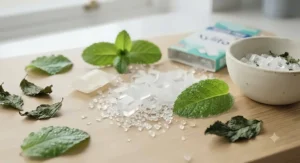
Finnish-made Xylingxyling Peppermint Pastilles are dissolving tablets rather than mints, sold as a 90g tub of 160 pieces. The maker describes them as roughly 97% xylitol, with natural flavours, vegan and gluten-free, and suggests two after meals or snacks.
Do the sums: at two pastilles after each of three meals, one tub lasts just under four weeks. At around £10 that works out at roughly 6p a pastille — over the £5 mark for the tub, but low per piece. Because they’re nearly all xylitol, each one delivers a meaningful dose, although I couldn’t find a per-pastille gram figure on the pages reviewed.
Here’s the practical angle: pastilles suit people who can’t or shouldn’t chew. The Oral Health Foundation says gum isn’t suitable for denture wearers, so a dissolving option may be worth raising with your dentist. Amazon’s summary of UK customer feedback points to good dental-care feel, fresher breath, relief from dry mouth and value for money, with mixed views on the small size and a few finding them too sweet. Ratings sit around 4.5 stars from over 500 ratings.
Pros:
- ✅ Around 97% xylitol, per the maker
- ✅ 160 pieces per tub
- ✅ Dissolves, so no chewing needed
Cons:
- ❌ Small pieces, according to some buyers
- ❌ A few reviewers find them too sweet
Around £10 per tub at the time of research; check current price. Verdict: the best long-run value among near-pure xylitol options.
7. Trebor Mighties Sugar Free Mints — the cheap-and-cheerful classic
Everyone knows the Extra Strong punch; Trebor Mighties Sugar Free Mints deliver it in a sugar-free tub. Retailer listings describe the range as sweetened with sugar alcohols and sweeteners — sorbitol and sucralose on the label of the related Minis — so always check the tub in your hand, as formulations differ between products.
What does that mean in practice? Sorbitol is tooth-friendly in the sense that it isn’t sugar, but a clinical paper on xylitol notes that sorbitol doesn’t reduce the decay-causing bacteria the way xylitol does. So treat these as an instant masking hit for post-onion emergencies rather than a xylitol gum for bad breath alternative with dental extras. As with most polyols, heavy snacking can upset your stomach.
Review samples are too tiny to draw conclusions: single-figure counts on both Amazon and a supermarket listing, albeit with high scores. That’s why I’m not leaning on sentiment here.
Pros:
- ✅ Very cheap per tub in UK shops
- ✅ Intense peppermint hit
- ✅ Sugar-free
Cons:
- ❌ Not xylitol-sweetened
- ❌ Amazon marketplace pricing can exceed supermarket shelves
Supermarkets usually charge well under £1 per tub, while the Amazon listing was higher at the time of research; check current price before you click. Verdict: brilliant for pennies, but not the pick for oral-health extras.
How to Use Xylitol Gum for Bad Breath: A Practical Daily Routine
Buying the right pack is half the job; using xylitol gum for bad breath well is the other half. This routine is built from dental guidance and dosing research, and it’s something you can start today.
- Time it right. Reach for a piece straight after meals, snacks or a coffee, when acids and food debris peak. The Oral Health Foundation suggests chewing for about 20 minutes after eating or drinking, while xylitol trials often used sessions of around five minutes. Go with whatever your jaw tolerates.
- Choose frequency over volume. Three to five short sessions a day, totalling roughly 5g of xylitol, is the range dental sources call optimal. One heroic chewing marathon isn’t the same thing.
- Keep brushing. Brush last thing at night and once more during the day with fluoride toothpaste, and clean between your teeth daily. Add tongue cleaning, because tongue coating is a leading source of odour.
- Bin it properly. Wrap used gum and bin it, never on the pavement.
Common mistakes in the first 30 days are predictable. People chew far more than needed and meet the laxative effect head-on; they treat gum as a brushing substitute; and they ignore odour that never quite leaves, which needs a dentist’s eye. With xylitol gum for bad breath, keep a simple rhythm — one piece after breakfast, lunch, dinner and a coffee — and adjust from there. If your jaw aches, shorten sessions or switch to dissolving options such as Xylingxyling Peppermint Pastilles.
Real-World Scenarios: Matching Xylitol Gum for Bad Breath to Your Life
Products only matter when they meet real routines, and xylitol gum for bad breath is no exception. Here are three profiles, each matched to picks with reasoning.
The budget-conscious commuter. Nine-to-five office, three coffees a day, lunchtime meetings. A bottle of Wrigley’s Extra White Peppermint lives on the desk, and a box of Peppersmith Peppermint Mints rides in a jacket pocket for stand-ups. At around five pieces a day, one 46-piece bottle lasts about nine days, roughly £8 a month.
The dog owner. Xylitol is a genuine hazard at home. Vets Now describes it as highly poisonous to dogs and advises keeping sugar-free products well out of reach. Flat, closed packs of Peppersmith British Peppermint Gum and Nuud Plastic Free Gum are easy to keep zipped in a bag; small rattly tubs left on a coffee table are the riskiest habit.
The dry-mouth sufferer. If medication leaves your mouth parched, saliva stimulation matters more than minty flavour. Sipping water, chewing sugar-free gum where appropriate and, for denture wearers, asking a dentist about dissolving options such as Xylingxyling Peppermint Pastilles is a sensible combination. Frequency: after every meal, plus once mid-afternoon.
✨ Don’t Miss These Handpicked Options!
🔍 Take your fresh-breath routine to the next level with these carefully selected products. Click on any highlighted item to check current pricing and availability. These picks will help you build a confident, tooth-friendly habit you’ll actually stick to!
How to Choose Xylitol Gum for Bad Breath: 7 Simple Steps
The short answer on how to choose xylitol gum for bad breath: pick a sugar-free product where xylitol leads the ingredient list, that suits how you like to use it (chew or dissolve), and that fits your budget per piece. Here’s the longer reasoning.
- Check the label order. Ingredients are listed by weight, and dental sources say xylitol should be listed first for decay-preventing levels. Xylitol-first beats a token sprinkle.
- Think in grams. Aim for products giving roughly 1g of xylitol per piece so daily totals are easy to reach.
- Pick your format. Chew for saliva stimulation; dissolve if you have dentures, braces or a sore jaw (ask your dentist).
- Decide about aspartame. Some buyers avoid it, and some sugar-free mints and gums use it too. Peppersmith British Peppermint Gum and PUR Gum skip it; Wrigley’s Extra White Peppermint includes it.
- Inspect the gum base. Synthetic or plant-based? Nuud Plastic Free Gum uses chicle if that matters.
- Match flavour to context. Peppermint for post-coffee; fruit flavours for kids’ parties (not under sevens, though).
- Compare cost per piece. A £10 tub of 160 pastilles beats a pricey gum on cost per exposure.

Saliva Stimulation: Why Chewing Beats Simply Masking Odour
Here’s the plot twist: cosmetic gum benefits aside, the most useful thing xylitol gum for bad breath does isn’t the flavour. It’s saliva stimulation. Chewing works the muscles around your salivary glands, and the resulting flow rinses food debris off teeth, dilutes acids and washes away odour-causing bacteria. Saliva also contains natural antibacterial enzymes, which is why a moist mouth smells fresher than a parched one.
A peer-reviewed review of halitosis treatments found that most cases stem from inadequate oral hygiene, gum disease and tongue coating, with ear, nose and throat problems accounting for around 10% and gastrointestinal or endocrine disorders around 5%. So saliva stimulation helps at the margins, particularly for dry mouths, but it can’t outrun a hygiene problem.
What does this mean for buying xylitol gum for bad breath? Gum edges out sugar-free mints on saliva stimulation because of the chewing action, though mints and pastilles still supply xylitol contact as they dissolve. If your breath problem is stubborn, sugar-free mints and xylitol gum for bad breath alike can only do so much;, spend your effort on brushing, interdental cleaning and a dental check-up first, and treat gum as the finishing touch. Think of it like deodorant: brilliant after a shower, useless instead of one.
Tooth-Friendly Sweeteners: How Xylitol, Sorbitol and Erythritol Compare
Not every sugar-free product is equally kind to teeth, so let’s compare tooth-friendly sweeteners honestly. Tooth-friendly sweeteners are the reason xylitol gum for bad breath and sugar-free mints exist as a category at all. Xylitol accumulates inside decay-linked bacteria (Streptococcus mutans) as a metabolite they can’t use, which inhibits their growth and can reduce plaque over time. Sorbitol-sweetened gum has also been shown to lower caries risk, but a clinical paper notes it has no effect on those bacteria and is less effective than xylitol.
Then there’s erythritol. A three-year trial of 485 schoolchildren reported that erythritol candies outperformed xylitol and sorbitol on several cavity measures. Worth knowing: the study was funded by an erythritol producer, and xylitol remains the best-studied sweetener in gum. Dose matters too. One meta-analysis found benefits at around 5-10g of xylitol a day, split across three to five exposures, with little effect below roughly 3.4g.
For bad breath specifically, the evidence is thinner than for tooth decay, so lean on the bigger picture: tooth-friendly sweeteners protect enamel while saliva stimulation and hygiene handle odour. That makes tooth-friendly sweeteners a bonus, not the main event, and it makes Peppersmith British Peppermint Gum and Xylingxyling Peppermint Pastilles natural choices, with Nuud Plastic Free Gum close behind despite the added stevia.
Sugar-Free Mints vs Xylitol Gum for Bad Breath: Which Wins?
Sugar-free mints are convenient, silent and desk-drawer friendly, and the best sugar-free mints are xylitol-based. Xylitol gum for bad breath is more active, with chewing driving saliva stimulation. Which deserves your pocket space depends on the moment.
| Option | Saliva effect | Tooth-friendliness | Best For |
|---|---|---|---|
| Peppersmith British Peppermint Gum | Strong: chewing plus flavour | Xylitol, tooth-friendly | Post-meal sessions |
| Xylingxyling Peppermint Pastilles | Moderate: flavour-driven | Near-pure xylitol, dissolving | Dry mouth, no-chew situations |
| Trebor Mighties Sugar Free Mints | Moderate: flavour-driven | Sugar-free, sorbitol-based | Quick masking |
| Traditional sugary mints | Flavour-driven | Feed bacteria | Occasional treats only |
Looking at the comparison above, gum wins for saliva stimulation, but sugar-free mints win for discretion, and the smartest sugar-free mints are xylitol-sweetened, which counts in a meeting or on a train. Xylingxyling Peppermint Pastilles are the interesting hybrid, offering xylitol contact without the jaw work. The one option to avoid for oral health is the traditional sugary mint, which keeps feeding the bacteria you’re trying to starve.
Top Breath Mints Under £5: Price and Value Analysis
The top breath mints under £5 are easier to find than you’d think, but “cheap” and “good value” aren’t synonyms. The trick is cost per piece and what you get for it. Prices here are approximate ranges at the time of research; check current price before buying.
| Product | Typical spend | Cost per piece | Best For |
|---|---|---|---|
| Peppersmith Peppermint Mints | Around £3 per box | Roughly 12p | Top breath mints under £5 with xylitol |
| Trebor Mighties Sugar Free Mints | Under £1 in shops | Pennies | Cheapest instant hit |
| Wrigley’s Extra White Peppermint | Under £3 per bottle | Around 5p | Gum, not mint, for budgets |
| Nuud Plastic Free Gum | £1-£2 per pack | Roughly 15p | Eco-friendly pocket packs |
| Xylingxyling Peppermint Pastilles | Around £10 per tub | Around 6p | Lowest cost per xylitol dose |
Looking at the numbers, Peppersmith Peppermint Mints is the clear winner if you want xylitol in a mint for under £5, while Xylingxyling Peppermint Pastilles demands more upfront but wins over a month. Trebor Mighties Sugar Free Mints is cheapest in a supermarket, though marketplace listings can cost several times more, so compare before you click.
Whitening Gum for Teeth and Breath: What It Can and Can’t Do
Whitening gum for teeth and breath sounds like a double win, and to a degree it is. Wrigley’s Extra White Peppermint says it helps remove stains and maintain natural whiteness. Chewing after coffee, tea or red wine can help dislodge surface staining and restart saliva flow, which is helpful.
But let’s keep our expectations honest. Gum is not bleach. It manages surface stains rather than changing the underlying shade of your teeth, so anyone expecting a visibly whiter smile within a week is going to be disappointed. Genuine shade change generally needs professional whitening from a registered dental professional.
The other trade-off is ingredients. Whitening gum in the mainstream range uses blended sweeteners including aspartame and a colourant, whereas purist picks like Peppersmith British Peppermint Gum skip both. If whitening gum for teeth and breath appeals mainly because it’s cheap and familiar, Wrigley’s Extra White Peppermint does the job. If you’re ingredient-fussy, choose a xylitol-only gum and treat any whitening effect as a bonus rather than a promise.
Cosmetic Gum Benefits: Confidence, Convenience and Where It Stops
Cosmetic gum benefits are real, just modest. Think of cosmetic gum benefits as freshness, confidence and convenience rather than treatment. A dentist-authored guide from a US oral-care brand notes that sugar-free gum can mask bad breath quickly and help clear food from teeth until you reach a toothbrush. Add the small pleasures — a calmer mid-afternoon, a substitute for sweets — and the appeal is obvious.
Confidence is the headline of the cosmetic gum benefits list. Knowing you’ve freshened up before a meeting or a first date changes your body language, which is arguably the point. Convenience is the second: a pocket pack, a bottle in the car, a tin on the desk.
Where it stops is equally important. Cosmetic gum benefits are temporary and don’t fix plaque, tongue coating or gum disease. They also don’t replace fluoride toothpaste or cleaning between teeth. Use xylitol gum for bad breath as a between-brushes touch-up, and cosmetic gum benefits will feel like a bonus, not a disappointment.
Safety, Side Effects and Who Should Skip It
Xylitol gum for bad breath is generally well tolerated by healthy adults, and sugar-free mints follow similar rules,, but a few safety points deserve straight talk.
Laxative effects. Polyols such as xylitol and sorbitol are digested slowly, and products carry a warning that excessive consumption may cause a laxative effect. Research on xylitol reports gastrointestinal side effects mainly with very large single doses, far beyond a few pieces of gum.
Heart health questions. A 2024 observational study raised questions about xylitol and cardiovascular events. A response published in the European Heart Journal argued that the oral-health doses used in gum haven’t been shown to be systemically absorbed or toxic and urged cautious interpretation. If you have heart disease and feel uneasy, ask your GP or pharmacist.
Who should skip it. The Oral Health Foundation says sugar-free gum isn’t suitable for children under seven because of choking risk, or for denture wearers, and some braces wearers should check with their dental team first.
Dogs. As covered above, xylitol is dangerous for dogs, so store every product securely.
Frequently Asked Questions
❓ Is xylitol gum for bad breath better than ordinary sugar-free gum?
❓ Why does my breath still smell after chewing gum?
❓ Can children or denture wearers use xylitol gum for bad breath?
❓ Is xylitol gum for bad breath vegan-friendly?
❓ Will xylitol gum help with morning breath?
Conclusion
The honest summary: xylitol gum for bad breath works best as a between-brushes helper, and the best pick depends on your priorities. For a purist xylitol-only chew, Peppersmith British Peppermint Gum leads. Heavy chewers who avoid aspartame will like the big PUR Gum bag, while eco-minded buyers should look at Nuud Plastic Free Gum. On a tight budget, Wrigley’s Extra White Peppermint is the cheapest whitening gum for teeth and breath, though it includes aspartame.
If you prefer sugar-free mints, Peppersmith Peppermint Mints are the standout among the top breath mints under £5, Xylingxyling Peppermint Pastilles win on long-run value for dissolving xylitol, and Trebor Mighties Sugar Free Mints is the pennies-only classic without the xylitol extras.
Remember the limits, too, of xylitol gum for bad breath. Saliva stimulation and tooth-friendly sweeteners help, and cosmetic gum benefits are pleasant, but none of it replaces brushing, cleaning between teeth and a dentist’s opinion if the smell won’t shift. Start small, chew after meals, keep it away from dogs, and enjoy fresher breath.
✨ Ready to Freshen Up for Real!
🔍 Take your daily routine to the next level with these carefully selected products. Click on any highlighted item to check current pricing and availability. These picks will help you create a confident, tooth-friendly habit that works with your day!
Recommended for You
- Dissolving Breath Strips vs Chewing Gum: 7 Best Picks (2026)
- Natural Breath Spray vs Mint Breath Spray: 7 Best UK Picks 2026
- Throat Spray for Bad Breath: 7 Best UK Picks (2026)
Disclaimer: This article contains affiliate links. As an Amazon Associate, I earn from qualifying purchases. If you purchase products through these links, we may earn a small commission at no additional cost to you.
✨ Found this helpful? Share it with your friends! 💬🤗
