
In This Article
You brush your teeth twice daily, use mouthwash, and visit your dentist regularly—yet you’re still missing up to 40% of your tooth surfaces. The culprit? Those tight spaces between your teeth where even the most expensive electric toothbrush simply cannot reach. This is where interdental brushes come into play, and they’re quietly revolutionising oral hygiene across the UK.
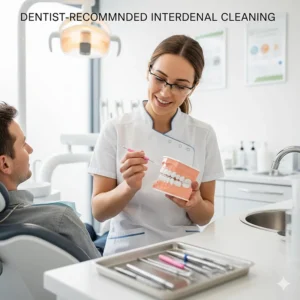
I remember chatting with my dental hygienist last year after she recommended I switch from traditional floss. “Trust me,” she said, “once you start using interdental brushes properly, you’ll wonder how you ever managed without them.” She was absolutely right. Within a fortnight, I noticed less bleeding, fresher breath, and that satisfying feeling of genuinely clean teeth.
According to the NHS, you can use interdental brushes or single-tufted brushes instead of flossing, especially if there are gaps between your teeth. What’s more, interdental brushing has overtaken traditional floss as the preferred way in which Brits clean in-between their teeth, and for good reason—they’re more effective, easier to use, and deliver results you can actually see.
In this comprehensive guide, I’ll walk you through everything you need to know about interdental brushes in 2026. We’ll explore the top seven products available on Amazon.co.uk, decode the sometimes confusing ISO sizing system, and answer the burning question: are interdental brushes genuinely better than floss? Whether you’re dealing with tight spaces, wearing braces, or simply want to upgrade your oral hygiene routine, you’ll find practical advice tailored specifically for UK residents.
Let’s dive into why these tiny brushes pack such a powerful punch for your dental health.
Quick Comparison Table: Top Interdental Brushes at a Glance
| Product | Size Range | Price (£) | Best For | Rating |
|---|---|---|---|---|
| TePe Original Mixed Pack | 0.4-1.3mm (ISO 0-7) | £3.99-£11.99 | All-round versatility | ⭐⭐⭐⭐⭐ |
| Curaprox CPS Prime | 0.6-1.1mm | £6.25-£7.80 | Premium quality seekers | ⭐⭐⭐⭐⭐ |
| TePe Angle Mixed Pack | 0.4-0.8mm (ISO 0-5) | £3.99-£4.50 | Back teeth access | ⭐⭐⭐⭐½ |
| Wisdom Clean Between | 3 sizes (rubber) | £3.00-£4.95 | Sensitive gums | ⭐⭐⭐⭐ |
| Vision Interdental Trial Pack | 2.5-12mm (6 sizes) | £4.50-£6.00 | First-time users | ⭐⭐⭐⭐ |
| TePe Extra Soft | 0.5-0.7mm (ISO 2-4) | £3.35-£4.25 | Post-surgery care | ⭐⭐⭐⭐½ |
| iWave Fine Brushes | 0.4mm (Pink) | £3.50-£4.99 | Tight spaces | ⭐⭐⭐⭐ |
💬 Just one click – help others make better buying decisions too! 😊
✨ Don’t Miss These Exclusive Deals!
🔍 Take your oral hygiene to the next level with these carefully selected products. Click on any highlighted item to check current pricing and availability on Amazon.co.uk. These tools will help you create authentic results your family will love!
Top 7 Interdental Brushes: Expert Analysis
1. TePe Interdental Brush Original Mixed Pack – The Gold Standard
If there’s one brand that dental professionals across the UK consistently recommend, it’s TePe. The Swedish manufacturer has perfected the art of interdental cleaning, and their Original Mixed Pack is the ideal starting point for anyone serious about improving their oral hygiene.
Key Specifications:
- Contains 8 brushes in 8 different sizes (0.4-1.3mm, ISO 0-7)
- Plastic-coated wire for safe cleaning around implants
- Made from renewable materials
Price Range: £3.99-£11.99 (depending on pack size)
UK Customer Feedback: UK buyers consistently praise the quality and durability. One recent reviewer from Manchester noted they’re “much better than dental floss and much easier to use,” whilst another from Edinburgh mentioned they’ve been “using these for years on dentist recommendation—they’re the best.”
✅ Pros:
- Comprehensive size range helps you find perfect fit
- Colour-coded for easy identification
- Sustainable materials appeal to eco-conscious buyers
❌ Cons:
- Individual caps no longer included (cost-cutting measure)
- Can bend with excessive force
TePe Original remains the benchmark against which all other interdental brushes are measured.
2. Curaprox CPS Prime Starter Kit – Swiss Precision Engineering
When you want the Rolls-Royce of interdental brushes, look no further than Curaprox. This Swiss brand brings pharmaceutical-grade precision to everyday oral care, with a clever click-on system that reduces plastic waste whilst delivering exceptional cleaning power.
Key Specifications:
- Reusable handles with replaceable brush heads
- Ultra-fine Curen® filaments (0.1mm diameter)
- Available in sizes 0.6-1.1mm
Price Range: £6.25-£8.00 for starter kits
UK Customer Feedback: Long-term users in the UK report these brushes last significantly longer than cheaper alternatives. A London-based reviewer mentioned using Curaprox for “several years and find them more convenient and effective than flossing.”
✅ Pros:
- Eco-friendly refill system reduces waste
- Exceptionally durable construction
- Flexible yet robust for daily use
❌ Cons:
- Higher upfront investment
- Fewer size options than TePe range
For those willing to invest in quality, Curaprox CPS Prime delivers outstanding value over time.
3. TePe Angle Interdental Brushes – Perfect for Posterior Access
Cleaning between your back molars can feel like performing dental gymnastics. The TePe Angle range solves this problem with pre-angled brush heads that reach those awkward posterior spaces without requiring you to dislocate your jaw.
Key Specifications:
- Pre-angled head for easier back-teeth access
- Long, flat handle for stable grip
- Available in 6 sizes (0.4-0.8mm, ISO 0-5)
Price Range: £3.99-£4.50 per pack
UK Customer Feedback: Users particularly appreciate the ergonomic design. One Birmingham reviewer specifically praised how “easy it is to reach those difficult back teeth without having to bend the wire.”
✅ Pros:
- No manual bending required
- Reduces strain on wrists and hands
- Ideal for people with limited dexterity
❌ Cons:
- Slightly higher price than straight versions
- Angle may not suit everyone’s mouth shape
The TePe Angle is particularly brilliant for elderly users or anyone with arthritis.
4. Wisdom Clean Between Rubber Interdental Brushes – Gentle Giant
Not everyone gets along with traditional wire-core brushes, and that’s where Wisdom’s rubber alternative shines. These soft silicone brushes offer a gentler approach to interdental cleaning, making them ideal for sensitive gums or those new to the practice.
Key Specifications:
- 100% rubber construction (no metal wire)
- Available in three sizes: Fine (blue), Medium (green), Large (purple)
- Safe around implants, fillings, and braces
Price Range: £3.00-£4.95 per pack
UK Customer Feedback: UK buyers with sensitive gums report significantly less discomfort. A Bristol reviewer noted these are “much gentler than wire brushes whilst still doing an effective job.”
✅ Pros:
- Zero risk of wire damage
- Comfortable for sensitive mouths
- Easy to carry in handbag or pocket
❌ Cons:
- Less effective for very tight spaces
- May not remove stubborn plaque as efficiently
Wisdom Clean Between proves you don’t always need metal to achieve a thorough clean.
5. Vision Interdental Trial Pack – The Perfect Starter Set
Designed by dental hygienists and marketed right here in Britain, the Vision trial pack removes the guesswork from choosing your first interdental brushes. With six different sizes included, you can systematically work through your mouth to identify exactly which brushes work best where.
Key Specifications:
- 6 brushes (one of each size): 2.5mm, 3mm, 5mm, 8mm, 10mm, 12mm
- Colour-coded for easy identification
- UK-designed and marketed
Price Range: £4.50-£6.00 per trial pack
UK Customer Feedback: First-time users find this approach invaluable. A Scottish reviewer mentioned it “took the confusion out of choosing the right size—brilliant for beginners.”
✅ Pros:
- Takes guesswork out of sizing
- Cost-effective way to find perfect fit
- Supports British dental hygiene innovation
❌ Cons:
- Limited to one brush per size
- May need to purchase additional packs once you identify your sizes
For UK residents new to interdental brushing, the Vision Trial Pack is an excellent, locally-designed solution.
6. TePe Extra Soft Interdental Brushes – Post-Surgery Specialist
Following dental surgery, gum recession, or for those with particularly sensitive tissues, the Extra Soft range from TePe provides the gentlest clean possible without compromising on effectiveness. These brushes feature softer filaments that caress rather than scrub.
Key Specifications:
- Extra-soft bristles for sensitive gums
- Available in 6 sizes (0.5-0.7mm, ISO 2-4)
- Recommended by dental professionals for post-operative care
Price Range: £3.35-£4.25 per pack
UK Customer Feedback: Those recovering from dental procedures praise the gentle action. A Leeds reviewer recovering from implant surgery called them “an absolute lifesaver during healing.”
✅ Pros:
- Minimises discomfort for sensitive gums
- Reduces bleeding during initial use
- Professional recommendation for recovery
❌ Cons:
- May wear out faster than regular bristles
- Not suitable for heavy plaque buildup
TePe Extra Soft bridges the gap between necessary cleaning and comfortable healing.
7. iWave Interdental Brushes Fine 0.4mm – Budget-Friendly Brilliance
Not everyone needs premium Swiss engineering or extensive size ranges. Sometimes you just want reliable, affordable interdental brushes that do the job without breaking the bank. The iWave Fine brushes deliver exactly that—no-nonsense cleaning at a fraction of the cost.
Key Specifications:
- 0.4mm diameter (pink, extra-fine)
- Pack of 5 brushes
- Simple, functional design
Price Range: £3.50-£4.99 per pack
UK Customer Feedback: Value-conscious UK buyers appreciate the competitive pricing without sacrificing quality. A Cardiff reviewer noted these offer “excellent value for money—they do the job perfectly well.”
✅ Pros:
- Excellent value for money
- Ideal for tight spaces
- Simple, no-frills approach
❌ Cons:
- Limited size options
- Less durable than premium brands
For those watching their pennies, iWave Fine proves effective oral care needn’t cost the earth.
Understanding ISO Size Standards: Your Complete Guide
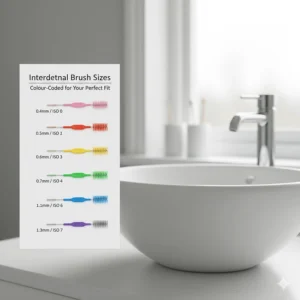
One of the most confusing aspects of purchasing interdental brushes is deciphering the sizing system. The international guideline ISO 16409:2016 determines interdental brush size based on the passage hole diameter (PHD), with ISO sizes ranging from 0 to 8. However, not all manufacturers use this standard consistently, which can lead to confusion when switching brands.
What Is the ISO Sizing System?
The ISO system measures the smallest hole through which a brush can pass, known as the Passage Hole Diameter (PHD). The size range of commercially available products was 0.6–5.2mm PHD, with 90% presenting with a PHD ≤ 2.0mm. This means most people will find their ideal size within the smaller end of the spectrum.
ISO Size Chart
| ISO Size | PHD Range | TePe Colour | Typical Use |
|---|---|---|---|
| ISO 0 | 0.4-0.45mm | Pink | Extremely tight spaces |
| ISO 1 | 0.45-0.5mm | Orange | Very narrow gaps |
| ISO 2 | 0.5-0.6mm | Red | Narrow gaps (most common) |
| ISO 3 | 0.6-0.7mm | Blue | Small to medium gaps |
| ISO 4 | 0.7-0.8mm | Yellow | Medium gaps |
| ISO 5 | 0.8-0.9mm | Green | Large gaps |
| ISO 6 | 1.1-1.2mm | Purple | Very large gaps/implants |
| ISO 7 | 1.3mm | Grey | Extra-large gaps |
| ISO 8 | 1.5mm | Black | Maximum size gaps |
Why Colour Coding Isn’t Universal
Here’s where it gets tricky: whilst TePe uses pink for their smallest brush (0.4mm), a 1.1mm purple interdental brush from TePe corresponds to a green one from Curaprox. Always check the millimetre measurement or ISO number rather than relying solely on colour when switching brands.
How to Find Your Perfect Size
The bristles should fit snugly between the teeth and the wire should not touch either adjacent tooth. Do not force a brush into a space, and there should be no signs of pain. Start with the smallest size and work your way up until you feel gentle resistance. You’ll likely need 2-3 different sizes for different areas of your mouth—and that’s perfectly normal.
Interdental Brushes vs Floss: Which Is Better?
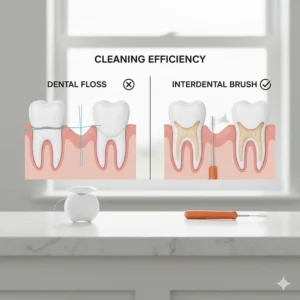
This debate has raged in dental circles for years, and the answer might surprise you. The British Society of Periodontology states that evidence supports the use of small interdental brushes for cleaning between the teeth where there is space to do so, in preference to flossing. However, they’re quick to add that floss is not a waste of time—it is a viable alternative to interdental brushing where appropriate.
The Scientific Evidence
Research comparing interdental brushes to dental floss found that interdental brushes were an effective alternative to dental floss for reducing bleeding and plaque between four and 12 weeks. Another comprehensive study revealed that in combination with a manual toothbrush, the use of interdental brushes is more effective in removal of plaque and results in a larger reduction of probing depth than the use of dental floss.
Benefits of Interdental Brushes
Effectiveness: Studies have shown that interdental brushes are the most effective interdental cleaning tool due to their superior plaque removal ability, with interdental bleeding reduced by 46% within one week.
Ease of Use: Many people find brushes simpler to manoeuvre than floss, particularly around back teeth or when dealing with limited dexterity.
Versatility: Interdental brushes excel at cleaning around braces, bridges, implants, and dental work where floss often struggles.
Reusability: Quality brushes can be rinsed and reused for up to a week, making them more economical long-term.
When Floss Wins
Floss isn’t obsolete—it still has its place:
- Very tight contacts: When teeth are extremely close together with no visible gap
- Front lower teeth: These tend to be tightly bunched in most people
- Travelling light: A compact floss container takes less space than brush packets
- Emergency cleaning: Perfect for removing that stubborn bit of spinach at a restaurant
The Hybrid Approach
Many dental professionals advise patients to adopt more than one technique, usually a combination of flossing and interdental brushing, for different areas of the mouth. Use interdental brushes where they fit comfortably, and reserve floss for those impossibly tight spaces between your front teeth. This combined approach delivers optimal results.
For more detailed information about maintaining healthy teeth, visit the NHS guide on keeping your teeth clean.
How to Use Interdental Brushes Correctly
Knowing which brush to buy is only half the battle—using them correctly ensures you actually reap the benefits. Here’s your step-by-step guide to mastering interdental cleaning.
Step 1: Choose the Right Size
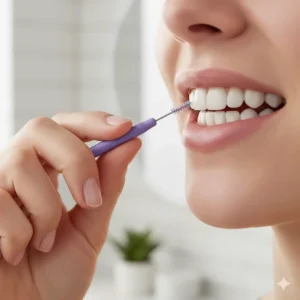
Start with your smallest brush. Look in the mirror and insert the brush between your teeth, close to the gums. Start with the smallest size and work your way up until you feel the brush bristles engage the tooth surface and the gum tissue. The brush should slide in with gentle pressure but never feel forced or painful.
Step 2: Insert at the Gumline
Position the brush at a slight angle towards the gumline. Don’t go straight in horizontally—a gentle angle allows better access to the space below the contact point where plaque loves to hide.
Step 3: Move Gently Back and Forth
Once inserted, move the interdental brush to its full length back and forth about 2-3 times. You’re not scrubbing vigorously—gentle, controlled movements work best.
Step 4: Access Back Teeth
For molars and premolars, you’ll need to angle your brush. Smaller sizes (pink, orange, red, blue) can be gently bent at the soft neck. Larger sizes with reinforced wires should be pre-curved before use. Alternatively, invest in pre-angled brushes like the TePe Angle range.
Step 5: Clean All Spaces
Work systematically around your entire mouth. Don’t just focus on obvious food traps—every interdental space deserves attention. You are likely to need two-three different sizes, or the combination of one-two brushes and floss.
Step 6: Rinse and Reuse
After use, rinse your brush thoroughly under running water. Allow it to air dry. Replace brushes weekly or when bristles become worn, whichever comes first.
What About Bleeding Gums?
If you haven’t cleaned between your teeth in a while, your gums can feel sore and bleed when you start cleaning. Don’t stop – bleeding is a sign of inflammation caused by plaque, so it’s important to keep cleaning every day. The bleeding typically subsides within a week as your gum health improves. If bleeding persists beyond two weeks or is excessive, consult your dentist.
Common Mistakes to Avoid
Forcing the brush: Never force an interdental brush into a space. This can damage your gums and break the wire.
Using the same size everywhere: Different gaps require different sizes—one brush doesn’t fit all spaces.
Rushing the process: Take your time. Proper interdental cleaning should take 2-3 minutes daily.
Forgetting to replace: Worn brushes lose effectiveness. Fresh bristles clean better.
Conical vs Cylindrical: Understanding Brush Shapes
Beyond size, interdental brushes come in different shapes, each designed for specific cleaning scenarios. Understanding these differences helps you choose the most effective tool for your unique dental landscape.
Cylindrical Brushes: The Traditional Choice
Cylindrical brushes maintain the same diameter throughout their length, creating a uniform cleaning surface. They’re ideal for:
- Regular interdental spaces of consistent width
- General daily cleaning
- Most people’s standard oral care needs
Advantages:
- Predictable cleaning action
- Widely available
- Most cost-effective option
Best for: Standard gaps between teeth, routine maintenance
Conical (Tapered) Brushes: The Specialist
Conical brushes taper from a wider base to a finer tip, resembling a pine tree or cone shape. This design makes them particularly suited for:
- Implant cleaning (wider at base, narrower at gumline)
- Orthodontic appliances like braces
- Irregular gaps that vary in width
- Gum recession areas
Advantages:
- More versatile for varying gap sizes
- Gentler insertion with tapered tip
- Excellent for dental work
Best for: Braces, implants, varied gap sizes
Which Shape Should You Choose?
For most people, cylindrical brushes work perfectly well for everyday interdental cleaning. However, if you have specific dental work—particularly implants or braces—conical shapes offer distinct advantages. Many experienced users keep both types on hand, using cylindrical for front teeth and conical for back teeth or around dental work.

Rubber vs Bristle: Making the Right Material Choice
The debate between rubber and traditional bristle brushes often boils down to personal preference and specific oral health needs. Let’s examine both options.
Traditional Bristle Brushes
These feature nylon filaments wrapped around a plastic-coated wire core.
Advantages:
- Superior plaque removal effectiveness
- Longer-lasting durability
- Available in more size options
- Better for stubborn debris
Disadvantages:
- Wire can potentially scratch sensitive areas
- May feel harsh on inflamed gums initially
- Requires careful use around dental work
Best for: Regular users, effective plaque removal, healthy gums
Rubber/Silicone Brushes
Made entirely from soft rubber without any metal wire core.
Advantages:
- Extremely gentle on sensitive gums
- Zero risk of wire damage
- Safe around all dental work
- Comfortable for nervous users
Disadvantages:
- Less effective plaque removal
- Shorter lifespan
- Fewer size options available
- May not fit very tight spaces
Best for: Sensitive gums, beginners, post-surgery care, cautious cleaning
The Verdict
For optimal plaque removal and gum health, traditional bristle brushes edge ahead in clinical studies. However, if you have particularly sensitive gums, find wire brushes uncomfortable, or prefer a gentler approach, rubber alternatives like the Wisdom Clean Between range offer a valid middle ground. Some users even employ both: rubber brushes during the day for maintenance, bristle brushes in the evening for thorough cleaning.
The British Dental Association provides additional resources on maintaining oral health at their website.
Interdental Brushes for Braces and Orthodontic Work
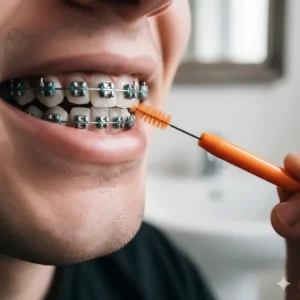
Wearing braces transforms your oral hygiene routine from straightforward to somewhat complex. Food and other debris can often get stuck between the bracket and wires, leading to plaque buildup and oral infections if left untreated. Interdental brushes become not just helpful but essential during orthodontic treatment.
Why Braces Need Special Attention
Traditional floss becomes nearly impossible to use around brackets and wires, leaving large areas vulnerable to plaque accumulation. Interdental brushes, however, can navigate around and beneath orthodontic hardware with relative ease.
Best Brush Sizes for Braces
Medium-sized brushes may be the most suitable for cleaning under the orthodontic wire and around brackets. Typically, this means ISO sizes 2-4 (0.5-0.8mm), though individual needs vary depending on your specific bracket spacing.
Technique for Braces
Around brackets: Use a conical brush to clean around each bracket, gently working the tapered tip into the space between the bracket and tooth surface.
Under wires: Insert a small cylindrical brush beneath the wire, moving it back and forth to remove trapped food particles.
Between teeth: Standard interdental cleaning applies here too—clean all spaces between teeth, taking extra care around the gumline.
Recommended Products
- TePe Angle: Pre-angled design makes accessing around braces significantly easier
- Curaprox CPS 14/18: Conical shapes specifically designed for orthodontic cleaning
- Wisdom rubber brushes: Gentler option if brackets are causing gum sensitivity
Your orthodontist can provide specific recommendations tailored to your bracket type and wire thickness.
Special Considerations: Implants, Bridges, and Dental Work
Dental implants, bridges, and other restoration work require modified cleaning techniques to ensure longevity and prevent complications. Interdental brushes play a crucial role in maintaining these investments in your smile.
Dental Implants
To protect your new tooth and keep it for a lifetime, it’s essential to clean between your teeth—especially around the implant—every day. Implants lack the natural protective mechanisms of regular teeth, making them more vulnerable to peri-implantitis if plaque isn’t meticulously removed.
Recommended approach:
- Use both cylindrical and conical brushes
- Clean all sides of the implant crown
- Pay extra attention to the gumline interface
- Consider the Curaprox CPS soft implant range
- Never use wire brushes that could scratch titanium surfaces—ensure plastic-coated wires only
Bridges
Fixed bridges create unique cleaning challenges because you cannot floss between the false tooth and gums normally. Interdental brushes become your primary tool for cleaning these areas.
Technique:
- Thread brush beneath bridge pontic (false tooth)
- Clean from both sides if possible
- Use smaller sizes for tighter spaces
- Consider specialised tools like superfloss for particularly narrow areas
Crowns and Veneers
Whilst crowns and veneers are durable, the junction where they meet your natural gum tissue requires careful cleaning to prevent decay of the underlying tooth structure.
Best practice:
- Use plastic-coated wire brushes to avoid scratching porcelain
- Focus on the gumline margin
- Be consistent—these areas are particularly prone to plaque accumulation
Always follow your dentist’s specific recommendations for your particular dental work.
Sustainability and Environmental Considerations
In 2026, environmental consciousness influences purchasing decisions more than ever. The oral care industry has responded with more sustainable options, though challenges remain.
The Plastic Problem
Traditional interdental brushes contain plastic handles and nylon bristles—neither particularly eco-friendly. With recommendations to replace brushes weekly, this generates considerable waste over a year (approximately 52 brushes per person annually).
Sustainable Alternatives
Reusable handle systems: Curaprox pioneered this approach, offering permanent handles with replaceable brush heads. This dramatically reduces plastic waste whilst maintaining cleaning effectiveness.
Bamboo handles: Brands like Truthbrush and Organically Epic offer bamboo-handled interdental brushes. Whilst the bristles remain nylon (no truly biodegradable alternative exists that maintains effectiveness), the bamboo handle reduces petroleum-based plastic consumption.
Recyclable packaging: TePe now packages their brushes in cardboard rather than plastic blisters, and the materials of the TePe Interdental Brush are sourced from renewable materials.
Making Sustainable Choices
- Choose reusable handle systems when possible
- Look for cardboard packaging over plastic
- Maximise brush lifespan without compromising hygiene
- Properly dispose of worn brushes in general waste (they’re too small for most recycling facilities)
- Consider water flossers as a complement rather than replacement—they use electricity but generate zero physical waste
Whilst interdental brushes aren’t yet fully sustainable, conscious choices can minimise environmental impact whilst maintaining excellent oral health.
Common Mistakes and How to Avoid Them
Even experienced users sometimes develop bad habits that reduce the effectiveness of interdental cleaning. Here are the most common pitfalls and how to sidestep them.
Mistake 1: Using One Size for Everything
The problem: Different spaces between teeth require different brush sizes. Using the same brush everywhere means some areas get inadequate cleaning whilst others may be damaged by forcing an oversized brush.
The solution: Invest in 2-3 different sizes. Use smaller brushes for tight front teeth and gradually larger sizes as you move towards molars where gaps typically widen.
Mistake 2: Rushing the Process
The problem: Interdental cleaning requires time and attention. A quick 30-second swoosh defeats the purpose.
The solution: Allocate 2-3 minutes for thorough interdental cleaning. Work systematically around your mouth, spending 2-3 strokes on each space. Consider it meditation for your mouth.
Mistake 3: Stopping When Gums Bleed
The problem: Initial bleeding frightens people into abandoning interdental cleaning just when their gums need it most.
The solution: Persist through the first week. Bleeding indicates inflammation already present—it’s not caused by the brushing. If you continue to use interdental brushes regularly, the bleeding should reduce within a few days and eventually stop.
Mistake 4: Neglecting to Replace Worn Brushes
The problem: Continuing to use brushes with bent wires or splayed bristles compromises cleaning effectiveness and risks gum damage.
The solution: Replace brushes weekly or when bristles show wear. Mark your calendar or set a phone reminder if you tend to forget.
Mistake 5: Using Toothpaste on Interdental Brushes
The problem: Regular toothpaste contains abrasives that can accelerate wear on delicate interdental brushes and may be unnecessarily harsh.
The solution: Use interdental brushes with water only, or consider specialised interdental gels like TePe Gingival Gel if you want an antimicrobial boost.
Mistake 6: Incorrect Angle of Insertion
The problem: Inserting brushes horizontally rather than at a slight angle toward the gumline misses the critical area where plaque accumulates.
The solution: Angle your brush slightly toward your gums as you insert it. This accesses the triangular space where tooth meets gum—the prime real estate for bacteria.
Mistake 7: Excessive Force
The problem: Forcing brushes into spaces that are too tight damages gums and can bend or break the wire.
The solution: If a brush won’t insert easily, drop down a size. Never force it. Gentle resistance is fine; pain is not.
Advanced Tips for Optimal Results
Once you’ve mastered the basics, these advanced techniques can elevate your interdental cleaning routine from good to exceptional.
Tip 1: The Double-Pass Technique
For particularly stubborn plaque or if you’ve been lax with interdental cleaning recently, try the double-pass method:
- First pass: Insert brush and remove it immediately (loosens debris)
- Second pass: Insert brush and perform 2-3 full back-and-forth movements
- This two-stage approach dislodges more plaque than a single pass
Tip 2: Strategic Timing
Clean between your teeth before brushing, not after. This allows your toothpaste fluoride to reach the freshly cleaned interdental spaces, maximising its protective benefits.
Tip 3: Mirror Positioning
Position your mirror so you can see what you’re doing, particularly for back teeth. Good visibility prevents injury and ensures thoroughness. A magnifying mirror can be revelatory.
Tip 4: The Hydration Hack
If you experience mild discomfort, swish with water for 10 seconds before starting. This softens any stuck debris, making removal gentler and more comfortable.
Tip 5: Document Your Sizes
Keep a small card in your bathroom cabinet noting which brush sizes you use in different areas of your mouth. This eliminates guesswork and ensures you purchase the correct sizes when reordering.
Tip 6: Professional Guidance
Schedule a session with your dental hygienist specifically to review your interdental cleaning technique. They can identify areas you’re missing and provide personalised recommendations. Many hygienists offer this as a standalone appointment.
Tip 7: The Evening Advantage
If you can only clean interdentally once daily, make it evening. This removes the day’s accumulation before sleep, when saliva flow (your mouth’s natural defence) decreases significantly.
Tip 8: Travel Kit
Assemble a travel kit with your essential sizes in a small case. Maintaining your routine whilst away from home prevents regression in gum health. Many brands offer travel caps that protect bristles whilst doubling as handle extensions.
Price Comparison: Value for Money in 2026
With prices ranging from £3.00 to £12.00+ for interdental brushes, understanding what represents genuine value helps stretch your dental hygiene budget.
| Price Range | What to Expect | Best Value Options |
|---|---|---|
| £3.00-£4.50 | Basic brushes, limited size options, 5-8 pack | iWave Fine, Wisdom, generic brands |
| £4.50-£6.50 | Quality brushes, good size range, 8-25 pack | TePe Original, Vision Trial Pack |
| £6.50-£12.00 | Premium materials, reusable systems, specialty sizes | Curaprox CPS, TePe bulk packs |
Cost Per Use Analysis
Let’s examine true cost over time:
Budget option (iWave):
- Pack of 5: £3.50
- Lifespan: 1 brush per week = 5 weeks
- Cost per week: £0.70
Mid-range option (TePe):
- Pack of 8: £3.99
- Lifespan: 1 brush per week = 8 weeks
- Cost per week: £0.50
Premium option (Curaprox):
- Starter kit: £8.00
- Replacement heads (5 pack): £6.25
- Initial investment higher, but handle lasts years
- Long-term cost per week: £0.60-£0.70 (including handle amortisation)
Value Recommendations
Best overall value: TePe Original packs offer the sweet spot of quality, size variety, and competitive pricing.
Best budget option: Generic silicone brushes in multi-packs from Amazon provide acceptable performance at rock-bottom prices.
Best premium value: Curaprox reusable systems cost more initially but deliver superior durability and reduce environmental waste, making them worthwhile for committed users.
Best for beginners: Vision Trial Pack eliminates sizing guesswork with modest upfront investment.
Remember that even premium interdental brushes cost less than a single professional cleaning, yet consistent use can dramatically reduce your need for expensive dental interventions.
Where to Buy: Amazon UK and Alternative Retailers
Interdental brushes are widely available across the UK, with various purchasing options to suit different preferences.
Amazon.co.uk
Advantages:
- Extensive selection of brands and sizes
- Competitive pricing
- Prime delivery available
- Customer reviews provide real-world feedback
- Subscribe & Save discounts (typically 5-15% off)
Popular Amazon UK listings:
- TePe Original Mixed Pack: £3.99-£11.99
- Curaprox sets: £6.25-£8.00
- Wisdom rubber brushes: £3.00-£4.95
All the products reviewed in this guide are available on Amazon.co.uk with convenient home delivery throughout the UK.
Boots and Superdrug
High street chemists stock:
- TePe range (most common)
- Wisdom products
- Own-brand alternatives
Prices typically match or slightly exceed Amazon pricing, but immediate availability without delivery wait can justify the minor premium.
Supermarkets
Larger Tesco, Sainsbury’s, and Asda stores increasingly stock basic interdental brushes, usually TePe or store brands. Prices are competitive, though selection may be limited to popular sizes.
Dental Practices
Many dentists sell interdental brushes directly, often with professional sizing advice included. Whilst prices may be higher, the personalised guidance can prevent costly sizing mistakes.
Online Specialist Retailers
- Dental Direct: Wide professional range, bulk buying options
- TePe Direct: Official UK distributor, comprehensive range
- Kent Express: Professional dental supplies
For comprehensive information about dental health, the Oral Health Foundation provides evidence-based guidance on all aspects of oral care.
Frequently Asked Questions
❓ How often should I replace my interdental brushes?
❓ Can interdental brushes damage my gums if I use them daily?
❓ Do I need different sizes for different teeth?
❓ Are interdental brushes suitable for children and teenagers?
❓ Can I use interdental brushes if I have receding gums or sensitivity?
Conclusion: Your Path to Healthier Gums and Teeth
After examining the science, testing the products, and exploring the techniques, one truth becomes abundantly clear: interdental brushes represent one of the simplest yet most impactful upgrades you can make to your oral hygiene routine in 2026. The evidence supporting their effectiveness over traditional floss continues mounting, UK dental professionals increasingly recommend them as first-line interdental cleaning tools, and the variety of products available ensures everyone can find brushes suited to their specific needs.
Whether you opt for the tried-and-tested TePe Original range, invest in premium Curaprox CPS for long-term sustainability, or choose gentle Wisdom rubber alternatives for sensitive gums, the key lies in consistency rather than brand choice. Start with a mixed pack to identify your ideal sizes, dedicate 2-3 minutes daily to methodical interdental cleaning, and persist through any initial bleeding—your gums will thank you within a fortnight.
The UK’s shift toward interdental brushing reflects growing awareness that comprehensive oral care extends beyond twice-daily brushing. Those tiny spaces between your teeth harbour up to 40% of the plaque that threatens your dental health. Neglecting them invites gum disease, tooth decay, expensive dental interventions, and potentially broader health complications linked to oral bacteria.
My own experience mirrors countless others: after incorporating interdental brushes into my evening routine, dental check-ups transformed from anxiety-inducing ordeals into quick confirmations of healthy gums and minimal plaque. The investment? Less than £5 monthly. The return? Priceless peace of mind and a genuinely cleaner mouth.
Take action today. Order a starter pack from Amazon.co.uk, identify your sizes systematically, and commit to 30 days of consistent daily use. By March, interdental cleaning will feel as natural as brushing your teeth—because it should be. Your future self, sporting healthy gums and fewer fillings, will appreciate the effort.
Remember, excellent oral health isn’t achieved through occasional heroic efforts but through small, consistent daily actions. Interdental brushes make those actions remarkably simple.
Recommended for You
- 7 Best Budget Water Flossers UK 2026: Top Picks Under £60
- 7 Best Water Flosser for Braces UK 2026
- 7 Best Cordless Water Flossers UK 2026
Disclaimer: This article contains affiliate links. If you purchase products through these links, we may earn a small commission at no additional cost to you. Prices shown are approximate and may vary.
✨ Found this helpful? Share it with your mates! 💬🤗
