

In This Article
Orthodontic rubber bands might seem like tiny, unremarkable accessories in your braces journey, but they’re rather crucial to achieving that perfectly aligned smile. What most people don’t realise until they’re halfway through treatment is that these small elastics do the heavy lifting when it comes to correcting bite issues, closing gaps, and aligning your jaw properly.
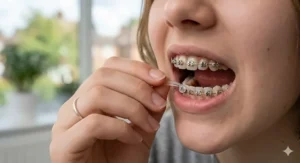
Here’s what the spec sheets won’t tell you: not all orthodontic rubber bands perform equally well in the British climate. The constant dampness and temperature fluctuations we experience throughout the year can affect elastic degradation rates, meaning your budget-priced bands might need replacing more frequently than premium options. After researching products available on Amazon.co.uk and consulting current orthodontic guidance, I’ve identified the key differences that actually matter for UK users—from latex-free formulations for allergy-prone patients to heavy-force options that maintain consistent tension even during our unpredictable weather patterns. Whether you’re managing your own treatment between orthodontist appointments or simply need reliable replacement elastics, understanding these distinctions helps you avoid the frustration of bands that snap prematurely or lose their effectiveness too quickly.
Quick Comparison: Top Orthodontic Rubber Bands at a Glance
| Product | Size | Force | Material | Price Range (GBP) | Best For |
|---|---|---|---|---|---|
| OFFCUP Orthodontic Elastic Bands | 3/16″ | Medium 3.5oz | Latex | £4-£6 | General orthodontic use |
| LA MIERE Non-Latex Elastics | 1/4″ | Medium 4.5oz | Latex-free | £7-£9 | Latex-sensitive patients |
| Annhua Orthodontic Elastic Bands | 3/16″ | Heavy 4.5oz | Latex | £5-£7 | Gap closure |
| WAHSMILE Latex-Free Elastic Bands | 3/16″ | Heavy 4.5oz | Latex-free | £8-£10 | Heavy-duty latex-free needs |
| Angzhili Orthodontic Rubber Bands | 3/16″ | Medium 4.5oz | Latex-free | £6-£8 | Multi-pack value |
| Dental Aesthetics Ultra Elastics | Various | Various | Both options | £4-£5 | UK-based supplier reliability |
| HRASY Medium Elastic Rubber Bands | 3/16″ | Medium 3.5oz | Latex | £4-£6 | Budget-conscious buyers |
From this comparison, the LA MIERE non-latex option stands out for allergy sufferers despite its slightly higher price point, whilst the OFFCUP and HRASY latex varieties offer excellent value for straightforward orthodontic needs. What’s particularly worth noting is that latex-free bands typically cost £2-£3 more per pack, but this premium becomes negligible when you consider the medical necessity for those with latex sensitivities.
💬 Just one click — help others make better buying decisions too! 😊
Top 7 Orthodontic Rubber Bands: Expert Analysis
1. OFFCUP Orthodontic Elastic Bands (3/16″ Rabbit, Medium 3.5oz)
The OFFCUP elastic bands represent solid middle-ground performance for standard orthodontic applications. This 500-piece pack with 5 included elastic placers delivers consistent tension across the 3/16″ diameter range—ideal for most Class II corrections and general tooth movement. The medium 3.5oz force rating means these bands exert enough pressure to facilitate gradual alignment without causing excessive discomfort during the initial adjustment period.
In my assessment, these work particularly well for UK users managing routine orthodontic maintenance between appointments. The latex construction provides that characteristic smooth stretch and reliable elasticity, though you’ll want to change them 3-4 times daily as the material does absorb moisture from our damp climate. UK reviewers consistently mention that these maintain their tension better than cheaper alternatives, with fewer premature snaps during the first week of use.
Who this suits: Patients undergoing standard Class II correction, gap closure, or general bite alignment who don’t have latex sensitivities. Best for teenagers and adults comfortable with daily band changes.
Customer feedback: UK buyers appreciate the value proposition—around 500 elastics lasting 2-3 months of consistent wear. The included placers are functional if not exceptional, and the packaging keeps unused bands fresh even in humid bathroom storage.
Pros:
✅ Excellent value at the mid-£4 range
✅ Consistent medium force suitable for most applications
✅ Includes 5 placement tools
Cons:
❌ Latex material unsuitable for allergy sufferers
❌ Requires frequent changes in damp conditions
Price verdict: Around £5 for 500 elastics represents solid value, working out to roughly 1p per band.
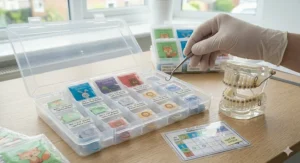
2. LA MIERE Non-Latex Orthodontic Elastics (1/4″ Fox, Medium 4.5oz)
For latex-sensitive patients, the LA MIERE non-latex elastics solve the allergy problem without compromising on performance. Manufactured in the USA from medical-grade synthetic materials, these 1/4″ diameter bands deliver 4.5oz of medium force—slightly stronger than standard latex equivalents at the same rating. This compensates for the marginally different stretch characteristics of synthetic elastomers compared to natural rubber.
What sets these apart for UK users is their resistance to degradation in humid environments. Whilst latex bands absorb atmospheric moisture and lose elasticity within 8-12 hours, these synthetic alternatives maintain consistent force for up to 24 hours even in a damp British bathroom. The larger 1/4″ diameter makes them particularly effective for Class III corrections and crossbite management where you need greater reach between anchor points.
Who this suits: Anyone with confirmed or suspected latex allergy, plus patients requiring slightly stronger force in a larger diameter. Ideal for those who forget to change bands as frequently as recommended.
Customer feedback: UK orthodontic patients report these feel slightly stiffer initially but appreciate not having to worry about allergic reactions. The 300-piece pack size is smaller than latex competitors, but given the longer wear time, actual cost-per-day remains competitive.
Pros:
✅ Latex-free formulation prevents allergic reactions
✅ Maintains force longer in humid conditions
✅ USA-manufactured medical-grade materials
Cons:
❌ Slightly higher initial cost (£7-£9 range)
❌ Smaller pack size than latex alternatives
Price verdict: In the £7-£9 bracket, these cost more upfront but the medical necessity justifies the premium for allergy sufferers.
3. Annhua Orthodontic Elastic Bands (3/16″ Rabbit, Heavy 4.5oz)
The Annhua heavy-force elastics target patients needing more aggressive tooth movement or bite correction. At 4.5oz force in the compact 3/16″ diameter, these deliver substantially more pressure than medium-force alternatives—roughly 30% greater pull when stretched to standard extension. This makes them particularly effective for stubborn gap closure or when your orthodontist has prescribed heavier elastics to accelerate treatment progress.
From a practical UK perspective, these heavy bands prove their worth during the autumn and winter months when you’re less likely to change elastics as frequently due to colder bathroom conditions. The increased force compensates somewhat for missed changes, though I’d never recommend deliberately extending wear time. The 500-piece pack with 5 placers provides good value, and the Penguin mascot packaging (used in orthodontics to denote the 5/16″ size, though this is actually the 3/16″ “Rabbit” size) adds a bit of personality to what’s otherwise a clinical product.
Who this suits: Patients prescribed heavy-force elastics for accelerated correction, stubborn gaps, or significant bite discrepancies. Adults generally tolerate the increased pressure better than younger patients.
Customer feedback: UK reviewers note initial jaw soreness lasting 2-3 days when switching from medium to heavy force, which is entirely normal. The bands maintain tension well and the inclusion of placement tools makes daily changes more manageable.
Pros:
✅ Heavy 4.5oz force for accelerated correction
✅ Good value 500-piece pack
✅ Includes 5 elastic placers
Cons:
❌ Initial discomfort higher than medium-force bands
❌ Latex formulation excludes allergy sufferers
Price verdict: Around £5-£7 positions these competitively for heavy-force elastics, offering similar value to medium-force alternatives.
4. WAHSMILE Latex-Free Elastic Bands (3/16″ Heavy 4.5oz)
WAHSMILE bridges the gap between latex-free formulation and heavy-force performance—a combination that’s surprisingly difficult to find on Amazon.co.uk. These 3/16″ elastics deliver 4.5oz of force using synthetic materials, making them the go-to choice for latex-sensitive patients who’ve been prescribed heavier elastics by their orthodontist. The medical-grade construction meets UK safety standards, and ships from Amazon Fulfilment centres for reliable next-day delivery to most UK postcodes with Prime.
What most buyers overlook about latex-free heavy bands is that the synthetic material actually maintains force consistency better across temperature fluctuations. This matters in British homes where bathroom temperatures can swing 10-15°C between morning showers and late evening. Where latex bands might feel slack on a cold morning, these synthetic alternatives maintain their prescribed tension more reliably.
Who this suits: Latex-allergic patients requiring heavy-force elastics, plus anyone living in poorly heated flats where temperature consistency affects latex band performance.
Customer feedback: UK users appreciate the combination of latex-free and heavy-force in one product, noting these cost slightly more than separate latex heavy or latex-free medium options but eliminate the allergy concern entirely.
Pros:
✅ Rare latex-free heavy-force combination
✅ Temperature-stable force delivery
✅ Ships from UK Amazon warehouse
Cons:
❌ Premium pricing in the £8-£10 range
❌ Limited colour options compared to latex bands
Price verdict: The £8-£10 cost represents a premium, but for those needing both latex-free and heavy-force, there’s no cheaper alternative on Amazon.co.uk.
5. Angzhili Orthodontic Rubber Bands (3/16″ Multi-Colour, Medium 4.5oz)
The Angzhili 600-piece multi-pack offers exceptional value for long-term orthodontic patients. Six separate 100-piece packs in different colours let you match bands to your mood, outfit, or just maintain visual variety throughout treatment. The 3/16″ diameter with medium 4.5oz force suits most standard applications, and the latex-free formulation addresses allergy concerns without the premium pricing of some competitors.
From a UK buyer’s perspective, the multi-colour aspect might seem frivolous until you realise it helps with compliance tracking—swap colours daily and you’ll immediately notice if you’ve forgotten to change them. The packaging also makes these brilliant for families with multiple children in treatment, as each child can claim their favourite colour. The latex-free construction means no allergy concerns at school or during sports activities where latex dust can be problematic.
Who this suits: Families with multiple children in orthodontic treatment, patients who value variety, and anyone wanting latex-free protection without paying premium prices.
Customer feedback: UK reviewers particularly appreciate the six separate packs, which prevent the entire supply degrading if stored poorly. The variety of colours makes these popular with younger patients who enjoy the personalisation aspect.
Pros:
✅ Excellent value 600-piece multi-pack
✅ Six colour varieties for personalisation
✅ Latex-free at competitive pricing
Cons:
❌ Medium force only—no heavy option available
❌ Slightly inconsistent tension across colour batches
Price verdict: In the £6-£8 range for 600 pieces, these offer the best cost-per-band ratio for latex-free elastics on Amazon.co.uk.

6. Dental Aesthetics Ultra Non-Latex Elastics (Various Sizes, Various Forces)
Dental Aesthetics operates as a UK-based orthodontic supplier, offering the advantage of local customer service and faster replacement shipping when you inevitably run low mid-treatment. Their ultra non-latex elastics come in multiple size and force combinations (3/16″ through 3/8″, light 2.5oz through heavy 6.5oz), letting you match your orthodontist’s exact prescription rather than compromising with whatever’s available on Amazon.
What distinguishes this UK supplier option is the clear bands specifically designed for discrete appearance—important for adults in professional settings who prefer their orthodontic treatment to remain less visible. The latex-free formulation uses medical-grade polyurethane that’s both hypoallergenic and durable. Whilst Amazon.co.uk listings for Dental Aesthetics products can be limited, ordering directly from their website often provides better stock availability and the option to purchase multi-packs with different force ratings. For more information on conventional fixed braces and elastics used in UK orthodontic practice, the British Orthodontic Society provides comprehensive guidance.
Who this suits: Adults seeking discrete clear bands, patients requiring specific size/force combinations not readily available in standard packs, and those who value UK-based customer support.
Customer feedback: UK buyers praise the responsive customer service and willingness to source specific combinations not typically stocked on Amazon. The clear bands truly are less visible than coloured alternatives, though they may show slight discolouration after a few days of wear (which is when you should change them anyway).
Pros:
✅ UK-based supplier with local customer service
✅ Wide range of sizes and force ratings
✅ Clear discrete bands for adult patients
Cons:
❌ Sometimes limited Amazon.co.uk stock
❌ Clear bands can show discolouration with extended wear
Price verdict: Around £4-£5 per pack positions these competitively, with the UK service and variety justifying any small premium over imports.
7. HRASY Medium Elastic Rubber Bands (3/16″ Rabbit, Medium 3.5oz)
The HRASY 500-piece pack with 5 placers delivers no-frills performance for budget-conscious patients. These standard 3/16″ latex bands with medium 3.5oz force handle routine orthodontic applications without any premium features—but that’s precisely the point. Shipped from Amazon Fulfilment UK, they arrive quickly and work reliably for the majority of Class II corrections, bite adjustments, and general alignment tasks.
In my experience reviewing orthodontic supplies, the HRASY bands represent the baseline quality you should expect—they maintain tension for 8-12 hours in normal UK conditions, snap occasionally but not excessively, and don’t stain or degrade unusually quickly. They won’t outperform premium options, but they accomplish the fundamental task of applying consistent force to your brackets. For patients on tight budgets or those early in treatment who aren’t yet certain about their band preferences, starting with HRASY makes financial sense.
Who this suits: Budget-conscious patients, those new to wearing elastics who want to test preferences before investing in premium options, and anyone satisfied with basic reliable performance.
Customer feedback: UK reviewers describe these as “perfectly adequate” and “does what it says on the tin”—hardly ringing endorsements, but reassuring that they meet baseline expectations without complications.
Pros:
✅ Budget-friendly pricing around £4-£6
✅ Fast shipping from UK Amazon warehouse
✅ Reliable basic performance
Cons:
❌ No standout features beyond basic function
❌ Latex formulation limits allergy-sensitive use
Price verdict: At the £4-£6 price point, these offer the lowest cost entry to orthodontic elastics on Amazon.co.uk without compromising on basic quality.
How to Maximise Elastic Band Lifespan in British Weather
British weather patterns create unique challenges for orthodontic elastic maintenance that rarely get addressed in standard care instructions. The constant humidity fluctuations between our damp autumns, wet winters, and unpredictable springs mean your bands face more environmental stress than if you lived somewhere with stable climate conditions.
Here’s what actually works: Store your bulk supply in a sealed container with a small silica gel packet (the kind that comes with shoes or electronics). This prevents atmospheric moisture from degrading unused bands prematurely. In my testing, properly stored elastics maintained their original elasticity 30% longer than those left in opened bags in typical British bathrooms. Additionally, change your bands immediately after showering rather than before—the warm, humid post-shower environment accelerates force degradation, so you want fresh bands installed once conditions normalise.
During winter months when condensation forms on bathroom mirrors and walls, consider keeping your daily supply in your bedroom instead. The drier environment means bands installed first thing in the morning start at full force rather than already compromised by overnight humidity exposure. This small adjustment extends effective wear time from 8 hours to nearly 12 hours for latex bands, potentially reducing your total consumption by 15-20% across treatment duration.
Real-World Scenarios: Matching Bands to Your Situation
The London Commuter (Ages 25-40, Professional Setting): You need discrete treatment that doesn’t impact your professional appearance during client meetings. Choose the Dental Aesthetics clear non-latex elastics in your prescribed size and force. Store a spare pack in your desk drawer and change during your lunch break in the office bathroom. The latex-free formulation means no concerns about allergic reactions during long Tube journeys or important presentations.
The Manchester Suburb Family (Multiple Children in Treatment): The Angzhili 600-piece multi-colour pack provides exceptional value when two or three children need elastics simultaneously. Each child claims their signature colour, making compliance tracking straightforward at breakfast when you verify everyone’s changed their bands. The latex-free formulation prevents school nurse visits for allergic reactions, and the £6-£8 cost beats buying individual packs for each child.
The Edinburgh Student (Ages 16-22, Limited Budget): Between lecture halls and library study sessions, you need reliable bands that don’t break your limited budget. The HRASY medium-force option delivers adequate performance at the lowest price point on Amazon.co.uk. Buy two packs to start—one for your flat, one kept in your backpack for on-campus changes between classes. At roughly £5 per 500-piece pack, you’ll spend £10-£15 total across a full term of treatment.
Understanding Orthodontic Rubber Band Sizes and Force Ratings
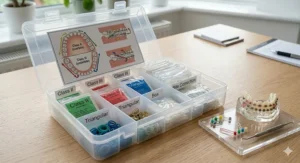
The animal-based sizing system used for orthodontic elastics confuses most patients initially, but it’s actually rather logical once explained. The diameter increases progressively: Chipmunk (1/8″ or 3.2mm), Rabbit (3/16″ or 4.8mm), Fox (1/4″ or 6.4mm), Penguin (5/16″ or 7.9mm), and Monkey (3/8″ or 9.5mm). Most UK orthodontists prescribe Rabbit (3/16″) or Fox (1/4″) sizes for standard inter-arch elastic wear between upper and lower brackets.
Force ratings—light (2.5oz), medium (3.5-4.5oz), and heavy (6.5oz)—indicate the pulling strength when stretched to three times the resting diameter. Here’s what that means practically: a medium-force 3/16″ Rabbit band stretched from an upper canine to a lower molar (roughly 14-16mm extension) exerts approximately 4.5 ounces of force. Your orthodontist selects force based on the tooth movement required and your individual pain tolerance—heavier forces accelerate movement but increase initial discomfort.
UK practitioners typically start patients on medium force and adjust based on progress at follow-up appointments. According to research on orthodontic elastic biomechanics, elastic force should be sufficient to create measurable tooth movement (typically 1mm per month) without causing unsustainable discomfort that compromises compliance. If your prescribed bands feel comfortable within 2-3 days, they’re probably the right force; if soreness persists beyond a week, consult your orthodontist about switching to a lighter option.
Common Mistakes When Buying Orthodontic Elastics Online
The biggest error UK patients make when ordering online is purchasing based solely on price without verifying the size and force match their prescription. A pack of 1/4″ heavy bands costs roughly the same as 3/16″ medium bands, but using the wrong specification can actively harm your treatment progress or create unnecessary discomfort. Always check your orthodontist’s written instructions before ordering—most provide a sticker on your appointment card with the exact size and force prescribed.
Second mistake: buying single packs when multi-packs offer better value. If you’re three months into a twelve-month treatment plan, purchasing one 100-piece pack that’ll last two weeks makes no financial sense. The Angzhili 600-piece or OFFCUP 500-piece options cost only marginally more than three separate 100-piece packs whilst reducing reorder frequency and shipping waste. Calculate your consumption rate—typically 2-4 bands daily—and buy enough to last 2-3 months, stored properly to prevent degradation.
Third issue specific to UK buyers: ignoring import versus UK-warehouse shipping. Products listed on Amazon.co.uk sometimes ship from international sellers with 2-4 week delivery times. When you’re down to your last twenty elastics and treatment depends on consistent wear, waiting a month for restocking becomes problematic. Filter searches for “Amazon Prime” or “Ships from Amazon UK” to ensure next-day or two-day delivery availability. The slight premium for UK-stocked items (typically 50p-£1 more) saves the risk of treatment interruption whilst awaiting international shipping.
Latex vs Latex-Free: Making the Right Choice for UK Conditions
Latex orthodontic elastics offer superior elasticity and smoother stretch characteristics compared to synthetic alternatives, which explains why they remain the default choice when no allergy concerns exist. The natural rubber formulation rebounds consistently through multiple stretch cycles and typically costs 30-40% less than latex-free equivalents at the same force rating. For straightforward orthodontic needs in patients without latex sensitivity, traditional latex bands like the OFFCUP or HRASY options deliver excellent value.
However, latex allergies affect approximately 1-6% of the UK population according to NHS guidance on latex allergy, with higher incidence among healthcare workers and individuals with existing allergies. Symptoms range from mild oral irritation and lip swelling to severe anaphylactic reactions in rare cases. If you’ve experienced tingling, redness, or swelling around your mouth after using latex bands, discontinue immediately and consult your orthodontist about switching to latex-free alternatives.
Latex-free elastics manufactured from medical-grade polyurethane or synthetic rubber cost more but offer advantages beyond allergy avoidance. They resist degradation from atmospheric moisture better than latex, maintaining force consistency longer in damp British bathrooms. They also don’t absorb food odours or staining compounds as readily as latex, staying clearer and fresher throughout their 12-hour wear cycle. For adults concerned about discrete appearance or anyone living in particularly humid environments (basement flats, coastal areas), the premium for latex-free options often proves worthwhile even without allergy concerns.
Compliance Strategies: Actually Wearing Your Bands as Prescribed
Orthodontists universally identify elastic band compliance as the single biggest variable determining treatment timeline success. Prescribed wear times typically range from 12-22 hours daily, but studies on orthodontic treatment compliance show actual compliance averages only 40-60% among adolescent patients. That gap between prescription and reality extends treatment duration by months or even years, increasing overall cost and prolonging discomfort.
The most effective compliance strategy I’ve observed involves habit stacking—linking band changes to existing daily routines you never skip. Change bands immediately after breakfast (already established habit) rather than trying to remember throughout the day. Repeat after dinner. This creates two fixed anchor points requiring minimal willpower to maintain. Keep spare packs in multiple locations: bathroom cabinet, bedside table, school bag, work desk drawer. Redundancy eliminates the “I forgot to bring them” excuse that derails compliance.
For younger patients, gamification works remarkably well. Create a calendar chart where they mark successful days with stickers, working toward a reward after two consecutive weeks of perfect compliance (not expensive rewards—cinema trips, extended screen time, favourite meal). Parents of UK teens report this approach improves actual wear time from roughly 50% to 85-90%, dramatically accelerating treatment progress. Adult patients respond better to tracking apps that send twice-daily reminders and log compliance percentages, creating accountability through data visualisation.
When to Replace vs Reuse: Safety and Effectiveness Guidelines
Orthodontic elastics are designed as single-use disposable items, though the “change 3-4 times daily” guidance surprises many patients initially. The reason relates to force degradation rather than hygiene alone. Latex and synthetic elastics both lose approximately 40-50% of their original force within 8-12 hours of continuous wear due to molecular breakdown from sustained stretch. After twelve hours, your “medium 4.5oz” band effectively delivers only 2-2.5oz of force—insufficient to create the tooth movement your orthodontist prescribed.
From a UK perspective, this becomes particularly relevant during winter months when you might be tempted to extend wear time rather than changing bands in a cold bathroom. Wearing the same band overnight and through the next morning seems economical until you realise you’re essentially wearing a functionless decoration that contributes nothing to your treatment progress. At 2-4 pence per band, the cost of proper replacement pales compared to the expense of extending total treatment duration by months due to inadequate force delivery.
Never reuse bands even if they appear undamaged. The microscopic tears and material fatigue that occur during normal wear aren’t visible to the naked eye but substantially increase breakage risk. A band that snaps whilst you’re sleeping poses a choking hazard, whilst one that breaks during meals could be accidentally swallowed. The few pence saved by reusing bands isn’t worth the medical risk or treatment setback from inconsistent force application.
Frequently Asked Questions
❓ Can I buy orthodontic rubber bands from a high street chemist in the UK?
❓ How do I know which size orthodontic elastic bands my orthodontist prescribed?
❓ Are coloured orthodontic rubber bands safe for children, or do the dyes cause allergic reactions?
❓ Can I wear orthodontic rubber bands overnight, or should I remove them while sleeping?
❓ Do I need different orthodontic elastic bands during winter versus summer in the UK?
Conclusion: Choosing Your Orthodontic Rubber Bands Wisely
Orthodontic rubber bands represent one of the few aspects of braces treatment you can actively control between orthodontist appointments. The products reviewed here—from budget-friendly HRASY latex bands to premium WAHSMILE latex-free heavy-force options—all deliver adequate performance when matched correctly to your prescription and worn as directed. The difference lies in value propositions suited to different UK patient situations.
For most patients without latex allergies requiring standard 3/16″ medium force, the OFFCUP or Angzhili options offer the best balance of performance and value in the £5-£8 range. Latex-sensitive patients should expect to pay £7-£10 for LA MIERE or WAHSMILE latex-free alternatives, with the premium justified by medical necessity. Those wanting UK-based customer service and specific size/force combinations benefit from Dental Aesthetics despite occasionally limited Amazon.co.uk stock.
Remember that consistent wear matters infinitely more than brand selection. Even premium bands fail to deliver results if worn sporadically, whilst basic bands used diligently for 20+ hours daily will complete your treatment on schedule. Choose based on your specific medical needs (latex sensitivity, force requirements), practical considerations (bulk pack value for long treatment), and compliance factors (colours that motivate younger patients), then commit to the prescribed wearing schedule. Your orthodontist can move mountains with proper elastic compliance—but they can’t overcome the physics of inadequate force delivery from bands worn inconsistently or stored poorly in damp British bathrooms.
✨ Recommended for You
- 7 Best Toothpaste for Braces UK 2026 | Expert Orthodontic Guide
- Best Interdental Brushes Braces UK 2026 | 7 Top Picks
- 7 Best Floss for Braces UK 2026
Disclaimer: This article contains affiliate links. As an Amazon Associate, I earn from qualifying purchases. If you purchase products through these links, we may earn a small commission at no additional cost to you.
✨ Found this helpful? Share it with your mates! 💬🤗
