
In This Article
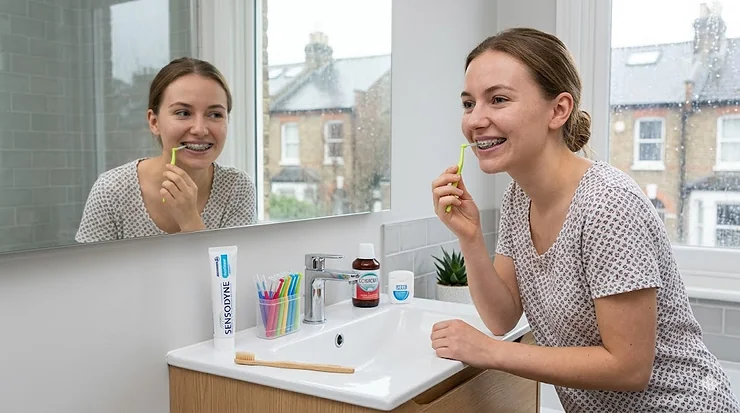
Wearing braces in the UK presents a rather unique cleaning challenge that goes beyond what your regular toothbrush can handle. Those brackets and wires create numerous nooks and crannies where food particles love to hide, and the British diet—think sticky flapjacks, dense cheese sandwiches, and the occasional Sunday roast—makes thorough cleaning absolutely essential. What most orthodontic patients overlook is that standard floss often struggles to navigate around metal brackets, leaving up to 40% of tooth surfaces inadequately cleaned.
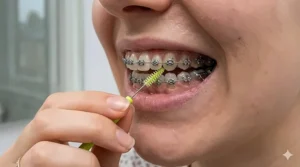
Interdental brushes braces users swear by offer a practical solution specifically designed for orthodontic appliances. These small, bristled tools slide beneath wires and around brackets with remarkable ease, reaching spaces your toothbrush simply cannot access. Unlike traditional dental floss that requires threading beneath each wire section—a time-consuming process that most people abandon after a few days—these brushes work quickly and effectively, making them far more likely to become part of your daily routine.
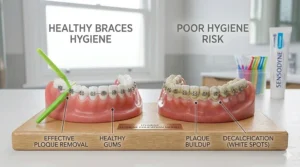
The consequences of inadequate cleaning during orthodontic treatment aren’t trivial. White spot lesions, those permanent chalky marks that appear when enamel demineralises around brackets, affect roughly 50% of brace wearers according to research from dental professionals. These marks remain visible long after your braces come off, rather defeating the purpose of investing months or years in treatment. Gum inflammation, tooth decay, and extended treatment times are other preventable complications that stem from poor oral hygiene during orthodontic care.
Throughout this guide, I’ll walk you through seven exceptional interdental brushes braces patients in the UK are currently using in 2026, from premium Swedish-engineered options to budget-friendly silicone alternatives. Whether you’re navigating NHS orthodontic care or private treatment, you’ll find practical recommendations tailored to British living—compact storage for smaller homes, products readily available on Amazon.co.uk with Prime delivery, and honest assessments of value for money in pounds, not dollars.
Quick Comparison: Top Interdental Brushes for Braces at a Glance
| Product | Size Range | Wire Type | Price Range (£) | Best For | Prime Eligible |
|---|---|---|---|---|---|
| TePe Original Mixed Pack | 0.4-1.3mm (ISO 0-7) | Plastic-coated metal | £3-£5 | All orthodontic needs | Yes |
| Curaprox CPS Prime Start | 0.6-1.1mm (CPS 06-11) | CURAL surgical wire | £8-£10 | Premium quality seekers | Yes |
| Piksters Interdental Size 00-6 | 0.4-1.3mm | Plastic-coated metal | £3-£7 | Eco-conscious buyers | Yes |
| TePe Angle | 0.4-0.8mm (ISO 0-5) | Plastic-coated metal | £4-£6 | Back teeth access | Yes |
| RAYITO Silicone 220 Pack | 0.7mm silicone head | Plastic handle | £6-£9 | Budget-conscious, disposable | Yes |
| DenTek Easy Brush Standard | Multiple tapers | Flexible wire | £5-£8 | Fluoride coating fans | Yes |
| GUM Proxabrush Go-Betweens | Ultra Tight to Wide | Coated wire | £4-£7 | Gentle cleaning | Yes |
From this comparison, the TePe Original emerges as the most versatile choice for UK brace wearers, offering the widest size selection at a reasonable price point. The flexible neck on smaller sizes (0.4-0.6mm) prevents wire breakage—a common frustration when cleaning tight spaces around brackets. Those seeking premium durability should consider Curaprox CPS Prime, where the surgical-grade wire justifies the higher investment through extended brush life. Budget buyers will find the RAYITO silicone brushes offer exceptional value at roughly 3p per brush, though the trade-off comes in durability; expect these to last just one or two uses compared to a week or more with traditional bristle brushes.
💬 Just one click — help others make better buying decisions too!😊
Top 7 Interdental Brushes Braces: Expert Analysis
1. TePe Original Mixed Pack: The Swedish Benchmark
TePe Original Mixed Pack remains the interdental brush most UK orthodontists recommend by name, and after using these throughout my own brace journey, the reputation feels well-earned. This Swedish brand offers eight brushes in varied sizes (0.4-1.3mm, ISO 0-7), allowing you to match different brush widths to the varying gaps around your brackets. The pink and orange brushes (0.4-0.45mm) work brilliantly for tight spaces between front teeth where brackets sit close together, whilst the green and blue sizes (0.6-0.7mm) handle the slightly larger gaps near molars.
What sets TePe apart is the plastic-coated wire that runs through each brush head. Unlike cheaper alternatives where exposed metal can scratch orthodontic brackets or irritate gums, this coating protects both your appliance and soft tissue. The four smallest sizes feature a flexible neck that bends without breaking—particularly valuable when you’re learning proper technique and inevitably apply too much force. During British winter months when central heating dries out your mouth, this flexibility prevents the gum trauma that rigid brushes can cause.
UK customers consistently praise the quality, with one Manchester reviewer noting they’re “much better than dental floss and much easier to use.” The mixed pack strategy proves especially sensible for brace wearers because your gap sizes change throughout treatment. As teeth shift, the space beneath your wire increases in some areas and decreases in others, so having multiple sizes on hand eliminates the guesswork. Each brush lasts roughly 7-10 days with proper rinsing, making the per-use cost quite reasonable when you calculate it out.
Pros:
✅ Nine ISO sizes cover every orthodontic gap
✅ Flexible neck on smaller sizes prevents wire breakage
✅ Plastic coating protects brackets and gums
Cons:
❌ Higher plastic waste compared to refillable systems
❌ No single-size packs if you only need one width
Around £3-£5 for an 8-pack on Amazon.co.uk makes this the best starting point for UK brace wearers who aren’t certain which size they need. The investment pays back quickly when you compare it to emergency orthodontist visits for bracket repairs caused by improper cleaning techniques.
2. Curaprox CPS Prime Start: Swiss Precision Engineering
When you’re after the Rolls-Royce of interdental brushes braces professionals use themselves, Curaprox CPS Prime Start delivers pharmaceutical-grade precision from Switzerland. This starter set includes five brush sizes (CPS 06 to CPS 011) plus two click-on handles, creating a modular system that reduces plastic waste whilst maintaining premium performance. The CURAL surgical wire at the core represents a significant engineering advancement—ultra-thin yet extraordinarily strong, allowing deeper penetration into tight orthodontic spaces without bending or buckling.
The click mechanism feels satisfyingly solid when you attach a new brush head to the reusable handle. Unlike friction-fit systems that wobble or separate mid-use, this Swiss design locks firmly in place. For UK buyers concerned about environmental impact, the refillable approach means you’re replacing only the brush head rather than discarding an entire plastic handle every week. Long-term users in London report these brushes lasting “significantly longer than cheaper alternatives,” with some brush heads remaining effective for up to two weeks even with twice-daily use.
The conical shape of CPS brush heads specifically targets the critical zone where brackets meet teeth and gums—the exact area where white spot lesions develop if plaque isn’t thoroughly removed. What the specification sheet won’t tell you is how the ultra-fine filaments feel noticeably gentler on inflamed gums during the first weeks of orthodontic treatment, when everything in your mouth feels tender and sensitive. If you’ve just had your braces fitted or recently had them tightened, this gentle approach makes the difference between tolerating your cleaning routine and dreading it.
Pros:
✅ Surgical-grade CURAL wire for superior durability
✅ Click-on system reduces plastic waste
✅ Conical heads specifically designed for brackets
Cons:
❌ Higher initial investment (£8-£10)
❌ Refill heads must match the Curaprox system
The price range of £8-£10 on Amazon.co.uk positions this firmly in the premium category, but when you factor in the extended lifespan and reduced waste, the cost-per-use actually rivals mid-range options. Best suited for UK buyers who value quality and sustainability over bargain hunting.
3. Piksters Interdental Size 00-6: Australian Innovation
Piksters Interdental Brushes bring Australian dental engineering to the UK market, offering a compelling alternative to the Swedish dominance in this category. Available in sizes 00 through 6 (0.4-1.3mm), these brushes feature plastic-coated wire and a distinctive triangular handle that provides superior grip control—particularly useful when your hands are wet or you’re cleaning back molars whilst standing over the bathroom sink. The coating extends 98% of the wire length, matching TePe’s protective coverage.
What makes Piksters especially relevant for UK brace wearers in 2026 is their bamboo handle range, addressing the growing environmental consciousness amongst British consumers. Whilst the bristle portion still uses nylon (unavoidable for effective cleaning), the sustainable handle option lets you reduce plastic consumption without sacrificing orthodontic hygiene. The bristles themselves feel slightly stiffer than TePe equivalents in comparable sizes, which some users prefer for stubborn plaque removal around brackets, though others find this makes them less forgiving on sensitive gums.
The 35-pack format popular on Amazon.co.uk offers exceptional value, working out to roughly 15-20p per brush depending on size. UK reviewers note these work “particularly well for cleaning around orthodontic bands from inside and outside,” those metal rings that typically sit around molars. If your orthodontic appliance includes bands rather than brackets on back teeth, the slightly more aggressive bristle action of Piksters handles the extra cleaning challenge effectively.
Pros:
✅ Bamboo handle option for eco-conscious buyers
✅ Triangular grip provides excellent control
✅ 35-pack offers strong value in GBP
Cons:
❌ Stiffer bristles may feel harsh on inflamed gums
❌ Less widely available in high street pharmacies
Priced at £3-£7 depending on pack size and whether you choose bamboo or standard plastic, Piksters represent solid middle-ground value. Australian engineering quality meets UK environmental sensibilities, making this a sensible choice for orthodontic patients who want effective cleaning without excessive plastic waste.
4. TePe Angle: Reaching Your Back Molars
TePe Angle solves a specific problem that every brace wearer encounters: cleaning the back molars where your orthodontic wire curves around. The pre-angled handle positions the brush head at roughly 45 degrees, eliminating the awkward wrist contortion required to access these posterior teeth with straight-handled brushes. Available in six sizes (0.4-0.8mm, ISO 0-5), the range covers most orthodontic gaps, though the largest sizes available in the standard Original range aren’t offered in the Angle design.
The longer handle length—similar to a standard toothbrush rather than the compact interdental design—provides leverage and control when working in the back of your mouth. This becomes particularly valuable for UK teenagers undergoing orthodontic treatment, as the familiar toothbrush-like handle makes the technique feel less foreign and intimidating. During the adjustment period when everything feels clumsy and difficult, that psychological comfort shouldn’t be underestimated.
What distinguishes Angle from simply bending a standard interdental brush yourself is the neck strength. The pre-formed angle maintains its shape under pressure, whereas manually bent brushes often straighten out when you push them through tight spaces. This consistent geometry means you develop muscle memory for the correct insertion angle more quickly, improving your cleaning effectiveness. The same plastic-coated wire found throughout the TePe range protects your orthodontic appliance, and the smaller sizes retain the flexible neck feature that prevents breakage.
Pros:
✅ Pre-angled head eliminates awkward hand positions
✅ Longer handle feels familiar to toothbrush users
✅ Neck maintains shape under cleaning pressure
Cons:
❌ Largest sizes not available in Angle format
❌ Takes up more storage space than compact brushes
At £4-£6 for a 6-pack on Amazon.co.uk, these sit at a slight premium compared to the standard Original range, but the back-tooth accessibility justifies the difference for most users. Especially recommended for UK brace wearers struggling with posterior cleaning or those with a strong gag reflex triggered by reaching too far back.
5. RAYITO Silicone 220 Pack: Budget-Friendly Volume
RAYITO 220 Pieces Interdental Brushes represent a fundamentally different approach to interdental cleaning for braces—silicone rather than bristle, disposable rather than reusable, and priced for volume at roughly 3-5p per brush. The soft, bendable silicone head measures approximately 0.7mm and functions as a dual-purpose tool: one end features the rubber bristles for cleaning between teeth and around brackets, whilst the other end serves as a traditional toothpick for dislodging stubborn food particles.
The appeal here is straightforward: absolute convenience. With 220 brushes in a compact storage box, you can keep supplies in your work bag, car, desk drawer, and bathroom without worrying about running out. For UK students or young professionals who eat meals away from home, this abundance means you’re more likely to actually clean your braces after lunch rather than waiting until evening. The psychological barrier of “I don’t have my brush with me” completely disappears.
However, the durability trade-off becomes apparent quickly. UK customer reviews reveal a consistent pattern: these work effectively for one or two uses, but the silicone head separates from the plastic handle with repeated insertion into tight spaces. Some reviewers report the underneath spike becomes exposed after the silicone coating peels away—a legitimate safety concern that wasn’t immediately obvious from the product images. The price point of £6-£9 for 220 pieces makes this financially viable despite the limited reusability, but you must factor in the increased plastic waste compared to brushes lasting a week or more.
Pros:
✅ Exceptional quantity (220 pieces) for £6-£9
✅ Dual-purpose design with toothpick end
✅ Compact storage box for portability
Cons:
❌ Limited durability (1-2 uses typically)
❌ Silicone head can separate, exposing sharp plastic
Best suited for UK brace wearers prioritising convenience and budget over environmental concerns, or as supplementary brushes to keep in multiple locations alongside a primary higher-quality set. The value proposition works for on-the-go cleaning but shouldn’t replace proper twice-daily orthodontic hygiene with more durable tools.
6. DenTek Easy Brush: American Innovation with Fluoride Coating
DenTek Easy Brush Standard brings American dental innovation to UK orthodontic care, featuring a distinctive fluoride coating on the bristles plus a refreshing mint flavour—unusual additions in the interdental brush category. The tapered, flexible brush head navigates tight spaces around brackets effectively, and the comfort-grip handle flexes to hold whichever bent position you set it to, making back-tooth access considerably easier without requiring a pre-angled design like TePe Angle.
The fluoride coating represents a genuinely useful feature for brace wearers specifically. During orthodontic treatment, the areas around brackets face elevated decay risk because thorough cleaning becomes more challenging. Having fluoride applied directly to these vulnerable spots during each cleaning session adds an extra layer of protection that standard interdental brushes don’t provide. The mint flavour, whilst perhaps gimmicky, does leave your mouth feeling noticeably fresher than uncoated alternatives—a small psychological reward that makes the twice-daily routine slightly more pleasant.
The antimicrobial cap that comes with each brush keeps it clean between uses and also extends the handle’s reach when attached to the opposite end, creating a double-length tool for enhanced control. UK availability has improved substantially on Amazon.co.uk in recent years, with Prime delivery now standard. The flexible wire allows bristles to bend during cleaning without breaking, though some reviewers note the bristles wear down slightly faster than premium European alternatives, typically lasting 5-7 days rather than 7-10.
Pros:
✅ Fluoride-coated bristles provide extra cavity protection
✅ Flexible handle holds bent positions for back teeth
✅ Mint flavour makes cleaning more pleasant
Cons:
❌ Bristles wear slightly faster than premium brands
❌ American sizing doesn’t align with ISO standards
Priced at £5-£8 for a standard pack on Amazon.co.uk, DenTek sits in the mid-range category where features like fluoride coating justify the modest premium over basic options. Particularly suited for UK teenagers whose orthodontic compliance needs every motivational boost available, as the mint flavour and novelty factor can encourage more consistent use.
7. GUM Proxabrush Go-Betweens: Ultra-Gentle for Sensitive Gums
GUM Proxabrush Go-Betweens target the specific subset of brace wearers who struggle with gum sensitivity, offering ultra-soft bristles that clean effectively without causing the bleeding and discomfort that firmer brushes can trigger. Available in multiple sizes from Ultra Tight through to Wide, these brushes use a triangular bristle configuration that maximises plaque removal whilst minimising gum trauma—a design backed by considerable clinical research in periodontal health.
The packaging includes multiple brush heads with a single reusable handle, similar to the Curaprox system but at a more accessible price point for UK buyers. The handle itself feels slightly less premium than Swiss alternatives, but the functional difference proves negligible once you’re actually using it. What matters more is the bristle softness, which sits noticeably below TePe or Piksters in firmness. During the first two weeks after having braces fitted or following adjustment appointments when everything feels tender, these ultra-soft bristles make the difference between maintaining your cleaning routine and abandoning it because it hurts too much.
UK customers report these work “particularly well during the adjustment period,” with one Edinburgh reviewer noting they switched to GUM temporarily after each orthodontist visit then returned to their regular TePe brushes once sensitivity subsided. This pattern suggests an intelligent strategy: keep a pack of GUM Proxabrush alongside your primary brush selection specifically for those tender post-adjustment days. The price point of £4-£7 makes this entirely practical without significant financial burden.
Pros:
✅ Ultra-soft bristles ideal for sensitive gums
✅ Triangular configuration backed by clinical research
✅ Multiple sizes accommodate various gap widths
Cons:
❌ Softer bristles may feel less effective on stubborn plaque
❌ Slightly less durable than firmer alternatives
Best suited for UK brace wearers with naturally sensitive gums, those in the early adjustment phase, or anyone experiencing inflammation despite proper cleaning technique. The £4-£7 price range on Amazon.co.uk positions this as an affordable supplementary option rather than a budget-stretching investment.
How Your Orthodontic Journey Changes Cleaning Needs
The interdental brushes braces wearers require shift throughout treatment in ways most people don’t anticipate before starting. During the first month, your primary challenge involves simply learning the technique whilst managing tender gums and general mouth discomfort. Everything feels awkward and oversensitive, so starting with ultra-soft options like GUM Proxabrush or the smallest TePe sizes (pink, ISO 0) prevents you from becoming discouraged by bleeding or pain during those initial weeks.
As your teeth begin moving—typically noticeable within 6-8 weeks for most UK NHS and private orthodontic cases—the gaps between teeth change size. What started as a tight squeeze for a 0.4mm brush gradually opens up, requiring progression to 0.6mm or 0.7mm sizes to maintain effective plaque removal. This explains why the TePe Mixed Pack proves so valuable: you’re already equipped with the next size up when your current brush starts feeling too small. Rather than making an emergency trip to Boots or ordering online and waiting for delivery, you simply select the next colour from your existing supply.
Mid-treatment, roughly 6-12 months into most orthodontic courses, represents the sweet spot where cleaning becomes routine rather than challenging. Your technique has improved, sensitivity has diminished, and you’ve identified which sizes work best for different areas of your mouth. This is when investing in a premium option like Curaprox CPS Prime makes most financial sense—you’ll use them consistently for the remaining treatment duration, and the superior durability justifies the higher per-pack cost when amortised over months of daily use.
The final 3-6 months before removal bring another shift as teeth approach their intended positions and gaps continue evolving. Some spaces close completely, eliminating the need for interdental brushes in those specific locations, whilst others remain accessible throughout treatment. Don’t abandon your cleaning routine during this final phase despite the temptation—white spot lesions can still develop right up until the brackets come off, and preventing them during these last months protects the cosmetic result you’ve invested so much time achieving.

The British Weather Factor: Storage and Hygiene Considerations
UK climate presents specific challenges for interdental brush hygiene that rarely appear in American or Australian product guidance. Our persistent dampness—whether it’s the drizzle outside or the condensation inside poorly ventilated British bathrooms—creates ideal conditions for bacterial growth on brush bristles if you’re not careful about storage and drying. Never store your interdental brush whilst still wet in a closed container or drawer; the trapped moisture encourages microbial colonisation that you’ll then transfer directly into the sensitive areas around your brackets.
The solution involves a simple routine: rinse your brush thoroughly under warm running water after each use, shake off excess moisture, then stand it upright in a cup or holder where air can circulate freely. The compact bathrooms typical in UK terraced houses and flats often lack windowsills or adequate ventilation, making mould and mildew persistent problems. If your bathroom suffers from excessive condensation (visible water droplets on tiles or mirrors after showers), consider storing your interdental brushes in your bedroom instead, bringing them to the bathroom only when needed.
During British winter months when central heating runs constantly, the opposite problem emerges: extremely dry indoor air that can make brush bristles brittle and increase gum sensitivity. Some orthodontic patients report their interdental brushes feel harsher during December through February compared to summer months, even using identical products. Adding a small humidifier to your bedroom helps mitigate this, though simply being aware that winter dryness affects both your mouth and your cleaning tools allows you to adjust technique—using lighter pressure and ensuring your mouth is well-hydrated before cleaning.
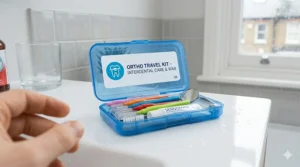
Travel presents another UK-specific consideration given our propensity for weekend breaks, work trips, and visiting relatives. The RAYITO bulk packs work brilliantly for keeping supplies in your work bag, car, or travel toiletries, whilst the TePe Angle 6-packs fit easily into compact travel cases without the bulk of standard interdental brush packaging. For weekend trips to the Cotswolds or business travel to Edinburgh, pack 2-3 days’ worth of brushes rather than your entire supply—the space savings add up when you’re travelling with hand luggage only on domestic flights or taking the train.
Orthodontic Interdental Cleaners vs Traditional Dental Floss: What Works Better for UK Brace Wearers?
The between teeth cleaning tools debate—interdental brushes versus traditional floss—becomes considerably less ambiguous when orthodontic appliances enter the equation. Research published in peer-reviewed dental journals consistently demonstrates that interdental brushes remove plaque more effectively than floss for patients with braces, primarily because floss requires threading beneath the orthodontic wire before it can clean each tooth surface. This threading process typically takes 15-20 minutes for a thorough job, assuming you don’t give up halfway through out of frustration.
Interdental brushes braces patients prefer simply slide beneath the wire and between teeth in a single motion, reducing full-mouth cleaning time to roughly 5-7 minutes once you’ve developed reasonable technique. The time difference matters enormously for compliance—orthodontic patients who find their cleaning routine tedious or time-consuming are significantly more likely to skip it, particularly during rushed mornings or late evenings when fatigue makes every extra minute feel burdensome.
That said, traditional floss still serves a purpose even when using interdental brushes regularly. The space where two teeth touch directly—the contact point—sometimes remains inaccessible to brush bristles, particularly for teeth that haven’t yet shifted enough to create gaps. UK orthodontists typically recommend using interdental brushes as your primary cleaning tool whilst supplementing with floss for these specific contact points once or twice weekly rather than daily. This hybrid approach delivers thorough cleaning without demanding an unsustainable time investment.
Orthodontic flossers with built-in threaders offer a middle ground, though most UK brace wearers find these equally cumbersome compared to standard floss. The rigid plastic handle makes them easier to manipulate than traditional string floss, but you’re still threading through each wire section individually. If you’ve tried interdental brushes and genuinely prefer the feel of floss, these threader-equipped flossers represent your best option—but for most people, the brush-first approach proves both more effective and more sustainable as a daily habit.
Understanding Wire Cleaning Accessories Sizing: ISO Standards Explained
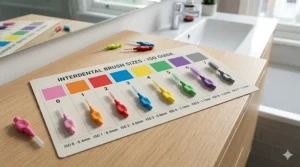
The sizing confusion surrounding bracket gap brushes stems from multiple competing standards rather than any inherent complexity in the products themselves. ISO 16409:2006 established an international sizing system numbered 0 through 8, where larger numbers indicate wider brush diameters. TePe follows this ISO standard religiously, colour-coding each size for easy identification: pink (ISO 0, 0.4mm), orange (ISO 1, 0.45mm), red (ISO 2, 0.5mm), blue (ISO 3, 0.6mm), yellow (ISO 4, 0.7mm), green (ISO 5, 0.8mm), purple (ISO 6, 1.1mm), and grey (ISO 7, 1.3mm).
Unfortunately, other manufacturers use their own sizing systems, creating genuine confusion for UK consumers switching between brands. Curaprox labels their brushes as CPS 06, CPS 07, CPS 08, and so forth—numbers that don’t correlate directly to ISO sizes. A 1.1mm purple TePe brush (ISO 6) corresponds roughly to a green Curaprox CPS 011, not to CPS 06 despite the similar numbering. Piksters uses their own numerical system from 00 through 6, where Size 00 equates to approximately 0.4mm and Size 6 to roughly 1.3mm, aligning somewhat with ISO sizing but using different labels.
For UK brace wearers, the practical solution involves focusing on millimetre measurements rather than colour codes or arbitrary numbers when switching between brands. Your orthodontist or dental hygienist can measure your interdental spaces and tell you specific millimetre widths to target, which then translates across any brand you choose. If TePe blue brushes (0.6mm, ISO 3) work well around your brackets, you’ll want Piksters Size 2-3 or Curaprox CPS 07 when trying alternatives—all sitting in the 0.6-0.7mm range despite completely different labelling systems.
The flexible neck feature appears on the four smallest sizes (ISO 0-3) in the TePe Original range but isn’t consistently offered across other brands’ smallest brushes. This matters significantly for orthodontic use because tight spaces around brackets benefit enormously from that flexibility, preventing wire fatigue and breakage. When comparing products, check whether flexibility is specifically mentioned for smaller sizes rather than assuming all manufacturers include this feature.
Common Mistakes UK Brace Wearers Make with Interdental Brushes
The most frequent error involves using excessive force during insertion, driven by the mistaken belief that pushing harder achieves better cleaning. Interdental brushes braces users should employ work through gentle back-and-forth motion rather than aggressive scrubbing, as brackets and wires create sufficient resistance without adding unnecessary pressure. Overly forceful insertion damages gum tissue, causes bleeding that discourages consistent use, and can bend the brush wire permanently out of shape, rendering it ineffective for subsequent cleanings.
Selecting the wrong size represents another widespread mistake, typically erring on the side of choosing brushes too large rather than too small. The proper size should slide between teeth with minimal resistance—you’re looking for a snug fit without forcing. When a brush feels genuinely stuck or requires substantial pressure to insert, drop down to the next smaller size. Using an oversized brush doesn’t clean more effectively; it simply irritates gums and makes the entire process unpleasant enough that you’ll eventually stop doing it altogether.
Many UK brace wearers purchase a single size based on initial recommendation then continue using that size throughout their entire treatment despite changing tooth positions and gap widths. Your interdental spaces evolve continuously as orthodontic treatment progresses, meaning the 0.6mm brush that worked perfectly at month three may feel loose and ineffective by month nine. Reassessing your size requirements every 2-3 months ensures your cleaning remains effective, and don’t hesitate to use multiple sizes for different areas of your mouth simultaneously—front teeth often require smaller brushes than back molars throughout treatment.
Storage mistakes undermine the hygiene benefits interdental brushes provide. Tossing a used brush into your toiletries bag or medicine cabinet whilst still wet creates bacterial breeding grounds, whilst leaving brushes exposed on bathroom counters in typical damp British bathrooms encourages mould growth on bristles. The protective caps included with brands like DenTek and Curaprox aren’t just packaging—they’re functional hygiene tools that should be used between cleanings after the brush has dried completely.
Finally, many people underestimate how frequently brushes need replacement. Even premium options like TePe or Curaprox should be discarded when bristles show visible wear, splaying, or flattening—typically after 7-10 days of twice-daily use. Continuing to use worn brushes delivers diminishing cleaning effectiveness whilst maintaining the illusion of proper hygiene, setting the stage for white spot lesions that become apparent only after bracket removal when correction proves impossible.
Long-Term Cost Analysis: What UK Brace Wearers Actually Spend
Breaking down the genuine cost of interdental brushes braces maintenance throughout typical orthodontic treatment reveals surprisingly affordable figures when calculated properly. A standard UK orthodontic course runs 18-24 months for most cases, requiring twice-daily interdental cleaning. Using TePe Original as a baseline—the most commonly recommended option—you’ll need approximately 2-3 brushes per week assuming each lasts 7-10 days and you use different sizes for different mouth areas.
At £4 for an 8-pack, that translates to 50p per brush, meaning 2.5 brushes weekly costs roughly £1.25. Over 24 months of treatment, total expenditure reaches approximately £130-£150 for comprehensive interdental cleaning. When you consider that white spot lesion treatment (professional microabrasion or composite bonding) costs £200-£400+ per tooth at UK private practices, the preventive investment appears remarkably sensible. NHS orthodontic patients receive their brace treatment at minimal cost but must manage their own hygiene supplies—this £130-£150 represents the true ongoing expense beyond the initial consultation fees.
Budget-conscious UK families can reduce costs further by choosing RAYITO silicone brushes for supplementary cleaning, keeping a 220-pack in the kitchen for post-meal cleaning whilst reserving premium TePe or Curaprox brushes for thorough morning and evening sessions. This hybrid approach drops costs to roughly £80-£100 over 24 months whilst maintaining effective plaque removal. The trade-off involves more plastic waste from disposable silicone brushes, but for families where three or four children undergo orthodontic treatment simultaneously, the financial savings prove meaningful.
Premium options like Curaprox CPS Prime initially appear more expensive at £8-£10 per pack, but the refillable system and longer-lasting brush heads actually deliver comparable cost-per-use to mid-range alternatives. Factor in the reduced plastic waste and superior durability, and the total-cost-of-ownership calculation over 24 months sits around £140-£170—only slightly higher than standard TePe whilst offering environmental benefits that appeal to sustainability-minded UK consumers.
What to Expect: Real-World Performance in British Conditions
The first week using interdental brushes braces feels universally awkward regardless which brand you choose. Your hands haven’t developed the muscle memory for correct insertion angles, your gums bleed somewhat, and the entire process takes far longer than product descriptions suggest. UK orthodontic patients report averaging 15-20 minutes for thorough cleaning during this initial learning phase, compared to the 5-7 minutes achievable once technique improves. This early period demands patience and persistence—don’t judge the products or your own capabilities too harshly when everything feels clumsy and difficult.
By week three, most people notice substantial improvement in both technique and comfort. Bleeding diminishes as gums toughen and inflammation reduces (assuming you’re cleaning properly rather than traumatising tissue through excessive force). The motion becomes more automatic, your hand finds the correct angles without conscious thought, and cleaning time drops closer to 7-10 minutes for full-mouth coverage. This represents the critical threshold where compliance becomes sustainable—if the routine still feels burdensome and time-consuming after a month, something needs adjusting, whether that’s brush size, technique, or product choice.
Throughout British winter, expect your mouth to feel drier and potentially more sensitive due to central heating effects. Many UK brace wearers report needing to use smaller brush sizes or switch temporarily to ultra-soft options like GUM Proxabrush during December through February, then returning to their standard sizes in spring. This seasonal adjustment isn’t weakness or oversensitivity—it’s a legitimate physiological response to environmental changes in the UK climate. Staying well-hydrated and using a basic mouth rinse before cleaning can ease this winter discomfort substantially.
The visible results from consistent interdental brush use become apparent at orthodontic adjustment appointments when your orthodontist comments on excellent oral hygiene and absence of gum inflammation. More importantly, when your braces finally come off, your teeth emerge without the white marks, staining, or decay that plague patients who neglected proper interdental cleaning. That moment—seeing straight, healthy teeth with no permanent reminders of the bracket positions—validates every minute spent on cleaning throughout treatment.
Interdental Brushes Braces for Different UK Age Groups
Teenagers and Young Adults
UK teenagers undergoing NHS orthodontic treatment (typically ages 11-16) face unique compliance challenges that influence product selection. The psychology of teenage healthcare adherence suggests that overly complicated routines or time-consuming processes lead to abandonment within weeks, making simplicity paramount. TePe Original Mixed Pack or Piksters work well because the colour-coding provides clear visual cues that appeal to this age group, whilst the compact size fits easily into school bags for after-lunch cleaning.
The social embarrassment factor shouldn’t be dismissed—many teenagers would rather skip interdental cleaning than pull out brushes in school bathrooms where peers might notice. Budget options like RAYITO silicone brushes come in discrete storage boxes small enough to fit coat pockets, reducing visibility whilst maintaining cleaning capability. Parents can improve compliance by keeping multiple sets available: one in the bathroom for morning/evening, another in the teenager’s school bag, and perhaps a third set downstairs for after-dinner cleaning when going back upstairs feels like too much effort.
University Students and Young Professionals
This demographic (ages 18-25) typically funds their own private orthodontic treatment and demonstrates higher motivation than younger teenagers, but faces different obstacles. Chaotic schedules, limited bathroom access in shared flats or halls of residence, and budget constraints influence product choices. The refillable Curaprox CPS Prime system appeals to environmentally conscious students, whilst the bulk value of RAYITO 220-piece packs provides year-long supplies that eliminate repeated purchasing trips.
Portable storage solutions matter enormously for this group—keeping brushes in gym bags, work desks, or even handbags ensures cleaning happens consistently despite unpredictable locations throughout the day. The TePe Angle design works particularly well for rushed cleaning sessions in cramped university bathroom sinks or office toilets, where space and time both prove limited.
Mature Orthodontic Patients
Adults undergoing orthodontic treatment (ages 30+) bring different priorities: concerns about gum recession, existing dental work like crowns or bridges, and potentially reduced manual dexterity from conditions like arthritis. The ultra-soft GUM Proxabrush options protect recession-prone gums, whilst the longer handles on TePe Angle or DenTek Easy Brush provide better control for those with joint stiffness.
This demographic typically prioritises quality and effectiveness over budget considerations, making premium options like Curaprox CPS Prime the natural choice. Adult patients also demonstrate superior compliance once convinced of benefit, as they’re investing significant private funds (£2,000-£5,000+ for comprehensive treatment) and take ownership of protecting that investment through proper hygiene. Clear explanations of white spot lesion risk and long-term consequences resonate strongly with this age group.
UK Regulations and Safety Standards for Orthodontic Cleaning Products
Interdental brushes sold in the UK must comply with the Medical Devices Regulations 2002 (as amended) following Brexit, displaying either UKCA marking or CE marking depending on when they entered the market. The Medicines and Healthcare products Regulatory Agency (MHRA) oversees enforcement, though interdental brushes classify as Class I devices—the lowest risk category requiring manufacturer self-declaration rather than third-party assessment.
What this means practically for consumers: reputable brands like TePe, Curaprox, and Piksters all meet UK safety standards without question, having established compliance long before Brexit complicated the regulatory landscape. Budget options from less-established brands should display UKCA marking and include safety information in English, covering choking hazards (particularly relevant for young children who might access brushes), wire breakage risks, and proper disposal instructions.
The British Standards Institution publishes BS EN ISO 16409:2016, which sets specifications for interdental brushes including wire strength, bristle retention, and durability testing. Brushes meeting this standard demonstrate resistance to wire bending under normal use conditions, consistent bristle attachment that prevents bristles detaching into the mouth, and reasonable lifespan expectations. Major brands reference ISO 16409 compliance in their technical specifications, whilst budget alternatives may not—a consideration when choosing between options at different price points.
Consumer protection under the Consumer Rights Act 2015 applies to all interdental brushes purchased from UK retailers including Amazon.co.uk. If brushes prove defective (wire breaks prematurely, bristles detach, plastic cracks during normal use), you’re entitled to refund or replacement within the initial 30 days regardless of retailer claims. Between 30 days and 6 months, the burden of proof shifts but statutory rights remain. Most issues arise from improper use rather than genuine defects, but legitimate manufacturing faults do occur occasionally with even premium brands.
FAQ: Your Interdental Brushes Braces Questions Answered
❓ How often should I replace interdental brushes whilst wearing braces in the UK?
❓ Can I use the same interdental brush size throughout my entire brace treatment?
❓ Are interdental brushes safe for braces available on Amazon.co.uk equivalent to ones from Boots or Superdrug?
❓ Do I still need to use regular dental floss if I'm cleaning with interdental brushes twice daily?
❓ Will interdental brushes damage my braces or brackets if I use them incorrectly?
Conclusion: Choosing Your Interdental Brushes Braces Companion
Selecting the right interdental brushes braces cleaning requires balancing multiple factors: your budget in pounds, environmental priorities, gap sizes around your specific bracket configuration, and honestly assessing your likely compliance with different product types. For most UK orthodontic patients, the TePe Original Mixed Pack represents the sensible starting point—comprehensive size range, proven quality, reasonable pricing around £3-£5, and availability with Prime delivery on Amazon.co.uk makes this the lowest-risk initial investment.
As you progress through treatment and develop clear preferences, consider upgrading to Curaprox CPS Prime if sustainability and premium quality appeal to you, or supplementing with budget RAYITO silicone brushes for on-the-go convenience whilst maintaining higher-quality options for thorough morning and evening cleaning. The TePe Angle solves specific back-tooth access challenges, whilst GUM Proxabrush addresses sensitive gum periods following orthodontic adjustments.
The financial investment over 18-24 months of treatment—roughly £80-£150 depending on product choices—pales in comparison to the cost of correcting white spot lesions or treating decay that develops from inadequate cleaning. More importantly, those few minutes twice daily protect the cosmetic result you’ve invested substantial time, discomfort, and potentially thousands of pounds achieving. Your straight teeth will last decades; the cleaning routine lasts only as long as you wear brackets.
UK orthodontic patients have access to exceptional interdental cleaning products through Amazon.co.uk, high street pharmacies, and dental supply websites, with most offering next-day Prime delivery across England, Scotland, Wales, and Northern Ireland. The challenge isn’t access to quality tools—it’s developing the habit and maintaining consistency throughout treatment. Start with the TePe Mixed Pack, give yourself genuine time to develop proper technique, and adjust your approach based on what works for your specific mouth, schedule, and priorities. The effort you invest now pays dividends in the mirror when those brackets finally come off.
Recommended for You
- 7 Best Floss for Braces UK 2026
- Best Electric Toothbrush for Braces UK 2026: 7 Top Picks
- 7 Best Travel Size Braces Wax Options UK 2026
Disclaimer: This article contains affiliate links. As an Amazon Associate, I earn from qualifying purchases. If you purchase products through these links, we may earn a small commission at no additional cost to you.
✨ Found this helpful? Share it with your mates! 💬🤗
