
In This Article
Picture this. You’ve just paid several hundred pounds for a new set of dentures, or you’ve had yours for a few years and they’re a beloved part of your daily life. Every morning you reach for your trusty toothbrush — the same one you’ve used since you had natural teeth — and give them a good scrub. Feels thorough. Feels right. Feels, frankly, a bit like muscle memory.
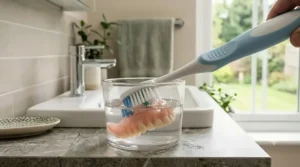
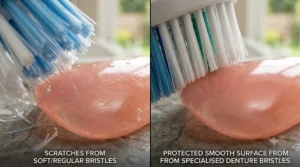
But here’s the uncomfortable truth that most people in this situation never hear: using a regular toothbrush on dentures can cause invisible microscopic scratches in the acrylic surface, and those tiny grooves become a permanent home for bacteria, staining, and odour. Not dramatically, not overnight. Quietly. Accumulating. Until one day your dentist peers into your mouth and wonders why your dentures look a decade older than they are.
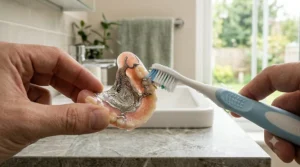
This is precisely the denture brush vs regular toothbrush debate — and it matters far more than most people realise. A denture brush isn’t just a slightly different shape; it’s a purpose-built tool designed around the specific material science of acrylic and porcelain prosthetics, which are softer and more vulnerable than natural tooth enamel. Use the wrong brush and you’re essentially sanding them down, very gently, every single day.
In this guide, we’ll cut through the noise, look at the seven best denture brushes available on Amazon.co.uk right now, and give you the honest, evidence-based breakdown you actually need. Whether you’re new to dentures or a seasoned wearer looking to do better by your investment, you’re in the right place.
Quick Comparison: Denture Brush vs Regular Toothbrush at a Glance
| Feature | Denture Brush | Regular Toothbrush |
|---|---|---|
| Bristle firmness | Soft-to-medium, optimised for acrylic | Often medium-to-hard — too abrasive |
| Head design | Dual-head (flat + tapered) | Single head, standard shape |
| Surface coverage | Reaches internal curves and gum lines | Misses concave denture surfaces |
| Risk of scratching | Low, when used correctly | Medium-to-high |
| Suitable for denture cleanser | ✅ Yes | ⚠️ Depends on bristle stiffness |
| Price range (Amazon.co.uk) | Under £10 for a multipack | Under £5 per brush |
| Best for | Denture wearers (full or partial) | Natural teeth only |
The data above tells a clear story: if you wear dentures, a standard toothbrush simply isn’t equipped for the task. The dual-head design of a proper denture brush isn’t a marketing gimmick — one flat head tackles the broad, smooth surfaces, whilst the tapered head gets into the concave interior and artificial gum line where plaque genuinely hides. No regular toothbrush shape can replicate that.
💬 Just one click — help others make better buying decisions too! 😊
✨ Don’t Miss These Exclusive Deals!
🔍 Take your denture care to the next level with these carefully selected products. Click on any highlighted item to check current pricing and availability on Amazon.co.uk. These picks will help you find exactly what you need!
Top 7 Denture Brushes on Amazon.co.uk: Expert Analysis
1. Wisdom Denture Brush (3-Pack)
Wisdom is a British oral care brand with serious heritage — and their denture brush remains one of the most consistently recommended options on Amazon.co.uk, with a loyal following among UK denture wearers that tells its own story. The 3-pack format is sensible value: you get one for the bathroom, one for the kitchen, and one spare for the travel bag without feeling guilty about it.
The head design features a slightly angled profile that fits the curved underside of full denture plates rather naturally — something that sounds minor until you’ve spent three minutes trying to scrub an awkward concave surface with a flat-headed brush. Bristles are medium-soft, which strikes the right balance between effective plaque removal and protecting the acrylic from toothbrush abrasion. UK reviewers consistently note how well the curved head fits without requiring awkward wrist angles — rather important for older users or anyone with reduced grip strength.
What most buyers overlook with the Wisdom brush is the handle length. It’s slightly shorter than a standard toothbrush, giving you better tactile control when you’re cleaning over a basin of water (the NHS recommends exactly this — cleaning over water to cushion any accidental drops). Available on Amazon.co.uk with Prime next-day delivery.
✅ British brand, widely trusted
✅ 3-pack offers excellent value
✅ Curved head suits full denture plates
❌ No separate tapered head for tight spots
❌ Not ideal for partial dentures with clasps
Price range: Under £5 for the pack — genuinely one of the best-value options available.
2. SOL 2pk Denture Brush — Dual Angled Heads
The SOL brush takes the dual-head concept and runs with it properly. You get two brushes per pack, each featuring angled heads designed to tackle hard-to-reach areas that a single flat head simply skips over. If you wear partial dentures with metal clasps, this is the brush most likely to serve you well — the angled bristle arrangement reaches into the junctions between metal and acrylic without requiring the sort of contortion that makes your wrist complain.
The non-slip grip handle is a genuinely useful feature rather than marketing padding. Wet hands, soapy water, and a ceramic sink is a combination that has sent more than a few dentures to their doom; a textured rubber handle reduces that risk meaningfully. UK reviewers with arthritis particularly appreciate the ergonomic design. That said, the bristles lean slightly firmer than the Wisdom option — fine for most users, but those with particularly soft or older acrylic dentures should apply a light touch.
Prime-eligible on Amazon.co.uk; typically delivered next day if ordered before the cut-off.
✅ Dual angled heads, genuinely useful
✅ Non-slip grip — important for dexterity issues
✅ Works well for partial dentures with clasps
❌ Bristles slightly firmer than ideal for very delicate acrylic
❌ 2-pack means fewer spares than the Wisdom option
Price range: Under £8 for the pack — mid-range value, justified by the dual-head design.
3. Oral-B Denture Brush
Oral-B barely needs an introduction in British bathrooms — the brand is as familiar as the kettle on the worktop. Their dedicated denture brush has been available on Amazon.co.uk for years and earned a reputation for being reliably effective rather than flashy. The head shape is broader than most specialist denture brushes, which makes it quick to cover large surface areas of full upper and lower plates, though it’s less adept at getting into deep grooves.
What makes the Oral-B option particularly worth considering is brand confidence — for denture wearers who are newer to the experience, there’s genuine reassurance in reaching for a name you’ve trusted for decades. In practice, the bristles are well-calibrated for acrylic surfaces, and the handle design is familiar enough that you don’t need to think about grip or angle. It won’t win awards for innovation, but consistency counts for a lot.
UK customers note it’s widely available through multiple Amazon sellers, which means stock tends to remain reliable even during periods of supply disruption — something worth considering since running out of your denture brush mid-week is a more irritating problem than it sounds.
✅ Trusted brand, familiar handling
✅ Wide head covers large surfaces efficiently
✅ Strong UK availability
❌ Less effective for deep concave areas
❌ Single head design limits versatility
Price range: Under £6 — solid choice for those who prioritise brand familiarity.
4. KYNZA Denture Brush — Dual Heads
KYNZA is one of those newer Amazon-native brands that has earned its place through solid product design rather than legacy marketing. The dual-head design here is well-executed: one flat, multi-layered bristle head for broad surface cleaning, and a second compact tapered head specifically angled for the artificial gum line and interdental areas. It’s the latter that sets it apart — that tapered brush is genuinely useful for partial denture wearers who need to clean around natural teeth without introducing cross-contamination.
The colour options (including a recognisable green) make it easy to distinguish your denture brush from your regular toothbrush if they share a bathroom space — a small thing, but one that matters when half-asleep at 7am. Multi-layered bristles on the flat head provide slightly better plaque-lifting than single-layer designs, particularly around the raised detail of artificial teeth. Available Prime-eligible on Amazon.co.uk with next-day delivery in most UK postcodes.
✅ Excellent dual-head design for both full and partial dentures
✅ Multi-layered bristles lift plaque effectively
✅ Colour options help avoid brush mix-ups
❌ Smaller brand — customer review volume lower than Wisdom or Oral-B
❌ Handle slightly thinner than ideal for reduced dexterity users
Price range: Under £8 — impressive value for a genuinely well-designed dual-head option.
5. Fortuna Denture Brush
The Fortuna Dental Care range is a pleasantly no-nonsense British offering. The denture brush is compact, well-priced, and designed with a clear focus on daily maintenance rather than deep-clean occasions. The head size is on the smaller side compared to broader options like the Oral-B, which is actually an advantage for denture wearers with partial plates — you have more control when manoeuvring around clasps and the natural teeth adjacent to the denture.
What stands out in UK customer feedback is the consistency of quality across batches. With some budget Amazon brush sets, you occasionally receive inconsistent bristle firmness between units in the same pack. Fortuna’s quality control appears more reliable — every brush arrives feeling the same, which sounds like a low bar but is genuinely worth noting if you order in multiples. Good for first-time denture wearers who want something straightforward without overwhelming choice.
✅ Compact head, good control for partial dentures
✅ Consistent quality within packs
✅ Simple, unpretentious design
❌ No tapered secondary head
❌ Limited colour choice — you’ll need to label if sharing a bathroom
Price range: Under £5 — excellent entry-level option for those new to specialist denture care.
6. Classicseali 8-Pack Denture Brushes (Multi-Colour)
For the denture wearer who likes to be comprehensively prepared — or who simply hates running out of anything — the Classicseali 8-pack is the bulk-buy option worth serious consideration. Eight brushes in four different colours means you can colour-code by location (upstairs bathroom, downstairs loo, travel kit, spare) and still have four left over. That might sound excessive, but given that NHS guidance recommends replacing your denture brush regularly as bristles wear and harbour bacteria, having spares readily to hand is genuinely sensible practice rather than hoarding.
The multi-layered bristle design on each brush provides reasonable cleaning effectiveness, and the double-sided head works adequately for most standard full denture plates. Where the Classicseali set makes a compromise is in the handle ergonomics — they’re lighter and slightly less substantial than the Wisdom or SOL options, which may feel a touch flimsy if you’re used to more premium brushes. For younger denture wearers or those with full manual dexterity, this is a non-issue.
✅ Outstanding value for money — 8 brushes per pack
✅ Multi-colour coding for organisation
✅ Double-sided head for decent surface coverage
❌ Lighter handles — less suitable for reduced grip strength
❌ Individual brushes less refined than single-unit options
Price range: Under £10 for all eight — the maths are quite satisfying.
7. Generic Dual-Head Denture Brush Sets (4-Pack, Various Brands)
Amazon.co.uk carries a wide range of 4-piece dual-head denture brush sets from smaller brands, typically featuring multi-tiered bristles, ergonomic rubber handles, and a portable carrying case in the pack. These sets represent the bottom of the price ladder whilst still offering purpose-built denture brush design — and for many UK buyers on a modest budget, they do the job admirably.
The carrying cases are the unexpected hero feature here. If you travel regularly — whether for holidays, visiting family across the country, or the occasional night away — having a dedicated case means your denture brush doesn’t rattle loose at the bottom of a washbag and pick up God-knows-what during transit. The cases are typically compact enough to tuck into a small overnight bag without taking up meaningful space. Brush quality varies slightly between brands in this segment, so read recent UK reviews before committing.
✅ Low price, purpose-built design
✅ Carrying case included — great for travel
✅ Multi-tiered bristles on dual heads
❌ Quality consistency varies between brands
❌ Handles often less ergonomic than premium alternatives
Price range: Under £8 for four brushes — solid value if you check recent UK reviews.
How to Choose a Denture Brush in the UK: 5 Key Criteria
Choosing a denture brush shouldn’t be complicated, but a few specific considerations make a real difference — particularly for UK buyers.
- Dual-head design first. If a brush only has one head, it’s already limited. The flat head cleans broad surfaces; the tapered head gets into the concave interior and artificial gum line. Both matter. Don’t settle for one.
- Bristle firmness: soft-to-medium, not hard. Denture acrylic is softer than natural tooth enamel, which means it scratches more easily. As Cambridge University Hospitals NHS Foundation Trust advises, abrasive pastes and hard bristles can scratch denture surfaces, creating grooves that collect debris and stain. Soft bristles, used with gentle pressure, are the correct approach.
- Handle ergonomics for your hands specifically. A significant proportion of denture wearers are older adults who may have reduced grip strength or dexterity. A thick, non-slip rubber handle isn’t a luxury feature — it’s practical safety, given that dentures dropped into a ceramic sink often crack (an expensive outcome for what should be a routine task).
- Size and portability. UK homes are famously compact — terraced houses, smaller bathrooms, and modest storage are the norm rather than the exception. A brush that comes with a carrying case earns extra credit for travel use, and a slimmer profile fits more naturally in a bathroom tumbler alongside your regular toothbrush.
- UK availability and Prime eligibility. Given that you’ll be replacing your denture brush regularly, choosing a product consistently stocked on Amazon.co.uk with Prime delivery available saves the irritation of discovering your brush has gone out of stock at an inconvenient moment.
Why a Regular Toothbrush Quietly Damages Dentures Over Time
This is the section most comparison articles gloss over, and it’s the most important one. The problem isn’t dramatic — you won’t see visible scratches after a single session with a regular toothbrush. What you’ll see, very gradually, is a surface that loses its original smooth sheen, develops a slightly dull quality, and starts to discolour faster than it used to. That’s toothbrush abrasion working its patient damage.
The science is fairly simple. Denture acrylic — the material that forms the base and, in many cases, the artificial teeth of full dentures — has a Vickers hardness roughly three to four times lower than natural tooth enamel. Regular toothbrushes, particularly anything with medium or hard bristles, are calibrated for that harder enamel surface. Apply that same brush to acrylic and you’re over-engineering the job, in the manner of sanding pine furniture with grit designed for stripping a car.
The NHS guidance from Guy’s and St Thomas’ Foundation Trust specifically advises against using toothpaste on dentures for exactly this reason — most toothpastes contain micro-abrasives designed to polish enamel, not protect acrylic. Those microscopic scratches, once created, become permanent grooves. And as Shropshire Community Health NHS Trust notes in their oral health guidance, daily mechanical cleaning with a non-abrasive denture cleanser is the evidence-based standard — not regular toothpaste and a standard brush.
The secondary problem is head geometry. A regular toothbrush is shaped for a convex surface — the outside curve of natural teeth. Dentures have significant concave geometry on the inner surface that fits against your palate or lower gum ridge. A flat-headed standard toothbrush simply cannot follow that curve effectively, which means you’re leaving plaque in exactly the areas that matter most for a hygienic fit.
Real-World Scenarios: Which Brush Suits Which UK Denture Wearer?
The Recent Retiree in the East Midlands
Margaret is 68, recently fitted with full upper and lower dentures after years of dental work, and understandably keen to protect her investment. She has mild arthritis in her right hand and needs a brush that won’t slip when her grip is slightly weaker than usual. Best match: SOL 2pk Dual Angled Head — the non-slip handle and angled heads make the cleaning routine manageable without straining. She keeps one at home and one for her frequent visits to her daughter in Nottingham.
The Working Professional in Birmingham
David is 52, wears partial lower dentures with metal clasps, and has roughly seven minutes in the morning before he needs to leave for work. He needs efficient, reliable coverage with minimum fuss. Best match: KYNZA Dual Head Denture Brush — the colour-coded design means there’s no mix-up with his regular toothbrush, and the dual heads cover both the acrylic and the areas around his clasps in one cleaning session.
The Budget-Conscious Student Carer in South Wales
Catrin looks after her father who wears full upper dentures and goes through brushes quickly because she replaces them diligently every six weeks as his dental nurse advised. Value and availability are the priorities. Best match: Classicseali 8-Pack — eight brushes for under £10 means she can maintain the replacement schedule without it affecting the weekly food budget. Colour-coding also means his brush is clearly distinguishable from the others in the bathroom.
Common Mistakes to Avoid When Cleaning Dentures (UK Edition)
❌ Using Regular Fluoride Toothpaste
It feels intuitive — toothpaste cleans teeth, dentures are teeth, therefore toothpaste cleans dentures. But the micro-abrasives in standard toothpaste are specifically designed to polish enamel and are too harsh for acrylic surfaces. Oxford Health NHS Foundation Trust’s community dental guidance is explicit: use denture cleaning solution on the brush, not toothpaste, as toothpaste can scratch dentures. Use liquid soap or a dedicated denture cleanser instead.
❌ Cleaning Over a Hard, Empty Sink
Dentures dropped onto ceramic crack. This is not a hypothetical — it happens with disappointing regularity, and replacement costs are significant. Always clean over a bowl of water or place a folded flannel in the sink. A silly-sounding tip that protects a several-hundred-pound prosthetic.
❌ Using Bleach or Very Hot Water
Both will warp or discolour your dentures, particularly those with metal components. Hot water can distort the acrylic base, altering the fit — and a poorly fitting denture causes gum irritation, sore spots, and potential bone resorption over time. Cold or lukewarm water is the correct choice.
❌ Using the Same Brush for Dentures and Natural Teeth
If you wear partial dentures and still have some natural teeth, use separate brushes — one dedicated denture brush for your prosthetic and a standard toothbrush with fluoride toothpaste for your remaining teeth. Cross-contamination is a genuine concern, and the cleaning requirements for each surface are genuinely different.
❌ Neglecting the Gums When Dentures Are Out
A surprisingly common oversight. When your dentures are soaking overnight, brush your gums, tongue, and the roof of your mouth with a soft toothbrush. This removes bacteria, stimulates circulation, and maintains the tissue health that supports your denture’s fit over time.
Denture Brush vs Regular Toothbrush: Feature-by-Feature Breakdown
| Comparison Point | Denture Brush | Regular Toothbrush |
|---|---|---|
| Bristle type | Soft, multi-tiered | Variable — often too stiff |
| Head shape | Dual: flat + tapered | Single flat head |
| Acrylic safety | ✅ Purpose-designed | ⚠️ Risk of micro-abrasion |
| Concave surface coverage | ✅ Excellent | ❌ Poor |
| Clasp cleaning (partials) | ✅ Tapered head reaches clasps | ❌ Can catch and bend clasps |
| Cost (Amazon.co.uk) | Under £10 for multipack | Under £5 single |
| Recommended use | Dentures only | Natural teeth only |
From the table above, the trade-offs are clear. The regular toothbrush isn’t inferior in absolute terms — it’s simply designed for a different surface. What matters is matching the tool to the task. The small additional cost of a dedicated denture brush (often under £5 per unit) is negligible compared to the cost of replacing damaged dentures prematurely.
✨ Don’t Miss These Exclusive Deals!
🔍 Explore the carefully selected denture brushes above and click any highlighted product to check current pricing and availability on Amazon.co.uk. Protect your dentures properly — it’s worth it.
Long-Term Denture Care: The Actual Cost of Getting It Wrong
A full set of private dentures in the UK typically costs between £1,000 and £2,500 depending on the practice and material quality. NHS dentures are available at a set Band 3 charge (check the NHS dental charges for the current year), but waiting times for NHS dental treatment have lengthened considerably post-pandemic, making the practical cost of replacement — in both money and time — higher than it’s ever been.
This context matters enormously for the denture brush vs regular toothbrush question. Every week of using the wrong brush doesn’t cost you anything visible. Over a year, the microscopic surface degradation begins to affect how the denture looks under certain light conditions. Over three to five years of improper cleaning, you may find staining becomes harder to shift, the acrylic develops a slightly rough quality, and your dentist begins mentioning that a reline or replacement might be on the cards sooner than expected.
The right denture brush, used with liquid soap or a non-abrasive denture cleanser and gentle technique, costs under £10 for a multipack and properly maintained could extend the comfortable lifespan of your dentures by years. That’s not an exaggeration — it’s basic materials science applied to a daily hygiene routine. For context, the University of Bristol Dental School’s patient guidance emphasises regular cleaning as central to long-term denture health, alongside routine dental check-ups to monitor fit.
The irony is that people who’ve spent hundreds or thousands of pounds on quality dentures are often the ones most likely to use the cheapest available brush out of habit, without questioning whether it’s appropriate. If you’re going to be careful about anything, be careful about this.
FAQ: Denture Brush vs Regular Toothbrush (UK Questions Answered)
❓ Can I use a regular toothbrush on my dentures?
❓ Should I use toothpaste on my dentures?
❓ How often should I replace my denture brush?
❓ Do denture brushes qualify for free delivery on Amazon.co.uk?
❓ Are denture brushes safe for partial dentures with metal clasps?
Conclusion: Make the Switch — Your Dentures Will Thank You
The denture brush vs regular toothbrush debate ends the same way most sensible hygiene debates end: use the right tool for the job. A regular toothbrush is superb for natural teeth. On denture acrylic, it’s the wrong choice — and the consequences, though slow and subtle, are real and costly.
The good news is that the solution is refreshingly simple and inexpensive. A quality denture brush from Amazon.co.uk — whether that’s the beloved Wisdom 3-pack, the ergonomic SOL dual-head, or the KYNZA with its colour-coded design — costs under £10 and will serve you for months on end if you replace it on schedule. That’s a rather small investment for the protection of a prosthetic that cost you considerably more and does something rather important in your day-to-day life.
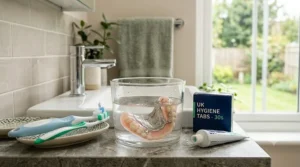
Start today. Rinse, brush gently with liquid soap or denture cleanser, soak overnight, and clean over water. Simple routine, properly followed, with the right tool. Your future self — and your future dentist appointments — will be the better for it.
✨ Don’t Miss These Exclusive Deals!
🔍 Ready to make the switch? Click any highlighted product above to check current pricing and Prime availability on Amazon.co.uk. Your dentures deserve the right brush!
Recommended for You
- Best Denture Brush UK 2026: 7 Expert Picks for Sparkling Clean False Teeth
- Are Ultrasonic Cleaners Good for Dentures? 7 Best UK Picks 2026
- Best Ultrasonic Denture Cleaner UK 2026: 7 Expert Picks
Disclaimer: This article contains affiliate links. As an Amazon Associate, I earn from qualifying purchases. If you purchase products through these links, we may earn a small commission at no additional cost to you.
✨ Found this helpful? Share it with your mates! 💬🤗
