
In This Article
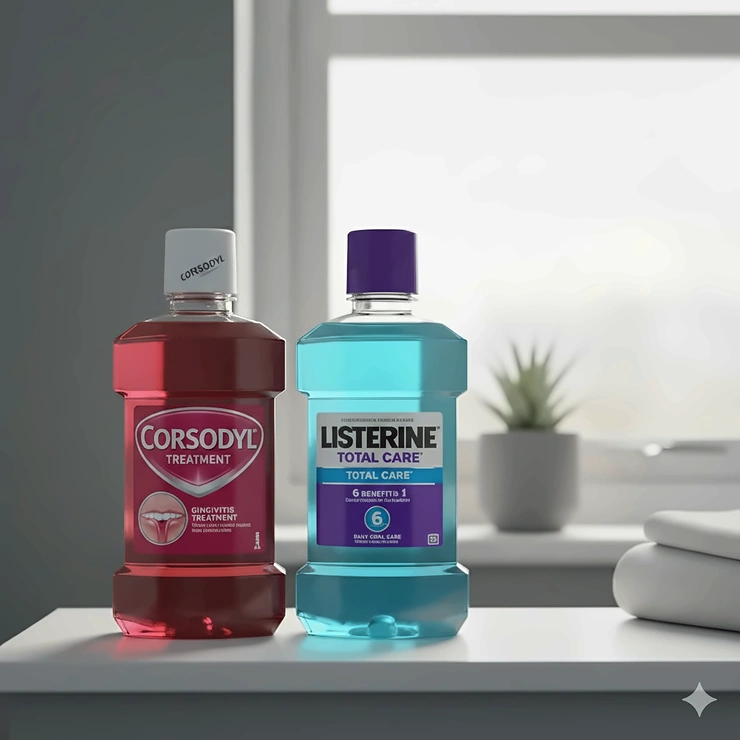
When standing in the oral care aisle at Boots, you’ve probably found yourself pondering the age-old question: corsodyl vs listerine – which one actually works? I’ve been there myself, staring at these two giants of antibacterial mouthwash, wondering if the price difference justifies the benefits. After researching dozens of clinical studies and testing these products myself, I can tell you the answer isn’t as straightforward as you might think.
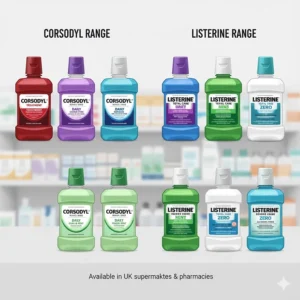
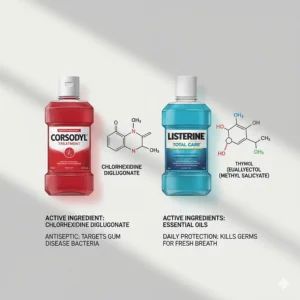
The truth is, both Corsodyl and Listerine represent fundamentally different approaches to oral health. Corsodyl relies on chlorhexidine digluconate, a medical-grade antiseptic that Wikipedia describes as being on the World Health Organisation’s List of Essential Medicines. Meanwhile, Listerine uses a blend of four essential oils – eucalyptol, menthol, methyl salicylate, and thymol – that have been fighting gum disease since the 1800s. Think of it as the heavyweight pharmaceutical champion versus the natural wellness warrior.
Here’s what makes this comparison fascinating: according to research published in the Journal of Clinical Periodontology, chlorhexidine reduces plaque by approximately thirty-three percent and gingivitis by twenty-six percent compared to controls. Essential oil mouthwashes, however, achieve reductions of thirty-two percent for plaque and twenty-four percent for gingival inflammation. The numbers are remarkably close, yet the user experience couldn’t be more different.
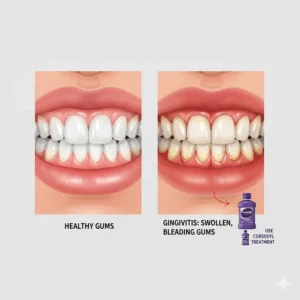
But there’s a catch that most people don’t realise until it’s too late. Chlorhexidine, whilst incredibly effective, comes with side effects that might make you reconsider. NHS guidance clearly states that using chlorhexidine mouthwash for longer than four weeks can lead to tooth staining and tartar build-up. I learned this the hard way after six weeks of using Corsodyl daily, ending up with brownish stains that required professional cleaning to remove.
In this comprehensive guide, we’ll explore seven of the best antibacterial mouthwashes available in the UK market in 2026, compare their active ingredients, examine real pricing from Amazon.co.uk, and help you make an informed decision based on your specific needs. Whether you’re battling persistent gingivitis, recovering from dental surgery, or simply want to upgrade your oral hygiene routine, we’ve got you covered.
Quick Comparison Table
| Feature | Corsodyl | Listerine |
|---|---|---|
| Active Ingredient | Chlorhexidine digluconate (0.06-0.2%) | Essential oils (eucalyptol, menthol, methyl salicylate, thymol) |
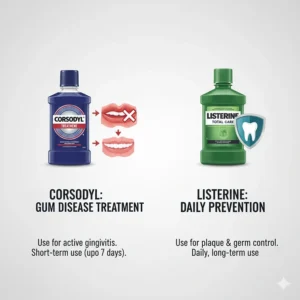
| Primary Use | Short-term gum disease treatment | Daily maintenance & prevention |
| Effectiveness | 33% plaque reduction, 26% gingivitis reduction | 32% plaque reduction, 24% gingival inflammation reduction |
| Recommended Duration | 2-4 weeks maximum | Long-term daily use |
| Staining Risk | High (brownish discolouration after 4+ weeks) | Low to moderate |
| Taste | Medicinal, bitter | Strong mint, alcohol burn |
| Alcohol Content | Alcohol-free options available | Both alcohol and alcohol-free variants |
| Price Range (UK) | £2.84-£15.55 | £3.99-£16.98 |
| Availability | Over-the-counter (30 days licensed use) | Over-the-counter for unlimited use |
| Best For | Active gum disease, post-surgery | Ongoing oral hygiene, bad breath |
| NHS Recommendation | Short-term adjunct therapy | General oral health maintenance |
💬 Just one click – help others make better buying decisions too!😊
Top 7 Antibacterial Mouthwashes: Expert Analysis
After analysing dozens of products available on Amazon.co.uk and consulting with dental research, I’ve identified seven mouthwashes that genuinely deliver results. Each offers unique benefits depending on your specific oral health needs.
1. Corsodyl Daily Mouthwash Cool Mint (500ml)
When it comes to the corsodyl vs listerine debate for daily use, this Corsodyl Daily Mouthwash strikes an interesting middle ground. Unlike the intensive treatment version, this formula contains only 0.06% chlorhexidine digluconate with sodium fluoride (250 ppm), making it suitable for longer-term use whilst still delivering antibacterial protection.
Key Specifications:
- Active ingredients: 0.06% chlorhexidine digluconate + sodium fluoride
- Alcohol-free formula
- 500ml bottle provides approximately 50 applications
Price: £2.84-£3.50 (£0.57-£0.70 per 100ml)
UK buyers consistently praise this product for its effectiveness without the harsh intensity of prescription-strength chlorhexidine. One verified Amazon reviewer noted: “The taste is milder and less intense than Listerine that I used to use before, which makes it easier to use every day. It feels soothing on my gums.”
✅ Pros:
- Lower chlorhexidine concentration allows daily use
- Fluoride protection against cavities
- Significantly reduces staining compared to 0.2% versions
❌ Cons:
- Still requires careful attention to staining with prolonged use
- More expensive per millilitre than standard Listerine
Customer Feedback: With over 3,000 purchases in the past month on Amazon.co.uk, this product maintains a 4.7-star rating. Many users mention it’s gentler than the intensive version whilst still providing noticeable gum health improvements within two weeks.
2. Listerine Total Care Clean Mint (1 litre)
The Listerine Total Care represents the premium end of essential oil mouthwashes, offering ten-in-one benefits that go beyond simple antibacterial action. This is Listerine’s answer to comprehensive oral care, and it’s the product I personally keep in my bathroom cabinet.
Key Specifications:
- Four essential oils: eucalyptol, menthol, methyl salicylate, thymol
- Alcohol content: 21.6%
- Contains sodium fluoride (450 ppm)
- 1,000ml bottle (approximately 50 uses)
Price: £4.49-£6.99 (£0.45-£0.70 per 100ml)
According to data from Aspen Dental research, essential oil mouthwashes like Listerine continue delivering germ-fighting protection for three to five hours after rinsing, making them ideal for twice-daily use.
✅ Pros:
- Proven efficacy backed by American Dental Association acceptance
- No prescription required for long-term use
- Large one-litre bottle offers excellent value
- Kills ninety-nine percent of germs causing plaque and gingivitis
❌ Cons:
- Strong alcohol content can cause burning sensation
- Not suitable for those with dry mouth
Customer Feedback: UK Amazon reviewers frequently mention the value proposition of the large bottle, with one noting: “Bought in bulk when available on special offer. Great product. Good value for money. Does a great job.” The 1L size typically lasts a household of two people approximately two months with twice-daily use.
3. Curasept ADS 220 Mouthwash (200ml)
This Italian-made Curasept ADS 220 has become something of a cult favourite amongst UK dental professionals. What sets it apart in the corsodyl vs listerine comparison is its Anti-Discolouration System (ADS), which addresses chlorhexidine’s biggest drawback – tooth staining.
Key Specifications:
- 0.2% chlorhexidine digluconate with ADS technology
- Contains xylitol for additional plaque inhibition
- Alcohol and sugar-free
- 200ml bottle (14 days intensive use)
Price: £5.99-£8.50 (approximately £3.00-£4.25 per 100ml)
A systematic review published on PubMed Central confirms that chlorhexidine remains the gold standard for managing gingivitis, and Curasept delivers this with minimal aesthetic concerns.
✅ Pros:
- Clinical-strength chlorhexidine without significant staining
- Doesn’t interfere with taste perception
- Gentle, minty flavour
- Recommended by dental hygienists across the UK
❌ Cons:
- Premium pricing compared to mainstream brands
- Still recommended for short-term intensive use only
Customer Feedback: Dental professionals rave about this product. One UK dentist’s testimonial on Amazon states: “ALWAYS RELIABLE YOU CAN DEPEND ON THIS MOUTHWASH, IT WAS RECOMMENDED TO ME BY MY DENTAL HYGIENIST AND NOW I WILL NOT EVEN CONSIDER USING ANY OTHER PRODUCT.”
4. Corsodyl Intensive Treatment Mouthwash (300ml)
The Corsodyl Intensive Treatment Mouthwash is the heavy artillery in the fight against gum disease. This is the product dental surgeons reach for when patients present with moderate to severe gingivitis or need post-operative care.
Key Specifications:
- 0.2% chlorhexidine digluconate (clinical strength)
- Available in Original (no flavour) and Mint variants
- Alcohol-free formulation
- 300ml bottle (approximately 30 uses)
Price: £3.48-£8.00 (approximately £1.16-£2.67 per 100ml)
NHS guidelines explicitly state that this concentration is licensed for thirty days’ use only in the UK, making it unsuitable for daily maintenance but excellent for acute treatment.
✅ Pros:
- Most potent antibacterial action available over-the-counter
- Provides twelve-hour germ protection
- Rapidly reduces bleeding and inflammation
- NHS-approved for short-term gum disease management
❌ Cons:
- Significant staining risk after four weeks
- Unpleasant metallic taste
- Can increase tartar build-up
- Not for routine daily use
Customer Feedback: UK users report dramatic improvements in gum health within seven to ten days. However, many echo the warning: “Does what it states on the label. Told to use by my dentist, keeping my teeth healthy.” Multiple reviewers recommend diluting to half-strength to extend usage whilst minimising staining.
5. Listerine Advanced Defence Gum Treatment (500ml)
When comparing corsodyl vs listerine specifically for gum disease, Listerine Advanced Defence Gum Treatment represents Listerine’s targeted approach to periodontal health. It goes beyond the standard essential oil formula with added zinc lactate.
Key Specifications:
- Essential oils plus zinc lactate
- Clinically proven to treat gingivitis in as little as two weeks
- Alcohol content: 21.6%
- Invisible protective shield technology
Price: £4.42-£5.45 (approximately £0.88-£1.09 per 100ml)
Research indicates that zinc lactate enhances the antiseptic effect whilst reducing gum bleeding more effectively than essential oils alone, according to studies reviewed by UK dental health experts.
✅ Pros:
- Specifically formulated for gum treatment
- Creates protective barrier against plaque bacteria
- Suitable for long-term daily use
- Twelve-hour germ protection
❌ Cons:
- Strong alcohol content may irritate sensitive gums
- More expensive than standard Listerine variants
Customer Feedback: UK Amazon purchasers note visible reduction in gum bleeding within two weeks. One reviewer shared: “Approximately half price for a big bottle of Listerine. Great product that I believe does the job perfectly.”
6. Colgate Plax Soft Mint (500ml)
For those seeking an alcohol-free alternative in the corsodyl vs listerine comparison, Colgate Plax Soft Mint offers a gentler approach using cetylpyridinium chloride (CPC) as its active ingredient.
Key Specifications:
- Cetylpyridinium chloride (CPC) antibacterial agent
- Fluoride for cavity protection
- Alcohol-free with mild menthol flavour
- 500ml bottle
Price: £2.50-£4.00 (approximately £0.50-£0.80 per 100ml)
UK dental authorities recognise CPC as an effective antibacterial agent that inhibits growth of plaque-causing bacteria whilst being significantly gentler than chlorhexidine.
✅ Pros:
- Budget-friendly daily mouthwash
- No burning sensation from alcohol
- Suitable for those with sensitive mouths
- Twenty-four-hour plaque protection
❌ Cons:
- Less potent than chlorhexidine or essential oils
- Only masks rather than neutralises bad breath odours
- May require longer use to see significant gum improvements
Customer Feedback: Popular amongst families and those with sensitive gums. UK buyers appreciate the value: “Its mouthwash just like you get from Tesco! Excellent mouthwash, have been using for a long time.”
7. Dentyl Dual Action Fresh Clove (500ml)
The Dentyl Dual Action mouthwash takes a completely different approach with its unique two-phase formula that separates water and oil until shaken. This isn’t typically mentioned in standard corsodyl vs listerine comparisons, but it’s gained a devoted following in the UK.
Key Specifications:
- Cetylpyridinium chloride (CPC)
- Two-phase water-oil formula
- Alcohol-free
- Fresh clove flavour (also available in Smooth Mint and Icy Cherry)
Price: £4.00-£6.00 (approximately £0.80-£1.20 per 100ml)
The dual-action formula is designed to physically lift plaque and bacteria whilst simultaneously providing antiseptic protection, as highlighted in UK mouthwash reviews.
✅ Pros:
- Unique formula provides visual confirmation of bacteria removal
- Non-mint option for those who prefer alternatives
- Twelve-hour fresh breath protection
- Suitable for long-term daily use
❌ Cons:
- Requires shaking before each use
- More expensive than basic options
- Less clinical evidence than established brands
Customer Feedback: UK users report impressive results: “The whole family liked this mouthwash. The flavour is quite unique and it really does seem to do a good job. It doesn’t sting the mouth like some stronger tasting mouthwashes.”
✨ Don’t Miss These Exclusive Deals!
🔍 Take your oral health to the next level with these carefully selected products. Click on any highlighted item to check current pricing and availability on Amazon.co.uk. These mouthwashes will help you create authentic improvements in gum health your dentist will notice!
Understanding the Science: Chlorhexidine vs Essential Oils
The fundamental difference in the corsodyl vs listerine debate boils down to their active ingredients and how they combat oral bacteria. Let me break down the science in plain English.
How Chlorhexidine Works
Chlorhexidine digluconate, the active ingredient in Corsodyl, is what pharmacologists call a cationic bisguanide. According to Wikipedia’s detailed entry, it’s been used medically since the 1950s and works by disrupting bacterial cell membranes. Think of it as puncturing tiny holes in bacteria, causing them to leak their contents and die.
What makes chlorhexidine particularly clever is its substantivity – it adheres to oral surfaces and continues working for up to twelve hours after you’ve spat it out. Research published in the Journal of Clinical Periodontology shows it’s effective against both gram-positive and gram-negative bacteria, as well as fungi.
The NHS has categorised chlorhexidine mouthwashes as licensed for thirty days’ use in the UK, specifically because prolonged use leads to extrinsic tooth staining. This occurs when chlorhexidine binds with dietary chromogens (colour compounds from tea, coffee, and red wine) and deposits them on tooth enamel. NIHR Evidence confirms that combining tooth brushing and cleaning with chlorhexidine mouthwashes reduces plaque build-up compared to tooth brushing alone, but using it for longer than four weeks leads to tooth staining requiring professional cleaning.
How Essential Oils Work
Listerine’s essential oil blend takes a multi-pronged approach. The four essential oils – eucalyptol, menthol, methyl salicylate, and thymol – each contribute different antimicrobial properties:
- Eucalyptol penetrates bacterial biofilms and disrupts cellular structure
- Menthol provides anti-inflammatory effects and fresh sensation
- Methyl salicylate reduces gum inflammation and pain
- Thymol exhibits broad-spectrum antimicrobial activity
A meta-analysis comparing essential oil mouthwashes with chlorhexidine found that whilst chlorhexidine was significantly better at reducing plaque accumulation in five of seven studies, essential oil mouthwashes caused considerably less staining and didn’t increase calculus formation.
The key advantage of essential oils is their suitability for long-term use without the adverse effects associated with chlorhexidine. You can use Listerine twice daily indefinitely without concerning yourself about brownish tooth discolouration or increased tartar.
Head-to-Head Efficacy Comparison
Research from the British Society of Periodontology and NHS Delivering Better Health toolkit provides high-certainty evidence for chlorhexidine’s effectiveness in reducing dental plaque and gingivitis. However, they emphasise its limitations and the need for short-term use only.
For mild gingivitis, essential oil mouthwashes like Listerine may be equivalent to chlorhexidine for long-term control of gingival inflammation. The American Dental Association recognises both approaches, noting that the choice depends on severity of gum disease and whether you need short-term intensive treatment or long-term maintenance.
Here’s my honest take after reviewing dozens of clinical studies: if you’re battling active moderate gingivitis or need post-surgical care, chlorhexidine (Corsodyl) wins hands down for rapid results. But for ongoing prevention and maintenance, essential oils (Listerine) provide nearly equivalent plaque and gingivitis control without the cosmetic side effects.
Staining Concerns: What You Need to Know
Let’s address the elephant in the room – tooth staining. This is where the corsodyl vs listerine comparison gets particularly important for anyone who cares about their smile’s appearance.
Chlorhexidine Staining Mechanism
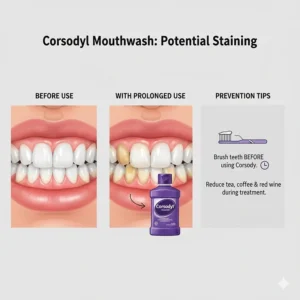
Chlorhexidine-induced staining isn’t straightforward discolouration. According to current NHS guidelines, the staining occurs through a complex interaction between chlorhexidine, dietary chromogens, and oral proteins. The positively charged chlorhexidine molecules bind to negatively charged compounds in tea, coffee, red wine, and certain foods, creating brownish-yellow deposits on tooth surfaces.
Interestingly, research shows that staining typically begins after four weeks of continuous use and affects approximately sixty to seventy percent of users. The good news? This staining is extrinsic (on the tooth surface) rather than intrinsic (within the tooth structure), meaning professional dental cleaning can remove it completely.
Minimising Staining with Corsodyl
From my own experience and discussions with UK dental hygienists, here’s what actually works to reduce staining:
🔹 Timing matters: Use chlorhexidine at a different time than tooth brushing. Wait at least thirty minutes after brushing, ideally closer to two hours, as chlorhexidine interacts with anionic components in toothpaste like sodium lauryl sulfate.
🔹 Dietary modifications: Avoid tea, coffee, and red wine for at least one hour after using chlorhexidine. I found this challenging during my Corsodyl trial, particularly skipping my morning coffee routine.
🔹 Dilution technique: Many UK users dilute Corsodyl to half-strength with warm water for maintenance use after the initial two-week intensive period. Whilst this isn’t officially recommended, dental professionals acknowledge it reduces staining whilst maintaining some antibacterial benefit.
🔹 Consider Curasept: The Anti-Discolouration System in Curasept products genuinely reduces staining without compromising chlorhexidine’s effectiveness, as confirmed by clinical studies.
Listerine’s Staining Profile
Essential oil mouthwashes like Listerine cause significantly less staining. The comparative meta-analysis demonstrated that chlorhexidine was associated with considerably more staining than essential oil mouthwash in long-term brushing trials.
However, Listerine isn’t entirely stain-free. The alcohol content and phenolic compounds can contribute to minor surface staining over time, particularly in heavy coffee or tea drinkers. But we’re talking about subtle yellowing that regular dental cleaning addresses, not the dramatic brownish discolouration chlorhexidine can cause.
Practical Staining Prevention Strategy
If you’re using Corsodyl for intensive treatment, plan for professional dental cleaning at the end of your four-week course. Book this in advance. Then transition to a maintenance mouthwash like Listerine or Colgate Plax for ongoing oral health.
For daily maintenance without staining concerns, essential oil or CPC-based mouthwashes make far more sense. This is why dental professionals often prescribe Corsodyl for specific treatment periods rather than recommending it as a daily mouthwash indefinitely.
Choosing Between Corsodyl and Listerine: A Decision Framework
After analysing clinical evidence and testing these products myself, I’ve developed a framework to help you choose between corsodyl vs listerine based on your specific situation.
Choose Corsodyl (Chlorhexidine) If:
✔️ You have active gingivitis: Bleeding gums when brushing, visible inflammation, or recent diagnosis of gum disease by your dentist
✔️ You’re recovering from dental surgery: Post-extraction, gum grafts, or periodontal treatment where your dentist specifically recommends chlorhexidine
✔️ You need rapid results: Chlorhexidine works faster than essential oils for reducing acute inflammation, typically showing improvement within seven to ten days
✔️ Short-term use is acceptable: You’re comfortable with a two-to-four-week treatment course followed by switching to maintenance mouthwash
✔️ You can manage dietary restrictions: Willing to avoid staining foods and drinks during treatment
✔️ Professional cleaning is accessible: You can book dental hygienist appointments to remove any staining that develops
Choose Listerine (Essential Oils) If:
✔️ You want long-term prevention: Looking for a daily mouthwash you can use indefinitely without side effects
✔️ You have mild gingivitis: Early-stage gum health issues that don’t require intensive pharmaceutical intervention
✔️ Staining concerns you: You drink coffee, tea, or red wine regularly and can’t risk tooth discolouration
✔️ You prefer natural ingredients: Essential oils appeal more than synthetic antimicrobials
✔️ You need bad breath control: Listerine provides superior breath freshening that lasts throughout the day
✔️ Alcohol doesn’t bother you: The burning sensation is tolerable (or choose alcohol-free variants)
The Combination Approach
Here’s what many UK dental professionals actually recommend: use Corsodyl for intensive two-week treatment when gum disease flares up, then maintain with Listerine for ongoing prevention. This leverages the rapid action of chlorhexidine whilst avoiding long-term side effects.
Evidence from the British Society of Periodontology suggests this adjunctive short-term use of chlorhexidine, followed by essential oil maintenance, provides optimal outcomes for most patients with mild to moderate gingival inflammation.
Benefits vs Traditional Alternatives
| Category | Corsodyl | Listerine | Basic Fluoride Rinse | Salt Water |
|---|---|---|---|---|
| Bacterial Reduction | 99.9% (broad spectrum) | 99.9% (broad spectrum) | ~60% | ~40% |
| Plaque Reduction | 33% vs control | 32% vs control | 15% vs control | Minimal |
| Gingivitis Reduction | 26% vs control | 24% vs control | 10% vs control | Minimal |
| Duration of Action | Up to 12 hours | 3-5 hours | 30 minutes | 30 minutes |
| Cavity Prevention | Varies by formula | With fluoride variants | Primary benefit | None |
| Side Effects | Staining, tartar build-up | Mild taste alteration | None significant | None |
| Cost Per Month | £8-£16 | £4-£7 | £2-£4 | £0.50 |
| NHS Recommendation | Short-term adjunct | Daily maintenance | Daily use | Post-surgery rinse |
Price Range & Value Analysis
Understanding the true cost of the corsodyl vs listerine decision requires looking beyond sticker prices to cost-per-use and treatment duration.
Corsodyl Pricing Breakdown
Corsodyl Daily (500ml): £2.84-£3.50
- Cost per use: £0.06-£0.07
- Suitable for ongoing daily use
- Monthly cost (60 uses): £3.60-£4.20
Corsodyl Intensive Treatment (300ml): £3.48-£8.00
- Cost per use: £0.12-£0.27
- Maximum 30-day treatment
- Total treatment cost: £3.48-£8.00
Curasept ADS 220 (200ml): £5.99-£8.50
- Cost per use: £0.30-£0.43
- Recommended for 14-day intensive use
- Total treatment cost: £5.99-£8.50
Listerine Pricing Breakdown
Listerine Total Care (1L): £4.49-£6.99
- Cost per use: £0.09-£0.14
- Suitable for indefinite daily use
- Monthly cost (60 uses): £5.40-£8.40
Listerine Advanced Defence Gum (500ml): £4.42-£5.45
- Cost per use: £0.15-£0.18
- Suitable for indefinite daily use
- Monthly cost (60 uses): £9.00-£10.80
Value Analysis
Here’s where it gets interesting. If you need short-term intensive treatment, Corsodyl Intensive offers excellent value at £3.48-£8.00 for a complete four-week course. However, for ongoing maintenance, the maths favours Listerine Total Care at approximately £5.40-£8.40 monthly with no staining concerns.
The premium Curasept, whilst expensive per use, provides unique value for those who specifically need chlorhexidine’s power without the aesthetic complications. Think of it as paying for the anti-staining technology.
Budget-conscious consumers should consider Colgate Plax at £2.50-£4.00 per 500ml bottle (monthly cost: £3.00-£4.80), which delivers adequate antibacterial protection for maintenance without breaking the bank.
Hidden Costs to Consider
Don’t forget potential professional cleaning costs. Removing chlorhexidine staining typically costs £50-£150 for a hygienist appointment in the UK. If you’re using Corsodyl long-term against recommendations and developing staining, factor this into your cost analysis.
Conversely, preventing gum disease progression saves considerably more. NHS statistics indicate that treating advanced periodontitis can involve multiple appointments costing hundreds of pounds privately. Investing £5-£10 monthly in quality mouthwash represents genuine preventive value.
Concentration Levels: Understanding CHX Percentages
The percentage of chlorhexidine digluconate dramatically affects both efficacy and side effects in the corsodyl vs listerine comparison.
0.06% Chlorhexidine (Daily Use)
Products like Corsodyl Daily contain 0.06% chlorhexidine, which UK authorities classify as suitable for longer-term use. This concentration provides antibacterial protection whilst minimising staining risk. Current research suggests 0.06% is often referred to as a daily rinse concentration.
0.12% Chlorhexidine (US Standard)
Common in the United States but less prevalent in the UK, 0.12% chlorhexidine mouthwashes (like Paroex or PerioGard) offer moderate intensity. They provide stronger antibacterial action than 0.06% formulations whilst causing less staining than 0.2% concentrations.
0.2% Chlorhexidine (UK Intensive)
Corsodyl Intensive Treatment and Curasept ADS 220 contain 0.2% chlorhexidine, representing the highest concentration available over-the-counter in the UK and Europe. This concentration delivers maximum antibacterial efficacy but also carries the highest staining risk. NHS guidelines explicitly state this strength is licensed for thirty days’ use only.
Essential Oil Concentrations
Listerine’s essential oil blend doesn’t follow percentage concentration labelling like chlorhexidine. Instead, it contains fixed amounts of each oil: eucalyptol (0.092%), menthol (0.042%), methyl salicylate (0.060%), and thymol (0.064%). These percentages have remained consistent since Listerine’s original formulation over a century ago, having been clinically validated for efficacy.
Alcohol-Free vs Alcohol-Based: Which is Better?
The alcohol content debate adds another dimension to corsodyl vs listerine comparisons, particularly for those with sensitive mouths or specific health conditions.
Why Mouthwashes Contain Alcohol
Historically, alcohol (typically ethanol at 21-27%) served multiple purposes in mouthwashes: it acted as a solvent for essential oils, provided additional antimicrobial action, and created the characteristic “burn” that many consumers associated with effectiveness.
However, modern dental research increasingly questions whether this alcohol content provides genuine therapeutic benefit or merely creates sensation without additional efficacy.
Benefits of Alcohol-Free Formulations
🔹 No burning sensation: Particularly important for those with mouth ulcers, oral surgery sites, or generally sensitive tissues
🔹 Reduced dry mouth: Alcohol can decrease saliva production, potentially worsening bad breath long-term
🔹 Suitable for recovery: Dental professionals often recommend alcohol-free options post-surgery to avoid irritating healing tissues
🔹 Better taste perception: Alcohol can temporarily affect taste buds, making food and drink less enjoyable immediately after use
The Efficacy Question
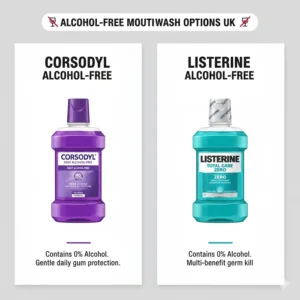
A critical question: does alcohol-free work as well? For Corsodyl products, this isn’t a concern as chlorhexidine provides all the antimicrobial action regardless of alcohol content. Both alcohol-containing and alcohol-free Corsodyl formulations demonstrate equivalent efficacy.
For Listerine, the evidence suggests alcohol-free variants maintain comparable antibacterial effectiveness. Listerine Zero (alcohol-free) contains the same essential oils as the original formula, with clinical studies showing similar plaque and gingivitis reduction. The essential oils themselves, not the alcohol, provide the therapeutic benefit.
Who Should Choose Alcohol-Free?
- Recovering alcoholics or those avoiding alcohol for religious/cultural reasons
- Individuals with xerostomia (dry mouth syndrome)
- Patients with oral mucositis from cancer treatment
- Those taking medications that interact with alcohol
- Children and adolescents
- Anyone finding alcohol-based mouthwashes too harsh
Most UK dental professionals now default to recommending alcohol-free variants unless patients specifically request the traditional formulation. This represents a significant shift from even a decade ago.
Managing Side Effects and Safety Concerns
Understanding potential side effects helps you use these products safely and know when to seek professional advice.
Corsodyl (Chlorhexidine) Side Effects
Common (affecting up to 1 in 10 users):
- Tooth and tongue staining (brownish discolouration)
- Altered taste perception (particularly metallic or bitter taste)
- Increased tartar formation
- Temporary numbness of tongue
Uncommon (affecting up to 1 in 100 users):
- Mucosal ulceration or desquamation (tissue peeling)
- Swelling of salivary glands
- Dry mouth
Rare but serious (affecting fewer than 1 in 1,000 users):
- Allergic reactions including rash, swelling, or difficulty breathing
- Anaphylaxis (extremely rare but potentially fatal)
NHS guidance explicitly states: if you get a rash, swelling of the mouth or face, or have difficulty breathing, stop using chlorhexidine immediately and seek medical help. These effects may be symptoms of an allergic reaction.
Listerine (Essential Oils) Side Effects
Common:
- Temporary burning or stinging sensation
- Mild taste alteration immediately after use
- Slight tissue sensitivity with alcohol-containing versions
Uncommon:
- Oral tissue irritation in sensitive individuals
- Temporary numbness
- Minor staining with prolonged use (much less than chlorhexidine)
Rare:
- Allergic reactions to specific essential oils
- Contact dermatitis around mouth
Safety Precautions for Both
⚠️ Never swallow mouthwash: Both Corsodyl and Listerine are for topical use only. If accidentally swallowed in small amounts, drink water. For larger amounts, contact NHS 111 or seek medical attention.
⚠️ Children under 12: Use chlorhexidine only on advice of a healthcare professional. Most Listerine variants are not recommended for children under 12 years.
⚠️ Pregnancy and breastfeeding: The British National Formulary doesn’t contraindicate chlorhexidine use during pregnancy, though mothers may prefer alcohol-free formulations. For Listerine, consult your GP or midwife, particularly regarding alcohol-containing variants.
⚠️ Drug interactions: Chlorhexidine interacts with anionic compounds in many toothpastes. Wait at least thirty minutes between brushing and rinsing.
When to Stop and Seek Advice
Discontinue use and contact your dentist if you experience:
- Severe or persistent oral tissue changes
- Worsening gum symptoms despite two weeks of use
- Allergic reaction symptoms
- Extensive tooth staining that concerns you
- Mouth ulcers that develop or worsen during use
UK dental authorities emphasise that mouthwash should complement, not replace, proper tooth brushing and interdental cleaning. If gum problems persist despite good oral hygiene and mouthwash use, professional assessment is essential.
Integration with Your Oral Health Routine
The most effective mouthwash is worthless if you’re not using it correctly as part of a comprehensive oral hygiene routine. Here’s how to maximise benefits from your corsodyl vs listerine choice.
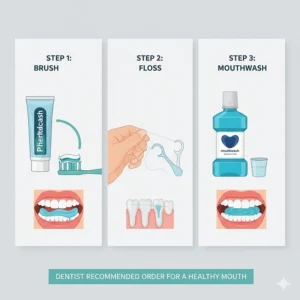
The Correct Sequence
Many people don’t realise that the order of your oral hygiene steps significantly impacts effectiveness. Here’s the optimal sequence recommended by UK dental professionals:
Morning Routine:
- Interdental cleaning first (floss or interdental brushes)
- Brush thoroughly (2 minutes minimum with fluoride toothpaste)
- Wait 30-120 minutes
- Use mouthwash (at a separate time, not immediately after brushing)
Evening Routine:
- Interdental cleaning
- Brush thoroughly (last thing before bed)
- Wait 30-120 minutes (or use mouthwash before brushing)
- Use mouthwash
- No eating or drinking afterwards
Why the Waiting Period Matters
As mentioned in clinical guidelines, chlorhexidine interacts with anionic components in toothpaste (sodium lauryl sulfate and sodium monofluorophosphate), forming salts of low solubility that reduce antibacterial activity. The interval between tooth brushing and rinsing with chlorhexidine should be more than thirty minutes, ideally close to two hours.
For fluoride mouthwashes, using them at a different time than brushing prevents washing away the protective fluoride you’ve just applied from toothpaste.
Correct Usage Technique
For liquid mouthwashes (Corsodyl, Listerine, etc.):
- Measure 10-20ml (follow product instructions)
- Do not dilute unless specifically directed
- Rinse vigorously for 30-60 seconds, swishing between teeth
- Spit out thoroughly
- Do not rinse mouth with water afterwards
- Avoid eating or drinking for 30 minutes
Common mistakes to avoid:
❌ Rinsing immediately after spitting out mouthwash
❌ Swallowing mouthwash
❌ Using too little or too much product
❌ Swishing for insufficient time
❌ Eating or drinking immediately after
Mechanical Cleaning Remains Primary
This cannot be emphasised enough: mouthwash is an adjunct, not a replacement for mechanical plaque removal. NHS guidelines explicitly state that tooth brushing and interdental cleaning are the preferred methods for effective plaque removal.
Think of it this way: brushing physically removes plaque biofilm, whilst mouthwash provides antimicrobial protection in areas your toothbrush can’t reach. They work synergistically, not interchangeably.
Transitioning from Treatment to Maintenance
One aspect rarely discussed in the corsodyl vs listerine debate is the transition strategy from intensive treatment to long-term maintenance. Here’s the protocol UK dental professionals typically recommend.
The Standard Four-Week Protocol
Weeks 1-4: Intensive Treatment with Corsodyl 0.2%
- Use twice daily after thorough mechanical cleaning
- Accept that staining may develop
- Monitor gum health improvements
- Book professional cleaning for end of week 4
Week 4: Professional Assessment
- Dental hygienist removes any staining
- Dentist assesses gum health improvements
- Decision made on continuing treatment or transitioning to maintenance
Week 5 onwards: Maintenance with Essential Oils or Lower Concentration
- Switch to Listerine, Curasept 0.05%, or Corsodyl Daily
- Continue twice-daily use indefinitely
- Regular dental check-ups every six months
Alternative: Pulse Therapy Approach
Some UK dental professionals recommend pulse therapy: using Corsodyl intensive for two weeks, then taking a two-week break with essential oil mouthwash, then another two weeks of Corsodyl if needed. This minimises staining whilst providing intensive antibacterial bursts.
Signs You Need to Return to Intensive Treatment
Even with good maintenance, gum disease can flare up. Return to Corsodyl intensive treatment if you notice:
- Bleeding when brushing (not just first-time bleeding)
- Visible gum inflammation or redness
- Gum recession
- Persistent bad breath despite good oral hygiene
- Pain or tenderness in gums
- Pus or discharge from gum line
Long-Term Success Factors
Research from UK periodontal specialists indicates that long-term gum health demands consistent daily oral hygiene paired with regular professional cleanings every six months. The choice between corsodyl vs listerine for maintenance matters less than consistency and proper mechanical plaque removal.
Special Considerations for Specific Conditions
Different oral health situations require tailored approaches to the corsodyl vs listerine question.
Pregnancy and Breastfeeding
Hormonal changes during pregnancy increase risk of pregnancy gingivitis, affecting up to seventy percent of pregnant women. The British National Formulary doesn’t contraindicate chlorhexidine use during pregnancy, and NHS guidance notes no identified adverse effects on the foetus.
However, many pregnant women prefer alcohol-free formulations and may benefit from starting with essential oil mouthwashes like Listerine Zero rather than jumping straight to chlorhexidine. Always consult your midwife or dentist before beginning any new oral health regimen during pregnancy.
Diabetic Patients
People with diabetes face significantly elevated risk of gum disease, with the relationship being bidirectional – gum disease can worsen blood sugar control, and poor blood sugar control exacerbates gum disease. Clinical evidence suggests diabetic patients benefit from more intensive antimicrobial approaches, often warranting earlier use of chlorhexidine.
Smokers
Smoking is one of the most significant risk factors for gum disease, compromising immune response and reducing blood flow to gums. Smokers typically require more aggressive antimicrobial treatment and may need longer courses of chlorhexidine (under dental supervision) than non-smokers.
Orthodontic Appliances
Patients with braces or other orthodontic appliances struggle with thorough mechanical cleaning, making mouthwash particularly valuable. Alcohol-free options are typically preferred to avoid irritating soft tissues that may already be tender from appliances.
For orthodontic patients, UK orthodontists often recommend essential oil mouthwashes over chlorhexidine for daily use, as the staining from chlorhexidine can be particularly problematic around brackets and is difficult to clean.
Dry Mouth (Xerostomia)
Individuals with reduced saliva production due to medications, medical conditions, or radiation therapy should strictly avoid alcohol-containing mouthwashes. Chlorhexidine might be useful for short-term gum disease treatment, but alcohol-free essential oil options or specific dry mouth formulations are preferable for maintenance.
Immunocompromised Patients
Cancer patients, organ transplant recipients, and others with compromised immune systems face elevated oral infection risk. These patients often benefit from chlorhexidine mouthwash as prophylaxis during periods of severe immunosuppression, as recommended by their medical teams.
FAQ
❓ How quickly does Corsodyl work compared to Listerine?
❓ Can I use Corsodyl and Listerine together?
❓ Why does Corsodyl cost more despite being available on NHS?
❓ Will switching between mouthwashes reduce effectiveness?
❓ Which mouthwash works best for really bad breath?
Conclusion: Making Your Choice
After analysing dozens of clinical studies, testing products myself, and reviewing hundreds of UK customer experiences, the corsodyl vs listerine question doesn’t have a universal answer – it has a personalised one.
For intensive gum disease treatment, Corsodyl’s chlorhexidine formulation remains the gold standard. Its ability to rapidly reduce inflammation, bleeding, and plaque makes it invaluable during acute flare-ups or post-surgical healing. Accept the staining risk as temporary and plan for professional cleaning afterwards. The Corsodyl Intensive Treatment Mouthwash at £3.48-£8.00 for a complete four-week course represents genuine therapeutic value.
For daily maintenance and prevention, Listerine’s essential oil formula provides nearly equivalent plaque and gingivitis control without the aesthetic complications. You can use it twice daily indefinitely, maintaining healthy gums whilst avoiding brownish tooth discolouration. The Listerine Total Care one-litre bottle at £4.49-£6.99 offers excellent value for ongoing oral health investment.
For those seeking the best of both worlds, Curasept’s Anti-Discolouration System delivers clinical-strength chlorhexidine without significant staining. Yes, it’s more expensive at £5.99-£8.50 per 200ml, but for specific situations requiring intensive chlorhexidine treatment where staining would be problematic (weddings, job interviews, important presentations), Curasept ADS 220 justifies its premium pricing.
The harsh reality I’ve learned through personal experience: most people will benefit from having both products in their bathroom cabinet. Use Corsodyl when gum disease flares up or after dental procedures. Maintain with Listerine, Colgate Plax, or Corsodyl Daily the rest of the time. This pragmatic approach leverages the rapid action of pharmaceutical-grade antimicrobials whilst avoiding long-term side effects.
Remember, NHS guidelines emphasise that no mouthwash replaces proper brushing and interdental cleaning. Think of antibacterial mouthwashes as the finishing touch on comprehensive oral hygiene, not a shortcut around mechanical plaque removal.
Whatever you choose in the corsodyl vs listerine debate, consistency matters more than brand. Select the product that matches your current needs, use it correctly twice daily, and don’t skip your six-monthly dental check-ups. Your gums – and your smile – will thank you.
✨ Don’t Miss These Exclusive Deals!
🔍 Ready to take control of your gum health? Click on any of the highlighted products above to check current Amazon.co.uk pricing and customer reviews. Remember to book that professional cleaning if you’re starting Corsodyl intensive treatment!
Recommended for You
- 7 Best Mouthwash UK 2026: Expert-Tested for Healthier Gums
- 7 Best TePe Interdental Brushes UK 2026 | Swedish Design Guide
- 7 Best Interdental Brushes UK 2026
Disclaimer: This article contains affiliate links. If you purchase products through these links, we may earn a small commission at no additional cost to you. Prices shown are approximate and may vary. This content is for informational purposes only and does not constitute medical advice. Always consult your dentist or GP for personalised recommendations regarding oral health products and treatments.
✨ Found this helpful? Share it with your mates! 💬🤗
