
In This Article
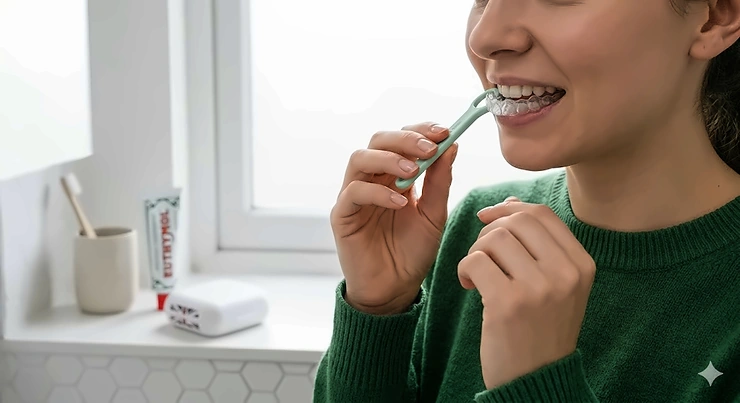
If you’ve ever wrestled with tight-fitting aligners whilst standing over a bathroom sink, desperately trying not to crack a nail or accidentally launch your tray across the room, you’ll know exactly why an aligner removal tool isn’t just handy—it’s essential. The first week of any new aligner set is particularly brutal. Your orthodontist cheerfully tells you to “just pop them out with your fingernails,” which works splendidly if you happen to have talons like a velociraptor and the patience of a saint. Before beginning any orthodontic treatment in the UK, ensure your practitioner is registered with the General Dental Council, the regulatory body for all dental professionals.
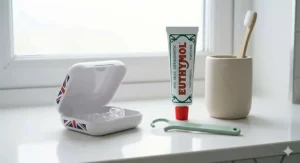
Here’s what most people don’t realise until they’re three months into treatment: removing aligners by hand isn’t just awkward—it’s genuinely unhygienic. Every time you stick your fingers in your mouth to prise out those stubborn trays, you’re introducing bacteria from your hands straight onto your teeth and gums. In a country where we’re rather fond of shaking hands and touching door handles on the Tube, that’s hardly ideal for oral health. An aligner removal tool provides a cleaner, safer alternative that keeps your hands away from your mouth, which is particularly important during cold and flu season when germs seem to travel faster than the 8:15 to Paddington.
The beauty of these little gadgets is their simplicity. Most feature a small hook on one end that slides between your aligner and back molars, allowing you to gently lever the tray away from your teeth without applying the sort of brute force that makes your gums ache. They’re especially brilliant if you have attachments—those tiny bumps your orthodontist bonds to your teeth to help with tricky movements. What the specification sheets won’t tell you is that attachments turn your aligners into what feels like industrial-strength vacuum seals, and trying to remove them bare-handed can leave your fingertips sore and your manicure in tatters.
Quick Comparison: Top Aligner Removal Tools at a Glance
| Product | Price Range (£) | Material | Best For | UK Delivery |
|---|---|---|---|---|
| PUL Original Tool | £4-6 | BPA-free plastic | Attachments & buttons | Prime eligible |
| 5-Piece Multicolour Kit | £3-5 | ABS plastic | Budget-conscious buyers | Free over £25 |
| PUL 2-Pack | £7-10 | Food-grade plastic | Home & travel | Next-day available |
| Generic 4-Pack Set | £2-4 | Standard plastic | Basic removal needs | Standard delivery |
| Ortho-Care Professional | £4-6 | Medical-grade ABS | NHS private patients | Royal Mail |
| Premium Ergonomic Design | £6-9 | Reinforced polymer | Long nails/arthritis | Prime eligible |
| Travel-Size Compact | £3-5 | Lightweight plastic | On-the-go use | Free delivery |
From the comparison above, the PUL Original Tool offers exceptional value for money in the £4-6 range, particularly if you’re dealing with multiple attachments where grip and precision matter. Budget buyers should note that whilst the generic 4-pack sets come in under £4, they tend to snap more easily around the hook area—rather annoying when you’re halfway through a 12-month treatment plan. The 5-piece multicolour kit strikes the best balance between affordability and durability, giving you backups for your handbag, desk drawer, and bathroom cabinet without breaking the bank.
💬 Just one click — help others make better buying decisions too!😊
✨ Don’t Miss These Exclusive Deals!
🔍 Take your aligner care to the next level with these carefully selected products. Click on any highlighted item to check current pricing and availability on Amazon.co.uk. These picks will help you find exactly what you need!
Top 7 Aligner Removal Tools: Expert Analysis
1. PUL Aligner Removal Tool (Original Design)
The PUL Aligner Removal Tool remains the gold standard for a reason—it was created by a Registered Dental Assistant who actually understood the daily frustrations of aligner wearers. The ergonomic finger ring sits at precisely the right angle to give you leverage without straining your wrist, whilst the hook is thin enough to slide into the tightest gaps yet robust enough to withstand daily use for over a year.
What sets this apart from cheaper alternatives is the thoughtful design for British users dealing with typical UK challenges. The BPA-free plastic material doesn’t become brittle in cold weather, which matters more than you’d think when you’re storing it in an unheated car boot during winter or carrying it in your coat pocket on a frosty morning commute. At around 7.6 cm long, it fits perfectly into standard aligner cases and slips easily into even the smallest handbags or trouser pockets. UK customers particularly appreciate that it arrives with clear instructions and ships quickly from Amazon.co.uk warehouses, meaning you’re not waiting weeks for delivery from overseas suppliers.
The real test comes with attachments and buttons. If your orthodontist has fitted your teeth with these little bumps to help rotate stubborn teeth, you’ll know they transform aligner removal from mildly annoying to genuinely challenging. The PUL tool’s hook angle is specifically designed to catch the aligner edge even when attachments create what feels like an airtight seal. One London-based user noted it “makes the morning routine actually bearable instead of a ten-minute wrestling match before breakfast.”
✅ Works brilliantly with multiple attachments and buttons
✅ Durable enough for 12+ month treatments
✅ Compact design fits all standard aligner cases
❌ Single tool means no backup if lost
❌ Slightly higher price than multipack options
Price: Around £4-6 | Value verdict: Worth every penny for the build quality and ergonomic design that actually considers British storage and travel needs.
2. 5-Piece Retainer Aligner Removal Tool Kit (Multicolour)
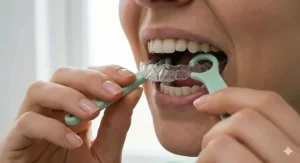
The 5-Piece Retainer Aligner Removal Tool Kit solves a problem most people don’t anticipate until they’re deep into treatment: these little tools have a habit of disappearing into the depths of handbags, rolling under car seats, or getting accidentally binned along with lunch packaging. Having five identical tools in different colours means you can stash one in every location you regularly remove your aligners—bathroom cabinet, bedside table, desk drawer at work, gym bag, and car.
Each tool measures approximately 7.6 cm and features a non-slip grip design, though the “non-slip” element is more marketing speak than revolutionary technology—it’s really just slightly textured plastic. That said, it works perfectly well even with damp hands, which is handy when you’re rinsing your aligners in the sink and need to pop them back out for a final clean. The ABS plastic construction is safe and reliable, though not quite as refined as the medical-grade materials used by premium brands. Think of these as the reliable Ford Focus of aligner tools—not fancy, but they’ll get the job done day after day without complaint.
What British buyers particularly value is the price-to-quantity ratio. At around £3-5 for five tools, you’re paying roughly 60p-£1 per tool, which makes losing one far less stressful than misplacing a single £6 premium model. The assorted colours (typically white, yellow, pink, green, and blue) might seem like a gimmick, but they’re genuinely useful for keeping track of which tool lives where. One Manchester user keeps the blue one at home, pink in her handbag, and green at work, which “sounds daft until you’re frantically searching through your bag wondering if you’ve even got one with you.”
The hooks are slightly less refined than premium brands—a touch thicker and not quite as smoothly finished—which means they require marginally more effort to slide between aligner and tooth. However, for the 80% of users without extensive attachments, this barely registers as an issue. Where they fall short is longevity; expect the very tip of the hook to show wear after 4-6 months of heavy use, though they’ll still function adequately.
✅ Brilliant value for money at under £1 per tool
✅ Colour coding helps organise multiple locations
✅ Perfect for keeping backups everywhere
❌ Slightly thicker hook design than premium options
❌ Tips can wear with extended heavy use
Price: Around £3-5 for the set | Value verdict: Outstanding budget choice that covers all your bases without requiring a second mortgage.
3. PUL 2-Pack Aligner Removal Tool Set
The PUL 2-Pack represents the sensible middle ground between buying a single premium tool and committing to a five-pack you might not need. Two tools give you the essential backup without cluttering your bathroom drawer with an excessive collection. This is the option recommended by many private orthodontic practices across the UK, particularly those in London, Manchester, and Edinburgh where treatment costs run high and patients want accessories that match the premium nature of their care.
Each tool in the pack maintains the same high-quality construction as the individual PUL tool—food-grade, BPA-free plastic that’s been independently tested for safety, which matters when you’re putting something in your mouth multiple times daily for 12-18 months. The finger ring diameter is generous enough for most adult hands whilst remaining slim enough to store conveniently. What’s particularly clever is the packaging; both tools arrive in separate sealed pouches, so you can keep one pristine as a backup whilst the other does daily duty.
British users in smaller flats and terraced houses appreciate that you’re not accumulating unnecessary stuff. Two tools mean one stays home in the bathroom cabinet whilst the other travels with you in your aligner case. If you’re commuting into central London or any major city, having that backup in your desk at work prevents the nightmare scenario of forgetting your tool at home and spending lunchtime trying to prise out your aligners with your fingernails in the office loo.
The durability is where this pack justifies its slightly higher cost versus budget multipacks. The hook maintains its shape even after six months of twice-daily use, and the plastic doesn’t develop the micro-scratches that can harbour bacteria. One Birmingham user reported using the same pair for her entire 14-month Invisalign treatment without either tool showing significant wear, which works out to around 840 removals per tool. That’s rather impressive engineering for what looks like a simple piece of plastic.
✅ Perfect backup solution without excess
✅ Premium build quality lasts entire treatment
✅ Separate packaging keeps backup hygienic
❌ Higher cost per tool than five-packs
❌ Might want more for multi-location use
Price: Around £7-10 | Value verdict: The Goldilocks option—not too many, not too few, and quality that justifies the mid-range price for a complete treatment cycle.
4. Generic 4-Pack Clear Aligner Removal Tool Set
The Generic 4-Pack tools represent the budget end of the market, and they’re rather honest about what they offer: basic functionality at rock-bottom prices. These typically cost £2-4 for four tools, which translates to roughly 50-£1 per tool—genuinely remarkable value if you’re on a tight budget or simply want disposable tools you won’t fret about losing or replacing every few months.
Construction is standard ABS plastic without any fancy coatings or premium materials, which actually isn’t necessarily a disadvantage. They’re lightweight (barely noticeable in your pocket), simple to clean with ordinary soap and water, and available for next-day delivery through Amazon Prime. What they lack in refinement, they compensate for with sheer practicality. The hook does the job of separating aligner from tooth, the handle provides adequate grip, and the whole thing fits in standard aligner cases.
Where these tools reveal their budget nature is durability and finish quality. The plastic can feel slightly rough straight out of packaging, though a quick rinse and dry sorts that out. The real limitation emerges with heavy daily use over months; the hook tip tends to bend or wear down faster than premium alternatives, usually becoming noticeably less effective after about three months of twice-daily removal. For someone on a 6-12 month treatment plan using the tool multiple times daily, you’ll likely need to replace these midway through, which somewhat erodes the initial cost savings.
That said, they’re brilliant as travel backups or temporary solutions. If your premium tool is lost or broken and you need something immediately whilst waiting for a replacement delivery, these generic options available with next-day Prime shipping can be lifesavers. They’re also popular with students and younger users on tight budgets who are less bothered about premium finishes and more concerned about functional affordability. One Edinburgh student mentioned keeping one in every jacket pocket “because at £1 each, losing one doesn’t trigger the same panic as losing a £6 tool.”
The lack of brand recognition actually works in your favour regarding price; you’re not paying for marketing or fancy packaging. What arrives is straightforward: four plastic hooks in assorted colours, usually packaged in basic sealed bags. No frills, no nonsense, just functional tools that do the essential job for a fraction of premium prices.
✅ Exceptional price point under £1 per tool
✅ Perfect for trial or temporary use
✅ Prime delivery available for quick replacement
❌ Durability concerns with extended daily use
❌ Rougher finish than premium alternatives
Price: Around £2-4 for the set | Value verdict: Sensible choice for budget-conscious buyers or as emergency backups, though plan to replace every 3-4 months with heavy use.
5. Ortho-Care Professional Aligner Remover Tool
The Ortho-Care Professional Aligner Remover Tool comes from a UK-based orthodontic supplier, which means it’s designed specifically with British patients and NHS private treatments in mind. The build quality sits comfortably in the mid-premium range—noticeably better than generic budget options but without the premium price tag of imported American brands. At around £4-6, it represents solid middle-ground value for patients who want reliability without overspending.
What distinguishes Ortho-Care’s offering is the medical-grade ABS plastic construction, which undergoes stricter quality controls than standard consumer-grade tools. This translates to more consistent manufacturing—each tool in a batch performs identically, with no variation in hook thickness or angle. For British buyers, there’s reassurance in knowing it comes from a supplier that serves NHS and private orthodontic practices across England, Scotland, and Wales, meaning the design has been tested in real clinical settings rather than just being manufactured cheaply overseas and rebranded.
The ergonomic grip is thoughtfully designed for British hands and usage patterns. It’s slightly wider than imported alternatives, providing better purchase for users with arthritis or reduced grip strength—an important consideration given that many adult aligner patients are in their 40s-60s. The tool arrives with clear English-language instructions (no poorly translated manuals) and often includes a QR code linking to proper video demonstrations from UK orthodontists.
Storage is practical rather than fancy; it fits standard aligner cases and NHS-provided retainer boxes without modification. The Royal Mail delivery typically takes 2-3 working days, which is perfectly acceptable for a non-urgent accessory. One Sheffield-based user appreciated that “it just works without any faff—no fancy packaging or marketing nonsense, just a well-made tool that does exactly what it should.”
✅ UK-designed for British treatment standards
✅ Medical-grade materials with consistent quality
✅ Excellent grip design for reduced dexterity
❌ Less widely available than Amazon Prime options
❌ Longer delivery times than next-day services
Price: Around £4-6 | Value verdict: Reliable mid-range option that supports UK businesses whilst delivering professional-grade performance suitable for NHS private patients.
6. Premium Ergonomic Aligner Removal Tool (Reinforced Design)
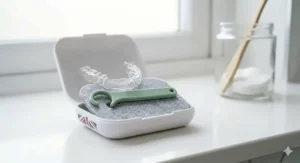
The Premium Ergonomic Aligner Removal Tool costs around £6-9, placing it firmly in the higher price bracket—but if you have long nails, arthritis, limited manual dexterity, or simply want the absolute best tool money can buy, the extra investment proves worthwhile. This reinforced design features a wider grip handle that distributes pressure across your palm rather than concentrating it on fingertips, which makes a substantial difference during the first week of each new aligner set when removal requires more force.
Construction uses reinforced polymer rather than standard plastic, giving the tool noticeably better rigidity without adding weight. The hook itself is precision-moulded rather than cut, resulting in a smoother edge that slides between aligner and tooth more easily whilst being less likely to catch on gum tissue. British users with gel or acrylic nails particularly appreciate this tool; the ergonomic design means you’re pulling with your palm and wrist rather than using nail tips as leverage points, which prevents the heartbreak of cracked or lifted artificial nails.
The tool’s length (approximately 8.9 cm) is slightly longer than standard models, providing extra leverage that’s especially helpful for back molars where access is naturally more restricted. This might seem like a minor detail, but when you’re removing aligners 14 times a week for 12-18 months, those small ergonomic improvements compound into significant comfort gains. One Bristol user with rheumatoid arthritis mentioned it was “the only tool that doesn’t leave my hands aching after morning and evening removal.”
Prime eligibility means next-day delivery is available across most of the UK, and the tool arrives in protective packaging that’s genuinely useful—a small plastic case that’s perfect for hygienic storage in your bathroom cabinet. The reinforced construction typically lasts the entire treatment duration without visible wear, making the higher upfront cost a sensible long-term investment.
✅ Outstanding ergonomic design reduces hand strain
✅ Perfect for users with long nails or arthritis
✅ Reinforced construction lasts entire treatment
❌ Premium price point around £6-9
❌ Slightly longer length won’t fit smallest cases
Price: Around £6-9 | Value verdict: Premium price justified by superior ergonomics and durability—especially worthwhile if you have specific dexterity challenges or want to protect expensive manicures.
7. Travel-Size Compact Aligner Tool
The Travel-Size Compact Aligner Tool measures approximately 6.4 cm—about 15-20% shorter than standard models—making it the ideal choice for minimalist travellers, gym-goers, or anyone who wants a discreet tool that disappears into even the smallest pockets. At around £3-5, it’s affordably priced whilst maintaining decent quality construction using lightweight plastic that barely registers when carried.
This compact design particularly suits British commuters navigating packed Tubes, buses, and trains where every millimetre of bag space matters. It fits comfortably in a coin pocket, phone case pocket, or small makeup bag compartment that wouldn’t accommodate full-size tools. The trade-off for this portability is slightly reduced leverage; the shorter handle means you’re applying force over a smaller distance, which requires marginally more effort during removal. For most users without extensive attachments, this barely registers as an inconvenience.
Where this tool excels is as a supplementary option rather than your primary removal tool. Keep your standard-size tool at home for morning and evening removals, then carry this compact version for the inevitable times you need to remove aligners during your workday or whilst out socially. One Manchester professional mentioned always keeping one “in my suit jacket pocket for client lunches—I can excuse myself to the loo, sort out my aligners, and be back at the table in two minutes without anyone noticing.”
The free delivery threshold on Amazon.co.uk (typically £25+ for non-Prime items) means you might want to bundle this with other aligner care products like cleaning tablets or chewies to qualify for free shipping. However, even with standard delivery charges, the total cost remains reasonable for a tool you’ll use daily. The lightweight construction does mean it won’t last quite as long as heavier-duty premium tools, but at this price point, replacing it every 6-9 months is hardly a financial burden.
✅ Ultra-compact design perfect for travel
✅ Fits in coin pockets and tiny compartments
✅ Affordable supplementary tool option
❌ Reduced leverage versus full-size tools
❌ Lightweight construction wears faster
Price: Around £3-5 | Value verdict: Brilliant secondary tool for on-the-go use, though most users will want a full-size option at home for primary daily removal.
Real-World Usage: Making Your Aligner Tool Last the Full Treatment
Getting the most from your aligner removal tool requires understanding how these simple devices actually work in practice—not just the manufacturer’s optimistic claims, but the reality of daily British life. The typical clear aligner treatment in the UK runs 12-18 months, which translates to roughly 730-1,100 individual aligner removals if you’re diligent about removing them for meals and brushing. That’s substantial wear on what appears to be a simple piece of plastic.
The single biggest factor affecting tool longevity is storage. British homes and bags present unique challenges: damp from rain-soaked coats, temperature fluctuations between heated interiors and cold outdoor conditions, and the general chaos of keys, phones, and other hard objects banging together in pockets and handbags. Always store your tool in a dedicated compartment or case—most aligner cases have small sections specifically designed for this purpose. If your case doesn’t, a small cloth pouch costs under £2 and prevents the hook from being damaged by repeated impacts with harder objects.
Cleaning requires minimal effort but consistent attention. Rinse your tool under warm (not hot) water with ordinary soap after each use, particularly after removing aligners before eating. British tap water is perfectly fine for this purpose—you don’t need fancy antimicrobial solutions or expensive cleaning products. Once weekly, give it a more thorough clean with a soft toothbrush to remove any buildup in the finger ring area where skin oils accumulate. Let it air dry completely before storing it away; trapping moisture in your aligner case creates an ideal environment for bacteria growth, which rather defeats the hygiene benefits of using a tool instead of your fingers.
The hook tip is the most vulnerable part and requires occasional inspection. Hold your tool up to good light and check the very end of the hook for any rough edges, cracks, or excessive wear. If the tip has become noticeably thinner or developed sharp edges, it’s time for replacement—continuing to use a worn hook risks scratching your aligners or irritating your gums. Most quality tools show minimal wear for 6-9 months, but cheaper options might need replacing every 3-4 months with heavy daily use.
Temperature awareness matters more in British conditions than you might expect. Never leave your tool in direct sunlight on a car dashboard during summer (yes, we occasionally get sunshine) or in unheated vehicles during winter freezes. Extreme temperatures can make plastic brittle or cause slight warping that affects the hook angle. One Yorkshire user learned this lesson after leaving her tool in a frozen car overnight—”it snapped the first time I used it the next morning, clean break right at the hook.”
Essential Maintenance Tips:
Daily routine: Rinse with warm soapy water after each use, air dry before storing in dedicated compartment.
Weekly deep clean: Use soft toothbrush with soap to clean finger ring and hook thoroughly, particularly around joints and curves.
Monthly inspection: Check hook tip for wear, rough edges, or thinning. Replace if compromised.
Storage best practice: Keep in dry, room-temperature location within your aligner case or dedicated pouch, never loose in bags or pockets.
Winter precautions: Don’t store in unheated cars or outdoor coat pockets during freezing weather—brittle plastic snaps more easily.
Travel wisdom: Pack backup tool in checked luggage when flying, carry primary tool in hand baggage but not loose in pockets where airport security items might damage it.
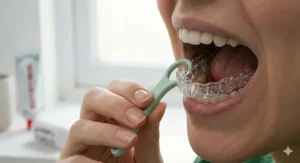
Solving the Attachment Problem: When Standard Tools Aren’t Quite Enough
Orthodontic attachments—those tiny tooth-coloured bumps bonded to your teeth—transform the aligner removal experience from mildly awkward to genuinely challenging. If your orthodontist mentioned you’d need “a few attachments,” you probably nodded along thinking they’d be barely noticeable. Then you got your first aligner set with attachments and discovered they create what feels like industrial-strength suction between tray and tooth. Orthodontic treatment has evolved significantly over the decades, but managing attachments remains one of the most challenging aspects of modern clear aligner therapy. Welcome to the club nobody warns you about joining.
The fundamental problem attachments cause is they eliminate the slight gaps where you’d normally start prying your aligner loose. A standard aligner sits snugly against your teeth but with microscopic space that allows fingernails or basic removal tools to find purchase. Add attachments into the equation, and that space disappears entirely—the aligner plastic moulds precisely around each bump, creating multiple seal points along your arch. This isn’t just uncomfortable to remove; it’s occasionally painful if you yank with too much force.
Here’s what actually works, developed through thousands of British users’ trial and error rather than orthodontists’ theoretical advice. Always start removal at the very back of your mouth, on the interior (tongue-side) surface where attachments are rarely placed. The removal tool’s hook should slide between your last molar and the aligner edge, right where the plastic turns to cover your tooth’s inner surface. This positioning gives you the best leverage whilst avoiding the attachment-clustered front regions.
Apply gentle, consistent pressure rather than sudden yanking motions. The aligner should release gradually—first from the back molars, then progressively forward as you work the hook along your arch. If you encounter resistance around an attachment, don’t force it. Instead, move to the opposite side of your mouth and release that section first, which reduces overall tension and makes the stubborn attachment areas easier to tackle. One Sheffield user described it as “like carefully peeling off a plaster rather than ripping it off in one go.”
Tool selection matters enormously with multiple attachments. Standard budget tools with thicker hooks genuinely struggle to find any gap to work with, forcing you to use excessive pressure that’s uncomfortable and risks damaging your aligners. Premium tools like the PUL design feature thinner, more precisely angled hooks specifically engineered for attachment-heavy cases. The extra £2-3 isn’t marketing fluff—it’s the difference between manageable daily removal and a frustrating ordeal three times daily.
Some attachment patterns are simply more difficult than others. If your orthodontist has placed multiple attachments on your canines and premolars (common for rotation corrections), you’re facing the most challenging removal scenario. In these cases, consider having two tools: a premium thin-hook design for your primary daily use at home, and a backup standard tool for emergencies or travel. The premium tool does the heavy lifting where precision matters; the backup ensures you’re never stranded without options if you lose or forget your main tool.
Understanding UK Orthodontic Treatment Context: Private vs NHS Realities
The aligner removal tool market in Britain exists because clear aligners are almost exclusively private treatments—and that private status shapes everything from product pricing to availability. Understanding this context helps explain why you’re investing in accessories that NHS patients receiving traditional braces would never need to consider. According to the NHS orthodontic treatment guidelines, metal braces remain the standard for NHS-funded care as the most cost-effective option.
NHS orthodontic care in England, Scotland, and Wales focuses on treating genuine dental health problems in children and teenagers, assessed using the Index of Orthodontic Treatment Need (IOTN). This scoring system grades orthodontic issues from 1 to 5, with only scores of 4-5 (indicating significant health impact) typically qualifying for NHS funding. Even when NHS treatment is approved, it’s delivered using traditional metal braces rather than clear aligners because, quite simply, metal braces cost the NHS far less whilst achieving similar clinical outcomes. The British Orthodontic Society confirms that adults rarely qualify for NHS orthodontic treatment at all except in extreme medical cases, and even then, clear aligners aren’t an option.
This means if you’re using clear aligners in the UK, you’re paying privately—typically £1,500-£5,500 depending on treatment complexity and provider. That private investment gives you access to modern, discreet technology, but it also means you’re responsible for all accessories and maintenance costs that NHS patients might receive as part of their treatment package. Your orthodontist might provide one complimentary removal tool during your initial consultation, but if you lose it or it breaks, you’re purchasing replacements yourself.
The private nature of aligner treatment also affects product availability and marketing. Unlike dental care products that serve both NHS and private patients, aligner accessories target a specific demographic: people who’ve chosen to invest significant sums in their smile and are willing to spend modestly on tools that make that investment more comfortable. This explains why even premium removal tools cap out around £6-9—manufacturers understand their market consists of cost-conscious consumers who’ve already spent thousands on treatment and are watching their accessory spending carefully.
British buyers particularly appreciate products that acknowledge this private treatment reality. Tools that last 12-18 months represent better value than cheap options requiring multiple replacements. Multipack sets appeal because losing a £1 tool from a five-pack is psychologically easier than losing a single £5 tool. Prime delivery matters because when your tool breaks unexpectedly, next-day replacement prevents the nightmare of struggling through 24 hours using your fingernails.
How to Choose Your Aligner Removal Tool: British Buyer’s Framework
Selecting the right aligner removal tool isn’t rocket science, but a systematic approach prevents you from buying tools that look identical but perform quite differently. Start by honestly assessing your specific situation rather than assuming all tools suit all users equally—they genuinely don’t.
First consideration: Attachment situation. Count how many orthodontic attachments you have. None or 1-3? Any basic tool will work fine. 4-8 attachments? Consider mid-range options with thinner hooks. 9+ attachments or buttons? Invest in premium tools specifically designed for complex cases. This single factor determines 70% of your satisfaction with whichever tool you choose.
Second consideration: Manual dexterity. Be honest about your nail situation, grip strength, and any conditions affecting hand function. Long gel nails, arthritis, or reduced finger strength all demand ergonomic premium tools with wider grips and better leverage. Attempting to save £3 by buying budget options when you have arthritis is false economy—you’ll abandon the cheap tool within days and buy the premium version anyway, wasting your initial purchase.
Third consideration: Lifestyle and organisation. Are you the sort of person who keeps track of belongings meticulously, or do you regularly lose items in the depths of handbags and coat pockets? Honest answer determines whether you need a single premium tool or a multipack of budget options. There’s no shame in knowing yourself well enough to buy five £1 tools rather than one £5 tool you’ll inevitably misplace.
Fourth consideration: Budget realism. How much are you actually willing to spend on a removal accessory? If the honest answer is “as little as possible,” embrace that and buy generic budget packs. If you’re willing to invest £6-9 for premium performance, commit properly rather than compromising on a mid-range option that satisfies neither budget nor performance goals.
Fifth consideration: Treatment duration. A 6-month mild correction treatment has different tool requirements than an 18-month comprehensive realignment. Shorter treatments can manage with budget tools that might not survive longer courses. Longer treatments justify premium tool investment more easily—the cost-per-month of a £6 tool over 18 months is roughly 33p monthly, which is rather trivial when you consider the daily benefit.
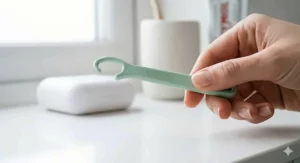
Common Mistakes When Using Aligner Removal Tools
The brilliant thing about aligner removal tools is their simplicity—there’s genuinely not much that can go wrong. That said, certain mistakes appear repeatedly among British users, particularly during the first month of treatment when you’re still learning the technique. Avoiding these common errors saves frustration and prevents unnecessary tool replacements.
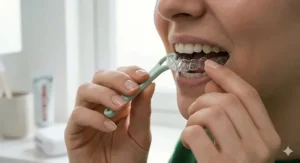
Mistake 1: Starting removal from the front. Your instinct screams “grab the visible edge at the front of your teeth and pull,” but this approach guarantees maximum discomfort and risks damaging attachments. Always start at the very back molars on the interior (tongue-side) surface, working forward. This leverages your natural jaw mechanics and releases the aligner progressively rather than yanking it off all at once.
Mistake 2: Using excessive force. If you’re straining hard enough to feel your gums aching or see your hand turning white from grip pressure, you’re doing it wrong. Proper technique requires gentle, consistent pressure applied at the correct angle. More force doesn’t equal faster removal—it equals sore gums and potentially cracked aligners. Think “careful lever” rather than “aggressive yank.”
Mistake 3: Ignoring hook wear. The hook tip is consumable, not permanent. Check it monthly for thinning, rough edges, or cracks. A worn hook slides less smoothly, requires more force, and risks scratching your expensive aligners or irritating gum tissue. Replacing a £3 worn tool is sensible prevention, not wasteful spending.
Mistake 4: Storing tool whilst damp. British enthusiasm for hygiene sometimes backfires—rinsing your tool after use is excellent, but immediately sealing it in your aligner case whilst still wet creates a bacterial breeding ground. Always air dry completely before storage, even if it means leaving it on your bathroom counter for five minutes whilst you sort out your aligners.
Mistake 5: Buying unnecessarily fancy options. Some removal tools come with elaborate cases, multiple colour choices, or premium packaging that adds cost without improving function. Unless aesthetics genuinely matter to you, standard functional tools deliver identical performance at half the price. Save your money for things that actually affect treatment outcomes, like proper cleaning tablets and replacement aligner cases.
Mistake 6: Attempting to use damaged tools. A cracked or bent tool isn’t “fine to use a bit longer”—it’s a problem waiting to happen. British thriftiness is admirable, but continuing to use a damaged tool risks injuring your gums or damaging expensive aligners. The £3-5 replacement cost is negligible compared to the potential problems.
Building Your Complete Aligner Care Kit: Essential UK Combinations
An aligner removal tool rarely works in isolation—it’s part of a broader care system that determines whether your treatment stays comfortable and hygienic throughout its duration. British buyers can assemble a comprehensive care kit for £15-25 that covers all essential accessories whilst avoiding unnecessary products that marketing departments insist you “absolutely need.”
Core essentials (£12-18 total):
- 2-pack premium removal tools (£7-10): One at home, one in travel case
- Cleaning tablets pack (£3-5): For proper daily hygiene
- Compact travel case (£2-3): Protects tools and aligners on the go
Useful additions (£6-10 total):
- Aligner chewies pack (£2-4): Help seat new aligners properly
- Compact mirror (£2-3): Check removal progress in workplace loos
- Backup generic tool (£2-3): Emergency option for glove box or desk drawer
Skip these:
- Elaborate storage systems exceeding £10: Standard aligner cases work perfectly
- Expensive branded cleaning solutions: Ordinary soap and water plus basic tablets suffice
- Multiple premium tools: Two covers all genuine needs; more is wasteful
Amazon.co.uk typically requires £25+ for free standard delivery on non-Prime items, so bundling your removal tool with other aligner accessories in a single order makes financial sense whilst ensuring you have everything needed from day one of treatment. Prime members benefit from next-day delivery on individual items, which is particularly valuable when you need emergency tool replacement.
Frequently Asked Questions About Aligner Removal Tools
❓ Do I really need a dedicated removal tool, or can I just use my fingernails?
❓ Will aligner removal tools work with all clear aligner brands available in the UK?
❓ How often should I replace my aligner removal tool during treatment?
❓ Can I travel internationally with aligner removal tools in my hand luggage?
❓ Are more expensive aligner removal tools genuinely better than budget options?
Conclusion: Simple Tools, Significant Impact on Treatment Comfort
The humble aligner removal tool represents one of those rare products where a modest £3-9 investment delivers disproportionate daily benefits throughout your orthodontic journey. Whether you opt for premium branded options, mid-range UK suppliers, or budget multipacks, having dedicated removal tools transforms the aligner experience from a fingernail-breaking ordeal into a straightforward routine that takes seconds rather than minutes.
British buyers navigating the private clear aligner market face enough expenses without overpaying for accessories, yet false economy on tools you’ll use 14+ times weekly for 12-18 months rarely makes sense. The sweet spot for most users sits around £5-8 spent once, delivering tools that survive your entire treatment whilst providing hygienic, comfortable removal regardless of attachment complexity. Budget-conscious buyers can absolutely manage with £3 multipacks whilst remaining confident their basic needs are met, whilst those with long nails, arthritis, or extensive attachments find premium ergonomic options worth every extra pound.
What’s most important is simply having a tool—any tool—rather than relying on fingernails and brute force. The hygiene benefits alone justify the minimal investment, whilst the comfort improvements and manicure preservation are welcome bonuses. Your orthodontist invested years of training and you’ve invested thousands of pounds achieving your smile goals; spending a few quid ensuring you can actually remove your aligners comfortably seems rather sensible in that context.
Recommended for You
- 7 Best Travel Aligner Storage Cases UK 2026
- Retainer Cleaning Tablets vs Crystals: 7 Best UK Options 2026
- 7 Best Aligner Cleaning Crystals UK 2026
Disclaimer: This article contains affiliate links. As an Amazon Associate, I earn from qualifying purchases. If you purchase products through these links, we may earn a small commission at no additional cost to you.
✨ Found this helpful? Share it with your mates! 💬🤗
