
In This Article
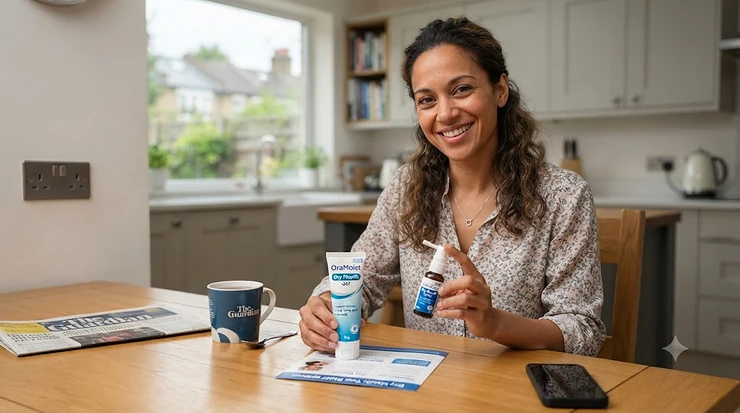
Xerostomia, the clinical name for a persistently dry mouth, is a condition where your salivary glands stop producing enough saliva to keep your mouth comfortably wet, and it affects a surprising number of adults, especially anyone taking regular medication. If you’ve landed here at two in the morning with your tongue stuck to the roof of your mouth, you already know the feeling doesn’t need an introduction. What you need is a straight answer: spray or gel, and which actual product to buy.
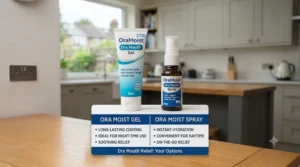
Here’s the short version before we get into the detail. A dry mouth spray gives you a fast, light burst of moisture that’s brilliant for daytime top-ups, public speaking, or that dreadful mid-meeting cotton-wool feeling. A dry mouth gel sits thicker and clings longer, which makes it the natural choice for overnight use when you’re not swallowing every few minutes to reactivate it. Neither format “wins” outright — they solve different problems, and most people with genuinely dry mouths end up using both.
This guide compares seven real, currently available UK products across both formats, backed by genuine specs, aggregated review themes, and honest analysis rather than marketing fluff. According to the clinical definition of xerostomia, the condition is often a side effect of medication and becomes more common with age, which is exactly why we’ve built this comparison around real-world use cases rather than just listing ingredients.
Quick Comparison: Dry Mouth Spray vs Gel
Before diving into all seven products, here’s the fast-read version for anyone who just wants the headline differences.
| Factor | Spray | Gel |
|---|---|---|
| Relief speed | Instant, absorbs in seconds | Slower to spread, but lasts longer |
| Best time to use | Daytime, on the go, before speaking | Bedtime, overnight dryness |
| Texture | Thin, watery mist | Thick, viscous coating |
| Application | One-handed, spray into mouth | Needs a fingertip or applicator |
| Portability | Excellent — fits in a pocket | Good, but messier in transit |
The core trade-off here is staying power versus convenience. A spray is over almost as soon as you’ve used it, which is exactly why it’s so easy to reach for twenty times a day, but that same thinness means it evaporates or gets swallowed away within twenty to thirty minutes for most users. A gel’s thicker consistency is precisely what makes it clumsy to use at your desk, yet that same viscosity is what lets it sit undisturbed against your gums for six to eight hours while you sleep. Buyers managing dry mouth from medication side effects, in particular, tend to end up owning one of each rather than picking a single winner.
💬 Just one click — help others make better buying decisions too!😊
Top 7 Dry Mouth Sprays and Gels: Expert Analysis
We’ve deliberately spread this list across budget, mid-range and premium options, and across both formats, so whatever your situation — night-time only, all-day dryness, or medication-induced — there’s a genuine match below.
1. Oralieve Moisturising Dry Mouth Relief Spray — best budget daytime spray
At around £7.99 for a 50ml pump bottle, this is the spray most UK pharmacists reach for first when someone mentions a dry mouth, and the price point alone explains why it’s become something of a default recommendation. The formula is alcohol-free and mild mint flavoured, built around xylitol, which is included specifically because xylitol doesn’t feed the bacteria that cause tooth decay the way sugar does — a genuinely useful detail for anyone already worried about dental health on top of the dryness itself. Based on the spec sheet, this is a maintenance product rather than a medical treatment: it moisturises on contact rather than stimulating your glands to produce more saliva of your own.
Reviewers consistently report that the mild mint flavour is gentle enough for sensitive or sore mouths, which matters a lot if your dry mouth comes with any burning or irritation, and the pump mechanism gets praised for being easy to operate one-handed. A recurring theme in feedback is that the relief, while pleasant, is genuinely short-lived — expect to reach for it every twenty to thirty minutes during a bad flare-up rather than treating it as a once-an-hour fix.
Pros:
- ✅ Very affordable entry point under £8
- ✅ Alcohol-free formula suitable for sore mouths
- ✅ Widely stocked across UK pharmacies and Amazon
Cons:
- ❌ Short relief window compared with gels
- ❌ Mild mint flavour may feel weak to some users
Sitting in the £7-£8 bracket, Oralieve Moisturising Dry Mouth Relief Spray is hard to beat as a first purchase if you’ve never tried a dedicated dry mouth product before.

2. BioXtra Dry Mouth Oral Spray — best for fluoride protection
BioXtra Dry Mouth Oral Spray comes in a 50ml bottle, typically priced between £6.60 and £7.99 depending on retailer, with a two-pack around £16.47 working out slightly cheaper per bottle. What sets it apart on the spec sheet is the inclusion of 150ppm fluoride alongside calcium and xylitol, plus a “lactoperoxidase system” designed to mimic components naturally found in real saliva rather than simply coating the mouth with liquid. In practice, that fluoride content means this spray is doing double duty — moisturising and actively helping to strengthen enamel — which matters enormously if your dry mouth has already led to increased sensitivity or the early signs of decay.
The brand markets this specifically toward people managing dry mouth caused by cancer therapy, radiotherapy or chronic medication, and the ingredient list backs that positioning up rather than just being a slogan. Aggregated reviewer sentiment sits around 4.2 out of 5, with users specifically calling out the calming, non-stinging sensation as a strength worth paying slightly more for over own-brand alternatives.
Pros:
- ✅ Contains fluoride for enamel protection
- ✅ Designed with cancer-therapy patients in mind
- ✅ Gentle, non-stinging application
Cons:
- ❌ Slightly pricier than Oralieve per ml
- ❌ Two-pack bundles push the total above £15
If dental sensitivity is part of your dry mouth picture, BioXtra Dry Mouth Oral Spray earns its place as the analysis-backed upgrade pick over a plain moisturising spray.
3. Xerostom Dry Mouth Spray with Saliactive — best clinically formulated spray
At roughly £9.49 for a compact 15ml bottle, Xerostom Dry Mouth Spray with Saliactive is the priciest spray on this list per millilitre, and that’s a fair criticism to raise upfront — but the formula justifies a closer look before writing it off as overpriced. Saliactive is the brand’s patented blend of extra virgin olive oil, betaine and xylitol, engineered with a neutral pH between 6.3 and 7.3 specifically so it doesn’t add acidic stress to already-vulnerable tooth enamel. What most buyers overlook about this model is that the olive oil component gives it a noticeably richer, more cushioning feel on the tongue than the thinner, more watery mist of a standard xylitol spray.
Because it’s alcohol-free and doesn’t rely on the drying, evaporative sensation that some sprays leave behind, reviewers frequently mention it as the pick for people whose dry mouth is severe enough that ordinary sprays feel like they’re barely touching the problem. On the specialist pharmacy service’s overview of artificial saliva products used in UK dentistry, Xerostom’s spray and gel range appears specifically because it isn’t prescribable on an FP10D form — meaning if your dentist has mentioned it, you’ll be buying it retail either way, and Amazon is usually the cheapest route.
Pros:
- ✅ Neutral pH formula protects enamel
- ✅ Richer, oil-based cushioning texture
- ✅ Backed by dental-industry recognition
Cons:
- ❌ Highest price per ml on this list
- ❌ Small 15ml bottle needs frequent reordering
For anyone whose dry mouth has been dismissed by cheaper sprays, Xerostom Dry Mouth Spray with Saliactive is worth the premium in this comparison.
4. Biotène Moisturising Dry Mouth Gel — best premium night-time gel
Biotène Moisturising Dry Mouth Gel comes in a 50g tube and typically sits somewhere between £8 and £13 depending on pack size and retailer, making it one of the pricier gels here, though it’s also the most internationally recognised dry mouth brand on the market. The gel is built around a long-lasting moisturisation claim, and the spec that matters most for night-time use is viscosity — this is a genuinely thick, clinging gel rather than a loose lotion, which is exactly the property you want at 11pm when you’re about to go six or seven hours without swallowing anything.
Reviewers consistently flag that a little goes a long way, with most people using a pea-sized amount applied with a clean fingertip to the tongue, gums and inner cheeks just before bed. Based on the spec comparison against the thinner sprays on this list, Biotène’s gel is unmistakably the format built for staying put rather than being reapplied every half hour, and the alcohol-free formula avoids the stinging sensation some users report with older mouthwash-style dry mouth products.
Pros:
- ✅ Thick formula built specifically for overnight use
- ✅ Trusted, dentist-recognised international brand
- ✅ Alcohol-free, non-stinging application
Cons:
- ❌ More expensive than UK own-brand gel alternatives
- ❌ Texture feels sticky if applied too generously
As a dedicated dry mouth gel for night-time relief, Biotène Moisturising Dry Mouth Gel is the benchmark the rest of this list gets measured against.
5. Oralieve Moisturising Dry Mouth Relief Gel — best budget night-time gel
Sold alongside its spray sibling at around £7.99 for a 50ml tube, Oralieve Moisturising Dry Mouth Relief Gel is essentially the value alternative to Biotène’s gel, and for a huge number of users, it does the job at a noticeably lower price. It shares the same xylitol-based, alcohol-free approach as the Oralieve spray, but reformulated to a thicker consistency so it clings to oral surfaces rather than dispersing in seconds. What most buyers overlook here is that because it comes from the same brand as one of the UK’s most popular budget sprays, it’s genuinely easy to build a matched day-and-night routine without juggling two different companies’ ingredient lists.
Aggregated review sentiment sits around 4.2 out of 5 from well over a thousand ratings, with the most common praise centring on how well it holds up through a full night’s sleep without needing a middle-of-the-night top-up. The most common criticism, honestly, is the flavour — some users find the neutral taste a little clinical compared with mintier competitors, though for a bedtime product that’s arguably a non-issue.
Pros:
- ✅ Noticeably cheaper than Biotène’s equivalent gel
- ✅ Matches easily with the Oralieve spray for a routine
- ✅ Xylitol content helps protect against decay
Cons:
- ❌ Neutral flavour reads as bland to some users
- ❌ Thinner consistency than premium gels
If budget matters as much as bedtime comfort, Oralieve Moisturising Dry Mouth Relief Gel is the sensible pairing with its own-brand spray.

6. GC Dry Mouth Gel — best for flavour variety
GC Dry Mouth Gel ships in 40g tubes across five genuine flavour options — mint, orange, lemon, raspberry and fruit salad — with prices typically landing somewhere in the £8-£12 range, though imported multi-packs can run noticeably higher, so it’s worth comparing current listings carefully before buying. GC is a respected name in professional dental supply circles, and this gel is frequently the one handed out by hygienists to patients recovering from radiotherapy, which says something about how seriously the formulation is taken within the profession itself. The sugar-free gel forms a protective coating over teeth and soft tissue rather than just adding moisture, which matters if your dry mouth has already put you at higher risk of rapid decay.
The flavour range is genuinely the standout feature here — reviewers repeatedly mention that having five distinct options solves the “I can’t face another mint gel” fatigue that sets in after months of daily use, something none of the other gels on this list offer. On the practical side, the 40g tube is smaller than Biotène’s 50g offering, so cost-per-use calculations should factor in the slightly shorter lifespan.
Pros:
- ✅ Five real flavour options, unusual in this category
- ✅ Trusted by dental professionals for post-treatment care
- ✅ Sugar-free protective coating formula
Cons:
- ❌ Smaller 40g tube than some competitors
- ❌ Pricing varies significantly between listings
For anyone who’s grown tired of mint-only options, GC Dry Mouth Gel solves a genuinely underrated problem in this product category.
7. XyliMelts for Dry Mouth Adhering Discs — best alternative to gel for overnight relief
Rounding out the list is something a little different: XyliMelts for Dry Mouth Adhering Discs, typically sold in 40-count boxes for somewhere around £15-£20 depending on the seller, since most UK stock arrives via import listings rather than a UK-manufactured supply chain. Rather than being sprayed or smeared on, these are small oral-adhering discs that stick directly to a back molar or the adjoining gum, then slowly release xylitol over five to eight hours as they dissolve — a mechanism that’s fundamentally different from either a spray or a gel, and one worth knowing about if neither format has fully solved your night-time dryness.
What most buyers overlook about this model is that because the disc physically adheres rather than sitting loose in the mouth, it survives the kind of tossing and turning that can wipe a gel application clean off your gums within an hour. Reviewers frequently describe finally sleeping through the night without waking up desperate for water, though a genuine and recurring criticism is that positioning the disc correctly takes a few nights of practice, and some users report it briefly stimulating too much saliva before settling into its slow-release phase.
Pros:
- ✅ Physically adheres, surviving movement during sleep
- ✅ Delivers five to eight hours of steady relief
- ✅ Works well alongside CPAP machines or dentures
Cons:
- ❌ Pricier than gels on a per-night basis
- ❌ Learning curve for correct placement
For chronic night-time sufferers who’ve already tried a standard gel without success, XyliMelts for Dry Mouth Adhering Discs is the logical next step to try.
Top 7 Products at a Glance
| Product | Format | Price Range | Best For |
|---|---|---|---|
| Oralieve Moisturising Dry Mouth Relief Spray | Spray | Around £7.99 | Budget daytime use |
| BioXtra Dry Mouth Oral Spray | Spray | £6.60-£7.99 | Fluoride/dental protection |
| Xerostom Dry Mouth Spray with Saliactive | Spray | Around £9.49 | Severe daytime dryness |
| Biotène Moisturising Dry Mouth Gel | Gel | £8-£13 range | Premium overnight relief |
| Oralieve Moisturising Dry Mouth Relief Gel | Gel | Around £7.99 | Budget overnight relief |
| GC Dry Mouth Gel | Gel | £8-£12 range | Flavour variety |
| XyliMelts for Dry Mouth Adhering Discs | Disc | £15-£20 range | Stubborn overnight dryness |
Looking at the table as a whole, the clearest pattern is that the three sprays cluster tightly around a £7-£9.50 price band while doing broadly the same job with small formulation differences, whereas the gels and discs spread out more widely based on brand reputation and delivery mechanism. If your budget is the deciding factor, Oralieve Moisturising Dry Mouth Relief Spray and its matching gel are the two cheapest genuine relief products here, while XyliMelts for Dry Mouth Adhering Discs only makes financial sense once a standard gel has already let you down.
Practical Usage Guide: Getting the Most From Spray and Gel
Buying the right product is only half the battle — how you actually use it changes the results dramatically, and this is exactly the kind of detail that never appears on an Amazon listing. Start by matching format to moment rather than picking one product for everything: keep a spray in your bag or desk drawer for quick top-ups before calls, meetings or meals, and reserve the thicker gel for the last thing you do before switching off the light. Layering both, rather than choosing one, is what most long-term users eventually settle on.
For sprays, two to four short bursts aimed at the tongue, inner cheeks and under the tongue works better than one long spray, since it distributes moisture across more surface area rather than pooling in one spot. For gels, resist the urge to use more than a pea-sized amount — a common first-30-days mistake is over-applying, which leaves a sticky film that some sleepers find more irritating than the original dryness. Apply gel with a clean fingertip rather than squeezing it straight from the tube onto your tongue, since direct contact gives you better control over where the coating actually sits.
A maintenance habit worth building early: brush gently with a soft-bristled toothbrush after using gel in the morning, since a dry mouth already carries a higher decay and gum-disease risk, a point echoed clearly in NHS guidance on managing xerostomia, which recommends rinsing with plain water after eating and brushing after every meal for exactly this reason. Sip water frequently through the day rather than gulping large amounts infrequently, since steady small sips help both spray and gel formulas work rather than fighting against total dehydration.
Real-World Scenarios: Who Should Buy What
Reading specs in isolation only gets you so far, so here are three realistic profiles matched to specific products, based on genuine differences in cause, frequency and environment.
The antidepressant user with daytime dryness. If you’re managing dry mouth as a known side effect of an SSRI or similar medication, and the dryness is mostly a nuisance during working hours rather than overnight, a budget spray like Oralieve Moisturising Dry Mouth Relief Spray used every 30-45 minutes during the working day, paired with a fluoride spray like BioXtra Dry Mouth Oral Spray before bed, covers both the frequency and the dental-protection angle without overspending.
The cancer-therapy patient managing severe dryness. Radiotherapy to the head or neck can cause dramatically reduced saliva flow that ordinary sprays simply can’t keep pace with. Here, Xerostom Dry Mouth Spray with Saliactive during the day and Biotène Moisturising Dry Mouth Gel overnight is a combination frequently recommended in dental settings, precisely because both formulas are built to sit gently on already-sensitive, treatment-affected tissue.
The chronic night-waker who’s tried everything. If you’ve already used a standard gel and still wake up at 3am with your tongue glued to your palate, that’s the specific signal to try XyliMelts for Dry Mouth Adhering Discs instead of buying yet another gel — the adhering mechanism solves the problem that gels physically can’t, which is staying in place while you move around in your sleep.
Dry Mouth Spray vs Gel: Which Actually Wins?
There isn’t a single winner here, and any article claiming otherwise is oversimplifying a genuinely situational choice. Spray wins decisively on speed and convenience — you can use it in seconds, one-handed, without breaking a conversation or a meeting. Gel wins decisively on duration — its thicker consistency means it isn’t swallowed away or evaporated within minutes, which makes it the only sensible option for the six-to-eight-hour stretch of sleep when you’re not reapplying anything.
Where this gets interesting is cost-per-use. A 50ml spray bottle, used four to six times a day, typically lasts two to three weeks, working out to roughly 30-40p per day. A 50g gel tube, used once nightly, can last a similar two to three weeks, landing in a comparable daily cost — so price isn’t really the deciding factor between formats at all. The decision should come down entirely to when your dryness is worst: if it’s a daytime problem, buy the spray first; if it’s a nightly problem, buy the gel first; if it’s both, as it is for most chronic sufferers, budget for one of each rather than trying to stretch a single product to cover two very different jobs.
What Is Dry Mouth (Xerostomia)? Causes and Symptoms
Xerostomia is the medical term for a persistent dry mouth, most often caused as a side effect of medication rather than by anything wrong with the salivary glands themselves. Common triggers include antidepressants, antihistamines, diuretics, and anticholinergic drugs, alongside non-medication causes like anxiety, diabetes, Sjögren’s syndrome, menopause, and radiotherapy to the head or neck.
Symptoms extend well beyond simple dryness. A sticky or thick feeling in the mouth, bad breath, a burning sensation, difficulty swallowing or speaking, cracked lips, and an increased rate of tooth decay are all commonly reported, since saliva plays a much bigger protective role than most people realise — cleansing teeth and gums, neutralising acid, and helping the body fight off harmful bacteria in the mouth. Clinically, xerostomia is sometimes defined by an objective measure of reduced unstimulated salivary flow, but plenty of people experience the subjective sensation of dryness even when a dentist can’t measure a dramatic drop in output, which is exactly why over-the-counter relief products remain useful regardless of the underlying cause.
How to Choose a Dry Mouth Spray or Gel
Picking between the seven products above gets much easier once you work through these criteria in order.
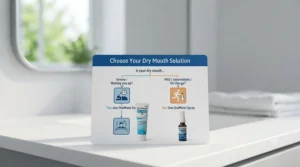
- Identify when your dryness is worst. Daytime dryness points toward a spray; overnight dryness points toward a gel or an adhering disc.
- Check for fluoride if dental health is a concern. Products like BioXtra Dry Mouth Oral Spray add enamel protection that plain moisturising sprays don’t.
- Consider your flavour tolerance. A sore or irritated mouth benefits from a mild, neutral option, while long-term users often appreciate variety, which is where GC Dry Mouth Gel‘s five flavours stand out.
- Factor in your budget realistically. Sprays cluster around £7-£9.50 and gels around £8-£13, so there’s little reason to overspend unless a specific formulation genuinely solves your particular problem.
- Match severity to formulation strength. Mild, occasional dryness suits a basic xylitol spray; medication-induced or treatment-related dryness often needs the richer, oil-based or enzyme-based formulas.
- Think about application convenience. A busy daytime routine favours a one-handed spray; a bedtime routine can comfortably accommodate the slightly fiddlier fingertip application a gel requires.
- Don’t assume one product must do everything. As covered above, most chronic sufferers end up owning both a spray and a gel rather than expecting a single bottle to cover 24 hours.
Saliva Flow: Why It Matters More Than You Think
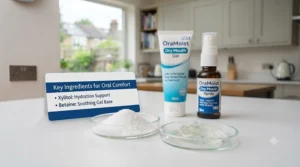
Saliva isn’t just there to keep your mouth comfortable — it’s doing genuine biological work every minute of the day. A healthy, unstimulated saliva flow sits somewhere around 0.3-0.4ml per minute, and clinicians consider anything below roughly 0.1ml per minute significantly abnormal, a threshold discussed in detail in a review published in the British Journal of Hospital Medicine. That flow rate matters because saliva washes away food debris, buffers the acids produced by bacteria, delivers minerals like calcium and phosphate that actively remineralise enamel, and helps control the micro-organisms that would otherwise multiply unchecked.
When saliva flow drops, whether from medication, radiotherapy, or an underlying condition, none of that protective work happens properly, which is why chronic dry mouth sufferers see disproportionately higher rates of tooth decay and gum disease compared with the general population. Products like the ones reviewed above don’t restore natural saliva flow in a medical sense — they substitute for it, coating and lubricating the mouth artificially — but that substitution is genuinely valuable precisely because so much of saliva’s protective function can be at least partially replicated by a well-formulated spray or gel.
Medication Side Effects That Cause Dry Mouth
If you’ve started a new prescription and noticed your mouth drying out within days, you’re far from alone — dry mouth is one of the most commonly reported medication side effects across an enormous range of drug classes. Antidepressants, particularly tricyclics and some SSRIs, are frequent culprits, alongside antihistamines, antihypertensives used for blood pressure, diuretics, antipsychotics, and many anticholinergic medications prescribed for everything from bladder issues to Parkinson’s disease.
The mechanism varies by drug, but broadly, many of these medications interfere with the nerve signals that trigger your salivary glands to produce saliva in the first place. This is precisely why the NHS’s specialist pharmacy service maintains detailed guidance on artificial saliva products used in UK dental prescribing, since so many patients need ongoing management alongside their primary treatment rather than a one-off fix. If dry mouth appears shortly after starting a new medication, it’s always worth checking the patient information leaflet that came with it — dry mouth is frequently listed as a known side effect, and your GP or pharmacist may have alternatives worth discussing, though stopping or switching medication should never be done without professional advice.
Common Mistakes When Buying Dry Mouth Relief Products
A handful of buying mistakes come up again and again, and avoiding them saves both money and frustration. The most common is buying a spray for a night-time problem, then being disappointed that relief doesn’t last past midnight — that’s not a faulty product, it’s simply the wrong format for the job, as covered extensively above. The second is over-applying gel, assuming more product means more relief, when in reality a pea-sized amount spread thinly performs better than a thick, sticky layer that some users find uncomfortable against the roof of the mouth.
A third mistake is ignoring flavour tolerance, particularly for anyone whose dry mouth comes with soreness or irritation — a strongly minted spray can genuinely sting on broken or sensitive tissue, which is exactly why the mild, neutral formulations reviewed above exist as deliberate alternatives. Finally, plenty of buyers assume all dry mouth products are functionally interchangeable and simply grab whichever bottle is cheapest, missing the genuine formulation differences — fluoride content, pH, oil-based versus water-based textures — that actually determine whether a product solves their specific version of the problem.
Long-Term Cost and Maintenance
Thinking beyond the first bottle changes the value calculation considerably. A daily spray user going through roughly one 50ml bottle every two to three weeks is looking at an annual spend somewhere between £120 and £180 depending on brand, while a nightly gel user typically lands in a similar £120-£200 range, since gel tubes tend to last comparably long despite the thicker consistency. Buying multipacks, where available, generally shaves 10-15% off the per-unit price, and it’s worth checking whether your specific product is available on NHS prescription if your dry mouth is linked to a diagnosed medical condition or ongoing cancer treatment, since some artificial saliva products are prescribable even though the specific brands reviewed here largely aren’t.
Maintenance-wise, the biggest long-term cost isn’t the relief product itself but the dental care that chronic dry mouth makes more urgent. More frequent check-ups, a higher-fluoride toothpaste, and possibly professional fluoride treatments all become sensible investments once dry mouth has been present for more than a few months, since the products in this guide manage symptoms rather than eliminating the underlying decay risk entirely.
Top Dry Mouth Spray Under £10: The Value Breakdown
For readers specifically hunting for the best dry mouth spray under £10, three of the seven products above qualify, and it’s worth laying their differences out directly.
| Spray | Typical Price | Key Advantage |
|---|---|---|
| Oralieve Moisturising Dry Mouth Relief Spray | Around £7.99 | Cheapest genuine relief spray |
| BioXtra Dry Mouth Oral Spray | £6.60-£7.99 | Fluoride protection included |
| Xerostom Dry Mouth Spray with Saliactive | Around £9.49 | Richest, oil-based formula |
All three sit comfortably under the £10 mark, so at this price point the decision really comes down to formulation rather than budget. Oralieve Moisturising Dry Mouth Relief Spray is the safest first purchase if you’ve never tried a dedicated product before, BioXtra Dry Mouth Oral Spray earns its place if dental sensitivity or decay risk is already a concern, and Xerostom Dry Mouth Spray with Saliactive is worth the extra pound or two if your dryness is severe enough that thinner sprays haven’t been cutting it.
✨ Don’t miss these exclusive deals!
🔍 Check current prices on any of the products above — availability and pricing shift regularly, so it’s worth a quick look before you commit.
FAQ
❓ Is dry mouth spray or gel better at night?
❓ What is the best dry mouth spray under £10 in the UK?
❓ Can I use dry mouth spray and gel together?
❓ Do dry mouth sprays and gels help with medication-induced dry mouth?
❓ How often should I use dry mouth spray or gel?
Conclusion
Choosing between a dry mouth spray and a dry mouth gel isn’t really about which product is objectively “better” — it’s about matching the format to the moment your dryness actually strikes. For daytime relief, a fast-absorbing spray like Oralieve Moisturising Dry Mouth Relief Spray or BioXtra Dry Mouth Oral Spray gets you back to normal in seconds. For the long, unmonitored stretch of overnight sleep, a thicker gel such as Biotène Moisturising Dry Mouth Gel or Oralieve Moisturising Dry Mouth Relief Gel simply outperforms anything thinner, and for the toughest, most stubborn cases, XyliMelts for Dry Mouth Adhering Discs offers a genuinely different mechanism worth trying.
Whichever combination you land on, remember that these products manage symptoms rather than cure the underlying cause, so if your dry mouth appeared alongside a new medication or persists for months without explanation, it’s worth a conversation with your GP, dentist or pharmacist alongside whatever you pick up from this list. Relief is available in both formats — the right choice is simply the one that matches when your mouth actually needs it most.
✨ Ready to stop waking up at 3am with a bone-dry mouth?
🔍 Check current prices on your best-matched pick above and start your day-and-night routine today! 💧
Recommended for You
- Xylitol Gum For Bad Breath: 7 Best Picks Compared (2026)
- Dissolving Breath Strips vs Chewing Gum: 7 Best Picks (2026)
- Natural Breath Spray vs Mint Breath Spray: 7 Best UK Picks 2026
Disclaimer: This article contains affiliate links. As an Amazon Associate, I earn from qualifying purchases. If you purchase products through these links, we may earn a small commission at no additional cost to you.
✨ Found this helpful? Share it with your friends! 💬🤗
