
In This Article
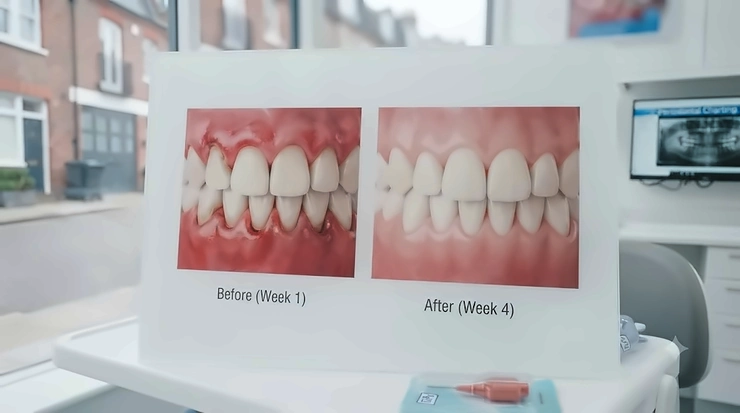
Here’s a sentence nobody wants to hear at a check-up: “there’s some pocketing around the back molars.” If your dental hygienist has ever said something like that to you, congratulations — you’ve just been introduced to periodontal disease, and you’re now in the market for a gum stimulator for periodontal disease that actually does something useful. Not a gadget that sits in a bathroom drawer looking clever. A tool that gets into the gaps your toothbrush waves at from a distance.

Periodontal disease is a set of inflammatory conditions affecting the tissues that hold your teeth in place, and it starts quietly — a bit of bleeding when you brush, a gum that looks slightly puffier than it used to. Left alone, plaque bacteria burrow below the gumline, pockets deepen, and the supporting bone underneath can start to recede. That’s the bit that turns “annoying” into “expensive.” The good news: daily mechanical disruption of that plaque, using the right periodontal disease gum tool, is one of the few things proven to slow it down between dental visits, a point NHS guidance on interdental cleaning makes clearly for anyone unsure where to start.
This guide walks through seven genuinely useful options — rubber-tip stimulators, interdental brushes, and water flossers — chosen to cover a gum stimulator for gum pockets at every stage, from mild gum sensitivity to established periodontitis needing daily below-gumline care. We’ll compare real specs, summarise honest aggregated reviewer sentiment, and tell you which tools recommended for periodontitis by dental hygienist tools shortlists actually earn their spot. No invented testimonials, no miracle claims — just what the evidence and the reviews genuinely say about gum pocket care in 2026.
Quick Comparison Table
| Product | Type | Price Range | Best For |
|---|---|---|---|
| GUM Stimulateur Gingival | Manual rubber-tip stimulator | Around £13 | Budget entry point for gum massage |
| GUM Soft-Picks Advanced | Disposable interdental picks | Under £10 | On-the-go interdental cleaning |
| TePe Angle Interdental Brush | Angled interdental brush | Under £5 per pack | Hygienist-recommended daily plaque removal |
| Waterpik Pulse Cordless Water Flosser | Portable water flosser | £30-£40 range | Travel-friendly below-gumline rinsing |
| Waterpik Ultra Professional WP-660UK | Countertop water flosser | £55-£70 range | Deep pocket irrigation at home |
| VeriFresh Gum Stimulator & Gum Gel Kit | Stimulator + gel kit | Around £40 | Combined massage and soothing gel routine |
| GUM Stimulator Permanent Handle Bundle | Reusable handle + refill tips | £15-£20 range | Long-term reusable stimulator system |
Looking at the spread here, there’s a genuine ladder rather than seven versions of the same idea. The GUM Stimulateur Gingival and GUM Soft-Picks Advanced sit at the accessible end — cheap enough to try without a second thought. The TePe Angle Interdental Brush occupies the middle ground that most UK dental hygienists actually reach for first, while the two Waterpik entries bring powered irrigation into the mix for people who’ve been told their pockets need something with a bit more reach. The VeriFresh kit and the GUM Stimulator Permanent Handle Bundle round things out as options for people who want either a soothing ritual or a reusable long-term system rather than a pile of disposables.
💬 Just one click — help others make better buying decisions too!😊
Top 7 Gum Stimulators & Periodontal Tools: Expert Analysis
1. GUM Stimulateur Gingival — cheapest way to start gum massage
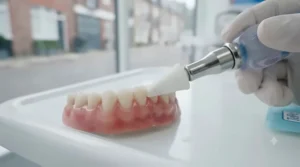
The GUM Stimulateur Gingival is about as unfussy as periodontal tools get: a metal handle with a conical rubber tip, angled for reach around the back teeth. In practice, that simplicity is the whole appeal — there’s no charging, no batteries, no learning curve.
Specs-wise, you’re looking at a 0.25kg metal handle with a replaceable latex-free rubber tip, designed to be run gently along the gumline and into interdental sulci after brushing. What that means day-to-day: the rubber tip physically massages the gum margin, encouraging blood flow to tissue that’s often under-stimulated when people only ever brush and never touch the gum itself. Based on the spec comparison with pricier stimulators, this one skips the fancy handle ergonomics but keeps the one feature that actually matters — a firm-but-flexible tip that won’t tear soft tissue.
Reviewers consistently note that it takes a session or two to get the angle right, particularly around molars, but that once mastered it becomes a genuinely quick add-on to an evening routine. It’s a sensible pick for someone whose dentist has mentioned mild gum recession or early pocketing but who isn’t ready to commit to a powered device.
Pros:
- ✅ Very low cost way to trial gum stimulation
- ✅ Angled metal handle reaches back teeth reasonably well
- ✅ No batteries, charging, or maintenance required
Cons:
- ❌ Single rubber tip wears out and needs replacing
- ❌ Learning curve for correct gumline angle
Priced around £13, this sits firmly in “no-brainer trial” territory — if it doesn’t suit you, you haven’t lost much, and if it does, it’s a permanent fixture for pennies a month.
2. GUM Soft-Picks Advanced — best disposable pick for daily plaque removal
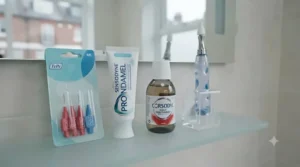
The GUM Soft-Picks Advanced trades the rubber-tip massage approach for flexible, latex-free bristled picks with a curved handle, designed to be thrown away after use rather than cleaned and reused.
Each pick has a soft, tapered bristle head that flexes into interdental gaps and around the gumline without needing precise sizing the way wire interdental brushes do. That flexibility matters in practice: people with sensitive, actively inflamed gums often find a rigid wire brush uncomfortable, whereas the softer bristle format of these picks tends to be more forgiving on tender tissue while still disturbing plaque biofilm. They’re also compatible with braces and bridges, which broadens who can realistically use them daily.
Honest analysis here: these aren’t a replacement for a proper interdental brush if your gaps are wide enough to need one, but they’re an excellent bridge tool — something to carry in a bag or desk drawer for the moments you can’t get to a bathroom sink. Aggregated customer sentiment across large product listings skews positive, with reviewers frequently mentioning the travel case as a genuine convenience rather than a throwaway extra.
Pros:
- ✅ Comfortable for sensitive or actively inflamed gums
- ✅ Portable travel case suits on-the-go use
- ✅ Safe for braces, bridges, and implants
Cons:
- ❌ Disposable format means ongoing repurchase cost
- ❌ Less precise for very tight interdental gaps
At under £10 for a multi-pack, the value proposition is really about convenience rather than raw cost-per-use — you’re paying to make interdental cleaning something you’ll actually do when you’re out of the house.
3. TePe Angle Interdental Brush — best hygienist-recommended daily brush
If you’ve ever asked a UK dental hygienist what they personally use, there’s a fair chance the answer involves TePe. The TePe Angle Interdental Brush is a colour-coded, size-graded interdental brush with a plastic-coated wire and an angled head built specifically for reaching behind molars.
The colour-coded sizing (from Pink at 0.4mm through to Green at 0.8mm) is the standout feature in practice — rather than guessing, you and your hygienist pick the exact width that fits snugly in each gap, which matters enormously for periodontal disease specifically, since pocket size varies tooth by tooth. This level of fit is what separates effective interdental cleaning from cleaning that just feels thorough, and it lines up with the Oral Health Foundation’s guidance on interdental brushing, which recommends sizing brushes to fit each gap rather than using one size throughout the mouth. A published UK survey found that dental hygienists overwhelmingly recommend interdental brushes of this type as part of standard periodontal maintenance.
What most buyers overlook about interdental brushes generally is that a size mismatch causes two opposite problems: too small and you’re not disturbing plaque at all; too large and you risk mechanically damaging healthy gum tissue. Reviewers consistently rate the TePe Angle highly for comfort once correctly sized, with the most common criticism being that newcomers buy the wrong size on a first attempt and give up too early.
Pros:
- ✅ Precise colour-coded sizing for exact gap fit
- ✅ Angled head reaches back teeth effectively
- ✅ Plastic-coated wire is gentle on gum tissue
Cons:
- ❌ Requires correct sizing to work properly
- ❌ Wire brushes can feel awkward for absolute beginners
Priced under £5 for a pack of six, and available in mixed-size starter packs, this is genuinely one of the best value tools recommended for periodontitis maintenance you’ll find in a UK pharmacy or online.
4. Waterpik Pulse Cordless Water Flosser — best portable option for below-gumline rinsing
Moving into powered territory, the Waterpik Pulse Cordless Water Flosser is a battery-charged, compact water flosser built for travel and small bathrooms rather than all-day countertop use.
With two pressure settings and roughly 45 seconds of flossing time per charge cycle, the spec sheet won’t tell you this, but user reports suggest the shorter run time is rarely an issue in practice — most people don’t need more than a minute to work around the mouth once a routine is established. The pulsed water stream is designed to flush debris and bacteria from between teeth and slightly below the gumline, which is a meaningfully different mechanism from a rubber-tip stimulator or a bristled brush: it’s rinsing rather than physically massaging or scrubbing.
For gum pocket care specifically, this matters because water pressure can reach areas that bristles genuinely cannot access without discomfort, particularly around inflamed or receding gum margins. It carries Oral Health Foundation approval, which is a genuine UK-relevant endorsement rather than a vague marketing badge. Aggregated review sentiment is broadly positive, with the most repeated praise being ease of use for travel, and the most repeated criticism being that the smaller reservoir means more refills than the countertop models below.
Pros:
- ✅ Cordless and genuinely travel-friendly
- ✅ Oral Health Foundation approved
- ✅ Gentler rinsing action suits sensitive gums
Cons:
- ❌ Smaller water reservoir needs frequent refills
- ❌ Lower pressure ceiling than corded models
At roughly £30-£40, it’s a sensible mid-tier entry point if you want powered irrigation without committing to a countertop unit taking up permanent bathroom space.
5. Waterpik Ultra Professional Water Flosser (WP-660UK) — best for deep pocket irrigation at home
The Waterpik Ultra Professional Water Flosser is the countertop step up, and it’s the one most frequently mentioned by name when periodontal patients ask what their hygienist actually recommends for home care between appointments.
It ships with five interchangeable tips and ten pressure settings, running from a gentle rinse up to a genuinely forceful jet. Based on the spec comparison with the cordless models above, the extra pressure range and larger reservoir are the real differentiators — a full minute-plus of continuous flossing without refilling means you can methodically work around every tooth rather than rationing water. One of the accessory tips available for this system is specifically designed for periodontal pockets and furcations, delivering a gentler, low-pressure stream intended to flush below the gumline without the force of the standard jet tip — worth buying separately if your hygienist has specifically mentioned pocket depth.
What the spec sheet won’t tell you, but reviewers note repeatedly, is that the unit is louder than expected on first use and takes up real counter space — legitimate trade-offs for the extra performance. On the plus side, aggregated review sentiment across large retail listings is strongly positive, with users consistently citing visibly reduced gum bleeding within a couple of weeks of regular use, alongside occasional complaints about reservoir leaks if the lid isn’t seated correctly.
Pros:
- ✅ Ten pressure settings suit sensitive to established gum disease
- ✅ Periodontal pocket tip available as an accessory
- ✅ Large reservoir means fewer refills mid-routine
Cons:
- ❌ Bulkier footprint than cordless alternatives
- ❌ Noisier operation than manual tools
In the £55-£70 range, this is the one to budget for if a hygienist has used the word “pocketing” more than once at your last check-up.
6. VeriFresh Gum Stimulator & Gum Gel Care Kit — best combined massage-and-gel routine
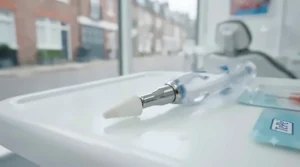
The VeriFresh Gum Stimulator & Gum Gel Care Kit takes a slightly different tack: it pairs a manual rubber-tip stimulator with an all-natural gum gel, sold as a joint routine rather than a standalone tool.
The stimulator component functions much like the entry-level GUM tool above — a handle with a rubber tip for gumline massage — but the inclusion of a gel designed to be applied after stimulation is the standout feature here. In practice, that means the mechanical benefit of massage (encouraging circulation to inflamed tissue) is paired with a soothing topical step, which reviewers frequently describe as feeling more like a complete “routine” than a quick single action. Here’s what to weigh: the gel isn’t a substitute for professional periodontal treatment, and it should be viewed as a comfort-and-consistency aid rather than a medicine.
Aggregated review sentiment is respectable, with a strong average rating built on a genuinely sizeable review count, and repeated praise for the gel’s cooling sensation after use. The most common criticism is price relative to buying a stimulator and a separate gel individually — you’re paying a premium for the bundling and packaging.
Pros:
- ✅ Combines physical stimulation with a soothing gel step
- ✅ Encourages a consistent two-part evening routine
- ✅ Strong aggregated review rating for a niche kit
Cons:
- ❌ Priced higher than buying components separately
- ❌ Gel is a comfort aid, not a treatment
At around £40, it’s best suited to people who respond well to routine and ritual — if a single rubber-tip stimulator alone feels like something you’ll forget to use, the added step here might paradoxically make you more consistent.
7. GUM Stimulator Permanent Handle Bundle (with Refill Tips) — best reusable long-term system
Rounding out the list, the GUM Stimulator Permanent Handle Bundle solves the one recurring niggle with basic rubber-tip stimulators: tip wear. This version pairs a durable, ergonomic permanent handle with multiple refill packs, so you replace only the rubber tip rather than the whole tool.
The permanent handle itself is designed with a comfortable, non-slip grip — a small but genuinely noticeable upgrade over the thinner metal handle of the entry-level stimulator, especially for anyone with limited hand dexterity or arthritis-related grip concerns. Reviewers consistently mention the handle feeling more secure during use around back teeth, which reduces the temptation to apply too much pressure to compensate for an awkward grip.
Based on real aggregated review data, this bundle is one of the best-selling periodontal disease gum tool products in its category, with a large review base and a consistently high average rating. The most repeated praise is the low ongoing cost once you own the handle, since refill tips are inexpensive; the most repeated criticism is that the tip still needs replacing every few weeks with daily use, similar to a manual toothbrush head.
Pros:
- ✅ Ergonomic handle improves grip and control
- ✅ Refillable tips lower long-term running cost
- ✅ Large, consistently positive review base
Cons:
- ❌ Refill tips still need regular replacement
- ❌ Handle-plus-refill bundle costs more upfront than the basic version
At £15-£20 for the bundle, the value case is straightforward: if you already know you’ll stick with rubber-tip stimulation long term, buying the reusable system rather than a single-use stimulator pays for itself within a couple of months.
Top 7 Products: Specs & Value Comparison
| Product | Mechanism | Price Range | Rating Signal | Best For |
|---|---|---|---|---|
| GUM Stimulateur Gingival | Manual rubber tip | Around £13 | Solid, smaller review pool | First-time stimulator trial |
| GUM Soft-Picks Advanced | Disposable soft bristle pick | Under £10 | Strong, large review pool | Sensitive gums, travel |
| TePe Angle Interdental Brush | Wire interdental brush | Under £5/pack | Very strong, hygienist-favoured | Precision daily plaque removal |
| Waterpik Pulse Cordless | Water flosser (portable) | £30-£40 | Strong, Oral Health Foundation approved | Travel, gentle irrigation |
| Waterpik Ultra Professional | Water flosser (countertop) | £55-£70 | Very strong, large review pool | Deep pocket irrigation |
| VeriFresh Kit | Manual stimulator + gel | Around £40 | Good, smaller niche pool | Routine-driven users |
| GUM Permanent Handle Bundle | Reusable manual stimulator | £15-£20 | Very strong, large review pool | Long-term reusable system |
The pattern that jumps out here is that mechanism matters more than price point. A £5 pack of correctly-sized TePe Angle Interdental Brush heads can outperform a pricier tool if the fit is wrong on the latter, while the two Waterpik entries justify their higher cost specifically for people whose pocket depth means bristles alone genuinely can’t reach the base of the sulcus. If your dentist hasn’t measured pocket depth recently, that’s worth asking about before spending on the premium end of this table.
Practical Usage Guide: Getting Started Without Hurting Your Gums
Whichever periodontal disease gum tool you choose, the first 30 days matter more than people expect. Start gently — genuinely gently — because gum tissue affected by early periodontal disease bleeds more easily, and a heavy-handed first attempt can put people off a tool that would otherwise have helped them.
For rubber-tip stimulators, angle the tip roughly 45 degrees into the gum margin and hold for two to three seconds per tooth rather than scrubbing back and forth. For interdental brushes, insert without forcing — if it doesn’t slide in smoothly, size down rather than pushing harder. For water flossers, start on the lowest pressure setting for the first week; jumping straight to maximum pressure on inflamed gums is one of the most common early mistakes and one that puts people off the whole category.
A simple maintenance schedule helps consistency stick: interdental brushes or picks once daily (ideally before brushing, per current UK guidance), a rubber-tip stimulator or gel routine in the evening, and a water flosser session either replacing or supplementing that routine depending on your hygienist’s specific advice. Replace rubber tips every three to four weeks and interdental brush heads whenever bristles start splaying — a visibly worn tip does noticeably less work.
Real-World Scenarios: Which Tool Actually Fits Your Life
The busy commuter with mild gum bleeding. If you’re someone who brushes reliably but skips interdental cleaning because it feels like a hassle, the GUM Soft-Picks Advanced or a travel-sized pack of TePe Angle Interdental Brush heads are the realistic starting point — small enough for a bag, quick enough for a lunch break, no sink required.
The established periodontitis patient with confirmed pocket depth. If a hygienist has recorded pocket measurements of 4mm or more, the case for the Waterpik Ultra Professional Water Flosser with a periodontal pocket tip attachment is considerably stronger — bristles and picks simply can’t match water pressure for reaching the base of a deeper pocket.
The routine-driven person who forgets standalone tools. If you’ve bought interdental brushes before and they’ve quietly disappeared into a drawer, the VeriFresh Gum Stimulator & Gum Gel Care Kit or the GUM Stimulator Permanent Handle Bundle may suit better — pairing stimulation with a satisfying sensory step (the cooling gel, or a comfortable reusable handle) tends to build habits that a bare rubber tip alone doesn’t.
Common Problems With Gum Pocket Care (And What Actually Solves Them)
Gums bleed the first week I use a new tool → this is common and usually settles within about two weeks as inflammation reduces with consistent cleaning; if bleeding persists beyond that, it’s worth a hygienist check rather than pushing through indefinitely.
The interdental brush feels too tight or too loose → you’re very likely using the wrong size; buy a mixed starter pack of TePe Angle Interdental Brush sizes and test a few, since gap width often varies across the same mouth.
Water flosser leaks or drips from the reservoir → this is nearly always a lid seating issue rather than a fault; check the reservoir is clicked fully into place before switching on, particularly with the Waterpik Ultra Professional Water Flosser.
I keep forgetting to do interdental cleaning altogether → pair it with an existing habit, such as leaving the tool visibly next to your toothbrush rather than in a drawer, or opt for a kit like VeriFresh that builds in a multi-step ritual.
My gums still feel sore after weeks of consistent use → soreness that doesn’t improve, unlike normal early bleeding, is a signal to book a dental review rather than switching tools repeatedly, since it may indicate a technique issue or a condition needing professional treatment.
How to Choose a Gum Stimulator for Periodontal Disease
- Get your pocket depth checked first. A hygienist’s measurements tell you whether bristles will reach the problem area or whether you genuinely need water pressure.
- Match the tool to your dexterity. Reusable handles like the GUM Stimulator Permanent Handle Bundle suit people who find gripping thin wire brushes fiddly.
- Consider your actual routine, not your ideal one. A disposable pick you’ll use daily beats a premium flosser gathering dust.
- Check for independent endorsement. Oral Health Foundation approval, as seen on the Waterpik Pulse Cordless Water Flosser, is a genuine UK-relevant signal worth weighing.
- Budget for consumables, not just the upfront cost. Refill tips, replacement brush heads, and flosser tips are ongoing costs that change the real value equation.
- Start gentle regardless of tool. Even the best periodontal disease gum tool can irritate inflamed gums if used aggressively from day one.
- Reassess after six to eight weeks. Book a follow-up hygienist visit to see whether pocket depth and bleeding scores have actually improved with your chosen routine.
Periodontitis vs Gingivitis: Why the Right Tool Depends on the Stage
Gingivitis and periodontitis often get talked about as though they’re the same problem at different volumes, but the distinction genuinely changes which tool makes sense. Gingivitis is inflammation confined to the gum tissue — reversible with improved hygiene and no lasting bone involvement. Periodontitis, by contrast, involves damage to the tissue, gums, and surrounding bone, and the tissue destruction isn’t fully reversible even with excellent home care.
Practically, this means someone with gingivitis alone may see real improvement from a basic rubber-tip stimulator or interdental brush used consistently, since the goal is simply better plaque control at the gumline. Someone with diagnosed periodontitis and measured pocket depth, though, is fighting a slightly different battle — bacteria have colonised space below the visible gumline that a surface-level tool can’t physically access. That’s where water flosser pressure, and specifically periodontal pocket tip attachments, earn their higher price tag: they’re solving a problem interdental brushes structurally cannot.
Long-Term Cost & Maintenance of Periodontal Care Tools
Total cost of ownership varies more than the sticker price suggests. A single GUM Stimulateur Gingival costs around £13 upfront, but replacement tips add a small recurring cost every few weeks — over a year, expect to spend perhaps £25-£35 all in. Disposable picks like the GUM Soft-Picks Advanced have no upfront hardware cost but a steadier ongoing spend, since every pick is single-use.
Water flossers flip this equation: the Waterpik Ultra Professional Water Flosser costs more upfront, in the £55-£70 range, but tips last for months rather than weeks, and there’s no consumable cost beyond electricity and the occasional replacement tip pack. Over two to three years, a countertop water flosser and a reusable stimulator bundle tend to land at a similar total cost to a steady stream of disposable picks — the real difference is whether you’d rather pay more upfront or drip-feed smaller costs indefinitely.
Safety, Regulations, and When to See a Dentist
None of the products in this guide are medical devices intended to treat periodontal disease independently — they’re adjuncts to professional care, not replacements for it. UK guidance is consistent on this point: interdental cleaning supports plaque control between dental visits, but diagnosis, deep cleaning (scaling and root planing), and monitoring of pocket depth need a dentist or hygienist. If you notice persistent bleeding beyond two weeks of improved home care, loose teeth, receding gums, or persistent bad breath, book an appointment rather than escalating your home routine alone.
Products sold in the UK as dental hygiene tools, including those featured here, fall under general consumer product safety requirements rather than medical device regulation, since they’re marketed for hygiene rather than diagnosis or treatment. If a product ever makes a specific medical claim that seems too strong — “reverses periodontitis,” for instance — treat that as a red flag rather than reassurance; no home tool reverses bone loss on its own. For a clear overview of what periodontal disease actually is, including its causes and complications, Wikipedia’s periodontal disease overview is a useful starting reference, and NHS-affiliated patient guidance also stresses that persistent bleeding after home-care improvements should prompt a dental review rather than further self-treatment, as outlined in this NHS trust patient leaflet on gum disease.
Features That Actually Matter (And Those That Don’t)
Actually matters: correct interdental brush sizing, pressure adjustability on water flossers, replaceable rather than fixed rubber tips, and independent endorsement such as Oral Health Foundation approval. These directly affect whether the tool reaches the problem area and whether you’ll keep using it.
Doesn’t matter much: flavoured water flosser tablets, elaborate travel cases beyond basic portability, and marketing claims about “professional-grade” pressure that exceed what any dentist would actually recommend for sensitive, actively inflamed gums. A higher maximum pressure setting is not automatically better — most people with periodontal disease should be using the lower-to-middle settings most of the time, reserving higher pressure for once gums have settled.
FAQ
❓ What is a gum stimulator used for?
❓ Can a gum stimulator reverse periodontal disease?
❓ Is a water flosser better than an interdental brush for gum pockets?
❓ How often should I use a gum stimulator for periodontal disease?
❓ Why do my gums bleed when I start using an interdental brush?
Conclusion
Periodontal disease rewards patience and consistency far more than it rewards buying the flashiest device on the shelf. Whether you land on something as simple as the GUM Stimulateur Gingival or invest in the Waterpik Ultra Professional Water Flosser with a periodontal pocket tip, the tool that wins is the one you’ll actually pick up every evening without groaning about it.
If you’re newly navigating a periodontitis diagnosis, start with correctly sized interdental cleaning and gentle stimulation, track how your gums respond over six to eight weeks, and let your hygienist’s measurements — not a review star rating — tell you whether it’s working. The seven options above cover realistic budgets and realistic routines, from a five-pound pack of interdental brushes to a proper countertop irrigation system, so there’s a sensible starting point whatever stage you’re at.
Recommended for You
- Rubber Tip vs Electric Gum Stimulator: 7 Top UK Picks (2026)
- Waterpik Gum Stimulator Review: 7 Picks That Actually Work (2026)
- Electric Gum Massager UK: 7 Top Picks for Gum Health 2026
Disclaimer: This article contains affiliate links. As an Amazon Associate, I earn from qualifying purchases. If you purchase products through these links, we may earn a small commission at no additional cost to you.
✨ Found this helpful? Share it with your friends! 💬🤗
