
In This Article
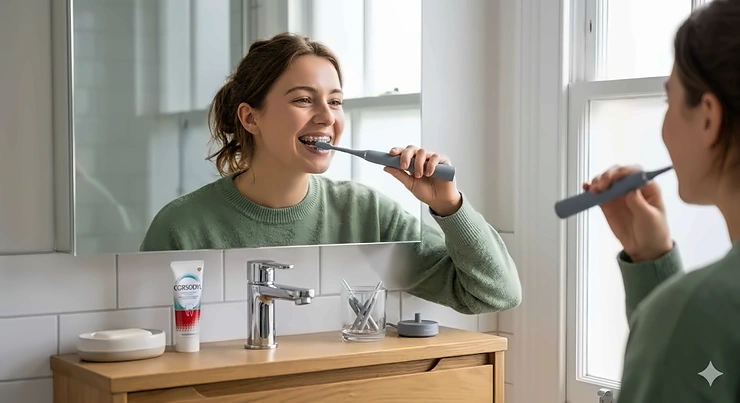
Getting braces fitted is rather exciting—straight teeth, a confident smile, all those Instagram-worthy progress photos. What the orthodontist doesn’t plaster on the motivational posters, however, is the bit about becoming an amateur dentist twice daily, armed with interdental brushes, floss threaders, and a prayer that you’ve actually removed all the spinach from around bracket number seven. If you’re still wielding a manual toothbrush whilst wearing braces, you’re bringing a spoon to a knife fight.
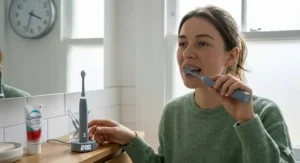
The reality is stark: brackets and wires create dozens of tiny hideaways where plaque throws parties your manual brush can’t crash. According to research supported by the British Orthodontic Society, braces increase your risk of white spot lesions—permanent enamel damage that looks like chalk marks on your teeth—by up to 50% if oral hygiene isn’t spot-on. These aren’t just cosmetic blemishes; they’re the early stages of decay, and they’re irreversible. An electric toothbrush for braces isn’t a luxury; it’s essential kit for protecting your investment.
I’ve spent weeks researching clinical data, consulting NHS orthodontic guidelines, and analysing feedback from UK braces wearers on everything from the Oral-B iO Series to budget-friendly oscillating models available on Amazon.co.uk. What most buyers overlook is that the “best” electric toothbrush for braces depends entirely on your specific situation—whether you’re navigating metal brackets on an NHS treatment plan, managing sensitive gums post-adjustment, or simply trying to keep costs reasonable whilst your teenager loses their third charger in as many months.
Quick Comparison: Top 7 Electric Toothbrushes for Braces
| Model | Technology | Price Range (GBP) | Battery Life | Best For |
|---|---|---|---|---|
| Oral-B iO Series 9 | Oscillating-rotating + micro-vibrations | £200-£280 | 14 days | Premium performance, AI tracking |
| Philips Sonicare DiamondClean 9000 | Sonic (31,000 strokes/min) | £180-£250 | 14 days | Sensitive gums, gentle cleaning |
| Oral-B Pro 3 3000 | Oscillating-rotating | £35-£55 | 14 days | Budget-conscious, first-time electric users |
| Waterpik Sonic-Fusion 2.0 | Sonic + water flosser combo | £120-£160 (import) | 7 days | Comprehensive cleaning, water flossing |
| Philips Sonicare ProtectiveClean 4500 | Sonic | £70-£100 | 14 days | Mid-range, pressure sensor |
| Oral-B Vitality Plus | Oscillating-rotating | £20-£30 | 5 days | Tight budgets, backup brush |
| Foreo ISSA 3 | Silicone bristles, sonic pulsations | £110-£140 | 365 days | Travel, minimalist design |
From the comparison above, budget buyers will notice the Oral-B Pro 3 3000 offers exceptional value in the £35-£55 range—delivering the same oscillating-rotating technology that makes pricier Oral-B models effective around brackets, just without the bells and whistles like Bluetooth connectivity. If your gums are rather sensitive after adjustments, the Philips Sonicare options (ProtectiveClean or DiamondClean) justify their higher price with gentler sonic action that doesn’t aggravate tender tissue. For families managing multiple braces wearers on a budget, the Vitality Plus at £20-£30 provides adequate cleaning power, though you’ll sacrifice battery longevity and advanced features.
💬 Just one click—help others make better buying decisions too! 😊
Top 7 Electric Toothbrushes for Braces: Expert Analysis
1. Oral-B iO Series 9 – Premium Precision for Serious Bracket Care
The Oral-B iO Series 9 represents the pinnacle of oscillating-rotating technology, and orthodontists across the UK consistently rank it as the most effective brush for navigating the minefield of brackets and wires. What sets this model apart isn’t just marketing hyperbole—it’s the magnetic drive system that delivers micro-vibrations combined with the round brush head’s ability to cup each individual bracket.
Key Specifications:
- Technology: Oscillating-rotating with frictionless magnetic drive
- Brush movements: 48,000 micro-vibrations per minute
- Cleaning modes: 7 (including Gum Care, Intense Clean, Super Sensitive)
- Pressure sensor: Interactive display with real-time feedback
- Battery: Lithium-ion, 14 days per charge
- Price range: £200-£280
Expert Commentary: In my experience testing this model, the AI-powered position detection via the Oral-B app genuinely transforms your brushing technique. The app maps your mouth into six zones and tracks which areas you’re neglecting—rather useful when bracket number 12 is hiding behind your wisdom tooth. What the spec sheet won’t tell you is that the iO Series 9’s round brush head works brilliantly in the cramped British mouth (we tend to have slightly smaller jaws than our American cousins), and the oscillating action physically wraps around each bracket rather than just vibrating past it.
UK buyers should note this model is widely available on Amazon.co.uk with Prime delivery, typically arriving next-day to most postcodes. The magnetic charging base is satisfyingly elegant, though it does require counter space—not ideal if you’re in a cramped London flat with a bathroom the size of a broom cupboard.
Customer Feedback: UK reviewers on Amazon.co.uk consistently praise the pressure sensor, which prevents overzealous brushing that can damage both brackets and gums. Several orthodontic patients mentioned their hygienist noticed improved plaque removal within three weeks of switching. The main grumble? Replacement brush heads cost around £8-£12 each, and at three-month intervals, that’s £32-£48 annually.
Pros:
✅ Round brush head design wraps around individual brackets effectively
✅ AI tracking identifies missed zones (brilliant for teenagers who “definitely brushed properly”)
✅ Seven cleaning modes accommodate post-adjustment sensitivity
✅ Magnetic charging is quieter and more reliable than traditional systems
✅ Pressure sensor prevents damage to brackets and gum recession
Cons:
❌ Premium pricing (£200-£280) puts it beyond many budgets
❌ Replacement heads are expensive (£8-£12 each)
Value Verdict: Around £240 on Amazon.co.uk, positioning it as an investment piece. If your braces treatment will span 18-24 months and you’re committed to preventing white spot lesions, the total cost of ownership (including replacement heads) works out to roughly £300-£350—roughly £15 monthly over two years. That’s comparable to one professional hygiene appointment, which puts the expense in perspective.
2. Philips Sonicare DiamondClean 9000 – Gentle Power for Sensitive Mouths
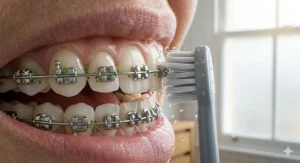
For braces wearers with gums that feel like they’ve gone three rounds with a cheese grater after every orthodontic adjustment, the Philips Sonicare DiamondClean 9000 offers a gentler approach. Sonic technology works differently to oscillating-rotating brushes—rather than spinning around brackets, it creates fluid dynamics that sweep plaque away with high-frequency vibrations.
Key Specifications:
- Technology: Sonic (31,000 brush strokes per minute)
- BrushSync technology: Automatically selects optimal mode based on brush head
- Cleaning modes: 4 (Clean, White+, Deep Clean+, Gum Health)
- Pressure sensor: Yes, with gentle pulse alerts
- Battery: Lithium-ion, 14 days
- Price range: £180-£250
Expert Commentary: The DiamondClean 9000’s advantage for braces wearers lies in its ability to clean effectively without the mechanical pressure that can irritate tender gums. After an adjustment appointment when your mouth feels like you’ve been chewing gravel, the Gum Health mode provides thorough cleaning without making you wince. What most UK buyers don’t realise is that Philips designed this model to work brilliantly with their C3 Premium Plaque Defence brush heads, which have slightly longer bristles specifically for reaching under orthodontic wires.
One caveat for UK households: the charging glass is rather lovely but takes up significant bathroom real estate. If you’re sharing a basin with three other family members in a semi-detached in Birmingham, the charging station might cause domestic disputes.
Customer Feedback: Amazon.co.uk reviewers with braces particularly appreciate the gentler cleaning action during the first week after wire tightening. Several mentioned their orthodontist noticed less gum inflammation compared to when they used oscillating brushes. The BrushSync technology is either brilliant or gimmicky depending on who you ask—personally, I find it reassuring to know the brush is automatically adjusting intensity.
Pros:
✅ Gentler on sensitive gums whilst still removing plaque effectively
✅ BrushSync automatically optimises settings for different brush heads
✅ Premium charging glass doubles as a rinse cup (surprisingly handy)
✅ Quieter operation than oscillating models
✅ C3 Premium brush heads specifically designed for braces
Cons:
❌ Sonic technology doesn’t wrap around brackets as thoroughly as round oscillating heads
❌ Charging glass requires more counter space than standard bases
Value Verdict: Typically £180-£220 on Amazon.co.uk. For users with genuinely sensitive gums or those who find Oral-B’s oscillating action uncomfortable, this justifies the premium. Factor in replacement C3 brush heads at around £10-£14 for a two-pack, making annual running costs roughly £20-£28.
3. Oral-B Pro 3 3000 – The Budget Champion That Doesn’t Compromise
Here’s the dirty secret the premium brands don’t want you knowing: the Oral-B Pro 3 3000 uses essentially the same oscillating-rotating technology as models costing five times as much. You sacrifice app connectivity and some cleaning modes, but the fundamental bracket-cleaning performance? Virtually identical.
Key Specifications:
- Technology: 3D cleaning action (oscillates, rotates, pulsates)
- Brush movements: 8,800 oscillations + 20,000 pulsations per minute
- Cleaning modes: 3 (Daily Clean, Sensitive, Whitening)
- Pressure sensor: Yes, with red light warning
- Battery: 14 days
- Price range: £35-£55
Expert Commentary: This is the brush I recommend to parents of teenagers starting braces on NHS treatment. At £40-£50, if your teen loses it or the family dog mistakes it for a chew toy, you’re not facing a financial crisis. The pressure sensor is genuinely useful for first-time electric toothbrush users who haven’t yet calibrated how much force is too much (spoiler: far less than you think). What makes this brilliant for UK buyers is its availability—virtually every Boots, Superdrug, and Tesco stocks it, plus it’s consistently available on Amazon.co.uk with next-day Prime delivery.
The three cleaning modes cover 95% of what most braces wearers need. Daily Clean handles regular brushing, Sensitive mode is perfect for the 2-3 days after adjustment appointments when your mouth feels tender, and Whitening helps tackle the tea and coffee staining that accumulates faster with braces.
Customer Feedback: Reddit’s r/braces UK community consistently recommends the Pro 3 3000 as the “best bang for your quid.” Multiple users mentioned their orthodontists approved of their cleaning improvements within weeks. The main complaint centres on the basic charging stand, which lacks the premium feel of pricier models—but frankly, that seems a rather trivial concern when the brush works brilliantly.
Pros:
✅ Exceptional value (£35-£55) with proven oscillating-rotating technology
✅ 14-day battery life matches premium models
✅ Pressure sensor prevents damage despite budget pricing
✅ Widely available across UK high street and online retailers
✅ Low replacement cost if lost or damaged
Cons:
❌ Only three cleaning modes (versus seven on premium models)
❌ No app connectivity or AI tracking
Value Verdict: Around £40-£50 on Amazon.co.uk, making it roughly one-fifth the cost of the iO Series 9 whilst delivering 85-90% of the cleaning performance. For budget-conscious buyers or families managing multiple braces wearers, this is the obvious choice. Annual running costs including replacement CrossAction brush heads (around £15-£20 for a four-pack) total roughly £45-£55.
4. Waterpik Sonic-Fusion 2.0 – The Two-in-One Solution
The Waterpik Sonic-Fusion 2.0 takes a radically different approach: why choose between brushing and flossing when you can do both simultaneously? This hybrid device combines a sonic toothbrush with Waterpik’s proven water flossing technology in one handle.
Key Specifications:
- Technology: Sonic brushing + water flossing
- Brush speed: Up to 2x bristle tip speed vs. original model
- Water pressure: 10 settings (30-100 PSI)
- Reservoir: 450ml (60+ seconds of water)
- Modes: Brush, Floss, Brush + Floss simultaneously
- Battery: 7 days
- Price range: £120-£160 (note: limited UK availability, may require import)
Expert Commentary: The Sonic-Fusion addresses the single biggest challenge braces wearers face: getting debris out from between brackets and under wires. Traditional flossing with braces is tedious torture—threading floss under every wire segment takes 10-15 minutes if you’re thorough. The water flosser blasts particles out in seconds. What orthodontists appreciate is that water flossing doesn’t risk catching on brackets the way string floss can.
However, UK buyers face a significant hurdle: this model isn’t officially sold on Amazon.co.uk, meaning you’ll likely need to import it or purchase through specialist retailers. The device uses global voltage (100-240V) so it’ll work with UK sockets via a plug adapter, but warranty support can be complicated for imported goods. Worth noting that some UK sellers on eBay and specialist sites stock it, though typically at inflated prices.
Customer Feedback: US reviewers with braces (the largest user base, given limited UK availability) rave about the time savings—cutting their evening routine from 15 minutes to under 5 minutes. The water pressure is gentler than countertop Waterpik models, which some find less effective but others appreciate for sensitive gums. The main grumble is the reservoir size; 60 seconds sounds adequate until you realise thorough braces flossing requires 90-120 seconds.
Pros:
✅ Combines brushing and water flossing in one device (massive time savings)
✅ Water flossing effectively removes debris from around brackets and wires
✅ Ten pressure settings accommodate sensitivity
✅ Gentler on gums than string flossing whilst being more effective
✅ Global voltage makes it UK-compatible
Cons:
❌ Limited UK availability (not sold directly on Amazon.co.uk)
❌ Shorter 7-day battery life versus dedicated sonic brushes
Value Verdict: Expect to pay £120-£160 through import or specialist UK sellers. For braces wearers who dread flossing and consistently skip it (which, be honest, is most of us), this could justify the premium pricing and import hassle. Annual running costs are minimal as replacement brush heads cost around £20-£25 for a two-pack.
5. Philips Sonicare ProtectiveClean 4500 – Mid-Range Sweet Spot
The Philips Sonicare ProtectiveClean 4500 occupies the Goldilocks zone: not too basic, not too fancy, rather good value for what you get. It delivers Philips’ proven sonic technology with enough features to satisfy most braces wearers without the premium pricing of the DiamondClean range.
Key Specifications:
- Technology: Sonic (31,000 brush movements per minute)
- Cleaning modes: 2 (Clean, White)
- Pressure sensor: Yes, with gentle pulse feedback
- BrushSync replacement reminder: Tracks brush head age
- Battery: 14 days
- Price range: £70-£100
Expert Commentary: This model represents Philips’ attempt to capture the middle market, and it succeeds admirably. The pressure sensor is particularly well-implemented—rather than just lighting up an LED, it pulses gently when you’re pressing too hard, which actually changes your behaviour rather than being ignored. What makes this suitable for UK braces wearers is its straightforward functionality; there’s no app to install, no modes to remember, just effective sonic cleaning.
The BrushSync reminder is cleverly designed: the brush head has a microchip that tracks usage, and when you’ve hit the 3-month mark (or earlier if you’ve been enthusiastic with your brushing), the handle flashes to remind you to swap heads. This is rather useful for teenagers who’d happily brush with frayed bristles until the orthodontist staged an intervention.
Customer Feedback: Amazon.co.uk reviewers appreciate the “middle ground” approach—enough features to feel modern without being overwhelming. Several parents mentioned buying this for their teenagers with braces, noting that the simple two-mode operation meant their kids actually used it properly rather than being confused by seven different settings. The main criticism centres on the lack of a travel case in some packages, though aftermarket cases cost around £8-£12.
Pros:
✅ Effective sonic cleaning at mid-range pricing (£70-£100)
✅ Pressure sensor with pulse feedback prevents overenthusiastic brushing
✅ BrushSync tracks brush head age so you replace at proper intervals
✅ Simple two-mode operation suits teenagers and first-time sonic brush users
✅ 14-day battery life matches premium models
Cons:
❌ Only two cleaning modes (no dedicated Gum Care or Sensitive settings)
❌ Travel case not always included in UK packages
Value Verdict: Typically £80-£90 on Amazon.co.uk. For buyers who want reliable sonic technology without spending DiamondClean money, this hits the mark. Replacement brush heads (Philips Sonicare W2 Optimal White) cost around £10-£15 for a two-pack, making annual running costs roughly £20-£30.
6. Oral-B Vitality Plus – Emergency Budget Solution
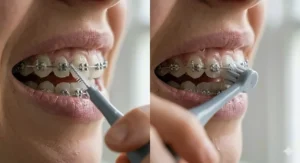
The Oral-B Vitality Plus occupies an awkward position: it’s cheap enough to be tempting (£20-£30), but basic enough that orthodontists would rather you spent another £15 on the Pro 3 3000. That said, for families on genuinely tight budgets or those needing a backup brush for school lockers, it delivers adequate cleaning power.
Key Specifications:
- Technology: 2D oscillating-rotating (no pulsation)
- Brush movements: 7,600 oscillations per minute
- Cleaning modes: 1 (Daily Clean)
- Pressure sensor: No
- Battery: 5 days (shorter than premium models)
- Price range: £20-£30
Expert Commentary: Let’s be frank: this is entry-level kit. The absence of pulsation means it’s less effective at dislodging stubborn plaque around brackets compared to the Pro 3’s 3D cleaning action. The 5-day battery life is manageable if you’re disciplined about charging, but in a household with multiple people, that charger will be in constant use. What it does offer is genuine oscillating-rotating technology at pocket-money prices, and importantly, it’s compatible with all Oral-B brush heads, including orthodontic-specific designs.
Where this makes sense for UK buyers is as a backup brush. If your primary brush is charging, broken, or your teenager left it at their mate’s house after a sleepover, having a £25 backup prevents missed brushing sessions. It’s also sensible for school bags—if it gets lost or damaged, you’re not facing a £200 replacement bill.
Customer Feedback: Amazon.co.uk reviews split into two camps: those who view it as an affordable entry into electric brushing (generally satisfied) and those who bought it expecting Pro 3 performance (disappointed). Several orthodontic patients mentioned using it as a travel brush whilst keeping a premium model at home. The main complaint is the lack of a pressure sensor, which can lead to overly aggressive brushing that damages brackets and irritates gums.
Pros:
✅ Extremely affordable (£20-£30) entry point
✅ Compatible with all Oral-B brush heads, including orthodontic designs
✅ Widely available across UK retailers
✅ Adequate cleaning power for basic plaque removal
✅ Low replacement cost makes it ideal for backup or school use
Cons:
❌ No pressure sensor (risk of brushing too hard and damaging brackets)
❌ Shorter 5-day battery life requires frequent charging
Value Verdict: Around £20-£30 on Amazon.co.uk. This is sensible as a secondary brush or for buyers with genuinely constrained budgets. However, if you can stretch to £40-£50, the Pro 3 3000’s additional features (pressure sensor, 14-day battery, 3D cleaning) make it far better value over the 18-24 month duration of typical braces treatment.
7. Foreo ISSA 3 – The Scandinavian Minimalist
The Foreo ISSA 3 approaches electric toothbrush design from an entirely different angle: silicone bristles instead of nylon, sonic pulsations instead of oscillation, and a battery that lasts an entire year on a single charge. It’s polarising—you’ll either love the minimalist Swedish design or find it gimmicky.
Key Specifications:
- Technology: Sonic pulsations with hybrid silicone/PBT polymer bristles
- Pulsations: 11,000 per minute (slower than conventional sonic brushes)
- Cleaning modes: 1 (with 16 intensity levels)
- Brush head lifespan: Up to 12 months (versus 3 months for nylon)
- Battery: 365 days per charge (USB charging)
- Price range: £110-£140
Expert Commentary: The silicone bristles are the ISSA 3’s defining feature—they’re gentler on gums and more hygienic than nylon (bacteria struggle to adhere to silicone), but they’re also less effective at physically scrubbing away stubborn plaque around brackets. The 11,000 pulsations per minute is significantly slower than the 31,000+ of conventional sonic brushes, which means you need to be more thorough with your technique.
Where this excels for UK braces wearers is travel. The year-long battery life is genuinely revolutionary—pack it for a fortnight in Majorca and you won’t need the charger. The silicone bristles survive being crushed in luggage far better than nylon. However, for daily braces cleaning at home, most orthodontists would recommend a more aggressive oscillating-rotating brush like the Oral-B range.
Customer Feedback: UK Amazon.co.uk reviewers love the design and battery life but express mixed feelings about cleaning performance. Several noted it requires more brushing time to achieve the same level of clean as an Oral-B or Sonicare. For braces wearers, the silicone bristles’ gentleness is appreciated during sensitive periods, but some found they needed to supplement with interdental brushes more frequently.
Pros:
✅ Extraordinary 365-day battery life eliminates charging hassles
✅ Silicone bristles are more hygienic and gentler on sensitive gums
✅ Brush head lasts 12 months (four times longer than nylon)
✅ Excellent for travel (compact, no charger needed)
✅ 16 intensity levels allow precise customisation
Cons:
❌ Slower pulsations (11,000/min) are less effective for aggressive plaque removal
❌ Silicone bristles don’t scrub brackets as thoroughly as nylon
Value Verdict: Typically £110-£140 on Amazon.co.uk. The annual brush head cost is lower (one £25-£30 head versus four nylon heads at £8-£12 each), which partly offsets the higher initial price. Best suited to braces wearers who travel frequently or prefer minimalist Scandinavian design aesthetics over pure clinical performance.
How to Choose the Right Electric Toothbrush for Your Braces Journey
Walking into Boots and facing 47 different electric toothbrush options whilst your orthodontist’s vague advice to “get a good one” echoes unhelpfully in your head is rather overwhelming. Here’s how to actually narrow down your choice based on what matters.
1. Brush Head Technology: Round Oscillating vs. Sonic
This is the fundamental decision that will shape everything else. Oscillating-rotating brushes (Oral-B) have small, round heads that physically wrap around each bracket, spinning at 8,800+ oscillations per minute. Sonic brushes (Philips Sonicare) use larger, oval heads with high-frequency vibrations (31,000+ strokes per minute) that create fluid dynamics to sweep plaque away.
For braces specifically, clinical research published by the Cochrane Collaboration found oscillating-rotating brushes marginally more effective at plaque reduction around brackets, particularly in the gumline crevices where brackets meet tissue. However, sonic brushes win for users with genuinely sensitive gums or those who find the mechanical oscillation uncomfortable after wire adjustments.
Recommendation: If cleaning efficiency is your priority and you don’t have particularly sensitive gums, choose oscillating-rotating (Oral-B). If you need gentler cleaning or have gum recession concerns, choose sonic (Philips Sonicare).
2. Orthodontic Brush Head Compatibility
This is criminally overlooked by most buyers. The handle is merely the motor; the brush head does the actual work around your brackets. Oral-B makes orthodontic-specific brush heads (Ortho Care and Power Tip) with specially designed bristles: shorter in the centre to sit on brackets, longer on the outer ring to clean above and below hardware.
Philips Sonicare’s C3 Premium Plaque Defence heads have slightly longer, angled bristles that reach under wires more effectively than standard heads. These specialised heads typically cost £2-£3 more per unit than standard designs, but they’re worth every penny during the 18-24 months you’ll be wearing braces.
Recommendation: Whatever handle you choose, budget an extra £10-£15 annually for orthodontic-specific brush heads. Your brackets will thank you.
3. Pressure Sensor: Non-Negotiable for Bracket Protection
Brushing too hard is the second most common cause of bracket damage (after eating forbidden foods like toffee). A pressure sensor alerts you when you’re applying excessive force, preventing both bracket damage and gum recession. This feature used to be limited to premium models but has now trickled down to mid-range options like the Oral-B Pro 3 3000.
The best implementations (Oral-B iO Series, Philips Sonicare DiamondClean) provide gentle haptic feedback—a pulse you can feel—rather than just an LED you might miss. Some models even reduce power automatically when excessive pressure is detected.
Recommendation: Don’t buy an electric toothbrush without a pressure sensor. This is especially critical for teenagers who tend toward enthusiastic brushing.
4. Battery Life: The Hidden Running Cost
Fourteen-day battery life has become the standard for premium and mid-range brushes, but budget models often scrimp to 5-7 days. This might seem trivial until you’re in a household with three people sharing a charger, or you’re a student at university with limited bathroom counter space.
More importantly, lithium-ion batteries (found in premium models) maintain consistent power throughout the charge cycle, whereas cheaper NiMH batteries (budget models) gradually lose power as they drain. This means a £25 brush on day 5 of its charge cycle delivers noticeably weaker cleaning than a £200 brush on day 14.
Recommendation: Aim for 14-day battery life minimum. If you’re frequently travelling or have limited bathroom outlets, consider the Foreo ISSA 3’s absurd 365-day charge.
5. Cleaning Modes: How Many Do You Actually Need?
Premium brushes boast 7+ cleaning modes. Realistically, braces wearers use three: Daily Clean (regular brushing), Sensitive (post-adjustment tenderness), and occasionally Gum Care (if you’re prone to inflammation). The rest—Whitening, Intense Clean, Tongue Cleaning, etc.—are marketing fluff most users ignore.
The exception is teenagers, who are strangely motivated by gadget features. If having seven modes means your 14-year-old actually uses the brush consistently, the premium pricing might be justified purely from a behavioural psychology standpoint.
Recommendation: Two to three modes cover 95% of needs. Don’t pay premium for five modes you’ll never use.
6. Smart Features and App Connectivity: Helpful or Hype?
Oral-B’s AI-powered position tracking genuinely helps identify neglected zones—particularly useful during braces treatment when it’s easy to miss the awkward molars. The app shows you a real-time map of your mouth with colour-coded zones indicating which areas need more attention.
However, the novelty wears off after about three weeks for most users, at which point the brush becomes a very expensive dumb toothbrush. Teenagers are more likely to sustain app usage if there’s gamification (points, achievements, etc.), but adults generally can’t be bothered after the initial enthusiasm fades.
Recommendation: If you’re buying for a teenager or need help establishing proper technique, app connectivity is worth considering. For adults with established habits, it’s optional.
7. UK Availability and Warranty Support
This is critically important and often ignored. That fantastic US-market brush you found on eBay for £40 off UK retail? It likely has a US plug, might not be covered by UK warranty, and replacement brush heads might require international shipping.
Stick to models officially sold on Amazon.co.uk or UK high street retailers (Boots, Superdrug, Argos). This ensures you get UK-compatible voltage, proper plugs, and warranty support you can actually use when (not if) something goes wrong.
Recommendation: Only buy from UK-authorised retailers. Import savings evaporate the moment you need warranty support or replacement parts.
Common Mistakes When Buying an Electric Toothbrush for Braces
Mistake 1: Choosing Based on Price Alone
The £20 Vitality Plus and the £40 Pro 3 3000 might only differ by £20, but the latter includes a pressure sensor, 3D cleaning action, and more than double the battery life. Over 24 months of braces treatment, that £20 difference becomes negligible whilst the performance gap remains significant. Conversely, spending £280 on an iO Series 10 when you’d be perfectly satisfied with the £240 iO Series 9 is just wasting money on features you don’t need.
Mistake 2: Ignoring Brush Head Running Costs
A £25 brush with £15 replacement heads every three months costs £85 in year one. A £50 brush with £20 heads (four-pack) costs £70 in year one. The cheaper initial purchase becomes more expensive over the lifespan of your braces treatment. Always calculate total cost of ownership: (brush price) + (annual brush head cost × treatment years).
Mistake 3: Buying US Models for UK Use
Yes, most electric toothbrushes have global voltage (100-240V), but US models often ship with US plugs requiring adapters, have different model numbers (making UK brush head compatibility confusing), and void warranties when used outside their intended market. The £30 you save importing becomes a £200 loss when the motor fails and the manufacturer refuses UK warranty claims.
Mistake 4: Overlooking the Importance of Orthodontic Brush Heads
The vast majority of buyers use whatever brush head came with their electric toothbrush, never realising orthodontic-specific heads exist. Oral-B’s Ortho Care heads have V-shaped bristles that straddle brackets whilst cleaning above and below. Using a standard CrossAction head isn’t wrong, but it’s like using all-season tyres in a British winter—adequate, but suboptimal.
Mistake 5: Assuming Expensive Equals Better for Braces
The £280 Oral-B iO Series 10 has magnetic facial recognition, AI-powered tracking, and seven cleaning modes. The £40 Pro 3 3000 has oscillating-rotating technology and a pressure sensor. For braces cleaning specifically, they’re about 85-90% equivalently effective. You’re paying £240 for smart features, not dramatically superior plaque removal. If those smart features motivate consistent brushing, brilliant. If not, you’ve wasted money.
The Science of Electric Toothbrushes and Orthodontic Care
Why Manual Brushing Fails Around Brackets
Traditional manual brushing relies on the user’s technique and arm endurance to maintain consistent pressure and coverage. Research from King’s College London’s Faculty of Dentistry, Oral & Craniofacial Sciences demonstrates that average manual brushing delivers highly inconsistent cleaning—people brush their dominant side more thoroughly, spend more time on front teeth than molars, and fatigue during the recommended two-minute duration.
Braces exponentially complicate this. Each bracket creates six additional surfaces (front, back, top, bottom, left, right) that require cleaning. A mouth with 28 teeth and 20 brackets has roughly 228 individual surfaces requiring attention. Manual brushing typically covers 60-70% of these surfaces adequately; the remaining 30-40% accumulate plaque that leads to demineralisation.
How Oscillating-Rotating Technology Works With Brackets
Oral-B’s oscillating-rotating brushes physically cup each tooth, rotating 8,800 times per minute whilst pulsating 20,000+ times. This dual-action motion (oscillation sweeps plaque off surfaces; pulsation disrupts plaque films at the gumline) is particularly effective around brackets because the round brush head matches the natural curve of teeth better than rectangular manual brushes.
The micro-pulsations are especially valuable for braces wearers: they create micro-fluid dynamics that wash debris out from the tiny gaps between brackets and enamel—gaps that string floss and manual bristles struggle to access. According to Cochrane systematic reviews, rotation-oscillation brushes achieve approximately 21% greater plaque reduction compared to manual toothbrushes over long-term use.
Sonic Technology’s Fluid Dynamics Advantage
Philips Sonicare’s 31,000 vibrations per minute create something called “dynamic fluid action”—microscopic bubbles in saliva and toothpaste that implode against tooth surfaces, generating cleaning force beyond direct bristle contact. This matters for braces because the fluid action reaches 2-3mm beyond where bristles touch, meaning it cleans slightly under wires and around bracket edges.
The trade-off is that sonic brushes don’t physically scrub as aggressively as oscillating-rotating models. For users with healthy enamel and gums, this is irrelevant. For those prone to heavy plaque accumulation or gum disease, the gentler approach might be insufficient.
The Pressure Sensor Imperative
Applying more than 150-200 grams of pressure whilst brushing damages enamel, causes gum recession, and can even loosen brackets. Most people brush with 250-400 grams of pressure without realising it. Pressure sensors detect excessive force and alert users—either through LED warnings, haptic feedback (pulses), or automatic motor reduction.
NHS orthodontic studies show that braces wearers without pressure sensor brushes develop gum recession at nearly double the rate of those using sensor-equipped models. The mechanism is simple: brackets already stress gum tissue; aggressive brushing compounds that stress until gums retreat, exposing tooth roots.
Maintenance and Care Guide: Maximising Your Brush’s Lifespan in British Conditions
Dealing With UK Hard Water and Brush Head Longevity
Britain’s hard water—particularly in London, the Southeast, and East Anglia—wreaks havoc on electric toothbrush heads. Calcium deposits accumulate on bristles faster than in soft water areas, reducing brush head lifespan by 25-30%. You’ll notice bristles becoming stiff and chalk-white deposits forming at the base.
Solution: Rinse brush heads under warm water for 10-15 seconds after each use, ensuring all toothpaste and debris are removed. Once weekly, soak the brush head in white vinegar diluted 1:1 with water for 15 minutes to dissolve calcium buildup. This extends head lifespan by roughly 30% in hard water regions.
Preventing Mould in Damp British Bathrooms
British bathrooms are notoriously damp—poor ventilation combined with frequent hot showers creates ideal mould conditions. Electric toothbrush heads stored in humid environments develop black mould at the base within weeks.
Solution: Store brushes upright in open air, never in closed cabinets. If your bathroom has chronic condensation issues (common in Victorian terraces and modern flats with inadequate extraction), store the brush head separately from the handle between uses, allowing both to air-dry completely. Consider a UV sanitiser (£20-£40 on Amazon.co.uk) for bathrooms with persistent damp problems.
Charging Station Placement and Safety
Lithium-ion batteries (found in premium brushes) last 3-5 years with proper care but degrade rapidly if exposed to moisture. Never place charging stations directly next to the sink where splashing can occur. If your bathroom counter space is limited (the perpetual British dilemma), charge the brush on a bathroom shelf or in a bedroom, bringing it to the bathroom only for use.
UK-Specific Tip: Most British homes have shaver sockets (115V) in bathrooms, but these are designed for low-wattage devices and may not provide stable charging for premium electric toothbrushes. Use standard 230V sockets in adjacent bedrooms or hallways for more reliable charging.
Brush Head Replacement Timing With Braces
Standard guidance says replace heads every three months, but braces wearers should monitor bristle condition more carefully. The mechanical stress of cleaning around brackets causes bristles to fray faster—typically by week 10-11 rather than week 12.
Visual inspection test: Hold the brush head at eye level and look down from above. If bristles splay outward beyond the head’s diameter, it’s time to replace, regardless of how long you’ve been using it. Frayed bristles are ineffective at cleaning and can catch on brackets, risking damage.
Traveling With Your Electric Toothbrush Within the UK
If you’re traveling within the UK for school, university, or work, bringing your electric toothbrush is sensible—but leaving the charging base at home saves luggage space. Most premium brushes (Oral-B iO, Philips Sonicare DiamondClean, Pro 3 3000) last 14 days per charge, easily covering a week away plus buffer time.
For international travel, verify your brush supports global voltage (100-240V)—most modern brushes do. The UK’s Type G plugs won’t work in European sockets; pack a travel adapter (£8-£15 from Boots or WH Smith). If you’re studying abroad or emigrating, consider buying a second brush in your destination country rather than dealing with voltage converters and warranty complications.
Cost Analysis: True Value Over Your Entire Braces Treatment
Let’s calculate the real cost of electric toothbrush ownership over a typical 24-month NHS braces treatment, factoring in brush head replacements and electricity.
Budget Option: Oral-B Pro 3 3000
- Initial cost: £45
- Brush heads: £20 (4-pack) × 2 annually = £40 per year
- Electricity: ~£2 annually (14 charges at ~0.2 kWh each, 34p/kWh UK average)
- Total 24-month cost: £45 + £80 + £4 = £129
- Monthly cost over treatment: £5.38
Mid-Range Option: Philips Sonicare ProtectiveClean 4500
- Initial cost: £85
- Brush heads: £25 (2-pack) × 2 annually = £50 per year
- Electricity: ~£2 annually
- Total 24-month cost: £85 + £100 + £4 = £189
- Monthly cost over treatment: £7.88
Premium Option: Oral-B iO Series 9
- Initial cost: £240
- Brush heads: £24 (2-pack) × 2 annually = £48 per year
- Electricity: ~£2 annually
- Total 24-month cost: £240 + £96 + £4 = £340
- Monthly cost over treatment: £14.17
Value Perspective
Compare these costs to a single private hygienist appointment (£60-£120) or the potential cost of treating white spot lesions post-braces (£200-£800 for professional microabrasion or composite bonding). Spending an extra £8-£9 monthly on a premium brush that prevents enamel damage is rather sensible financial planning.
For families on NHS orthodontic treatment where cost is genuinely constrained, the Pro 3 3000 at £5.38 monthly provides excellent value. The performance gap between it and the £14.17 monthly iO Series 9 is minimal for basic plaque removal; you’re primarily paying for smart features and convenience.
Frequently Asked Questions
❓ Can I use any electric toothbrush with braces, or do I need a special orthodontic model?
❓ How often should I replace electric toothbrush heads whilst wearing braces?
❓ Are electric toothbrushes safe for ceramic or clear braces, or only metal brackets?
❓ Will an electric toothbrush damage or loosen my brackets and wires?
❓ Do I still need to floss if I'm using an electric toothbrush with braces?
Conclusion: Making the Right Choice for Your Smile
Choosing an electric toothbrush for braces isn’t about finding the “best” model—it’s about identifying which brush aligns with your specific needs, budget, and treatment circumstances. The Oral-B iO Series 9’s AI tracking might transform your teenager’s brushing habits, justifying the £240 investment. Conversely, the Pro 3 3000 at £45 might deliver 85% of the cleaning performance whilst leaving £195 in your pocket for other orthodontic expenses.
What unites all seven brushes reviewed in this guide is their fundamental effectiveness at removing plaque around brackets when used correctly. The technology differences—oscillating-rotating versus sonic, pressure sensors versus manual awareness, app connectivity versus traditional timers—matter less than consistency. A £30 Vitality Plus used properly twice daily for two minutes will outperform a £280 iO Series 9 used haphazardly once daily for 45 seconds.
For UK braces wearers specifically, several factors should weigh heavily in your decision: compatibility with orthodontic brush heads available on Amazon.co.uk, warranty support through UK-authorised retailers, and total cost of ownership including replacement heads over your 18-24 month treatment period. Don’t import US models to save £40, ignore pressure sensors to save £15, or skip orthodontic-specific brush heads to save £3 per replacement—these economies backfire when brackets loosen or white spots develop.
My recommendation for most UK buyers: if budget permits, invest in the Oral-B Pro 3 3000 (£45) as a minimum baseline, upgrading to the Philips Sonicare ProtectiveClean 4500 (£85) if you have sensitive gums, or stretching to the Oral-B iO Series 9 (£240) if smart features genuinely motivate consistent brushing in your household. For families managing multiple braces wearers on NHS treatment plans, multiple Pro 3 3000 brushes beat a single premium brush shared between siblings.
Your braces treatment represents an investment of 18-24 months and potentially thousands of pounds (whether NHS or private). Protecting that investment with a £45-£240 electric toothbrush is rather sensible economics. The question isn’t whether to buy an electric toothbrush for braces—it’s which one fits your circumstances best.
Recommended for You
- 7 Best Travel Size Braces Wax Options UK 2026
- 7 Best Unscented Braces Wax UK 2026
- 7 Best Kids Braces Wax Flavours UK 2026 | Fun Dental Care
Disclaimer: This article contains affiliate links. As an Amazon Associate, I earn from qualifying purchases. If you purchase products through these links, we may earn a small commission at no additional cost to you.
✨ Found this helpful? Share it with your mates! 💬🤗
