
In This Article
Choosing between carbamide peroxide vs hydrogen peroxide can feel like deciphering a chemistry textbook, can’t it? Yet this decision fundamentally shapes your teeth whitening results, sensitivity levels, and overall treatment experience. Both active ingredients promise that coveted brighter smile, but they work quite differently — and understanding these differences could save you from unnecessary discomfort whilst maximising your whitening outcomes.
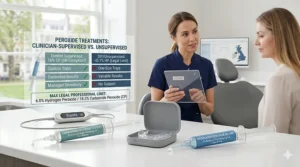
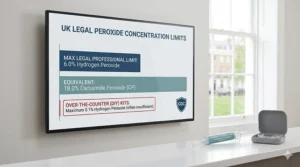
In the UK, teeth whitening regulations are particularly strict, with the EU Cosmetics Regulation limiting hydrogen peroxide concentrations to specific levels for consumer safety. Over-the-counter products cannot exceed 0.1% hydrogen peroxide, whilst professional treatments administered by dental practitioners can contain up to 6%. These regulations exist to protect your enamel and gums, but they also mean you need to navigate your options carefully.
This comprehensive guide examines carbamide peroxide vs hydrogen peroxide from every angle — their chemical composition, activation speed, wear times, and effectiveness. Whether you’re dealing with stubborn coffee stains, tobacco discolouration, or simply the natural yellowing that comes with age, you’ll discover which peroxide formulation suits your needs. We’ve also analysed seven top-rated products available on Amazon.co.uk, complete with honest pricing, specifications, and real UK customer feedback. By the end, you’ll know exactly which whitening agent delivers the results you’re after.
Quick Comparison Table
| Feature | Carbamide Peroxide | Hydrogen Peroxide |
|---|---|---|
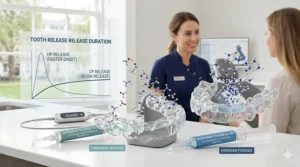
| Active Release | Slow (6-8 hours) | Fast (30-60 minutes) |
| Wear Time | 2-8 hours or overnight | 15-60 minutes |
| Sensitivity | Lower (gradual release) | Potentially higher |
| Best For | Sensitive teeth, overnight use | Quick results, short sessions |
| Typical Strength | 10-44% (UK: varies by use) | 3-35% (UK: max 6% professional) |
| Shelf Life | Longer | Shorter (degrades faster) |
| Equivalent Power | 30% CP ≈ 10% HP | Direct whitening agent |
| UK Availability | Widely available | Restricted concentrations |
💬 Just one click – help others make better buying decisions too! 😊
Top 7 Carbamide Peroxide vs Hydrogen Peroxide Products: Expert Analysis
1. Opalescence PF 16% Carbamide Peroxide Gel
The gold standard in professional at-home whitening, Opalescence PF 16% combines potassium nitrate and fluoride in their patented PF formula, minimising sensitivity whilst strengthening enamel during treatment. Each syringe contains sticky, viscous gel that adheres exceptionally well to custom trays, preventing wastage.
Key Specifications:
- Concentration: 16% carbamide peroxide (equivalent to ~5.5% hydrogen peroxide)
- Wear time: 2-4 hours daily or overnight
- Formula: Contains potassium nitrate, fluoride
Price Range: £35-£55 for 4 syringes (1.2ml each)
UK Customer Feedback: British buyers consistently praise the noticeable results within 6-8 applications, with minimal sensitivity reported. The mint flavour makes extended wear comfortable.
✅ Pros:
- Dentist-recommended formula trusted worldwide
- Minimal sensitivity due to PF protection
- Long-lasting results (up to 3 years with touch-ups)
❌ Cons:
- Requires custom trays for optimal results
- Higher price point than budget alternatives
2. MySweetSmile Teeth Whitening Powder (Peroxide-Free Alternative)
While not containing traditional peroxide, MySweetSmile Teeth Whitening Powder deserves mention as the UK’s best-selling whitening product. Winner of The Independent’s “Best Teeth Whitening Product” in both 2023 and 2024, this innovative powder uses pentasodium triphosphate to dissolve stains safely.
Key Specifications:
- Active ingredient: Pentasodium triphosphate (non-peroxide)
- Treatment: 2 minutes, twice weekly
- Supply: 6-month tub
Price Range: £24.99 per tub (Amazon.co.uk)
UK Customer Feedback: Over 1 million customers trust MySweetSmile, with particular appreciation from users over 40 who find peroxide-based products too harsh. Many report visible whitening within 2 weeks without sensitivity.
✅ Pros:
- Zero sensitivity or gum irritation
- Dermatest 5-Star Seal of Approval
- Safe for caps, crowns, and veneers
❌ Cons:
- Takes longer than high-concentration peroxide gels
- Not suitable for extremely stubborn stains
3. Expertwhite 35% Carbamide Peroxide Gel
For those seeking rapid results, Expertwhite 35% delivers professional-strength whitening at home. This high-concentration carbamide peroxide gel breaks down slowly, releasing approximately 12% hydrogen peroxide equivalent over 30-60 minutes.
Key Specifications:
- Concentration: 35% carbamide peroxide
- Wear time: 30 minutes per session
- Origin: USA-made, ships to UK
Price Range: £40-£65 for 8 syringes
UK Customer Feedback: Users report 2-3 shade improvement after just 3 applications, though some experience temporary sensitivity that subsides within 24 hours.
✅ Pros:
- Fast-acting formula for busy schedules
- Noticeable results within one week
- Thick gel consistency prevents slippage
❌ Cons:
- May cause sensitivity in first few uses
- Requires careful application to avoid gum contact
4. White Dental Beauty 6% Hydrogen Peroxide Gel
The strongest legally available hydrogen peroxide concentration in the UK for professional use, White Dental Beauty 6% features their patented NOVON® compound. This creates a pH jump into the alkaline range, enhancing perhydroxyl ion release for faster whitening.
Key Specifications:
- Concentration: 6% hydrogen peroxide (EU maximum professional strength)
- Wear time: 30-90 minutes daily
- Shelf life: 24+ months (2-24°C storage)
Price Range: £45-£70 for 10 x 1.2ml syringes
UK Customer Feedback: UK dental patients appreciate the pharmaceutical-grade quality, with many achieving 3-4 shade improvements in under two weeks when used under dental supervision.
✅ Pros:
- Maximum legal concentration for UK professional use
- Advanced NOVON® technology for faster results
- High water content prevents dehydration sensitivity
❌ Cons:
- Requires dental professional supervision legally
- Not suitable for under-18s
5. DRDENT Professional Teeth Whitening Strips (Hydrogen Peroxide)
These professional-grade strips offer convenient hydrogen peroxide whitening without custom trays. DRDENT strips include 21 treatments with integrated mouth opener for optimal placement.
Key Specifications:
- Active ingredient: Hydrogen peroxide (within UK 0.1% OTC limit)
- Treatment: 30 minutes per application
- Supply: 42 strips (21 treatments)
Price Range: £13.99-£18.99 (Amazon.co.uk)
UK Customer Feedback: British users love the convenience factor, noting visible whitening after 7-10 days. The non-slip grip technology keeps strips secure during wear.
✅ Pros:
- No trays required – ready to use
- Enamel-safe formulation
- Excellent value for 21 treatments
❌ Cons:
- Results slower than higher-concentration gels
- Some users report slight residue after removal
6. Pola Day 6% Hydrogen Peroxide Gel
From Australia’s leading whitening brand, Pola Day combines 6% hydrogen peroxide with a neutral pH formula for daytime whitening sessions. The gel’s high water content and neutral pH minimise sensitivity whilst delivering professional results.
Key Specifications:
- Concentration: 6% hydrogen peroxide
- Wear time: 30-45 minutes daily
- Formula: High water content, neutral pH
Price Range: £50-£75 for syringe pack
UK Customer Feedback: UK buyers particularly appreciate the refreshing mint taste and report less sensitivity compared to other 6% hydrogen peroxide products, likely due to the neutral pH formulation.
✅ Pros:
- Fast results with 30-45 minute wear time
- Neutral pH reduces sensitivity risk
- Delivers professional-level whitening at home
❌ Cons:
- Premium pricing
- Must be prescribed by dental professional in UK
7. Spotlight Oral Care Hydrogen Peroxide Whitening Strips
Dentist-formulated in Ireland, Spotlight Oral Care strips provide gentle hydrogen peroxide whitening suitable for sensitive teeth. The 14-day treatment includes specially formulated toothpaste to maintain results.
Key Specifications:
- Active ingredient: Hydrogen peroxide (compliant with EU regulations)
- Treatment: 30 minutes daily for 14 days
- Kit includes: 28 strips + whitening toothpaste
Price Range: £30-£42 (Amazon.co.uk)
UK Customer Feedback: Users praise the comprehensive approach, with the included toothpaste helping to maintain whitening results long-term. Particularly popular among those with existing sensitivity issues.
✅ Pros:
- Dentist-formulated for safety and efficacy
- Includes maintenance toothpaste
- Minimal sensitivity reported
❌ Cons:
- Results take full 14 days to maximise
- Higher cost than basic strips
✨ Don’t Miss These Exclusive Deals!
🔍 Take your whitening routine to the next level with these carefully selected products. Click on any highlighted item to check current pricing and availability on Amazon.co.uk. These treatments will help you achieve authentic results your dentist will notice!
What Is Carbamide Peroxide vs Hydrogen Peroxide?
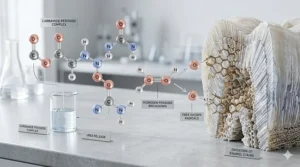
At their core, both agents serve as oxidising compounds that break down stain molecules through oxygen release. However, their chemical structures and release mechanisms differ significantly, creating distinct user experiences and results timelines.
Hydrogen peroxide (H₂O₂) is the direct bleaching agent — a simple molecule consisting of two hydrogen atoms bonded to two oxygen atoms. When applied to teeth, it immediately begins breaking down, releasing oxygen molecules that penetrate enamel and dentin layers. These oxygen ions target chromophore molecules (the chemical structures responsible for tooth discolouration), breaking their bonds and rendering them colourless. The process happens rapidly, with hydrogen peroxide releasing most of its whitening power within the first 30-60 minutes of application.
Professional dental offices frequently use hydrogen peroxide concentrations between 15-35% (up to 6% in the UK post-Brexit regulations), delivering dramatic results in single appointments. According to research published in the Journal of the American Dental Association, hydrogen peroxide’s immediate action makes it ideal for power bleaching sessions and accelerated whitening treatments.
Carbamide peroxide is essentially hydrogen peroxide combined with urea (carbamide). This compound breaks down gradually when exposed to water in your mouth, releasing hydrogen peroxide over an extended period. A 30% carbamide peroxide solution contains approximately 10% hydrogen peroxide by weight — the remaining composition consists of urea, which itself provides additional benefits by raising pH levels and reducing bacterial activity.
The breakdown process spans 6-8 hours, releasing about 50% of the whitening agent in the first two hours and continuing the release throughout the wear period. This extended-release mechanism explains why carbamide peroxide suits overnight whitening treatments and longer wear times. The National Center for Biotechnology Information notes that 37% carbamide peroxide can achieve similar results to 35% hydrogen peroxide when given sufficient treatment sessions.
UK Regulatory Context: Under the EU Cosmetics Regulation (which the UK continues to follow), products containing or releasing up to 6% hydrogen peroxide can only be used by registered dental professionals. Over-the-counter products available to consumers must not exceed 0.1% hydrogen peroxide. The General Dental Council enforces these restrictions rigorously, with violations constituting criminal offences. This regulatory framework exists to prevent chemical burns, enamel damage, and pulp necrosis — complications that recent BBC investigations exposed in illegal whitening operations using concentrations up to 53%.
Chemical Breakdown: How Each Peroxide Works
The whitening mechanism involves oxidation — a chemical process where oxygen molecules disrupt the molecular bonds holding stain particles together. Think of it as demolishing a brick wall: the oxygen acts as the wrecking ball, breaking apart the structure until individual bricks (unstained molecules) remain.
Hydrogen Peroxide Oxidation Process:
When hydrogen peroxide contacts saliva and tooth surface moisture, it immediately decomposes into water (H₂O) and highly reactive oxygen radicals. These radicals possess unpaired electrons, making them chemically unstable and eager to bond with other molecules. Upon encountering chromophore molecules embedded in tooth enamel — compounds from coffee, tea, red wine, tobacco, and food dyes — the oxygen radicals attack their double bonds.
This reaction breaks long-chain chromophore molecules into shorter, simpler molecules that reflect light differently. Dark, yellow-tinted molecules transform into colourless, light-reflecting structures. The entire process occurs within minutes, which explains hydrogen peroxide’s rapid visible results but also its potential for increased sensitivity. The swift oxygen release can temporarily open dentinal tubules (microscopic channels in teeth), exposing nerve endings.
Carbamide Peroxide Breakdown Cycle:
Carbamide peroxide follows a two-stage release process. First, water in your saliva triggers the compound to separate into urea and hydrogen peroxide. This initial breakdown happens relatively quickly, but the hydrogen peroxide release continues gradually over hours.
The urea component itself contributes therapeutically — it elevates pH levels in the mouth, creating a more alkaline environment. This pH shift serves dual purposes: it enhances the peroxide’s oxidising capacity and creates an inhospitable environment for acid-producing bacteria. Some research suggests this alkaline environment may reduce the risk of post-treatment sensitivity compared to straight hydrogen peroxide applications.
The slower oxygen release means gentler penetration of enamel, with less dramatic opening of dentinal tubules. This gradual approach typically causes less immediate sensitivity, though the total oxidation achieved over a full wear cycle can match that of a quick hydrogen peroxide session.
Molecular Efficiency: Whilst a 30% carbamide peroxide gel contains 10% hydrogen peroxide equivalent, the extended release often makes it more comfortable for sensitive individuals. A clinical evaluation published in the British Dental Journal found that patients using 20% carbamide peroxide reported similar final whitening results to those using 7.5% hydrogen peroxide, with modestly lower sensitivity ratings during treatment.
Speed of Results: Fast vs Gradual Whitening
Time investment significantly influences which peroxide type suits your lifestyle. Whether you need rapid results for an upcoming event or prefer gradual brightening over weeks, understanding each agent’s timeline helps set realistic expectations.
Hydrogen Peroxide Timeline:
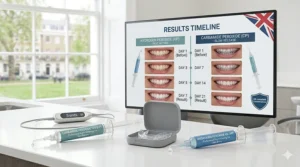
With hydrogen peroxide, you’re looking at visible results within 3-7 days for most formulations. Professional in-office treatments using 15-35% concentrations (6% maximum in UK professional settings) can lighten teeth 2-3 shades in a single 45-minute appointment. The immediate oxygen release means stain molecules begin breaking down the moment the gel contacts your teeth.
At-home hydrogen peroxide products (within the UK’s 0.1% OTC limit) work more gradually but still deliver faster results than equivalent carbamide peroxide concentrations. Users typically notice initial brightening after 2-3 applications, with optimal results appearing around the 10-14 day mark when used daily.
The speed advantage comes with trade-offs. Because hydrogen peroxide works so quickly, any existing enamel imperfections, thin spots, or exposed dentin become more apparent faster. This rapid action also means higher likelihood of temporary sensitivity, particularly in the first few applications.
Carbamide Peroxide Timeline:
Carbamide peroxide operates on a more leisurely schedule. The 50% release in the first two hours provides initial stain lifting, but the extended 6-8 hour release period means optimal results typically appear after 2-3 weeks of consistent use. For overnight applications (using 10-16% formulations), most users report noticeable whitening after 10-14 nights of wear.
However, this gradual approach offers advantages beyond comfort. The extended contact time allows the whitening agent to penetrate deeper stains more thoroughly. Coffee enthusiasts and long-term smokers often find carbamide peroxide more effective at addressing deeply embedded discolouration because the prolonged exposure gives oxygen molecules more opportunities to break down stubborn chromophores.
A systematic review in the Journal of Cosmetic Dentistry noted that after three bleaching sessions, 37% carbamide peroxide achieved comparable results to 35% hydrogen peroxide. The key difference? Hydrogen peroxide reached those results faster, whilst carbamide peroxide users reported 30% less sensitivity during treatment.
Real-World Scheduling:
- Hydrogen peroxide suits: Short-wear sessions (15-60 minutes), last-minute whitening needs, people who struggle with overnight tray wear, those seeking quick confidence boosts before photos or events
- Carbamide peroxide suits: Overnight whitening routines, gradual improvement preferences, sensitive teeth management, deeper stain removal from long-term consumption of staining substances
Sensitivity Comparison: Managing Discomfort
Tooth sensitivity remains the most commonly reported side effect of any bleaching treatment, affecting roughly 40-70% of users to varying degrees. Understanding how each peroxide type influences sensitivity helps you choose the most comfortable option whilst still achieving your whitening goals.
Why Whitening Causes Sensitivity:
All peroxide-based whitening works by penetrating tooth enamel to reach the dentin layer beneath. This penetration temporarily opens dentinal tubules — microscopic channels connecting to the tooth’s nerve centre. When these tubules open, stimuli (hot, cold, sweet, acidic) reach nerve endings more easily, creating that characteristic zingy sensation.
Additionally, the oxidation process temporarily dehydrates teeth, making them more porous and reactive. This dehydration typically resolves within 24-48 hours post-treatment as saliva remineralises the enamel surface. However, the interim period can feel uncomfortable for sensitive individuals.
Hydrogen Peroxide and Sensitivity:
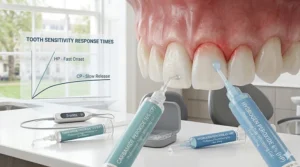
The rapid oxygen release from hydrogen peroxide means faster tubule opening and more dramatic dehydration in a shorter timeframe. Research published in the Journal of Endodontics found that 35% hydrogen peroxide treatments produced immediate sensitivity spikes in 55% of participants, though these typically resolved within 24 hours.
The concentrated, quick-acting nature means nerve endings experience more intense but shorter-duration exposure. Most users describe hydrogen peroxide sensitivity as sharp and immediate during or shortly after treatment, subsiding relatively quickly once the gel is removed and teeth rehydrate.
Carbamide Peroxide and Sensitivity:
Carbamide peroxide’s gradual release creates more sustained but generally milder sensitivity. The slower oxygen generation means dentinal tubules open progressively rather than all at once. Additionally, the urea component’s alkaline effect may help buffer the acidic byproducts of peroxide breakdown, potentially reducing sensitivity triggers.
Clinical trials comparing equivalent concentrations found carbamide peroxide produced lower sensitivity scores during treatment, though the extended wear time meant sensitivity persisted longer overall. Think of it as the difference between a sharp pinch versus a dull ache — carbamide peroxide users report less acute pain but more prolonged mild discomfort.
UK Sensitivity Management Strategies:
- Desensitising Toothpaste: Products containing potassium nitrate or strontium chloride (like Sensodyne) block tubules when used 2 weeks before starting whitening treatments
- Fluoride Applications: Post-treatment fluoride gel helps remineralise enamel and reduce tubule exposure
- Reduced Frequency: Using treatments every other day rather than daily gives teeth recovery time
- Lower Concentrations: UK-compliant products naturally contain gentler concentrations than some international alternatives
- Professional Guidance: Consulting a GDC-registered dentist ensures proper concentration selection and application technique
The NHS recommends anyone experiencing persistent sensitivity beyond 48 hours to discontinue use and seek dental evaluation, as prolonged sensitivity may indicate underlying issues requiring professional treatment.
Wear Time Requirements: Daily Routine Impact
Your daily schedule significantly influences which whitening agent integrates smoothly into your lifestyle. Matching product wear time to your routine prevents inconsistent use — the primary reason whitening treatments fail to deliver promised results.
Hydrogen Peroxide Wear Schedules:
Professional hydrogen peroxide concentrations (3-6% in UK professional settings) typically require 15-60 minute applications. This short wear time makes hydrogen peroxide ideal for incorporating into existing routines:
- Morning routine: Apply whilst showering, getting dressed, or preparing breakfast
- Evening routine: Use whilst cooking dinner or catching up on social media
- Lunch break: Quick 30-minute session at your desk (if working from home)
The brief application window means less disruption to speech and eating schedules. You’re unlikely to need to skip social events or delay meals waiting for treatment to complete. However, this convenience requires discipline — missing even a few days can slow progress noticeably because the fast-acting formula provides minimal residual effect between applications.
Lower-concentration hydrogen peroxide products (0.1% OTC UK limit) may require slightly longer wear times (45-60 minutes) to compensate for the reduced strength, but still fall well within the “convenient” category compared to overnight options.
Carbamide Peroxide Wear Schedules:
Carbamide peroxide formulations span a wider wear time spectrum depending on concentration:
- 10-16% concentrations: 2-4 hours daily or overnight (8-10 hours)
- 20-35% concentrations: 30 minutes to 2 hours daily
- 44% concentration: 15-30 minutes daily
The overnight capability represents carbamide peroxide’s standout advantage. For people who struggle with daytime compliance, loading trays before bed and wearing them whilst sleeping eliminates the need to carve out dedicated treatment time. You’re simply making your sleep hours do double duty.
Extended daytime wear (2-4 hours) suits those with flexible work-from-home arrangements but may feel awkward for office workers or anyone requiring frequent verbal communication. Trays can slightly affect speech clarity, and the gel’s presence makes eating or drinking impossible during treatment.
Lifestyle Matching Guide:
- Busy professionals: Hydrogen peroxide (quick sessions fit tight schedules)
- Night owls who forget daytime routines: Overnight carbamide peroxide
- Variable schedules: Carbamide peroxide 20-35% (flexible 30 min-2 hour options)
- Highly social calendars: Hydrogen peroxide (minimal interference with activities)
- Methodical routine-followers: Either option works with consistent use
Top 7 Products Comparison: Full Specifications Table
| Product | Type | Concentration | Wear Time | Price (£) | Sessions | UK Availability | Best For |
|---|---|---|---|---|---|---|---|
| Opalescence PF 16% | Carbamide | 16% CP | 2-4 hrs/overnight | 35-55 | 4 syringes | Amazon.co.uk, dental suppliers | Overnight whitening, sensitive teeth |
| MySweetSmile Powder | Non-peroxide | Pentasodium triphosphate | 2 min, 2x/week | 24.99 | 6 months | Amazon.co.uk | Gentle whitening, peroxide-intolerant |
| Expertwhite 35% | Carbamide | 35% CP | 30 minutes | 40-65 | 8 syringes | Ships to UK | Fast results, experienced users |
| White Dental Beauty 6% | Hydrogen | 6% HP | 30-90 minutes | 45-70 | 10 syringes | Professional only | Maximum UK legal strength |
| DRDENT Strips | Hydrogen | ≤0.1% HP | 30 minutes | 13.99-18.99 | 21 treatments | Amazon.co.uk | Convenience, no trays |
| Pola Day 6% | Hydrogen | 6% HP | 30-45 minutes | 50-75 | Varies | Professional only | Daytime professional whitening |
| Spotlight Oral Care | Hydrogen | EU-compliant | 30 minutes daily | 30-42 | 14 days | Amazon.co.uk | Complete system, sensitive teeth |
UK Legal Regulations: What You Must Know
The legal landscape surrounding teeth whitening in the UK operates under stringent EU Cosmetics Regulations, designed to protect consumers from dangerous concentrations whilst still allowing safe, effective treatments.
The 6% Rule:
Under the Cosmetic Products Enforcement Regulations 2013 (continuing post-Brexit), products containing or releasing more than 6% hydrogen peroxide are prohibited for cosmetic purposes. This represents the maximum concentration legally permitted in the UK, and only when administered by or under the direct supervision of a GDC-registered dental professional.
The 6% threshold applies to both hydrogen peroxide and carbamide peroxide (converted to hydrogen peroxide equivalent). For example, an 18% carbamide peroxide product releases approximately 6% hydrogen peroxide, placing it at the legal maximum for professional use.
The 0.1% Consumer Threshold:
Over-the-counter products sold directly to consumers without dental involvement cannot exceed 0.1% hydrogen peroxide. This dramatically limits the effectiveness of readily available shop-bought whitening products, explaining why supermarket whitening toothpastes deliver modest results compared to dental-supervised treatments.
Most effective OTC whitening strips and gels available on Amazon.co.uk operate at or below this 0.1% threshold. Products marketed within the UK claiming higher concentrations either require professional dispensing or operate illegally.
Age Restrictions:
Products containing between 0.1-6% hydrogen peroxide cannot legally be used on anyone under 18 years of age, except when treating or preventing disease (not applicable to cosmetic whitening). The GDC rigorously enforces this restriction, recognising that developing teeth and younger enamel require additional protection.
Professional-First-Use Requirement:
For products containing 0.1-6% hydrogen peroxide, the first application must be performed by a dental practitioner. After this initial session and clinical examination confirming suitability, the patient may continue at-home treatments with dentist-provided products. This requirement ensures proper diagnosis, technique instruction, and monitoring for adverse effects.
Illegal Whitening Operations:
A 2025 BBC investigation exposed widespread illegal whitening services operating through social media and beauty salons, using gels containing up to 53% hydrogen peroxide — nine times the legal professional limit. These operations risk:
- Unlimited fines under Trading Standards enforcement
- Criminal records for unlawful dental practice
- Severe patient harm including chemical burns, enamel erosion, and pulp necrosis
The GDC actively prosecutes illegal practitioners, with recent convictions resulting in substantial fines and business closures. Members of the public should report suspected illegal whitening to Citizens Advice or local Trading Standards.
International Product Caution:
Many international websites ship higher-concentration products (20-44% carbamide peroxide, 15-35% hydrogen peroxide) to UK addresses. Whilst customs may not routinely intercept these shipments, using them carries risks:
- No UK regulatory oversight of product safety
- Potential enamel damage from unmonitored high concentrations
- No recourse for adverse effects or product failures
- Supporting unregulated markets
UK dental professionals recommend using only products complying with domestic regulations to ensure safety and legal recourse if problems arise.
Cost-Effectiveness Analysis: Value for Money
Understanding the true cost of whitening treatments extends beyond initial purchase price to include longevity, results quality, and potential additional expenses for managing side effects or touch-ups.
Budget Tier (£10-£30):
Products in this range typically include OTC whitening strips, low-concentration gels, and non-peroxide alternatives like MySweetSmile. The DRDENT Professional Whitening Strips (£13.99-£18.99) and MySweetSmile Powder (£24.99) exemplify quality budget options.
Value proposition: Excellent for maintenance whitening, first-time users testing tolerance, or those satisfied with gradual 1-2 shade improvements. These products spread cost over weeks or months of treatments, making them economical for long-term use.
Limitations: Slower results, more applications needed to reach desired brightness, may not address deep stains effectively.
Mid-Range (£30-£55):
This tier captures professional-grade at-home systems like Opalescence PF 16% (£35-55) and comprehensive kits like Spotlight Oral Care (£30-42). These balance affordability with clinical-grade formulations.
Value proposition: Dentist-recommended quality at a fraction of in-office treatment costs (which run £300-800 in the UK). One treatment cycle often delivers results lasting 12-18 months with proper maintenance.
Optimal use: Best for committed users seeking noticeable whitening (3-5 shades) willing to invest in proven formulations. The higher concentration means fewer applications needed to reach goals, potentially making mid-range products more cost-effective per shade improvement than budget options.
Premium Tier (£50-£75+):
Professional-dispensed products like White Dental Beauty 6% (£45-70) and Pola Day 6% (£50-75) occupy this category. These require dental consultation but deliver maximum legally-permitted concentrations.
Value proposition: Fastest, most dramatic results available for home use in the UK. Professional guidance optimises safety and effectiveness, reducing waste from trial-and-error with OTC products.
Total ownership cost: Factor in the required dental consultation (£50-150), but recognise this includes oral health examination, custom tray fabrication (if needed), and professional oversight throughout treatment.
Long-Term Cost Comparison:
Calculating cost per shade improvement provides clarity:
- Budget products: £5-10 per shade (over longer timeline)
- Mid-range products: £7-11 per shade (moderate timeline)
- Premium products: £12-18 per shade (fastest timeline)
- Professional in-office: £100-200 per shade (single session)
For sustained whitening maintenance, budget products become increasingly cost-effective after achieving initial results with higher-concentration treatments.
How to Choose: Personalised Selection Guide
Selecting between carbamide peroxide vs hydrogen peroxide requires honest assessment of your priorities, sensitivity threshold, and lifestyle constraints. This decision tree guides you to the optimal choice:
Step 1: Assess Your Sensitivity
High sensitivity to hot/cold/sweet stimuli: → Start with carbamide peroxide 10-16% or non-peroxide alternatives → Consider products with added potassium nitrate (like Opalescence PF) → Use desensitising toothpaste 2 weeks before starting treatment
Moderate sensitivity: → Either option works; carbamide peroxide might be more comfortable → Start with lower concentrations and increase if tolerated
Low/no sensitivity:
→ Hydrogen peroxide offers faster results without extended wear → Can confidently use higher-strength carbamide peroxide (20-35%)
Step 2: Evaluate Your Schedule
Time-poor schedule (irregular hours, unpredictable days): → Hydrogen peroxide (15-60 minute sessions fit gaps easily) → Or overnight carbamide peroxide (zero daytime commitment)
Consistent routine (predictable bedtime, morning ritual): → Either option works well → Carbamide peroxide overnight maximises results with zero active time
Work-from-home flexibility: → Carbamide peroxide 2-4 hour daytime sessions work brilliantly → Can pause work calls during hydrogen peroxide quick sessions
Step 3: Define Your Timeline Goals
Event-driven whitening (wedding, photo shoot, reunion within 1-2 weeks): → Hydrogen peroxide delivers fastest results → Or higher-concentration carbamide peroxide (35%) with daily use
Gradual improvement preference (comfortable timeline over 1-2 months): → Carbamide peroxide provides steady, controlled whitening → Lower concentrations (10-16%) minimise sensitivity whilst delivering results
Ongoing maintenance (already whitened, maintaining brightness): → Low-concentration carbamide peroxide monthly touch-ups → Or non-peroxide products like MySweetSmile for regular use
Step 4: Consider Stain Type
Surface stains (coffee, tea, red wine, fresh tobacco stains): → Either peroxide type works effectively → Even OTC concentrations can address recent surface discolouration
Deep, long-established stains (decades of smoking, tetracycline staining): → Carbamide peroxide’s extended contact time penetrates deeper → Professional-strength required (dental supervision essential for tetracycline)
Age-related yellowing: → Both options effective; choose based on sensitivity and schedule preference → Expect modest results (2-3 shades) as intrinsic yellowing challenges all peroxides
Step 5: Budget Consideration
£10-30 budget: → OTC hydrogen peroxide strips or non-peroxide powder → Set realistic expectations (1-2 shades over 2-4 weeks)
£30-55 budget:
→ Quality carbamide peroxide systems (Opalescence 16%) → Delivers 3-4 shade improvement with proper use
£50+ budget: → Professional-dispensed 6% hydrogen peroxide → Includes dental consultation ensuring safety and optimal results
Step 6: Legal Compliance Check
Can access a GDC-registered dentist: → Unlocks professional-strength options (up to 6% HP equivalent) → Ensures legal compliance and safety oversight
Self-treatment only: → Limited to 0.1% OTC products within UK regulations → Consider non-peroxide alternatives for better results within legal limits
Application Techniques: Maximising Results
Proper application technique dramatically influences both results quality and comfort levels. Following these evidence-based practices ensures you extract maximum value from whichever peroxide type you choose.
Pre-Treatment Preparation (24 Hours Before):
- Professional cleaning: Plaque and tartar block peroxide penetration. Schedule a hygienist appointment before starting whitening for optimal results.
- Dental examination: Ensure no cavities, cracked fillings, or receding gums that could cause severe sensitivity or uneven whitening. UK regulations mandate this for 0.1-6% products.
- Desensitising protocol: Begin using potassium nitrate toothpaste (Sensodyne, Colgate Sensitive) twice daily. This builds protective barriers over exposed tubules.
- Avoid staining substances: Stop consuming coffee, tea, red wine, and tobacco 24 hours before first treatment. Clean enamel absorbs peroxide more effectively.
Hydrogen Peroxide Application:
- Brush and floss teeth before application, then rinse thoroughly. Dry teeth with tissue — wet surfaces dilute peroxide concentration.
- Apply thin layer: Use approximately 0.5ml gel per tray compartment (about 1/3 of a pea-sized amount per tooth). Excess gel wastes product and increases gum irritation risk.
- Tray insertion: Gently press tray against teeth to spread gel evenly. Wipe away any overflow onto gums with clean tissue immediately.
- Time precisely: Set a timer for the recommended duration (15-60 minutes). Over-wearing doesn’t enhance results but increases sensitivity risk.
- Removal protocol: Remove trays gently. Rinse mouth thoroughly with lukewarm water. Do not swallow rinsed gel. Brush teeth with fluoride toothpaste to begin remineralisation.
- Tray cleaning: Rinse trays with cool water immediately. Never use hot water (warps plastic). Store in ventilated case to prevent bacterial growth.
Carbamide Peroxide Application:
- Follow steps 1-2 above (brush, dry teeth, apply thin layer).
- Load tray conservatively: Carbamide peroxide’s extended wear time means less is more. Overfilling increases swallowing risk during overnight use.
- Bedtime routine (for overnight application): Apply trays 30 minutes before sleep. This allows gel to settle and saliva production to slow, reducing swallowing impulse.
- Morning removal: Gently remove trays upon waking. Rinse mouth thoroughly. Many users find morning breath less pleasant due to overnight gel contact — expect this normal occurrence.
- Daytime extended wear: If using 2-4 hour protocol, avoid eating or drinking during treatment. Choose times when verbal communication needs are minimal.
Common Application Mistakes:
❌ Overloading trays: Wastes expensive product and causes gum irritation
❌ Wearing longer than recommended: Increases sensitivity without improving results
❌ Inconsistent application: Missing days significantly slows progress
❌ Using on damaged teeth: Requires professional evaluation first to prevent severe pain
❌ Drinking staining beverages immediately after: Dehydrated enamel absorbs stains more readily for 24 hours post-treatment
Optimisation Tips:
✅ Take “before” photos in identical lighting conditions for accurate progress tracking
✅ Use shade guides (included with many products) to measure improvement objectively
✅ Schedule treatments at the same time daily to build habit consistency
✅ Keep emergency ibuprofen and sensitivity toothpaste accessible for discomfort management
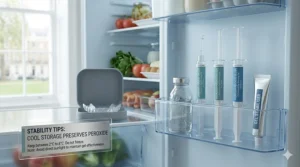
✅ Store gels in refrigerator (not freezer) to extend shelf life by 6-12 months
Maintenance & Touch-Ups: Long-Term Strategy
Achieving your desired shade represents only half the whitening journey — maintaining that brightness requires strategic planning and disciplined habits.
Why Teeth Re-Stain:
Enamel naturally absorbs chromophores from consumed substances. Coffee, tea, red wine, curry, berries, and tobacco contain highly pigmented molecules that penetrate enamel’s porous surface. Additionally, natural ageing thins enamel, revealing more of the yellowish dentin beneath.
No whitening treatment permanently prevents re-staining. The goal instead involves managing stain accumulation through lifestyle modifications and periodic touch-ups.
Initial Maintenance Period (First 2 Weeks Post-Treatment):
The “white diet” maximises and preserves newly achieved brightness. Teeth remain slightly porous and dehydrated for 10-14 days following final treatment, making them hyper-absorbent during this window.
Avoid entirely for 14 days:
- Coffee, black tea, red wine
- Coloured sodas (Coke, Dr Pepper, etc.)
- Berries, tomato sauce, curry, soy sauce
- Tobacco products
- Heavily pigmented lip colours (they transfer to teeth)
Safe to consume:
- White wine, clear spirits
- White fish, chicken, turkey
- White cheese, yoghurt, milk
- Cauliflower, mushrooms, white onions
- White pasta, rice, potatoes
- Bananas, pears (avoid skins)
Long-Term Stain Management:
- Straw method: Drink staining beverages through straws positioned beyond front teeth to minimise enamel contact.
- Rinse immediately: Swish water vigorously after consuming staining foods/drinks. Waiting even 30 minutes allows chromophores to bond with enamel.
- Whitening toothpaste: Use 2-3 times weekly (not daily — abrasiveness risks enamel damage). Brands like Opalescence Whitening Toothpaste or MySweetSmile maintain brightness between professional treatments.
- Professional cleanings: Schedule hygienist appointments every 4-6 months. Professional scaling removes surface stains before they penetrate deeply.
Touch-Up Schedule:
After 6 months: Most users notice slight yellowing as everyday stain exposure accumulates. Single touch-up session (one night for carbamide peroxide, 2-3 days for hydrogen peroxide) restores brightness.
After 12-18 months: More noticeable dulling occurs, requiring 3-5 day touch-up cycle. This represents normal maintenance for active coffee/tea drinkers.
After 24+ months: Full retreatment cycle may be needed if lifestyle includes heavy staining substance exposure or if initial results have faded significantly.
Product Selection for Maintenance:
Original products work best for touch-ups — switching formulations can create uneven results. Keep remaining syringes refrigerated (clearly labelled with expiration dates).
For ongoing maintenance, some users prefer gentler non-peroxide options like MySweetSmile Powder between annual peroxide treatments to prevent heavy stain buildup.
Safety Considerations: Protecting Your Oral Health
Whilst both peroxide types boast strong safety profiles when used correctly, understanding potential risks ensures you whitening journey enhances rather than compromises oral health.
Enamel Safety:
Contrary to outdated beliefs, properly formulated peroxide gels do not damage enamel structure. Research published in the British Dental Journal confirmed that concentrations up to 6% hydrogen peroxide cause no permanent enamel harm when used as directed. The temporary porosity that develops during treatment reverses within 24-48 hours as remineralisation occurs.
However, overuse creates cumulative effects. Using high-concentration gels daily for months (beyond recommended treatment cycles) can weaken enamel progressively. Always follow manufacturer protocols — more is not better.
Gum Protection:
Soft tissue (gums, inner cheeks, tongue) reacts more sensitively to peroxide than enamel. Contact causes temporary blanching (white patches) and can progress to chemical burns if exposure continues.
Prevention methods:
- Apply only to tray tooth compartments (not edges touching gums)
- Wipe away overflow immediately with tissue
- Consider using barrier gels or dental dam products (available from dentists)
- Stop treatment if gums develop persistent soreness or white patches
Pregnancy and Breastfeeding:
The NHS advises avoiding all elective dental procedures, including whitening, during pregnancy and breastfeeding. Whilst no definitive evidence proves peroxide harm to developing foetuses or nursing infants, insufficient research exists to guarantee safety. Postpone whitening until after breastfeeding concludes.
Pre-Existing Dental Work:
Peroxide does not whiten artificial materials — crowns, veneers, bonding, and fillings remain their original shade. Whitening natural teeth could create noticeable colour mismatches requiring replacement of dental work to match your new brighter smile. Discuss this with your dentist before beginning treatment to budget appropriately.
Medical Conditions Requiring Caution:
Consult your GP or dentist before whitening if you have:
- Active periodontal disease or gingivitis
- Untreated cavities or exposed roots
- Temporomandibular joint (TMJ) disorders (tray wearing may aggravate)
- Extreme sensitivity (may indicate underlying issues needing treatment first)
- Oral cancer history (requires oncologist clearance)
Emergency Warning Signs:
Seek immediate dental care if you experience:
- Severe pain persisting beyond 48 hours post-treatment
- Visible white patches on gums that don’t resolve within 24 hours
- Bleeding gums during or after treatment
- Intense throbbing suggesting pulp inflammation
- Tooth chipping or cracking
Product Expiration:
Peroxide gels degrade over time, losing potency and potentially forming harmful breakdown products. Never use products past their expiration date, regardless of how they were stored. Refrigeration extends shelf life but doesn’t prevent eventual degradation.
Signs of degraded gel:
- Significant colour change (yellowing or darkening)
- Unusual odour (beyond typical peroxide smell)
- Separation or crystallisation
- Bubbling or excessive fizzing when opened
FAQs: Your Questions Answered
❓ How long do carbamide peroxide vs hydrogen peroxide results last?
❓ Can I use carbamide peroxide and hydrogen peroxide together?
❓ Which peroxide type works better for sensitive teeth?
❓ Are higher concentrations always more effective?
❓ Can I whiten if I have dental crowns or veneers?
Conclusion: Making Your Decision
Choosing between carbamide peroxide vs hydrogen peroxide ultimately depends on your unique balance of timeline flexibility, sensitivity tolerance, and lifestyle constraints. Both agents deliver clinically proven whitening results when used correctly — the question isn’t which works, but which works best for you.
If rapid results for an upcoming event drive your decision, hydrogen peroxide’s fast-acting formula delivers visible brightness within days, fitting seamlessly into even the most packed schedules. Its short 15-60 minute wear time requires minimal disruption, making it ideal for busy professionals, social butterflies, or anyone who struggles with extended tray wear.
Conversely, if sensitivity concerns take priority or you prefer gradual, controlled whitening, carbamide peroxide’s extended-release mechanism provides gentler oxygen delivery. The ability to wear trays overnight transforms sleep hours into productive whitening time, eliminating the need to carve dedicated sessions from already full days.
For UK residents specifically, navigating legal concentration limits requires careful product selection. The 0.1% OTC threshold severely limits shop-bought effectiveness, making professional consultation worthwhile for anyone seeking noticeable results (3+ shades). The £50-150 investment in dental guidance unlocks access to 6% formulations delivering results comparable to the international products advertised online, whilst ensuring legal compliance and safety oversight.
Budget considerations shouldn’t be overlooked either. Products like the £24.99 MySweetSmile Powder prove that effective whitening needn’t cost hundreds — though setting realistic expectations about gradual timeline and modest shade improvements prevents disappointment. Meanwhile, the £35-55 Opalescence PF 16% represents the sweet spot of professional quality meeting reasonable pricing for committed at-home users.
Remember: consistency trumps concentration. A 10% carbamide peroxide gel used religiously for 14 nights outperforms a 35% gel used sporadically. Choose the option that aligns with your actual behaviour patterns, not idealised intentions.
Your smile transformation journey begins with honest self-assessment. Evaluate your sensitivity history, schedule realities, budget constraints, and timeline goals. Match these factors to the products reviewed in this guide. And crucially, stay within UK legal frameworks — the regulations exist to protect your health, not restrict your options.
Whether you choose hydrogen peroxide’s speed or carbamide peroxide’s gentleness, a brighter, more confident smile awaits. Take that first step today.
Recommended for You
- 7 Strongest Teeth Whitening Gels UK – 2026
- 7 Best Custom Teeth Whitening Trays UK 2026
- 7 Best Teeth Whitening Trays UK 2026
Disclaimer: This article contains affiliate links. If you purchase products through these links, we may earn a small commission at no additional cost to you. Prices shown are approximate and may vary. All information provided is for educational purposes only and does not constitute medical advice. Consult a GDC-registered dental professional before beginning any teeth whitening treatment.
✨ Found this helpful? Share it with your mates! 💬🤗
