
In This Article
Finding an electric toothbrush for sensitive receding gums shouldn’t feel like a gamble every time you stand in the toothpaste aisle wondering which box is lying to you. Receding gums are unforgiving — once the tissue pulls back and exposes the root, it doesn’t grow back, and a brush that’s too aggressive can quietly make things worse every single morning without you noticing until your dentist points it out. That’s the frustrating bit: the damage is silent, cumulative, and almost always caused by the very habit meant to protect you.

An electric toothbrush for sensitive receding gums is a powered brush built with softer bristle technology, a dedicated low-intensity cleaning mode, and — ideally — a pressure sensor that intervenes before you scrub too hard. The goal isn’t just “gentle for gentleness’s sake”; it’s removing plaque effectively along a vulnerable gumline without the scrubbing motion that caused the recession in the first place.
Below, we’ve researched seven real, currently available models spanning budget, mid-range and premium price points, each one genuinely built around sensitivity rather than just badge-slapped with the word. We’ll walk through the specs that actually matter, translate them into what you’ll feel each morning, and be upfront about where the aggregated review sentiment is genuinely positive versus where it’s mixed. As the NHS explains, gum disease and recession are driven by plaque build-up and, very often, by brushing technique — which makes the brush you choose a legitimately clinical decision, not just a shopping one.
Quick Comparison Table
| Product | Type | Sensitivity Feature | Best For |
|---|---|---|---|
| Oral-B Smart 4 4000 | Rotating-oscillating | Sensitive mode + rear pressure light | Budget buyers new to gum care |
| SURI Sonic Toothbrush 2.0 | Sonic | Medium-soft bristles + TouchSense sensor | Ultra-gentle, sustainable pick |
| Philips Sonicare ProtectiveClean 6100 | Sonic | Sensitive mode + light-ring pressure sensor | Best all-round value |
| Oral-B iO Series 5 | Rotating-oscillating | Sensitive + Super Sensitive modes | Tech-minded gum-recession sufferers |
| Philips Sonicare DiamondClean Smart 9500 | Sonic | Gum Health mode + app coaching | Premium sonic experience |
| Oral-B iO Series 9 | Rotating-oscillating | 7 modes incl. Super Sensitive + 3D display | Buyers who want every safeguard |
| Philips Sonicare DiamondClean 9900 Prestige | Sonic | SenseIQ auto-adjusting intensity | Most sensitive gums, no budget cap |
Looking at the spread above, the split between rotating and sonic isn’t just brand loyalty — it genuinely changes how the brush feels against an exposed root. Budget-conscious readers can get a legitimately gum-safe clean from the Oral-B Smart 4 4000 for a fraction of the flagship price, while anyone who wants the brush to actively police their pressure in real time will want to look toward the Philips Sonicare DiamondClean 9900 Prestige‘s auto-adjusting SenseIQ system. We’ll unpack exactly why in the full breakdown below.
💬 Just one click — help others make better buying decisions too!😊
Top 7 Electric Toothbrushes for Sensitive Receding Gums: Expert Analysis
1. Oral-B Smart 4 4000 — cheapest brush with a genuine sensitive mode
The standout here is value: this is one of the most affordable Oral-B models that still bothers to include a real Sensitive cleaning mode rather than just a single generic setting. Under the hood you get three cleaning modes (Daily Clean, Sensitive and Whitening), a rear pressure sensor that flashes when you push too hard, a two-minute timer, and roughly a fortnight of battery life between charges. In practice, the Sensitive mode noticeably drops the oscillation-rotation speed, which matters a great deal on a round head that’s already designed to hug each tooth individually rather than drag sideways across the gumline.
Based on the spec comparison against pricier Oral-B siblings, this is genuinely aimed at first-time electric-brush buyers managing early-stage sensitivity rather than advanced recession — it lacks the dedicated Gum Care mode found on the Smart 5 and above. Reviewers consistently note that the pressure light is easy to miss out of the corner of your eye compared with the full light-ring systems on costlier models, so it rewards attentiveness rather than nagging you. Aggregated feedback describes the round head as comfortable around back molars, with occasional comments that the plastic feels less premium than Oral-B’s iO range — fair, given the price gap.
Pros:
- ✅ Genuine Sensitive mode, not just marketing copy
- ✅ Visible pressure sensor prevents scrubbing habits
- ✅ Roughly two weeks of battery per charge
Cons:
- ❌ Pressure light easy to miss mid-brush
- ❌ No dedicated Gum Care mode like higher tiers
At around £25-£40 depending on bundle, the Oral-B Smart 4 4000 is hard to beat as an entry point — you’re paying for the safeguard, not the extras.

2. SURI Sonic Toothbrush 2.0 — lightest touch of any brush on this list
What immediately stands out is the sheer restraint of this brush: a slim aluminium body roughly half the size of a standard electric toothbrush, paired with medium-soft, plant-based bristles rather than the firmer nylon most competitors default to. The motor delivers 33,000 vibrations per minute — lower than most sonic rivals — which sounds like a compromise until you realise that’s deliberate; SURI prioritises a gentler sweep over raw power, and its TouchSense pressure sensor pulses to warn you before you bear down.
Here’s what to weigh: because the handle itself is lighter, there’s less transferred force from your grip in the first place, so even without the two-speed mode, many users apply noticeably less pressure than they would with a heavier, denser brush. What most buyers overlook about this model is that it has no light-ring or numeric pressure display — just a subtle pulse — so it suits people who want gentleness built into the hardware rather than a screen telling them off. Aggregated reviews, including hands-on coverage from lifestyle press, describe the brush as “whisper-quiet” and comfortable for small bathrooms, with the plant-based cornstarch heads and free recycling programme drawing consistent praise on sustainability grounds.
Pros:
- ✅ Ultra-light handle reduces transferred brushing force
- ✅ Sustainable, compostable plant-based brush heads
- ✅ Around a month of battery life per charge
Cons:
- ❌ Fewer brushing modes than rival premium brushes
- ❌ Pressure sensor pulse is subtler than a visible light
Typically priced in the £60-£75 range, the SURI Sonic Toothbrush 2.0 earns its premium-adjacent price through restraint rather than feature-stacking — a deliberate choice for anyone whose dentist has said “stop pressing so hard.”
3. Philips Sonicare ProtectiveClean 6100 — best all-round value for sensitive gums
The name undersells how well-targeted this brush is: its pressure sensor doesn’t just warn you, it physically pulses and reduces motor power the moment you push too hard, tackling the single most common cause of brush-induced gum recession — user force — at the mechanical level rather than relying on willpower. The sonic motor produces 31,000 brush strokes (62,000 movements) per minute, and Sonicare’s Fluid Action drives toothpaste and water between teeth and along the gumline without the bristles needing to physically scrub that area.
On paper this means you get flagship-level cleaning mechanics at a mid-range price, since Sonicare’s DiamondClean Smart shares the exact same motor — you’re paying for app connectivity on the pricier model, not extra cleaning power. Reviewers and dentists discussing gum recession in online forums consistently point to Sonicare’s pressure-sensing models as the practical fix once scrubbing habits have already caused damage, and the dedicated Sensitive mode is frequently singled out as noticeably softer than the Clean default. A recurring theme in aggregated feedback is that the three-week battery life comfortably outlasts most rivals, though a few users note the brush head range is pricier to replace than Oral-B’s.
Pros:
- ✅ Pressure sensor actively cuts power, not just warns
- ✅ Same motor as the flagship DiamondClean Smart
- ✅ Around three weeks of battery per charge
Cons:
- ❌ Replacement heads cost more than Oral-B’s range
- ❌ No app tracking without upgrading to Smart tier
Sitting in the mid-£60s to mid-£90s bracket depending on retailer promotions, the Philips Sonicare ProtectiveClean 6100 is the model most dental hygienists seem to reach for when a patient specifically asks about receding gums.
4. Oral-B iO Series 5 — best oscillating brush for tech-minded gum recession sufferers
What sets this apart from Oral-B’s non-iO range is the magnetic drive system paired with a genuine Super Sensitive mode — not just Sensitive — alongside real-time six-zone tracking via an in-handle LED display and companion app. The round head still uses the classic tooth-by-tooth oscillating-rotating motion Oral-B is known for, but the iO line’s magnetic micro-vibrations are noticeably smoother than the older mechanical gearing found in the Smart and Pro ranges.
Based on the spec comparison with the entry-level iO3, the Series 5’s improved pressure sensor is the real upgrade for gum-recession sufferers specifically — it’s more responsive and pairs with the app to show exactly where in your mouth you’re bearing down too hard, which static-light models simply can’t do. What most buyers overlook is that all iO models bar the iO2 share the same brush motor, so you’re not paying extra for a gentler clean at this tier — you’re paying for the feedback loop that helps you build better habits over months. Aggregated user commentary frequently highlights the round head’s ability to hug the gumline of individual teeth without the side-to-side dragging motion sonic brushes rely on, which many people with early recession find more reassuring, though some note the app nagging can feel excessive.
Pros:
- ✅ Super Sensitive mode beyond standard Sensitive
- ✅ Six-zone real-time pressure and coverage tracking
- ✅ Smooth magnetic drive versus older mechanical gearing
Cons:
- ❌ App features can feel unnecessary for some users
- ❌ Costs meaningfully more than the Smart 4 for the same core clean
Generally priced in the £90-£140 range depending on retailer offers, the Oral-B iO Series 5 suits anyone who wants data-backed proof they’re actually brushing gently, not just a promise.
5. Philips Sonicare DiamondClean Smart 9500 — best premium sonic experience with real coaching
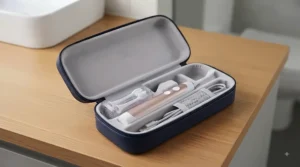
The standout feature is the combination of a dedicated Gum Health mode with genuine app-based brushing coaching — this isn’t just Bluetooth for the sake of a spec sheet; it tracks pressure, coverage and technique across sessions and flags patterns that a static pressure light never could. The same 62,000-movement sonic motor found in the 6100 sits inside a noticeably more premium travel case setup, with fifteen total brushing combinations across five modes and three intensity levels.
Here’s what to weigh: because the underlying motor is identical to the cheaper ProtectiveClean 6100, the extra cost buys you data and refinement rather than a fundamentally gentler brush. That said, for someone actively managing gum recession under a dentist’s guidance, the ability to log sessions and share trends is a genuine transformation-level benefit, not a gimmick — it turns “brush gently” from vague advice into something measurable. Aggregated reviews consistently praise the pressure sensor’s light ring as easy to spot mid-brush, and several long-term users report their hygienist noted visibly healthier gum tissue after switching, though the premium travel case and single included brush head at this tier draw mild criticism.
Pros:
- ✅ Genuine app coaching tracks pressure trends over time
- ✅ Dedicated Gum Health mode alongside Sensitive
- ✅ Light-ring pressure sensor easy to see mid-brush
Cons:
- ❌ Same motor as the cheaper 6100, so you’re paying for software
- ❌ Ships with fewer brush heads than some rivals at this price
Usually found in the £180-£250 range, the Philips Sonicare DiamondClean Smart 9500 is aimed at people who want their gum-care progress measured, not just assumed.
6. Oral-B iO Series 9 — most feature-complete oscillating brush for gum protection
This is Oral-B’s flagship oscillating brush, and the standout is the sheer breadth of its safeguards: seven brushing modes including Super Sensitive and dedicated Gum Care, a full-colour 3D display on the charging stand, and an advanced pressure sensor with a light ring offering white, green and red feedback depending on exactly how hard you’re bearing down. The round head and magnetic drive are mechanically identical to the cheaper iO5, so the cleaning action itself won’t feel different — the upgrade is entirely in feedback granularity and mode variety.
What most buyers overlook about this model is that, per Oral-B’s own engineering, every iO brush bar the iO2 uses the same core motor — meaning the extra spend here buys you seven ways to fine-tune the experience rather than a stronger or gentler clean at the bristle. For someone managing genuinely advanced recession under professional supervision, the Gum Care mode’s extended, lower-intensity cycle is a legitimate addition the Series 5 lacks. Aggregated commentary from long-term Oral-B users is broadly positive on the smart charging stand’s countdown display as a habit-forming tool, while a recurring criticism is that seven modes is more choice than most people will ever actually use day to day.
Pros:
- ✅ Dedicated Gum Care mode with extended low-intensity cycle
- ✅ Advanced light-ring pressure sensor with three-tier feedback
- ✅ Smart charging stand doubles as a brushing coach
Cons:
- ❌ Same core motor as the far cheaper iO5
- ❌ Seven modes is more complexity than most people need
Typically retailing from around £250 up to £350 depending on promotions, the Oral-B iO Series 9 is best reserved for buyers who genuinely want every available safeguard and will actually use the extra modes.
7. Philips Sonicare DiamondClean 9900 Prestige — best for very sensitive gums that need real-time adjustment
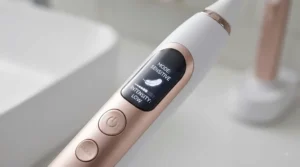
The headline feature is SenseIQ technology, which reads your brushing style up to 100 times per second and automatically dials intensity up or down in real time — rather than you selecting a mode and hoping it suits every surface of every tooth. Underneath that sits the familiar 62,000-movement sonic motor, fifteen brushing combinations across five modes (including Gum Health and Sensitive), a six-zone BrushPacer, and a genuinely elegant charging travel case with USB-C charging.
Based on the spec comparison with the DiamondClean Smart 9500, the meaningful upgrade for sensitive, receding gums specifically is that SenseIQ removes the guesswork entirely — instead of you deciding whether today’s gum tenderness calls for Sensitive or Gum Health mode, the brush adjusts moment to moment as it senses your grip and angle. What the spec sheet won’t tell you, but reviewers note, is that this only fully shines with the accompanying app open; used purely as a manual power toothbrush without pairing, you lose some of the adaptive benefit. Aggregated feedback is enthusiastic about the brush feeling “effortless” for people who’ve struggled with every previous model, with the design and touch-activated display frequently singled out, though a minority of reviewers question whether the premium over the 9500 is justified for anyone who doesn’t lean heavily on the app.
Pros:
- ✅ SenseIQ auto-adjusts intensity up to 100 times a second
- ✅ Five modes including dedicated Gum Health
- ✅ Elegant USB-C travel case for daily commuters
Cons:
- ❌ Full benefit requires the app to be paired and open
- ❌ Premium over the 9500 is steep for casual users
Positioned at the very top of the market, typically £300-£400, the Philips Sonicare DiamondClean 9900 Prestige is the brush to reach for when sensitivity is severe and budget genuinely isn’t the deciding factor.
Practical Usage Guide: Protecting Receding Gums From Day One
Switching to any of these brushes won’t help if your technique undoes the hardware. Start by fitting the softest brush head available for your model — the sensitive or gum-care variant, not the standard cross-action or whitening head — before you brush for the first time. Hold the brush at a 45-degree angle to the gumline, exactly where tooth meets gum, and let the motor do the sweeping motion rather than pushing or scrubbing manually; this is the single biggest habit change most people need to make.
For the first thirty days, lean on the Sensitive or Gum Care mode exclusively, even if it feels less “powerful” than Daily Clean — the goal right now is letting irritated tissue settle, not maximum plaque removal in one sitting. A common mistake is gripping the handle like a pen and pressing, which defeats even the best pressure sensor because the force comes from your wrist rather than being distributed through a relaxed hold; try holding it more like a paintbrush. Replace brush heads every three months, or sooner if bristles visibly splay, since worn bristles stiffen and become more abrasive against exposed root surfaces than a fresh head ever would.
Real-World Scenarios: Which Brush Fits Your Life
If you’re a student on a tight budget who’s just been told by a dentist to switch from a manual brush after early gum irritation, the Oral-B Smart 4 4000 covers the essentials — sensitive mode and pressure warning — without the outlay of a premium model you don’t yet need. If you’re commuting daily and want something slim enough for a gym bag or overnight case while actively avoiding plastic waste, the SURI Sonic Toothbrush 2.0‘s compact body and month-long battery suit that rhythm well.
For a parent managing moderate recession alongside a busy household budget, the Philips Sonicare ProtectiveClean 6100 balances genuine pressure protection with a price that doesn’t require justifying to a partner. And for someone under active periodontal care whose dentist wants measurable proof of gentler technique between check-ups, either iO Series 5 or the DiamondClean Smart 9500 turns brushing data into something you can actually show at your next appointment.
Problem → Solution: Fixing Common Sensitive-Gum Brushing Mistakes
Problem: bleeding gums after switching to electric. This is usually loosened plaque and mild inflammation surfacing, not new damage — stick with Sensitive mode for two weeks before judging the brush. Problem: brush feels too intense even on Sensitive mode. Try a softer aftermarket head rated specifically for sensitive gums, or step down to a model with a lower base vibration count like the SURI Sonic Toothbrush 2.0. Problem: you keep ignoring the pressure sensor. Choose a model with a light-ring or app alert rather than a subtle rear light — visibility genuinely changes behaviour, which is exactly why the Oral-B iO Series 9‘s three-tier ring outperforms a single flashing dot for habit-breaking.
Problem: forgetting to replace worn brush heads. Set a recurring calendar reminder for every twelve weeks, since a stiffened, splayed head is more abrasive than the sensor can compensate for. Problem: uncertainty about whether recession is worsening. No brush can diagnose this reliably — track it with your dentist rather than guessing from the mirror.
How to Choose an Electric Toothbrush for Sensitive Receding Gums
Choosing the right brush comes down to a handful of criteria that genuinely move the needle, in roughly this order of importance:
- Confirm a dedicated Sensitive or Gum Care mode exists — not just a “soft” bristle head on a brush with only one generic setting.
- Prioritise a visible or app-based pressure sensor over one that merely exists on the spec sheet; visibility drives behaviour change.
- Choose bristle softness over raw power — a lower stroke count with genuinely soft bristles beats a high-power brush used carelessly.
- Decide between sonic and oscillating based on which motion feels less invasive against your specific gumline (see the comparison below).
- Factor in replacement head cost across a year, since cheaper handles sometimes carry pricier ongoing consumables.
- Check battery life against your travel habits — a brush you forget to charge gets swapped for a harsher manual one in a pinch.
- Weigh app coaching only if you’ll actually use it — unused smart features are wasted spend, not wasted safety.
| Product | Motor Type | Strokes/Movements per Min | Modes | Price Range | Best For |
|---|---|---|---|---|---|
| Oral-B Smart 4 4000 | Oscillating-rotating | ~8,800 rotations | 3 | £25-£40 | Budget starters |
| SURI Sonic Toothbrush 2.0 | Sonic | 33,000 vibrations | 2 | £60-£75 | Gentlest overall feel |
| Philips Sonicare ProtectiveClean 6100 | Sonic | 31,000 / 62,000 | 4 | £60-£95 | Best value protection |
| Oral-B iO Series 5 | Oscillating-rotating | ~10,000 rotations | 5 | £90-£140 | Tracked gum recovery |
| Philips Sonicare DiamondClean Smart 9500 | Sonic | 31,000 / 62,000 | 5 | £180-£250 | App-coached premium |
| Oral-B iO Series 9 | Oscillating-rotating | ~10,000 rotations | 7 | £250-£350 | Maximum safeguards |
| Philips Sonicare DiamondClean 9900 Prestige | Sonic | 31,000 / 62,000 | 5 | £300-£400 | Auto-adjusting severe sensitivity |
Read across this table and a pattern emerges: within each brand, the underlying motor barely changes between tiers — what you’re really buying as price climbs is feedback quality, mode variety and coaching, not a fundamentally gentler bristle action. If your budget tops out around £90, the Philips Sonicare ProtectiveClean 6100 delivers essentially the same core clean as its £250 sibling. As Cochrane’s review of oral hygiene support for gum disease notes, consistent daily technique matters enormously alongside whatever hardware you choose.
✨ Don’t Miss These Exclusive Deals!
🔍 Take your gum-care routine to the next level with these carefully selected brushes. Click through to check current pricing and availability, and give your gums the gentler clean they’ve been asking for.
Electric Toothbrush Gum Sensitivity Mode Explained
A dedicated electric toothbrush gum sensitivity mode isn’t just a slower version of the default setting — reputable brands genuinely re-engineer the motion pattern for it. On Oral-B’s iO and Smart ranges, Sensitive mode reduces both the number of oscillations per second and the rotational arc, so the round head sweeps rather than scrubs. On Sonicare models, Sensitive mode typically lowers the amplitude of the sonic vibration rather than the frequency, keeping the fluid-dynamic cleaning effect intact while softening direct bristle contact.
What most buyers overlook is that “Super Sensitive” (found on iO Series 5 and above) and standalone “Gum Care” modes are meaningfully different from basic Sensitive — Gum Care in particular often runs a longer cycle at lower intensity specifically along the gumline zones, rather than uniformly across the whole mouth. If your dentist has specifically flagged gum recession rather than general tooth sensitivity, a brush offering a distinct Gum Care mode — like the Oral-B iO Series 9 or Philips Sonicare DiamondClean Smart 9500 — is worth the extra spend over a brush with Sensitive mode alone.
Sonic Toothbrush vs Rotating Brush Head: Which Protects Gums Better
This is genuinely a toss-up rather than a clear winner, and honest analysis says so rather than picking a side for content’s sake. A sonic toothbrush moves the entire head side-to-side at high frequency, driving fluid and micro-bubbles between teeth and along the gumline without the bristles needing heavy direct contact — which many people with tender gums find less invasive. A rotating brush head, by contrast, works tooth-by-tooth in small circular motions, physically hugging the curve of each tooth including right at the gumline, which some dentists argue actually disrupts plaque more thoroughly in that specific zone.
Based on the spec comparison and aggregated dental commentary, oscillating-rotating brushes like the Oral-B iO Series 5 tend to suit people who find the buzzing sensation of sonic brushes overwhelming, while sonic models like the Philips Sonicare ProtectiveClean 6100 or SURI Sonic Toothbrush 2.0 suit those who find rotating heads feel too “busy” against sensitive spots. Neither mechanism is inherently safer for receding gums — the pressure sensor and your own technique matter considerably more than which motion type you pick.
Pressure Sensor Electric Toothbrush: Why It’s Non-Negotiable for Receding Gums
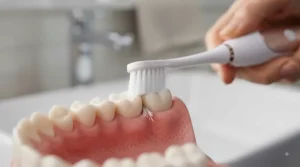
If you take one feature seriously above all others, make it this one. A pressure sensor electric toothbrush directly targets the leading cause of brush-induced gum recession: applying too much force. Basic implementations, like the rear flashing light on the Oral-B Smart 4 4000, simply warn you; more advanced systems, like the light-ring on the Philips Sonicare ProtectiveClean 6100 or the app-tracked feedback on the Oral-B iO Series 5, actively reduce motor power or log the moments you overdid it so you can course-correct over weeks, not just seconds.
The spec sheet won’t tell you this, but dentists discussing gum recession in online forums consistently recommend pressure-sensor models specifically as the fix once damage has already begun, because willpower alone rarely holds up during a rushed morning routine. If you’ve been told your recession is linked to heavy-handed brushing, treat a working pressure sensor as a baseline requirement, not a nice-to-have — it’s the one feature with a direct causal link to the problem you’re trying to solve.
Gentle Electric Toothbrush Features That Actually Matter (And Those That Don’t)
Genuinely useful features for sensitive, receding gums: a real Sensitive or Gum Care mode with an altered motion pattern (not just lower vibration volume), a pressure sensor you’ll actually notice mid-brush, soft or extra-soft bristle heads rated for sensitive use, and a two-minute timer with quadrant alerts so you’re not lingering too long in one spot. These directly address either the cause of further recession or the discomfort of brushing over already-exposed roots.
Features that sound impressive but barely move the needle for gum health specifically: whitening modes (cosmetic, not protective), multiple colour options, tongue-cleaning settings, and headline vibration counts alone without context — a higher number means nothing if the amplitude and bristle softness aren’t tuned for sensitivity. App connectivity sits in the middle: genuinely useful for building better habits over time, as the NHS’s guidance on keeping teeth clean makes clear technique matters as much as tools, but not essential if you’re already disciplined about gentle brushing.
Common Mistakes When Buying for Sensitive Gums
The most common mistake is assuming “electric” automatically means “gentler” — a powerful brush used with a heavy hand and the wrong mode can be harder on gums than a manual soft-bristle brush used correctly. A close second is buying based on stroke-count marketing alone; as the tables above show, price tiers within a brand often share the exact same motor, so a bigger number on the box doesn’t guarantee a gentler feel if the mode selection and pressure sensor aren’t equally considered.
Another frequent misstep is ignoring brush head compatibility and ongoing cost, only to discover replacement heads for a premium handle cost noticeably more per year than the handle itself suggested. Finally, plenty of buyers skip checking whether a dedicated Gum Care mode exists versus a generic Sensitive setting — for genuine recession rather than general sensitivity, that distinction is worth actively seeking out rather than assuming any “sensitive” label covers it.
Long-Term Cost & Maintenance
Total cost of ownership matters more than sticker price for a daily-use device like this. Brush heads for Oral-B’s Smart and iO ranges typically run in multi-packs, averaging out to a modest per-head cost when bought in bulk, while Sonicare’s compatible heads sit slightly higher per unit but fit across both the ProtectiveClean and DiamondClean ranges interchangeably — so upgrading your handle later doesn’t strand your existing head stock. SURI’s plant-based heads are priced comparably to premium synthetic heads but include a free recycling return scheme, which is worth factoring in if sustainability influences your buying decision as much as price.
| Product | Approx. Head Cost per Year | Battery Life | Value Verdict |
|---|---|---|---|
| Oral-B Smart 4 4000 | Low | ~2 weeks | Best entry-level value |
| SURI Sonic Toothbrush 2.0 | Mid | ~4-5 weeks | Best for infrequent chargers |
| Philips Sonicare ProtectiveClean 6100 | Mid | ~3 weeks | Strongest overall ROI |
| Oral-B iO Series 9 | Mid-high | ~2 weeks | Justified only if modes get used |
| Philips Sonicare DiamondClean 9900 Prestige | Mid-high | ~2-3 weeks | Best if app-paired daily |
Interpreting this table honestly, the mid-range models consistently offer the strongest ongoing value because you’re not paying a premium for features tied to app usage you may abandon after a few weeks. Battery life differences are real but rarely dealbreakers unless you travel frequently without easy charging access, in which case SURI’s month-plus runtime stands out clearly.
Safety, Gum Health Regulations & When to See a Dentist
No electric toothbrush, however advanced, can reverse gum recession that has already occurred — the NHS is explicit that gum disease prevention relies on consistent plaque removal alongside professional care, not hardware alone. UK-sold electric toothbrushes must meet standard UKCA or CE electrical safety marking as household appliances, which all seven products featured here comply with as mainstream retail devices sold through amazon.co.uk.
Persistent bleeding, swelling, pain, loose teeth, or a bad taste that doesn’t resolve within a couple of weeks of switching to a gentler brushing routine are signs to book a dental appointment rather than trying yet another toothbrush. A new electric toothbrush is a genuinely useful tool for slowing further recession and easing day-to-day discomfort, but it sits alongside — never instead of — regular dental check-ups and, where recommended, professional periodontal treatment.
Benefits vs Traditional Manual Toothbrushes
| Factor | Manual Toothbrush | Electric Toothbrush (Sensitive Mode) |
|---|---|---|
| Pressure control | None built in | Sensor warns or auto-reduces power |
| Consistency of motion | Depends entirely on user | Fixed, repeatable pattern every time |
| Timing | Easy to under-brush or over-brush | Built-in two-minute timer with alerts |
| Cost over time | Lower upfront, low ongoing | Higher upfront, moderate ongoing |
The core advantage for sensitive, receding gums specifically is consistency: a manual brush’s gentleness depends entirely on the user remembering to ease off every single stroke, while a pressure-sensor electric brush enforces that limit mechanically. That said, a manual soft-bristle brush used with genuinely careful technique can still be perfectly adequate — the electric advantage is really about removing reliance on willpower during tired, rushed mornings, which is exactly when bad habits tend to creep back in.
Frequently Asked Questions
❓ Will an electric toothbrush make my receding gums worse?
❓ Can receding gums grow back with the right toothbrush?
❓ What is the best electric toothbrush setting for sensitive gums?
❓ Are sonic toothbrushes gentler than rotating ones for gum recession?
❓ How often should I replace brush heads for sensitive gums?
Conclusion
Picking an electric toothbrush for sensitive receding gums genuinely comes down to three non-negotiables: a real Sensitive or Gum Care mode that changes the motion, not just the volume; a pressure sensor you’ll actually notice and respond to; and soft, well-maintained bristles replaced on schedule. Everything else — app coaching, colour displays, seven brushing modes — is refinement layered on top of those fundamentals, useful if you’ll genuinely use it, unnecessary spend if you won’t.
Budget shoppers get a legitimately safe, effective clean from the Oral-B Smart 4 4000, sustainability-minded buyers will love the restraint built into the SURI Sonic Toothbrush 2.0, and anyone wanting the strongest all-round value should look hard at the Philips Sonicare ProtectiveClean 6100 before assuming a premium model is necessary. Whichever you choose, pair it with the softest compatible head, a light touch, and regular dental check-ups — the brush supports your gum health, but it was never going to do the job entirely alone.
Recommended for You
- 7 Best Soft Bristle Toothbrush for Receding Gums in 2026 (UK)
- Soft Bristle Toothbrush Under £15: 7 Best Picks for 2026
- 7 Best Bleeding Gums Treatment Kits UK 2026
Disclaimer: This article contains affiliate links. As an Amazon Associate, I earn from qualifying purchases. If you purchase products through these links, we may earn a small commission at no additional cost to you.
✨ Found this helpful? Share it with your friends! 💬🤗
