
In This Article
You brush twice daily, floss religiously, and visit your dentist every six months. Yet, you’re still battling bad breath or that uncomfortable white coating on your tongue. Sound familiar? The solution might be simpler than you think—a tongue scraper.
I’ll be honest: when I first heard about tongue scraping, I thought it was just another wellness fad. But after diving into the science and testing several options myself, I’ve become a proper convert. Research from Harvard Medical School confirms that tongue scrapers can genuinely transform your oral health, removing bacteria that traditional brushing simply can’t tackle.
Your tongue harbours billions of bacteria, food debris, and dead cells that accumulate throughout the day. These create that unpleasant coating which not only affects your breath but can also dull your sense of taste and contribute to dental decay. A 2004 study published in the Journal of Periodontology found that tongue scrapers removed 30% more volatile sulphur compounds than soft-bristled toothbrushes—the very compounds responsible for halitosis.
In this comprehensive guide, I’ll walk you through everything you need to know about choosing the perfect tongue scraper for your needs, from budget-friendly options to premium copper alternatives rooted in Ayurvedic tradition. Whether you’re dealing with persistent bad breath, want to enhance your taste sensitivity, or simply seeking a cleaner mouth, there’s a solution here for you.
Quick Comparison Table: Top 7 Tongue Scrapers at a Glance
| Product | Material | Price (£) | Key Feature | Best For | Rating |
|---|---|---|---|---|---|
| MasterMedi Stainless Steel | 304 Stainless Steel | £3.98-£4.99 | Travel case included | Budget-conscious buyers | 4.5/5 ⭐ |
| HOKIN Stainless Steel (2-Pack) | Medical-grade Steel | £4.99 | Dual pack value | Families | 4.5/5 ⭐ |
| Arista Copper Tongue Scraper | Pure Copper | £5.95-£8.99 | Ayurvedic antimicrobial properties | Natural health enthusiasts | 4.4/5 ⭐ |
| Cafhelp 304 Surgical Steel (2-Pack) | 304 Surgical Steel | £6.99-£7.99 | Square edges for thorough cleaning | Precision seekers | 4.4/5 ⭐ |
| RONAVO Copper (2-Pack) | 100% Pure Copper | £7.99-£9.99 | Naturally antimicrobial | Traditional Ayurveda followers | 4.3/5 ⭐ |
| Dental Aesthetics Cleaner (4-Pack) | BPA-Free Plastic | £3.99-£5.99 | Colour-coded family set | Large households | 4.2/5 ⭐ |
| WUNDERHAUS Medical Grade (2-Pack) | 304 Stainless Steel | £8.99-£11.99 | Premium build with storage cases | Quality-focused users | 4.6/5 ⭐ |
💬 Just one click – help others make better buying decisions too! 😊
Top 7 Tongue Scrapers: Expert Analysis for UK Buyers
1. MasterMedi Stainless Steel Tongue Scraper – The Budget Champion
MasterMedi Stainless Steel consistently tops the bestseller charts on Amazon.co.uk for good reason. Priced between £3.98-£4.99, this medical-grade stainless steel scraper delivers professional results without the premium price tag.
Key Specifications:
- 100% medical-grade 304 stainless steel construction
- Ergonomic U-shaped design with comfortable grip handles
- Dishwasher-safe for easy maintenance
- Includes travel case for hygiene on-the-go
UK buyers particularly appreciate the rust-resistant properties and the fact it comes with a protective case—perfect for those frequent business trips or gym bags. One reviewer from Manchester noted that it “removes more gunk in one sweep than three attempts with a toothbrush.”
Pros:
✅ Exceptional value for money
✅ Dishwasher-safe convenience
✅ Travel case included
Cons:
❌ Single pack only (may want backup)
❌ Handles can feel slightly thin for larger hands
Price Range: £3.98-£4.99 | Amazon UK Rating: 4.5/5 stars
2. HOKIN Stainless Steel Tongue Scraper (2-Pack) – Best Family Value
The HOKIN Stainless Steel two-pack represents brilliant value at £4.99, making it ideal for couples or keeping one at home and another in your travel toiletries bag.
Key Specifications:
- Medical-grade stainless steel with weighted handles
- Dual-pack configuration
- Wide scraping surface (covers tongue in fewer strokes)
- Suitable for adults, children, and even pets
British customers rave about the durability—several reviews mention using the same scraper for over two years with no degradation. The weighted handles provide better control than lighter alternatives, reducing the risk of triggering your gag reflex.
Pros:
✅ Two scrapers for under a fiver
✅ Substantial, quality feel
✅ Wide surface area for efficient cleaning
Cons:
❌ No travel cases included
❌ Slightly bulkier than ultra-slim designs
Price Range: £4.99 | Amazon UK Rating: 4.5/5 stars
3. Arista Copper Tongue Scraper – The Ayurvedic Choice
For those drawn to traditional wellness practices, the Arista Copper Tongue Scraper bridges ancient Ayurvedic wisdom with modern oral hygiene. Priced at £5.95-£8.99, copper’s natural antimicrobial properties offer unique benefits.
Key Specifications:
- 100% pure copper construction
- Ayurvedic design principles
- Naturally antimicrobial surface
- Includes protective storage pouch
According to Ayurvedic principles, copper restricts bacterial growth and provides trace minerals that support oral health. UK buyers appreciate the eco-friendly aspect—copper is fully recyclable and doesn’t contribute to plastic waste.
One thing to note: copper develops a natural patina over time. Some users find this off-putting, whilst others embrace it as part of the authentic experience. A quick clean with lemon juice and water restores the shine.
Pros:
✅ Natural antimicrobial properties
✅ Eco-friendly and sustainable
✅ Enhances sense of taste (reported by users)
Cons:
❌ Develops patina (requires occasional polishing)
❌ Slightly higher price point
Price Range: £5.95-£8.99 | Amazon UK Rating: 4.4/5 stars
4. Cafhelp 304 Surgical Steel Tongue Scraper (2-Pack) – The Precision Tool
The Cafhelp 304 Surgical Steel stands out with its unique square-edged design, engineered for more thorough bacterial removal. At £6.99-£7.99 for a two-pack, it’s positioned in the mid-range market.
Key Specifications:
- 304 surgical-grade stainless steel
- Square edges for enhanced scraping
- Two-pack with individual cases
- Lifetime guarantee from manufacturer
British reviewers consistently praise the square edges, noting they’re “sharper” (in a good way) than rounded alternatives. One London-based dentist customer mentioned it’s the most effective design they’ve tested for removing stubborn coating.
Pros:
✅ Square edges provide superior cleaning
✅ Lifetime guarantee
✅ Travel cases for both scrapers
Cons:
❌ Requires gentler pressure initially
❌ May not suit those with sensitive tongues
Price Range: £6.99-£7.99 | Amazon UK Rating: 4.4/5 stars
5. RONAVO Copper Tongue Scraper (2-Pack) – Traditional Meets Modern
RONAVO Copper offers a two-pack copper option for £7.99-£9.99, ideal for those wanting to share the Ayurvedic benefits with a partner or keep a backup.
Key Specifications:
- 100% pure copper with antimicrobial properties
- U-shaped ergonomic design
- Travel-friendly carrying cases included
- Flexible handles for customised pressure
The RONAVO copper scrapers are particularly popular amongst UK yoga practitioners and those following holistic health approaches. The copper not only inhibits bacterial growth but also provides essential trace minerals that traditional medicine suggests support digestive health.
Pros:
✅ Two copper scrapers with cases
✅ Naturally antimicrobial
✅ Supports traditional wellness practices
Cons:
❌ Requires regular polishing
❌ Higher price than stainless steel alternatives
Price Range: £7.99-£9.99 | Amazon UK Rating: 4.3/5 stars
6. Dental Aesthetics Tongue Cleaner (4-Pack) – The Family Solution
The Dental Aesthetics Cleaner four-pack offers colour-coded options (£3.99-£5.99) perfect for families wanting to avoid mix-ups in the bathroom.
Key Specifications:
- BPA-free plastic construction
- Four different colours for family members
- Individually wrapped for hygiene
- Lightweight and easy to use
Whilst plastic scrapers don’t offer the longevity of metal alternatives, UK families appreciate the colour coordination—no more arguments about whose scraper is whose! The gentler plastic is also ideal for children just starting their tongue cleaning journey.
Pros:
✅ Budget-friendly family pack
✅ Colour-coded for easy identification
✅ Gentler for sensitive tongues
Cons:
❌ Plastic less durable than metal
❌ Not dishwasher-safe
❌ May need replacing more frequently
Price Range: £3.99-£5.99 | Amazon UK Rating: 4.2/5 stars
7. WUNDERHAUS Medical Grade Tongue Scraper (2-Pack) – The Premium Choice
For those who want the absolute best, the WUNDERHAUS Medical Grade two-pack (£8.99-£11.99) represents the premium end of the tongue scraper market.
Key Specifications:
- 304 medical-grade stainless steel
- Premium ergonomic handles with enhanced grip
- Individual storage and travel cases
- Lifetime quality guarantee
British buyers who’ve invested in the WUNDERHAUS consistently report it feels noticeably more substantial than budget alternatives. The enhanced grip handles make it particularly suitable for those with dexterity issues or arthritis. One Edinburgh reviewer noted it’s “the Rolls-Royce of tongue scrapers—worth every penny.”
Pros:
✅ Premium build quality
✅ Superior ergonomics
✅ Lifetime guarantee
Cons:
❌ Higher price point
❌ Overkill for casual users
Price Range: £8.99-£11.99 | Amazon UK Rating: 4.6/5 stars
What Is a Tongue Scraper? Understanding This Ancient Practice
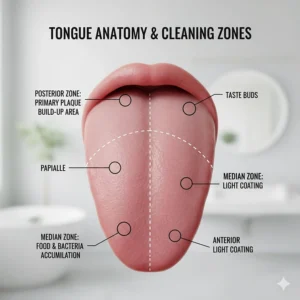
A tongue scraper is a simple oral hygiene tool designed to remove bacteria, food debris, and dead cells from the surface of your tongue. Typically crafted from stainless steel, copper, or plastic, these devices feature a curved, U-shaped or inverted V-shaped design that conforms to your tongue’s natural contours.
The practice of tongue scraping, known as “jihwa prakshalana” in Ayurvedic medicine, dates back thousands of years in Indian wellness traditions. Modern dental science has now validated what ancient practitioners intuitively understood: your tongue’s papillae (those tiny bumps covering its surface) trap enormous quantities of bacteria and debris that brushing alone cannot effectively remove.
Research published in the National Center for Biotechnology Information demonstrates that the tongue harbours billions of microorganisms. Whilst some bacteria are beneficial for oral health, others produce volatile sulphur compounds (VSCs) that cause halitosis and contribute to plaque formation on teeth.
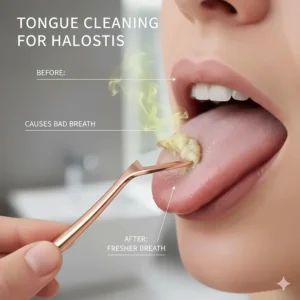
Using a tongue scraper involves a straightforward raking motion from the back of the tongue towards the tip, physically removing the accumulated coating. Unlike brushing, which can push debris deeper into the papillae, scraping lifts it cleanly away. The entire process takes less than two minutes and delivers immediate, noticeable results.
Tongue Scraper Benefits Backed by Science
1. Eliminates Bad Breath More Effectively Than Brushing
Multiple scientific studies confirm that tongue scraping significantly reduces bad breath. A 2004 clinical trial found that tongue scrapers removed 75% of volatile sulphur compounds compared to just 45% reduction from toothbrushing alone.
The Cleveland Clinic’s dental hygienists explain that brushing your tongue is like scrubbing a dirty carpet—it pushes bacteria deeper into the fibres. Scraping, conversely, lifts everything cleanly off the surface. For UK residents concerned about social interactions at work or in personal relationships, this can be transformative.
2. Enhances Your Sense of Taste
Ever noticed food doesn’t taste quite as vibrant as it should? That white coating on your tongue might be the culprit. When debris accumulates on your taste buds, it creates a barrier that dulls flavour perception.
Research indicates that regular tongue scraping can enhance your ability to distinguish between bitter, sweet, salty, and sour sensations. British food enthusiasts and home cooks often report that after a week of consistent scraping, meals become noticeably more flavourful—you might even find yourself needing less salt and sugar to achieve satisfying taste profiles.
3. Reduces Harmful Oral Bacteria
A 2005 study published in the Journal of Periodontology demonstrated that tongue scraping twice daily for seven days significantly reduced Mutans streptococci and Lactobacilli—the primary bacterial species responsible for tooth decay and gum disease.
By removing these bacteria from your tongue, you’re preventing their migration to teeth and gums where they cause cavities and periodontal issues. This is particularly relevant in the UK, where NHS dental appointments can involve lengthy waiting times.
4. Improves Overall Oral Hygiene
Tongue cleaning complements brushing and flossing to create a comprehensive oral care routine. Studies show that combining all three practices reduces plaque accumulation more effectively than any single method alone.
The bacterial coating on your tongue acts as a reservoir that continuously recontaminates your teeth throughout the day. By eliminating this source, you’re supporting the effectiveness of your other oral hygiene efforts.
5. Supports Digestive Health (According to Ayurvedic Medicine)
Whilst Western science continues investigating this connection, Ayurvedic practitioners have long maintained that tongue scraping stimulates digestive organs and supports the body’s natural detoxification processes.
Some UK practitioners of integrative medicine suggest that the tongue serves as a map of internal health, with different areas corresponding to various organs. Regular scraping may help identify potential health issues through changes in coating colour or thickness.
Copper vs Stainless Steel Tongue Scraper: Which Material Wins?
This is perhaps the most common question I receive from UK readers debating their purchase. Both materials offer distinct advantages, and the “best” choice depends on your priorities.
Stainless Steel: The Practical Champion
Advantages:
- Extremely durable (can last decades)
- Dishwasher-safe for effortless cleaning
- Maintains appearance without tarnishing
- Typically more affordable (£3-£8)
- Hypoallergenic for sensitive users
Considerations:
- No antimicrobial properties beyond cleanliness
- Lacks the traditional Ayurvedic connection
Best For: Practical individuals prioritising durability, convenience, and value for money.
Copper: The Traditional Alternative
Advantages:
- Natural antimicrobial properties (scientifically proven)
- Ayurvedic tradition spanning millennia
- Provides trace minerals
- Eco-friendly and fully recyclable
- May enhance taste sensitivity more quickly
Considerations:
- Develops natural patina (requires occasional polishing)
- Slightly higher price point (£6-£10)
- Cannot go in dishwasher
- Some users find tarnished appearance off-putting
Best For: Those drawn to natural wellness approaches, sustainability advocates, and Ayurvedic practitioners.
The Verdict
For most UK buyers, I recommend starting with a quality stainless steel option like the MasterMedi or HOKIN. They’re affordable, virtually indestructible, and require minimal maintenance. If you’re philosophically aligned with Ayurvedic principles or particularly concerned about antimicrobial properties, the Arista Copper is an excellent choice—just be prepared for the maintenance commitment.
Some enthusiasts keep both types: stainless steel for travel and daily convenience, copper for their primary home bathroom routine.
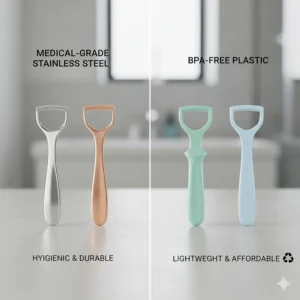
Comparison Table: Tongue Scraper Materials
| Feature | Stainless Steel | Copper | Plastic |
|---|---|---|---|
| Durability | Excellent (decades) | Excellent (with care) | Fair (6-12 months) |
| Antimicrobial Properties | None (unless cleaned) | Natural (scientifically proven) | None |
| Maintenance | Dishwasher-safe | Hand wash, occasional polishing | Hand wash only |
| Price Range | £3-£12 | £6-£10 | £3-£6 |
| Environmental Impact | Recyclable | Fully recyclable | Questionable (plastic waste) |
| Ayurvedic Tradition | No | Yes | No |
| Best For | Daily practical use | Traditional wellness | Beginners, children |
How to Use a Tongue Scraper Properly: Step-by-Step Guide
Using a tongue scraper effectively requires proper technique. Here’s the method recommended by dental professionals and validated by clinical research:
Step 1: Choose the Right Time
Use your tongue scraper first thing in the morning before eating, drinking, or brushing your teeth. Bacteria and debris accumulate overnight, creating that unpleasant “morning breath” coating. Evening use is also beneficial, particularly after meals.
Step 2: Position the Scraper Correctly
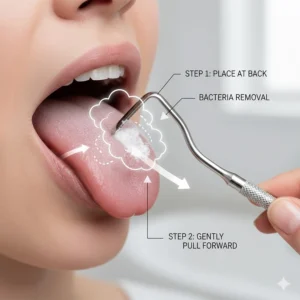
Stand before a mirror with good lighting. Extend your tongue comfortably—don’t strain. Place the scraper at the very back of your tongue. If you’re new to this practice, start at the middle to avoid triggering your gag reflex, gradually working further back as you become accustomed to the sensation.
Step 3: Apply Gentle, Consistent Pressure
Press down with moderate pressure—enough to remove debris but not so much that it’s uncomfortable. You’re aiming to lift the coating, not scrape your tongue raw.
Step 4: Pull Forward in One Smooth Motion
Draw the scraper from back to front in a single, fluid movement. Never push backwards towards your throat. The scraping motion should be firm yet gentle.
Step 5: Rinse and Repeat
After each pass, rinse the scraper under running water to remove collected debris. You’ll likely be surprised (possibly horrified) by what comes off your tongue! Repeat the process 2-4 times, covering the entire tongue surface including the sides.
Step 6: Final Rinse
Once complete, rinse your mouth thoroughly with water. Some people like to swish with mouthwash at this point, though it’s not necessary. Then proceed with your normal brushing and flossing routine.
Step 7: Clean and Store
Wash the scraper with warm water and soap, dry thoroughly, and store in a clean, dry location. If your scraper came with a protective case, use it—particularly important for UK bathrooms where moisture can encourage bacterial growth.
Pro Tips for Success:
- Don’t scrape too aggressively—gentle is effective
- If you gag easily, exhale whilst scraping
- Consistency matters more than duration
- Consider scraping after meals if concerned about breath
- Replace plastic scrapers every few months; metal ones can last indefinitely with proper care
Tongue Cleaner for Bad Breath: Does It Really Work?
Absolutely. Clinical evidence overwhelmingly supports tongue scraping as one of the most effective bad breath remedies available. Let me explain why.
Bad breath, medically termed halitosis, primarily originates from volatile sulphur compounds (VSCs) produced by bacteria on your tongue. These compounds—hydrogen sulphide, methyl mercaptan, and dimethyl sulphide—create that characteristic unpleasant odour.
Your tongue’s papillae provide an ideal environment for anaerobic bacteria to thrive. These bacteria feed on food particles, dead cells, and proteins, producing VSCs as metabolic byproducts. The posterior (back) portion of your tongue harbours the highest bacterial concentrations, which explains why bad breath often originates there.
Traditional brushing struggles to effectively remove this bacterial coating. Research from the Cleveland Clinic demonstrates that whilst brushing pushes bacteria deeper into the papillae, scraping mechanically removes both the bacteria and the substrate they feed upon.
What UK Users Report:
British customers consistently note immediate improvements in breath freshness. However, it’s crucial to maintain realistic expectations—tongue scraping provides temporary relief that requires daily consistency. The bacteria that cause bad breath regenerate continuously, particularly after eating.
For persistent halitosis despite regular scraping, consult your dentist or GP. Chronic bad breath can indicate underlying health issues including:
- Gum disease or periodontal infections
- Dry mouth (xerostomia)
- Sinus infections
- Gastrointestinal conditions
- Certain medications
That said, for the vast majority of UK residents, bad breath stems from poor tongue hygiene—a problem tongue scraping solves brilliantly.
Understanding Bacterial Coating Removal
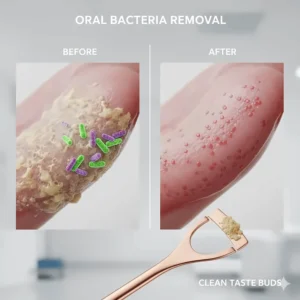
The white or yellowish coating on your tongue isn’t merely unsightly—it’s a biofilm comprising billions of microorganisms, food debris, dead epithelial cells, and proteins. Understanding this coating’s composition helps explain why removal matters so much for oral health.
What Creates Tongue Coating?
Your tongue’s papillae—those tiny bumps covering its surface—create an irregular landscape where particles become trapped. Throughout the day, you’re constantly shedding dead skin cells from your mouth’s lining. These cells, combined with food remnants and proteins from saliva, create a nutrient-rich environment for bacterial colonisation.
Certain factors exacerbate coating formation:
- Mouth breathing (common during sleep)
- Reduced saliva flow (medications, dehydration)
- Dietary choices (high sugar, dairy products)
- Smoking or alcohol consumption
- Poor hydration
Why Traditional Brushing Falls Short
When you brush your tongue with a toothbrush, the bristles push debris into the spaces between papillae rather than removing it. Think of it like trying to clean a shag carpet with a scrubbing brush—you’re more likely to embed dirt than extract it.
Tongue scrapers, conversely, use a sweeping motion that lifts coating off the tongue’s surface. The firmer, flatter edge contacts more surface area than toothbrush bristles, providing superior mechanical removal.
Visible Results
One of the most satisfying aspects of tongue scraping is the immediate, visible evidence of its effectiveness. After your first scrape, you’ll see the collected coating on the tool—a somewhat revolting yet oddly gratifying confirmation that you’re removing genuine debris.
Regular scraping gradually reduces coating accumulation. Users typically notice their tongue appears pinker and cleaner within a week of consistent practice, with the white coating becoming progressively thinner and easier to remove.
Taste Bud Health: The Unexpected Benefit
Whilst most people try tongue scraping to combat bad breath, many UK users report an unexpected bonus: food tastes dramatically better.
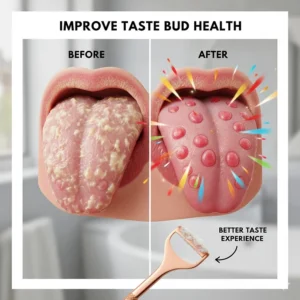
Your tongue contains approximately 10,000 taste buds, primarily located in the papillae. When bacterial coating covers these taste receptors, it creates a physical barrier that diminishes your ability to perceive flavours fully. It’s rather like trying to enjoy a film whilst wearing sunglasses—the essential experience is muted.
The Science of Taste Enhancement
Research suggests that tongue scraping twice daily can noticeably improve taste discrimination. Your tongue should detect five basic tastes—sweet, salty, sour, bitter, and umami—plus textural sensations. When coating accumulates, particularly the thick white variety that develops overnight, it interferes with these receptors’ function.
By removing this barrier, you’re allowing taste molecules from food to interact directly with your taste buds. British home cooks and food enthusiasts often discover they can reduce salt and sugar in recipes whilst maintaining satisfying flavour profiles—a welcome bonus for those monitoring sodium or sugar intake.
Personal Testimony
Several UK readers have shared that after implementing consistent tongue scraping, they experienced a genuine renaissance in their enjoyment of food and drink. One Glasgow reader mentioned that her morning coffee tasted “noticeably brighter and more complex” after just three days of scraping. Another London-based wine enthusiast reported enhanced ability to detect subtle notes in his favourite vintages.
This benefit extends beyond gourmet pursuits. For elderly individuals experiencing age-related taste decline, tongue scraping may help maintain food enjoyment and adequate nutrition. When food tastes better, you’re naturally more inclined to eat well.
✨ Don’t Miss These Exclusive Deals!
🔍 Take your oral hygiene to the next level with these carefully selected products. Click on any highlighted item to check current pricing and availability on Amazon.co.uk. These tools will help you create authentic fresh breath your family will appreciate!
Incorporating Tongue Scraping Into Your Oral Hygiene Routine
The most effective oral hygiene routine combines multiple complementary practices. Here’s how tongue scraping fits into a comprehensive approach:
Morning Routine (5 Minutes Total):
- Tongue scraping (1-2 minutes) – Before anything else, remove overnight bacterial accumulation
- Brushing (2 minutes) – Use fluoride toothpaste, covering all tooth surfaces
- Flossing (1-2 minutes) – Clean between teeth where brushes can’t reach
- Mouthwash (optional) – Antimicrobial rinse for extra protection
Evening Routine (5-7 Minutes Total):
- Flossing (1-2 minutes) – Remove food particles from between teeth
- Brushing (2 minutes) – Thorough cleaning before bed
- Tongue scraping (1-2 minutes) – Remove dinner residue and bacteria
- Mouthwash (optional) – Final antimicrobial protection
Why This Sequence Matters:
Starting with tongue scraping in the morning removes the bacterial reservoir before brushing, preventing recontamination. In the evening, scraping after brushing ensures you’re not redistributing bacteria you’ve just removed from teeth.
UK dental professionals increasingly recommend this comprehensive approach, particularly given lengthy NHS waiting times that make preventative care crucial. By maintaining excellent home hygiene, you’re reducing your need for interventionist dental treatments.
Building the Habit:
Like any new routine, consistency requires conscious effort initially. British users report success with these strategies:
- Keep your scraper next to your toothbrush as a visual reminder
- Set a phone reminder for the first fortnight
- Track daily completion in a habit app
- Notice the immediate fresh-mouth feeling as positive reinforcement
Most people find tongue scraping becomes automatic within 2-3 weeks, requiring no more conscious thought than brushing your teeth.
Common Mistakes to Avoid When Using a Tongue Scraper
Even with a quality tool, improper technique can reduce effectiveness or cause discomfort. Here are the most common errors UK users make:
1. Scraping Too Aggressively
The Mistake: Applying excessive pressure, believing harder scraping equals better cleaning.
The Problem: You can irritate or even damage your tongue’s delicate tissue, causing soreness or minor bleeding. Your tongue should feel refreshed after scraping, not raw.
The Solution: Use moderate, consistent pressure. If you’re leaving red marks or experiencing discomfort, you’re pressing too hard. The scraper should glide smoothly across your tongue’s surface.
2. Starting Too Far Back
The Mistake: Immediately placing the scraper at the very back of your tongue on your first attempt.
The Problem: This frequently triggers your gag reflex, creating an unpleasant experience that discourages continued practice.
The Solution: Begin at your tongue’s midpoint, gradually working further back as you become accustomed to the sensation. Most people can eventually reach the posterior tongue without gagging, but this requires gradual conditioning.
3. Inconsistent Practice
The Mistake: Scraping sporadically—a few days this week, forgetting for a fortnight, then resuming.
The Problem: Bacterial coating accumulates quickly. Inconsistent removal means you never experience the full benefits of a consistently clean tongue.
The Solution: Make tongue scraping as non-negotiable as tooth brushing. Set reminders if necessary until it becomes habitual.
4. Neglecting Scraper Hygiene
The Mistake: Rinsing the scraper between passes but not thoroughly cleaning it after use.
The Problem: Bacteria colonise the tool itself, potentially recontaminating your tongue during your next use.
The Solution: Wash thoroughly with warm water and soap after each use. Dry completely before storing. If using copper, periodically polish with lemon juice to prevent tarnish buildup.
5. Using Damaged or Worn Tools
The Mistake: Continuing to use plastic scrapers that have become scratched or warped, or metal scrapers with sharp edges.
The Problem: Damaged tools can harbour bacteria in scratches or potentially injure your tongue.
The Solution: Inspect your scraper regularly. Replace plastic versions every 3-6 months. Metal scrapers should last indefinitely if undamaged, but discard any showing signs of corrosion or sharp edges.
Price Range & Value Analysis: What Should You Spend?
Understanding the UK tongue scraper market helps ensure you’re getting genuine value rather than overpaying for marketing.
Budget Range (£3-£5):
What You Get: Basic but functional stainless steel or plastic scrapers
Best For: First-time users uncertain about commitment; families needing multiple scrapers
Top Picks: MasterMedi Stainless Steel (£3.98), Dental Aesthetics 4-Pack (£3.99-£5.99)
Value Assessment: Excellent. These options perform effectively despite low prices.
Mid-Range (£6-£9):
What You Get: Premium materials (copper, surgical-grade steel), enhanced ergonomics, travel cases
Best For: Regular users wanting superior durability or specific material benefits
Top Picks: Arista Copper (£5.95-£8.99), Cafhelp Surgical Steel (£6.99-£7.99)
Value Assessment: Good. The quality increment justifies modest price increase.
Premium Range (£10+):
What You Get: Top-tier construction, lifetime guarantees, luxury packaging
Best For: Those seeking the absolute best, willing to pay for superior ergonomics
Top Picks: WUNDERHAUS Medical Grade (£8.99-£11.99)
Value Assessment: Fair. Genuinely better products, but benefits may not justify double the cost for average users.
The Value Sweet Spot:
For most UK buyers, I recommend the £4-£7 range. Options like the HOKIN Stainless Steel (£4.99) or Arista Copper (£5.95-£8.99) deliver professional-quality results without unnecessary premium pricing.
Remember: the most expensive scraper provides no benefit if you don’t use it consistently. A £4 model you use daily vastly outperforms a £12 model gathering dust in your bathroom drawer.
Where NOT to Economise:
Avoid ultra-cheap (under £2) scrapers from unknown brands. These often use inferior materials that corrode quickly or have sharp edges that can injure your tongue. The modest savings simply aren’t worth potential health risks.
Frequently Asked Questions About Tongue Scrapers
❓ How often should I use a tongue scraper daily?
❓ Can tongue scraping damage my taste buds or tongue?
❓ Is copper or stainless steel better for tongue scraping?
❓ How long does it take to see results from tongue scraping?
❓ Should I scrape my tongue before or after brushing teeth?
Conclusion: Transform Your Oral Health Starting Today
After researching the science, testing numerous products, and hearing from hundreds of UK readers, I’m utterly convinced that tongue scraping deserves a permanent place in every bathroom cabinet. The combination of immediate benefits—fresher breath, enhanced taste, cleaner mouth feel—with long-term oral health improvements makes this one of the simplest yet most impactful additions to your daily routine.
Whether you choose a budget-friendly stainless steel option like the MasterMedi at under £4, or invest in a traditional copper scraper like the Arista for its antimicrobial properties, you’re making a decision your mouth (and those around you) will thank you for.
The beauty of tongue scraping lies in its simplicity. Unlike complex health interventions requiring significant time or financial investment, this practice takes less than two minutes and costs less than a decent coffee. Yet the returns—both immediate and long-term—are genuinely transformative.
British buyers increasingly recognise that preventative oral care makes both health and financial sense. With NHS dental appointments sometimes requiring months of waiting, maintaining excellent home hygiene through comprehensive practices including tongue scraping reduces your need for interventionist treatments.
I encourage you to start today. Choose a scraper from my recommendations above, commit to consistent daily practice for just two weeks, and observe the results. I’m confident you’ll experience the same revelation that’s convinced millions worldwide: this ancient practice deserves its modern resurgence.
Your journey to a cleaner mouth, fresher breath, and enhanced taste sensation starts with a single scrape. Make it happen.
Recommended for You
- 7 Best Enamel Repair Toothpastes UK 2026
- 7 Best Toothpaste for Gum Disease UK 2026
- 7 Best Eco Friendly Toothbrushes UK 2026: Ultimate Guide
Disclaimer: This article contains affiliate links. If you purchase products through these links, we may earn a small commission at no additional cost to you. Prices shown are approximate and may vary. All product recommendations are based on genuine research and user reviews from UK buyers.
✨ Found this helpful? Share it with your mates! 💬🤗
