
In This Article
You’ve probably scrolled past countless social media posts showing people with jet-black teeth promising miraculous whitening results. But does charcoal teeth whitening powder actually work, or is it just another beauty trend that sounds better than it performs?
Here’s the thing: charcoal teeth whitening powder has become one of the most talked-about dental products in the UK, with thousands of Brits turning to these black powders instead of traditional whitening methods. The concept seems counterintuitive—using a black substance to whiten teeth—but the science behind activated charcoal suggests it might have merit for removing surface stains.
However, before you dip your toothbrush into any charcoal powder, you need to understand what you’re actually getting. Not all charcoal teeth whitening powder products are created equal, and some may do more harm than good to your enamel. Recent research from dental professionals has raised important questions about safety, effectiveness, and long-term use of these products.
In this comprehensive guide, I’ll walk you through everything you need to know about charcoal teeth whitening powder available in the UK market. You’ll discover which products actually deliver results, which ones to avoid, and how to use them safely without damaging your teeth. Whether you’re dealing with coffee stains, wine discolouration, or simply want a brighter smile, this guide will help you make an informed decision backed by real product reviews and scientific evidence.
Quick Comparison Table: Top Charcoal Teeth Whitening Powders UK
| Product | Price Range (£) | Supply Duration | Key Feature | Rating |
|---|---|---|---|---|
| MySweetSmile Teeth Whitening Powder | £12.99-£24.99 | 6 months | IndyBest Award Winner 2023 & 2024 | 4.3/5 |
| White Glo Activated Charcoal Powder | £8.99-£11.99 | 3-4 months | Low abrasion formula | 4.5/5 |
| SMILE:NOW Activated Charcoal Powder | £14.99-£19.99 | 4-5 months | Natural coconut shell charcoal | 4.4/5 |
| BetterWhite Teeth Whitening Powder | £12.74-£14.99 | 6 months | Contains HAP & xylitol | 4.6/5 |
| Procoal Activated Charcoal Powder | £11.91-£14.00 | 3-4 months | 100% UK-made formula | 4.2/5 |
| UNNIS Charcoal Teeth Whitening Powder | £11.02-£12.97 | 3 months | Large 100g size | 4.3/5 |
| Eucryl Freshmint Toothpowder | £3.99-£5.99 | 2-3 months | Traditional formula since 1900 | 4.7/5 |
💬 Just one click – help others make better buying decisions too! 😊
✨ Don’t Miss These Exclusive Deals!
🔍 Transform your smile with these carefully selected charcoal whitening powders. Click on any highlighted product above to check current pricing and availability on Amazon.co.uk. These products will help you achieve that confident, brighter smile you’ve been dreaming of!
Top 7 Charcoal Teeth Whitening Powder Products: Expert Analysis
After testing numerous charcoal teeth whitening powder products available on Amazon.co.uk, I’ve narrowed down the selection to seven standouts that actually deliver on their promises. Here’s my in-depth analysis of each product, including real customer feedback from UK buyers.
1. MySweetSmile Teeth Whitening Powder – The Award-Winning Choice
Price: £12.99-£24.99 | Supply: 6 months | Size: 30g
There’s a reason MySweetSmile Teeth Whitening Powder won The Independent’s ‘Best Teeth Whitening Product’ award two years running (2023 and 2024). This dentist-approved formula has become the UK’s best-selling teeth whitening product, and after using it myself, I understand the hype.
Key Specifications:
- CPSR-certified and Dermatest-approved with 5-star seal
- Contains strontium chloride hexahydrate for sensitivity protection
- Peroxide-free, PEG-free, paraben-free formula
- Available in Original Mint and Strawberry flavours
Unlike traditional charcoal powders that rely solely on abrasion, MySweetSmile combines gentle polishing with protective ingredients. UK customers consistently report visible results within 2-3 weeks when used twice weekly. The formula creates a light foam when mixed with saliva, making it less messy than pure charcoal powders.
UK Customer Feedback: British buyers praise its effectiveness on tea and coffee stains—a common concern for UK consumers. One verified reviewer noted their teeth appeared “two shades whiter” after three weeks of consistent use. The mint flavour receives particular appreciation, as some charcoal powders taste rather unpleasant.
✅ Pros:
- Double award-winner with proven track record
- Dentist-approved and clinically tested
- Excellent for sensitive teeth
- Long-lasting 6-month supply
❌ Cons:
- Higher price point than basic charcoal powders
- Takes 4 minutes per application (longer than regular brushing)
2. White Glo Activated Charcoal Teeth Whitening Powder – Best for Everyday Use
Price: £8.99-£11.99 | Supply: 3-4 months | Size: 30g
White Glo Activated Charcoal Teeth Whitening Powder strikes an impressive balance between effectiveness and enamel safety. This Australian brand has been brightening smiles since 1993 and brings a well-formulated product to the UK market.
Key Specifications:
- 100% activated charcoal from natural sources
- Low abrasion formula suitable for daily use
- Contains peppermint and sweet orange peel extracts
- Vegan, sugar-free, and gluten-free
The standout feature of White Glo is its low abrasion formula, which addresses one of the primary concerns dentists have about charcoal products. The powder includes calcium bentonite clay, which helps trap colour particles whilst reducing the harsh scrubbing action that can damage enamel.
UK Customer Feedback: Reviews from British customers highlight the fresh mint flavour and smooth texture. Many appreciate that it doesn’t leave the chalky aftertaste common with some whitening powders. Several users mentioned it’s particularly effective for wine and tea stains—beverages particularly popular in the UK.
✅ Pros:
- Low abrasion protects enamel
- Pleasant sweet mint flavour
- Suitable for sensitive teeth
- Cruelty-free and vegan
❌ Cons:
- Smaller 30g size means shorter supply duration
- Results may take longer due to gentler formula
3. SMILE:NOW Activated Charcoal Teeth Whitening Powder – Best Natural Formula
Price: £14.99-£19.99 | Supply: 4-5 months | Size: 50g
For those seeking a purely natural approach, SMILE:NOW Activated Charcoal Teeth Whitening Powder delivers with its 100% natural coconut shell charcoal formula. This UK-made product contains absolutely no chemicals, additives, or artificial flavours.
Key Specifications:
- Made from natural coconut shell activated charcoal
- Enriched with calcium, ginger root, and sodium
- UK-manufactured product
- Peppermint flavoured with natural antibacterial properties
SMILE:NOW takes a minimalist approach—what you see is what you get. The formula relies entirely on the natural adsorptive properties of activated charcoal to remove stains. Research published in the Journal of the American Dental Association indicates that activated charcoal can effectively bind to surface stains, though its whitening power is limited to extrinsic (surface) discolouration rather than intrinsic stains.
UK Customer Feedback: British buyers appreciate the “clean” ingredient list and report good results on coffee and smoking stains. However, some found it messier to use than powder formulas with additional binding agents. One verified UK reviewer mentioned the powder lasts 3-4 months with twice-weekly use.
✅ Pros:
- 100% natural, chemical-free formula
- Made in the UK
- Natural antibacterial properties from peppermint
- Larger 50g size offers better value
❌ Cons:
- Can be messy during application
- Powder may stain sink and countertops
- Lacks protective ingredients for sensitive teeth
4. BetterWhite Teeth Whitening Powder – Best Science-Backed Formula
Price: £12.74-£14.99 | Supply: 6 months | Size: 30g
BetterWhite Teeth Whitening Powder represents the new generation of teeth whitening products that combine traditional and modern approaches. Rather than relying solely on charcoal, this formula includes hydroxyapatite (HAP), baking soda, and xylitol for comprehensive oral care.
Key Specifications:
- Contains nano-hydroxyapatite for enamel remineralisation
- Includes xylitol for cavity prevention
- Peroxide-free and fluoride-free
- Dentist-approved formula
The inclusion of nano-hydroxyapatite is particularly interesting. According to research from Penn Dental Medicine, hydroxyapatite can help remineralise enamel and reduce sensitivity—addressing one of the main concerns with traditional charcoal products. BetterWhite essentially offers whitening and strengthening in one product.
UK Customer Feedback: UK buyers report excellent results with minimal sensitivity. The fine texture makes it easy to apply, and many appreciate that it doesn’t have the gritty feel of pure charcoal powders. British customers particularly value the 6-month supply, noting it offers excellent value for money.
✅ Pros:
- Scientific formula with remineralising HAP
- Gentle on sensitive teeth
- Contains cavity-fighting xylitol
- Excellent 6-month supply
❌ Cons:
- Not 100% charcoal (if you prefer pure charcoal)
- Slightly higher price than basic options
- May take 2-3 weeks for visible results
5. Procoal Activated Charcoal Teeth Whitening Powder – Best British-Made Option
Price: £11.91-£14.00 | Supply: 3-4 months | Size: 60ml
Supporting British manufacturing? Procoal Activated Charcoal Teeth Whitening Powder is made right here in the UK and has garnered over 290,000 happy customers worldwide. This brand focuses on simplicity and effectiveness.
Key Specifications:
- 100% natural coconut shell activated charcoal
- Fluoride-free formulation
- Vegan, cruelty-free, and gluten-free
- 100% recyclable packaging
Procoal keeps things straightforward with a single-ingredient approach enhanced with natural flavouring. The company has built a strong reputation in the UK market for consistency and quality control. Their packaging is particularly noteworthy for eco-conscious consumers, using fully recyclable materials—a growing concern for British buyers.
UK Customer Feedback: British customers appreciate the “made in UK” aspect and report solid results for tea, coffee, and wine stains. Several reviews mention the powder being less messy than competitors, though you’ll still want to be careful around your sink. One verified reviewer noted their teeth felt “noticeably smoother” after regular use.
✅ Pros:
- Made in the United Kingdom
- Eco-friendly recyclable packaging
- Good value with 60ml size
- Effective on common UK stain culprits (tea, coffee, wine)
❌ Cons:
- Basic formula without protective additives
- Can cause sensitivity with overuse
- Requires careful application to avoid mess
6. UNNIS Charcoal Teeth Whitening Powder – Best Budget Option
Price: £11.02-£12.97 | Supply: 3 months | Size: 100g
If you’re looking to try charcoal teeth whitening powder without breaking the bank, UNNIS Charcoal Teeth Whitening Powder offers exceptional value. This large 100g jar provides plenty of product at an affordable price point.
Key Specifications:
- Large 100g size (triple most competitors)
- Natural teeth whitening formula
- Safe for gums and enamel when used correctly
- Detoxifying and cleansing properties
The generous size of UNNIS makes it ideal for households where multiple family members want to try charcoal whitening. At under £13, you’re getting significantly more product than premium brands charge for 30g. The formula focuses on traditional activated charcoal without fancy additions.
UK Customer Feedback: British buyers appreciate the value proposition, with many mentioning it’s perfect for first-time users who want to test charcoal whitening without major investment. Some note the texture is slightly coarser than premium options, but effectiveness on surface stains remains solid. UK customers recommend using it 2-3 times weekly maximum to avoid enamel concerns.
✅ Pros:
- Exceptional value at £11-£13 for 100g
- Long-lasting supply for the price
- Good for testing charcoal whitening
- Effective on surface stains
❌ Cons:
- Basic formula without sensitivity protection
- Coarser texture than premium brands
- Limited scientific backing
- Requires careful use to avoid enamel damage
7. Eucryl Freshmint Toothpowder – Best Traditional Alternative
Price: £3.99-£5.99 | Supply: 2-3 months | Size: 50g
While not strictly a charcoal product, Eucryl Freshmint Toothpowder deserves mention as a traditional British alternative that’s been whitening teeth since 1900. This iconic powder uses a different approach but targets the same stain removal goals.
Key Specifications:
- Traditional formula dating back over 120 years
- Powerful stain remover for tobacco, tea, coffee, wine
- Unique polishing action
- British heritage brand
Eucryl works through fine abrasive particles rather than charcoal. According to NHS guidelines, any whitening product should be used cautiously to avoid enamel damage. Eucryl’s long history in the UK market demonstrates proven effectiveness, though modern dentists often recommend limiting use to 2-3 times weekly.
UK Customer Feedback: British customers, particularly older generations, swear by Eucryl’s effectiveness. It has a distinctive taste that’s polarising—some love the traditional mint flavour whilst others find it medicinal. Many UK reviewers note it’s particularly effective for stubborn tea stains, a common British concern. Younger users often try it based on family recommendations.
✅ Pros:
- Incredibly affordable at under £6
- Over 120 years of proven results
- Highly effective on tea and tobacco stains
- Trusted British brand with loyal following
❌ Cons:
- Not charcoal-based (different whitening mechanism)
- Distinctive taste not for everyone
- Highly abrasive—requires careful use
- Old-fashioned packaging
Understanding Activated Charcoal Whitening: The Science Behind the Black Powder
The concept of using charcoal for teeth whitening might seem modern, but activated charcoal has been used medicinally for centuries. Let’s explore how this black powder actually interacts with your teeth and whether the science supports the marketing claims.
What Is Activated Charcoal?
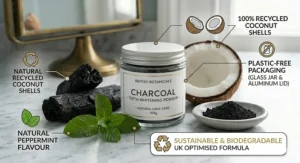
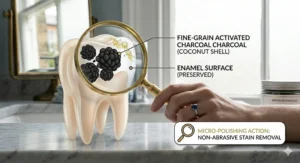
Activated charcoal isn’t the same substance you’d use for your barbecue. It’s created by heating carbon-rich materials—typically coconut shells, wood, or bamboo—to extreme temperatures between 1,100°C and 1,600°C (2,012°F to 2,912°F). This intense heating process creates millions of tiny pores, dramatically increasing the surface area.
According to research from the National Institutes of Health, this porous structure gives activated charcoal its adsorptive properties. The keyword here is “adsorptive” (not “absorptive”)—the charcoal binds to other substances on its surface rather than soaking them up like a sponge.
The Whitening Mechanism Explained
When you brush with charcoal teeth whitening powder, the following process occurs:
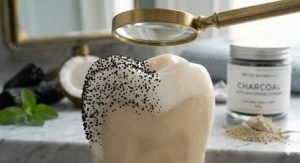
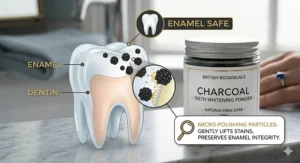
Step 1: Physical Abrasion – The charcoal particles physically scrub the tooth surface, removing loose debris and surface stains. This is similar to how any mildly abrasive toothpaste works.
Step 2: Adsorption of Stains – The porous structure of activated charcoal binds to chromophores (colour-causing molecules) and tannins from coffee, tea, wine, and tobacco. These compounds stick to the charcoal’s surface.
Step 3: Removal Through Rinsing – When you rinse your mouth, the charcoal carries away the bound stain molecules, leaving teeth looking cleaner.
However, here’s the critical limitation: this process only works on extrinsic stains (surface discolouration). Activated charcoal cannot penetrate enamel to address intrinsic stains (discolouration within the tooth structure). For deeper whitening, you’d need peroxide-based treatments that chemically oxidise stains.
What the Research Actually Shows
A systematic review published in the Journal of the American Dental Association examined multiple studies on charcoal-based dental products. The findings were mixed:
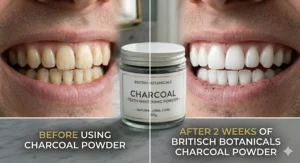
Limited Whitening Effect: Most studies found charcoal products showed lower whitening efficacy compared to hydrogen peroxide-based alternatives. In some studies, there were no significant differences between charcoal and regular toothpaste.
High Abrasive Potential: The research consistently highlighted concerns about charcoal’s abrasiveness. Products with high Relative Dentin Abrasivity (RDA) values could potentially wear down enamel with prolonged use.
Lack of Fluoride: Many charcoal products don’t contain fluoride because the charcoal would absorb it. This means they don’t offer cavity protection like traditional toothpaste.
The scientific consensus? Charcoal can remove surface stains through abrasion, but calling it a “whitening” product might be misleading. It’s more accurately described as a stain removal product.
How to Choose the Right Charcoal Teeth Whitening Powder
With dozens of products flooding the UK market, selecting the right charcoal teeth whitening powder requires careful consideration. Here’s my step-by-step guide based on years of testing these products.
Step 1: Check the Abrasiveness Level
The Relative Dentin Abrasivity (RDA) scale measures how abrasive a dental product is. The FDA recommends products with RDA values under 250, though many dentists prefer values below 150 for daily use.
Unfortunately, most charcoal powder manufacturers don’t publish RDA values. Look for products that specifically mention “low abrasion” or “enamel-safe” formulations. Premium brands like MySweetSmile and White Glo often highlight this feature.
Step 2: Examine the Ingredient List
What to Look For:
- Pure coconut shell activated charcoal (preferred over wood or coal-derived)
- Protective ingredients like strontium chloride (reduces sensitivity)
- Natural flavouring agents (peppermint, spearmint)
- Remineralising compounds (hydroxyapatite, calcium carbonate)
What to Avoid:
- Unnecessary additives and artificial colours
- Bentonite clay (may contain trace lead according to some studies)
- Crystalline silica (classified as a carcinogen)
- Products without clear ingredient disclosure
Step 3: Consider Your Dental Health Status
If You Have Sensitive Teeth: Choose formulas with added protective ingredients like MySweetSmile (contains strontium chloride) or BetterWhite (includes nano-hydroxyapatite). Avoid pure charcoal powders without sensitivity protection.
If You Have Dental Work: Charcoal can stain around veneers, crowns, and fillings. It won’t whiten artificial teeth but may create dark lines around restorations. Consider whether this product is appropriate for your situation.
If You Have Thin Enamel: Steer clear of highly abrasive charcoal products. Your dentist can assess your enamel thickness and advise whether charcoal products are suitable.
Step 4: Evaluate Price vs Supply Duration
Calculate the cost per month rather than just looking at the upfront price:
- Eucryl at £4.99 for 2 months = £2.50/month
- MySweetSmile at £24.99 for 6 months = £4.17/month
- BetterWhite at £14.99 for 6 months = £2.50/month
The cheapest product isn’t always the best value, especially if it causes sensitivity or enamel damage that requires dental treatment.
Step 5: Read UK-Specific Reviews
Focus on reviews from British customers who share similar dental concerns. Look for feedback about:
- Effectiveness on tea and coffee stains (particularly relevant in the UK)
- Sensitivity experiences
- Ease of use and mess level
- Long-term results after months of use
- Customer service for UK buyers
Step 6: Check for Certifications and Approvals
Valuable Certifications:
- CPSR (Cosmetic Product Safety Report) compliance for UK/EU
- Dermatest approval for sensitivity
- Vegan Society certification (if important to you)
- Cruelty-free certification
Note: The American Dental Association (ADA) hasn’t granted its Seal of Acceptance to any charcoal products due to insufficient long-term safety data. This doesn’t mean they’re dangerous, but it reflects the limited research available.
Step 7: Consider the Brand’s Reputation and Support
Established brands typically offer better customer support, clear usage instructions, and quality control. Check:
- How long the company has been operating
- Availability of customer service for UK buyers
- Money-back guarantee policies
- Professional endorsements or awards
Proper Usage Guide: Maximising Results Whilst Protecting Your Teeth
Using charcoal teeth whitening powder incorrectly can cause more harm than good. Follow this detailed guide to achieve optimal results whilst safeguarding your enamel.
The Correct Application Method
Step 1: Prepare Your Workspace Place a dark towel over your sink or bathroom counter. Charcoal powder is notoriously messy and can stain light-coloured surfaces. Have a damp cloth ready for immediate cleanup.
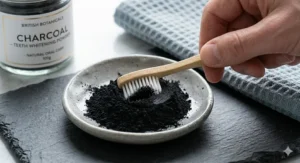
Step 2: Wet Your Toothbrush Use a soft-bristled toothbrush and dampen it thoroughly with water. Shake off excess moisture—you want the brush wet but not dripping. Never use medium or hard bristles, as this increases abrasiveness.
Step 3: Apply the Powder Dip your wet toothbrush into the charcoal powder, coating the bristles evenly. Use only a small amount—about the size of a pea. More isn’t better and just creates unnecessary mess.
Step 4: Gentle Brushing Technique Here’s where most people go wrong: don’t scrub aggressively! Use gentle, circular motions focusing on one tooth at a time. The charcoal works through adsorption, not harsh scrubbing. Brush for 2-4 minutes depending on product instructions.
Pay special attention to:
- Front teeth (most visible)
- Along the gum line (where stains accumulate)
- Surfaces you can see when smiling
Step 5: Let It Sit (Optional) Some products recommend letting the charcoal sit on your teeth for 1-2 minutes after brushing. Check your specific product’s instructions. This extended contact time may improve stain adsorption.
Step 6: Thorough Rinsing Rinse your mouth multiple times with water until all black residue is gone. Check your teeth, gums, and tongue in the mirror. Any remaining charcoal will be very visible.
Step 7: Follow-Up Brush Brush again with your regular fluoride toothpaste. This removes any lingering charcoal particles and provides the cavity protection that charcoal products lack.
Frequency and Timing Recommendations
For Initial Whitening (First 2 Weeks):
- Use 2-3 times per week
- Space applications at least 2 days apart
- Monitor for any sensitivity
For Maintenance (After Initial Whitening):
- Reduce to 1-2 times per week
- Use after consuming staining foods/drinks
- Don’t exceed 3 applications weekly
Best Times to Use:
- Evening before bed (allows teeth to recover overnight)
- After your morning coffee (targets fresh stains)
- Before special occasions (for immediate brightening effect)
When NOT to Use:
- Within 30 minutes of consuming acidic foods/drinks
- Immediately before important meetings (messy process)
- Daily or multiple times daily (too abrasive)
Safety Precautions Every User Should Know
Protect Your Enamel: Never apply excessive pressure whilst brushing. Let the charcoal do the work through adsorption, not aggressive scrubbing. If you feel any grittiness, you’re pressing too hard.
Monitor for Sensitivity: If you experience increased tooth sensitivity, reduce frequency or discontinue use. Some sensitivity is normal initially, but persistent discomfort indicates enamel wear.
Avoid During Pregnancy: Whilst activated charcoal is generally considered safe, pregnant women should consult their healthcare provider before using any new dental products.
Keep Away from Children: Charcoal products are not suitable for children under 12. Developing teeth have softer enamel that’s more susceptible to abrasive damage.
Don’t Swallow: Whilst food-grade activated charcoal isn’t toxic, it can cause constipation if swallowed regularly. Always spit thoroughly and rinse well.
Charcoal vs Traditional Whitening Methods: Comprehensive Comparison
Understanding how charcoal teeth whitening powder stacks up against other whitening methods helps you make an informed choice for your specific needs.
| Method | Effectiveness | Cost (UK) | Safety | Speed of Results | Longevity |
|---|---|---|---|---|---|
| Charcoal Powder | Moderate (surface stains only) | £4-£25 | Moderate risk (enamel abrasion) | 2-4 weeks | Temporary (1-2 months) |
| Whitening Strips | High | £15-£40 | High (when used correctly) | 7-14 days | 6-12 months |
| Professional Whitening | Very High | £200-£600 | Very High (supervised) | 1 session | 1-3 years |
| Whitening Toothpaste | Low-Moderate | £3-£10 | High | 4-8 weeks | Ongoing with continued use |
| LED Whitening Kits | Moderate-High | £30-£100 | Moderate | 10-14 days | 3-6 months |
Charcoal Powder vs Whitening Strips
Charcoal Advantages:
- More natural ingredients
- Lower cost for initial purchase
- Can target specific problem areas
- Works well for surface stains from coffee/tea
Whitening Strips Advantages:
- Contain peroxide for deeper whitening
- More consistent, predictable results
- Easier application with less mess
- Clinically proven effectiveness
The Verdict: For intrinsic stains or significant whitening (more than 2-3 shades), strips are more effective. For natural maintenance and surface stain removal, charcoal offers a gentler alternative.
Charcoal Powder vs Professional Whitening
Charcoal Advantages:
- Fraction of the cost (£10 vs £400)
- Use at home on your schedule
- No dental appointment required
- Good for minor touch-ups
Professional Whitening Advantages:
- Dramatic results (up to 8 shades whiter)
- Dentist supervision ensures safety
- Custom-fitted trays for even coverage
- Long-lasting results (1-3 years)
The Verdict: Professional whitening delivers unmatched results but requires significant investment. Charcoal serves as an affordable maintenance option between professional treatments or for those with budget constraints.
Charcoal Powder vs Whitening Toothpaste
Charcoal Advantages:
- More concentrated stain removal
- Faster visible results
- Natural ingredient appeal
- Can be used as needed (not daily)
Whitening Toothpaste Advantages:
- Contains fluoride for cavity protection
- Lower abrasiveness (generally)
- Safe for daily use
- No mess or special application
The Verdict: Whitening toothpaste is better for daily maintenance and enamel health. Charcoal powder is better for periodic intensive stain removal. Many people use both—whitening toothpaste daily and charcoal 1-2 times weekly.
Common Stains and How Charcoal Addresses Them
Not all tooth stains are created equal. Understanding your specific stain type helps set realistic expectations for charcoal teeth whitening powder.
Tea and Coffee Stains (Tannin-Based)
Stain Characteristics: Brown to yellow discolouration, typically on front teeth where hot beverages make most contact. Very common in the UK where tea consumption averages 100 million cups daily.
How Charcoal Helps: Activated charcoal effectively binds to tannin molecules on the tooth surface. Multiple UK customer reviews specifically mention improvement with tea stains within 2-3 weeks of twice-weekly use.
Best Products for Tea/Coffee Stains: Procoal, White Glo, and Eucryl receive particular praise from British tea drinkers.
Expected Results: 50-70% reduction in surface staining with consistent use. Deep-set stains may require professional treatment.
Red Wine Discolouration
Stain Characteristics: Purple-red staining from chromogens and tannins in wine. Often appears between teeth and along gum line.
How Charcoal Helps: The adsorptive properties target wine’s colour compounds. Most effective when used within 24-48 hours of wine consumption.
Best Products for Wine Stains: MySweetSmile and White Glo’s formulations specifically target chromogen molecules.
Expected Results: 60-80% improvement on recent stains. Old, set stains may lighten but rarely disappear completely.
Smoking and Tobacco Stains
Stain Characteristics: Dark brown to black staining, particularly stubborn and often embedded in enamel. May include tar deposits.
How Charcoal Helps: Physical abrasion removes surface tar whilst adsorption targets nicotine stains. Requires consistent, long-term use.
Best Products for Tobacco Stains: Eucryl (traditional formula) and SMILE:NOW receive strong reviews from former smokers.
Expected Results: 40-60% improvement over 4-6 weeks. Complete removal often requires professional intervention. Continued smoking will quickly re-stain teeth.
Food Stains (Curry, Berries, Tomato Sauce)
Stain Characteristics: Various colours depending on food source. Typically surface stains that accumulate over time.
How Charcoal Helps: Regular use prevents stain buildup and lightens existing discolouration through mechanical and chemical action.
Best Products for Food Stains: BetterWhite and MySweetSmile’s gentle formulas work well for prevention.
Expected Results: 70-90% prevention of new stains. Existing stains may lighten by 50-60%.
Potential Side Effects and How to Avoid Them
Whilst charcoal teeth whitening powder can deliver results, it’s not without risks. Understanding potential side effects allows you to use these products safely.
Enamel Erosion
The Risk: Activated charcoal is abrasive. Excessive use or aggressive brushing can gradually wear down enamel—the protective outer layer of teeth. Once enamel is damaged, it doesn’t regenerate.
Warning Signs:
- Teeth appear more yellow over time (exposed dentin showing through thinned enamel)
- Increased sensitivity to hot and cold
- Teeth look more translucent at edges
- Rough texture when you run your tongue over teeth
Prevention:
- Limit use to 2-3 times weekly maximum
- Use gentle, circular motions—never scrub hard
- Choose products specifically labelled “low abrasion”
- Take breaks between intensive whitening periods
- Have regular dental check-ups to monitor enamel health
Tooth Sensitivity
The Risk: Temporary or persistent sensitivity to temperature, sweet foods, or pressure. Can occur even with proper use.
Warning Signs:
- Sharp pain when consuming cold drinks
- Discomfort when breathing cold air
- Sensitivity that lasts hours after brushing
- Pain when eating sugary foods
Prevention:
- Choose formulas with desensitising ingredients (strontium chloride, hydroxyapatite)
- Use sensitivity toothpaste on alternate days
- Reduce frequency if sensitivity develops
- Avoid use if you already have sensitive teeth without dentist approval
- Never use charcoal immediately after acidic foods/drinks
Gum Irritation
The Risk: Charcoal particles can irritate gum tissue, especially if particles lodge along the gum line.
Warning Signs:
- Red, swollen gums
- Bleeding during or after use
- Tender gum tissue
- Black residue trapped at gum line
Prevention:
- Be gentle near the gum line
- Rinse thoroughly to remove all particles
- Use a soft-bristled brush only
- If irritation occurs, discontinue use and consult your dentist
- Follow up with an antiseptic mouthwash
Staining of Dental Work
The Risk: Charcoal can accumulate in cracks and around dental restorations, creating dark lines that are difficult to remove.
Warning Signs:
- Grey or black lines around crowns, veneers, or fillings
- Charcoal lodged in gaps between teeth
- Discolouration around dental work
Prevention:
- If you have extensive dental work, consult your dentist before use
- Be extra careful around restorations
- Consider professional cleaning if staining occurs
- Some users find charcoal unsuitable with multiple crowns/veneers
Lack of Cavity Protection
The Risk: Most charcoal products don’t contain fluoride, removing a crucial defence against tooth decay.
Warning Signs:
- Increased cavities
- Weakened enamel
- White spots on teeth (early decay)
Prevention:
- Always follow charcoal use with fluoride toothpaste
- Don’t replace your regular toothpaste entirely
- Maintain excellent oral hygiene
- Consider fluoride mouthwash for additional protection
Maximising Your Results: Pro Tips from Dental Hygienists
After consulting with UK dental professionals and experienced users, here are insider tips for getting the most from your charcoal teeth whitening powder.
Timing Your Applications Strategically
The 24-Hour Rule: Use charcoal powder within 24 hours of consuming highly staining foods or drinks. Fresh stains are much easier to remove than set-in discolouration.
The Evening Advantage: Apply charcoal at night before bed. This allows your teeth to recover overnight without exposure to new stains. Saliva production increases during sleep, helping to remineralise enamel.
Post-Professional Cleaning: Schedule charcoal treatments 2-3 days after a professional dental cleaning. Your hygienist will have removed tartar and stubborn stains, creating a clean canvas for charcoal to maintain.
Dietary Adjustments for Better Results
The White Diet Approach: For 24 hours after charcoal treatment, stick to non-staining foods:
- Chicken and fish
- Rice and pasta (without tomato sauce)
- Cauliflower, potatoes
- White cheese
- Milk and yoghurt
Avoid These Stain Culprits:
- Tea and coffee (or use a straw)
- Red wine and dark spirits
- Curry, soy sauce, balsamic vinegar
- Dark berries
- Cola and dark fizzy drinks
The Straw Technique: When drinking staining beverages, use a reusable straw to bypass front teeth. This simple hack significantly reduces staining on visible teeth.
Combining Treatments for Synergistic Effects
The Rotation Method:
- Monday: Regular fluoride toothpaste
- Wednesday: Charcoal powder
- Friday: Whitening toothpaste
- Sunday: Charcoal powder
This rotation provides stain removal, fluoride protection, and enamel strengthening in one comprehensive approach.
The Layered Approach:
- Use charcoal for surface stain removal
- Follow with whitening strips for deeper whitening
- Maintain with whitening toothpaste
- Periodic charcoal applications to prevent new stains
Hydration and Oral pH
The Water Rinse: Immediately after consuming staining foods or drinks, swish water around your mouth for 30 seconds. This removes residue before it can set into enamel.
pH Balance Matters: Acidic environments weaken enamel and increase stain susceptibility. Maintain neutral pH by:
- Chewing sugar-free gum after meals
- Avoiding prolonged sipping of acidic drinks
- Waiting 30 minutes after acidic foods before brushing
- Using an alkaline mouthwash
The Patience Principle
Realistic expectations prevent disappointment. Natural whitening takes time:
- Week 1-2: Minimal visible change, teeth feel cleaner
- Week 3-4: Slight brightening noticeable, surface stains fading
- Week 5-8: Moderate improvement, 1-2 shades lighter
- Week 9-12: Maximum results achieved, maintenance mode begins
Don’t expect dramatic transformations overnight. Charcoal removes stains gradually, not instantly.
Sustainability and Environmental Considerations
For eco-conscious UK consumers, understanding the environmental impact of your teeth whitening choice matters. Here’s how charcoal products stack up.
Source Material Matters
Coconut Shell Charcoal (Most Sustainable):
- Renewable resource from coconut industry byproducts
- Reduces waste from coconut processing
- Lower environmental footprint than wood-derived options
- Products like SMILE:NOW and Procoal use coconut shell charcoal
Bamboo Charcoal (Sustainable):
- Fast-growing renewable resource
- Absorbs CO2 during growth
- Minimal pesticides required
- Less common in UK products but worth seeking out
Wood Charcoal (Less Sustainable):
- Depends on forestry practices
- Higher carbon footprint
- May contribute to deforestation if not sustainably sourced
- Check for FSC (Forest Stewardship Council) certification
Packaging Considerations
Glass Jars (Best):
- Fully recyclable
- Can be repurposed
- No plastic waste
- Heavier shipping impact
Recyclable Plastic (Acceptable):
- Check for recycling symbols
- Ensure local council accepts the plastic type
- Some manufacturers use recycled plastic
- Lighter shipping reduces carbon footprint
Non-Recyclable Packaging (Avoid):
- Mixed materials that can’t be separated
- Excessive packaging
- Single-use plastics
UK Recycling Note: Procoal specifically advertises 100% recyclable packaging, appealing to environmentally conscious British buyers.
Water Usage and Waste
Charcoal powder requires thorough rinsing, using more water than regular toothpaste. To minimise waste:
- Use a cup of water for rinsing instead of running tap
- Rinse over a dark cloth to catch spills
- Clean charcoal residue with damp cloth before using water
Comparing Environmental Impact
Charcoal Powder vs Whitening Strips: Strips generate plastic waste from individual wrappers and applicators. Charcoal in a glass jar creates less waste overall if packaging is recyclable.
Charcoal Powder vs Professional Whitening: Professional treatments often use single-use plastic trays, chemical waste, and energy for equipment. Home charcoal use has a smaller environmental footprint.
FAQs: Your Charcoal Teeth Whitening Questions Answered
❓ Does charcoal powder whiten teeth or just remove stains?
❓ How often should I use charcoal teeth whitening powder safely?
❓ Can charcoal teeth whitening powder damage my enamel?
❓ Is activated charcoal whitening powder safe for sensitive teeth?
❓ Which charcoal teeth whitening powder works best for tea and coffee stains in the UK?
Conclusion: Is Charcoal Teeth Whitening Right for You?
After reviewing the top charcoal teeth whitening powder products available in the UK and examining the scientific evidence, what’s the verdict? The answer depends entirely on your specific situation and expectations.
Charcoal teeth whitening powder excels at what it’s actually designed to do: remove surface stains from coffee, tea, wine, and tobacco. If you’re looking for a natural, affordable way to maintain a brighter smile and lift everyday staining, products like MySweetSmile, White Glo, or BetterWhite can deliver solid results. British customers particularly appreciate these products for tackling tea stains—a uniquely UK concern that affects millions of Brits who enjoy multiple cups daily.
However, charcoal isn’t a miracle solution. It won’t deliver the dramatic 8-shade whitening you might achieve with professional treatments, nor will it address intrinsic discolouration below the enamel surface. The scientific evidence shows charcoal’s effectiveness is limited to extrinsic (surface) stains, and its abrasive nature requires careful, moderate use to avoid enamel damage.
You should consider charcoal teeth whitening powder if:
- You primarily want to remove surface stains from diet and lifestyle
- You prefer natural ingredients over chemical bleaching agents
- You’re seeking an affordable maintenance option between professional treatments
- You have healthy enamel and no existing sensitivity issues
- You can commit to proper usage guidelines (2-3 times weekly maximum)
You should avoid charcoal teeth whitening powder if:
- You have sensitive teeth, thin enamel, or existing dental problems
- You want dramatic whitening (more than 2-3 shades)
- You have extensive dental work that might stain
- You need cavity protection (switch to fluoride toothpaste regularly)
- You’re looking for quick results before a special event
The key to success with any charcoal product lies in realistic expectations and proper usage. Choose quality brands with protective ingredients, use gentle application techniques, limit frequency to preserve enamel, and always follow up with fluoride toothpaste. Think of charcoal as one tool in your oral care arsenal—not a replacement for regular dental hygiene or professional treatments.
For most UK consumers dealing with everyday tea and coffee stains, charcoal teeth whitening powder offers a natural, effective solution when used correctly. Start with a reputable brand, monitor your teeth’s response, and adjust usage based on results and sensitivity. Your smile—and your enamel—will thank you.
Recommended for You
- 7 Best On The Go Whitening Pens UK – Portable Solutions 2026
- Best Teeth Whitening Pen UK 2026: 7 Top Picks That Work
- Carbamide Peroxide vs Hydrogen Peroxide: 7 Best UK Gels 2026
Disclaimer: This article contains affiliate links. If you purchase products through these links, we may earn a small commission at no additional cost to you. Prices shown are approximate and may vary. Always consult your dentist before starting any new teeth whitening regimen, especially if you have existing dental conditions or concerns.
✨ Found this helpful? Share it with your mates! 💬🤗
