
In This Article
Here’s the thing nobody tells you about gum recession: it doesn’t announce itself. One week your teeth feel completely normal, and the next, a sip of cold water sends a jolt straight through your jaw. If you’ve landed here, you’re probably somewhere in that in-between stage — noticing your gum line looks a little different, or wincing more than you used to, and wondering whether a gentle mouthwash for receding gums can actually help, or whether it’s just marketing dressed up in mint flavouring.
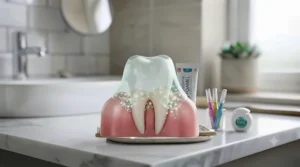
The short answer is: the right formula can genuinely calm things down, even if it can’t turn back the clock on the tissue itself. Gum recession happens when the gum margin pulls away from the tooth, exposing the root surface underneath — a softer, more porous layer than the enamel above it, which is exactly why exposed roots react so sharply to temperature and pressure. A soothing mouthwash for gum recession won’t regrow what’s been lost, but a well-formulated, alcohol-free rinse can reduce irritation, calm inflamed tissue, and slow further damage while you get proper advice from a dentist. As gingival recession researchnotes, the vast majority of adults experience some degree of gum recession by their forties, which makes this one of the most common — and most commonly mishandled — dental complaints around.
This guide walks through seven real, currently available mouthwashes formulated with sensitive, receding gums in mind, why their ingredients matter, and how to actually use one without making things worse. We’ll also cover root exposure, gum tissue sensitivity, and what “mild mouthwash formulation” really means on a label, so you’re not just guessing at the pharmacy aisle.
Quick Comparison Table
Before diving into the full breakdown, here’s a snapshot of how these seven mouthwashes stack up. Every product on this list is alcohol-free — a non-negotiable when gums are already inflamed, since alcohol dehydrates soft tissue and tends to make sensitivity noticeably worse rather than better.
| Mouthwash | Active Ingredient | Price Range | Best For |
|---|---|---|---|
| Oral-B Gum & Enamel Care | Cetylpyridinium Chloride (CPC) | Under £5 | Budget daily protection |
| Parodontax Daily Gum Care | CPC + Fluoride | £5-£7 range | Bleeding, inflamed gums |
| Corsodyl Daily Gum Care | Micellar/antibacterial complex | £5-£8 range | Gentlest everyday rinse |
| Sensodyne Mouthwash for Sensitive Teeth | Potassium-ion technology | £5-£8 range | Nerve-level sensitivity |
| CB12 Sensitive | Chlorhexidine, zinc, fluoride | £4-£6 range | Breath plus root sensitivity |
| TheraBreath Healthy Gums | CPC 0.05% | £10-£15 range | Dye-free, SLS-free formula |
| Listerine Advanced Defence Gum Treatment | Zero-alcohol antibacterial shield | £6-£9 range | Active gingivitis repair |
Looking at the table, a pattern emerges quickly: the differences between these products aren’t really about strength, they’re about what problem each one is engineered to solve first. Parodontax Daily Gum Care and Listerine Advanced Defence Gum Treatment lean hardest into gum-disease control, while Sensodyne Mouthwash for Sensitive Teeth and CB12 Sensitive are built around calming nerve-level pain from exposed dentine. Corsodyl Daily Gum Care and Oral-B Gum & Enamel Care sit in the middle as everyday maintenance rinses, and TheraBreath Healthy Gums is the outlier — a US import with a notably “clean label” formulation that UK buyers increasingly seek out.
💬 Just one click — help other make better buying decisions too!😊
Top 7 Gentle Mouthwashes for Receding Gums: Expert Analysis
1. Oral-B Gum & Enamel Care Fresh Mint Mouthwash — best budget pick for daily use
If you want the absolute entry point into gentle, receding-gum-friendly rinsing, this is it. Oral-B Gum & Enamel Care built its reputation on being unapologetically simple: no alcohol, no harsh burn, and a formula designed to be used twice daily without irritating tissue that’s already under strain.
The active ingredient here is cetylpyridinium chloride (CPC), an antimicrobial that targets the bacteria responsible for plaque build-up along the gum line without the astringency of chlorhexidine. Paired with sodium fluoride, it also does double duty on enamel strength, which matters because exposed root surfaces near a receding gum line are more vulnerable to decay than the enamel-covered crown above them. Based on the spec comparison, this puts Oral-B Gum & Enamel Care in a slightly different lane to the pure-sensitivity rinses further down this list — it’s less about numbing nerve pain, more about controlling the bacterial side of recession.
Who should reach for it: anyone starting a gentle-mouthwash routine for the first time, or anyone whose dentist has flagged early plaque build-up alongside mild recession. Reviewers on Amazon UK consistently describe the mint as noticeably softer than mainstream antiseptic rinses, with several noting it doesn’t leave that lingering chemical aftertaste some medicated mouthwashes do.
Pros:
- ✅ Genuinely alcohol-free, no burning on inflamed tissue
- ✅ Dual gum-and-enamel formula covers two problems at once
- ✅ Among the cheapest gentle options on this list
Cons:
- ❌ Milder antibacterial action than chlorhexidine-based rinses
- ❌ Less targeted relief for sharp, nerve-level sensitivity
At under £5 for a 500ml bottle, Oral-B Gum & Enamel Care offers strong everyday value — it’s the mouthwash you buy when you want gentle maintenance rather than an active treatment for a flare-up.
2. Parodontax Daily Gum Care Mouthwash — specialist choice for bleeding, receding gums
Parodontax has spent decades positioning itself as the gum-specific brand, and the mouthwash follows the same logic as its famously salty toothpaste: target plaque bacteria aggressively, but do it without alcohol so the gums aren’t further inflamed in the process.
What most buyers overlook about this formula is that it’s built around CPC at a slightly higher concentration than some budget rivals, specifically to tackle bleeding gums — one of the earliest warning signs that recession is being driven by active gum disease rather than just brushing habits. The spec sheet won’t tell you this, but user reports on retailer sites suggest the taste is more medicinal than mint-forward competitors, which some find reassuring (“it feels like it’s working”) and others find harder to stick with twice daily.
This is the pick for anyone whose gums bleed when flossing or brushing, since that symptom specifically points to gingivitis-driven recession rather than purely mechanical wear. Aggregated reviewer sentiment is largely positive on efficacy, with a recurring theme being noticeably less bleeding within a couple of weeks of consistent use, though a subset of reviewers flag the strong taste as an adjustment period.
Pros:
- ✅ Specifically engineered for bleeding, inflamed gum lines
- ✅ Alcohol-free with added fluoride for root protection
- ✅ Trusted, long-standing gum-health brand reputation
Cons:
- ❌ Stronger taste profile than milder mint alternatives
- ❌ Not the top pick if sensitivity, not bleeding, is your main issue
In the £5-£7 range, Parodontax Daily Gum Care earns its place as the specialist option — worth the slight taste trade-off if bleeding gums are part of your picture.
3. Corsodyl Daily Gum Care Mouthwash — gentlest micellar formula for daily rinsing
Here’s where things get interesting from a formulation standpoint. Corsodyl is best known for its short-term chlorhexidine treatment rinse — the one dentists prescribe after gum surgery — but the Corsodyl Daily Gum Care line is a completely different product, built with a micellar delivery system specifically designed to be gentler on gum tissue for everyday, long-term use.
Reviewers consistently note the absence of the tooth-staining and taste disturbance associated with chlorhexidine-based Corsodyl products, which tracks with the formulation change. On paper, this means you get a brand with genuine gum-disease credibility, packaged into a version explicitly designed not to be harsh — a meaningful distinction, since the two Corsodyl products are easy to confuse on a crowded shelf and buying the wrong one can mean unnecessary staining for someone who only needed gentle daily support.
This is arguably the best all-rounder on this list for someone whose dentist has confirmed mild-to-moderate recession without active infection: gentle enough for daily use, backed by a brand with real periodontal pedigree.
Pros:
- ✅ Micellar formula designed specifically to be gum-gentle
- ✅ No alcohol, no staining associated with the daily-use line
- ✅ Backed by decades of gum-health brand research
Cons:
- ❌ Easy to accidentally buy the stronger chlorhexidine version instead
- ❌ Not intended for active infection — see a dentist for that
Priced in the £5-£8 range depending on bottle size, Corsodyl Daily Gum Care offers strong value for a formula this specifically engineered around gum comfort.
4. Sensodyne Mouthwash for Sensitive Teeth — best for nerve-level sensitivity relief
If your main complaint isn’t bleeding but that sharp, electric jolt from cold drinks or ice cream, Sensodyne Mouthwash for Sensitive Teeth is built for exactly that. Its potassium-ion technology works differently to the antibacterial rinses above it on this list — rather than primarily targeting plaque, it works from the inside of the tooth outward, helping to calm the nerve response that makes exposed root surfaces so reactive.
What the spec sheet won’t tell you is how this translates day to day: potassium-based desensitisers typically need consistent use over one to two weeks before the calming effect becomes noticeable, so this isn’t a rinse-once-and-done fix. Reviewers frequently describe a gradual reduction in “zingers” from cold air or drinks rather than instant relief, which matches the clinical mechanism rather than an overnight cure.
Sensodyne is the number one dentist-recommended brand for sensitivity specifically, according to the brand’s own claim-verified positioning, and it pairs naturally with a matching Sensodyne toothpaste for a fuller sensitivity-management routine. Choose this one if root exposure sensitivity, rather than bleeding or active gum disease, is your primary concern.
Pros:
- ✅ Purpose-built for nerve-level sensitivity, not just plaque
- ✅ Alcohol-free, gentle mint that doesn’t sting on contact
- ✅ Pairs well with matching toothpaste for compounded relief
Cons:
- ❌ Takes one to two weeks of consistent use to feel the full effect
- ❌ Lighter antibacterial action than dedicated gum-disease rinses
At £5-£8 for a 500ml bottle, this sits mid-pack on price but earns its spot as the single best pick here for anyone whose problem is sensitivity, not inflammation.
5. CB12 Sensitive Mouthwash — best 3-in-1 for breath and root sensitivity
CB12 built its name on tackling the root cause of bad breath rather than masking it, using a chlorhexidine-and-zinc combination that neutralises the sulphur compounds responsible for halitosis. The CB12 Sensitive variant folds sodium fluoride into that same base, aiming to cover breath, plaque control, and enamel strengthening around exposed roots in one bottle.
Based on the ingredient list, this is a genuinely multi-purpose formula rather than a single-issue rinse, which suits people managing more than one symptom at once — say, root sensitivity alongside self-consciousness about breath, which is a surprisingly common combination once gum recession sets in and food particles find new places to lodge near exposed roots. Reviewers commonly highlight the long-lasting fresh feeling as the standout benefit, with a smaller but consistent thread noting the smaller 250ml bottle size means it doesn’t last as long as the 500ml competitors on this list.
Choose CB12 Sensitive if breath confidence is as much a priority for you as root comfort — it’s doing more jobs at once than most single-purpose rinses here.
Pros:
- ✅ Tackles bad breath and sensitivity in a single formula
- ✅ Chlorhexidine-and-zinc combination is clinically well-studied
- ✅ Long-lasting freshness reported consistently by reviewers
Cons:
- ❌ Smaller 250ml bottle means a higher cost per use
- ❌ Contains chlorhexidine, so check with a dentist for long-term daily use
In the £4-£6 range for the smaller bottle, CB12 Sensitive costs more per millilitre than the 500ml options, but the dual-purpose formula can justify that for the right person.
6. TheraBreath Healthy Gums Oral Rinse — best dye-free, SLS-free import pick
TheraBreath is a US brand that’s built a loyal following on Amazon UK among people who’ve specifically gone looking for a “clean label” mouthwash — no dyes, no SLS or sulfates, no parabens, and a CPC-based antigingivitis formula that’s alcohol-free and non-burning by design.
What most buyers overlook about TheraBreath Healthy Gums is that it was originally developed by a dentist for his own family’s sensitivity issues, and that origin story shows up in the formulation choices: it deliberately avoids several common irritant ingredients found in mainstream UK mouthwash brands, which matters if you’ve noticed your gums react not just to alcohol but to sulfates or synthetic dyes too. On paper, this makes it the most ingredient-conscious option on this list, though UK buyers should factor in that it’s imported, which affects both price and delivery times compared with domestically stocked brands.
Reviewers consistently praise the non-burning sensation and the certified vegan, gluten-free formulation, with recurring feedback that it feels noticeably gentler than UK high-street alternatives — useful context if you’ve tried several mainstream brands without success and suspect a sensitivity to a specific excipient rather than the active ingredient itself.
Pros:
- ✅ Dye-free, SLS-free, paraben-free “clean label” formulation
- ✅ Dentist-formulated specifically around gum health
- ✅ Large 1-litre bottle option available for longer-term use
Cons:
- ❌ Higher price point due to import status
- ❌ Longer delivery windows than domestically stocked brands
Priced at £10-£15 range for the larger format, TheraBreath Healthy Gums is the premium choice here — worth it specifically if you’ve identified sensitivity to common UK-formula excipients.
7. Listerine Advanced Defence Gum Treatment — best for active gingivitis repair
Where most of this list focuses on gentle maintenance, Listerine Advanced Defence Gum Treatment is positioned as a genuine treatment product — registered as a medical device and marketed specifically to treat and prevent gingivitis, the inflammatory condition that frequently drives gum recession in the first place.
The formula creates what the brand describes as an invisible protective shield that stops plaque bacteria from attaching to tooth surfaces, theoretically giving already-irritated gum tissue room to calm down and reattach where possible. Here’s what to weigh: this is a zero-alcohol formula, which keeps it in line with the gentle theme of this list, but its clinical positioning means it’s intended for twice-daily use specifically until bleeding stops, rather than indefinite daily maintenance the way a standard cosmetic mouthwash would be used.
Reviewers who’ve used it as directed after a hygienist appointment or during an active gum-disease flare-up report the fastest improvement in bleeding among the products covered here, though a few note the taste is more clinical than the mint-forward everyday rinses further up this list. This is the pick when your gums are actively unwell, not just cosmetically receded.
Pros:
- ✅ Registered medical device with clinically proven gingivitis claims
- ✅ Zero-alcohol formula despite its therapeutic strength
- ✅ Fast-acting reputation among reviewers managing active flare-ups
Cons:
- ❌ More clinical taste profile than everyday cosmetic rinses
- ❌ Intended for short-term therapeutic use, not indefinite daily habit
At £6-£9 for a 500ml bottle, Listerine Advanced Defence Gum Treatment represents strong value for what is essentially an over-the-counter therapeutic product rather than a simple freshening rinse.
How to Use a Gentle Mouthwash for Receding Gums the Right Way
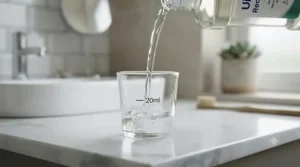
Buying the right bottle is only half the job — how you use it matters just as much, especially with tissue that’s already compromised. Start by rinsing after brushing, not instead of it; mouthwash is a supplement to mechanical plaque removal, never a replacement for it. Most gentle formulas call for 10ml swished for around 30-60 seconds, twice daily, though the exact figure varies by product, so it’s worth checking the label on whichever bottle you’ve chosen.
A mistake worth avoiding in the first thirty days: don’t rinse with water immediately afterwards. Fluoride and active ingredients need a few minutes of contact time to actually do their job, and rinsing straight away effectively washes the benefit down the sink. If you’re switching from a stronger antiseptic mouthwash to a gentler alcohol-free formula, expect a short adjustment period where the milder taste feels almost too subtle — that’s normal, not a sign the product isn’t working.
For maintenance, replace your toothbrush every three months alongside your mouthwash routine, and pair rinsing with a soft or extra-soft brush to avoid compounding mechanical wear on already-thinning gum tissue. If you notice increased sensitivity in the first week of a new mouthwash rather than improvement, it’s worth pausing and speaking to a pharmacist or dentist rather than pushing through — occasionally a specific excipient, rather than the active ingredient, is the culprit.
Real-World Scenarios: Who Actually Needs a Soothing Mouthwash for Gum Recession
Picture Sarah, 34, a graphic designer who’s noticed her front teeth look “slightly longer” over the past year and winces at her morning coffee. She’s not dealing with bleeding or pain during brushing — just cosmetic recession, likely from years of an overly enthusiastic brushing technique. For her, a mild, fluoride-focused rinse like Oral-B Gum & Enamel Care or Corsodyl Daily Gum Care makes sense: gentle daily protection without unnecessary therapeutic strength.
Then there’s Tom, 52, whose dentist flagged early periodontitis at his last check-up after noticing bleeding during probing. Tom’s situation calls for something with more targeted antibacterial action — Parodontax Daily Gum Care or, if his hygienist recommends it, Listerine Advanced Defence Gum Treatment for the short-term flare-up, stepping back to a gentler daily rinse once bleeding resolves.
Finally, consider Priya, 41, who’s tried three different mainstream mouthwashes and found all of them left her mouth feeling raw, on top of managing sharp sensitivity to cold drinks. Her best route is likely Sensodyne Mouthwash for Sensitive Teeth for the nerve-calming potassium technology, or TheraBreath Healthy Gums if she suspects the dye or SLS content in mainstream UK formulas is part of what’s been irritating her. Matching the product to the actual symptom, rather than the loudest marketing claim on the shelf, is the single biggest lever most people are missing.
Root Exposure Problems, Solved: A Quick-Reference Guide
Problem: Sharp pain when eating ice cream or drinking iced coffee. This points to dentine hypersensitivity from root exposure. Solution: a potassium-based rinse like Sensodyne Mouthwash for Sensitive Teeth, used consistently for at least two weeks, paired with a matching desensitising toothpaste.
Problem: Gums bleed every time you floss. This is a gingivitis signal, not just mechanical recession. Solution: Parodontax Daily Gum Care or a short course of Listerine Advanced Defence Gum Treatment, alongside a dental check-up to rule out deeper periodontal involvement.
Problem: Mouthwash makes your gums feel worse, not better. Often an alcohol-content or excipient reaction. Solution: switch to a genuinely alcohol-free, dye-free formula such as TheraBreath Healthy Gums, and introduce it gradually.
Problem: Persistent bad breath alongside visible root exposure. Food and bacteria can lodge more easily in the small pockets that form as gums recede. Solution: CB12 Sensitive, which is formulated to address both odour-causing compounds and root sensitivity simultaneously.
Problem: You’re not sure if it’s cosmetic recession or active disease. Solution: none of these mouthwashes replace a dental assessment. Book a check-up; a hygienist can measure pocket depth and tell you definitively which category you’re in.
✨ Ready to start soothing your gums today?
🔍 Compare current prices on any of these seven picks and start your gentle gum-care routine tonight. Click through to check availability before your next Amazon UK order.

How to Choose a Gentle Mouthwash for Receding Gums
Choosing the right rinse comes down to matching the formula to your actual symptom, not the flashiest label. Here’s the process, step by step:
- Identify your primary symptom first. Sensitivity, bleeding, and bad breath each point toward a different active ingredient, so start there rather than with brand loyalty.
- Rule out alcohol-based formulas entirely. Alcohol dehydrates gum tissue and consistently worsens sensitivity, regardless of how “premium” the branding looks.
- Check the active ingredient against your symptom. Potassium ions for sensitivity, CPC or chlorhexidine for bacterial control, fluoride for root-surface protection against decay.
- Consider your sensitivity to excipients, not just the active ingredient. If mainstream formulas have irritated you before, a dye-free, SLS-free option is worth the higher price.
- Factor in taste tolerance for long-term compliance. The gentlest formula in the world does nothing if the taste puts you off using it twice daily.
- Check whether it’s a daily-maintenance or short-term therapeutic product. Medical-device rinses like Listerine’s gum treatment are designed for bounded use, not indefinite daily habit.
- Get a dental opinion if anything feels ambiguous. Mouthwash manages symptoms; it doesn’t diagnose or replace professional periodontal assessment.
Common Mistakes When Buying Mouthwash for Exposed Roots
The single most common mistake is grabbing whatever “sensitive” mouthwash is cheapest without checking whether it’s actually alcohol-free — plenty of budget rinses use “sensitive” language on the front label while still containing alcohol on the ingredients list round the back. Read past the marketing copy every time.
A second frequent error is confusing short-term therapeutic products with everyday maintenance rinses, which is exactly the trap the two different Corsodyl lines set for unwary shoppers. Using a strong, chlorhexidine-based treatment rinse indefinitely can lead to tooth staining and altered taste perception, neither of which is necessary once active inflammation has resolved.
Finally, people often expect overnight results from potassium-based sensitivity rinses, get discouraged within a few days, and switch products before the formula has had a fair chance to work. Consistency for at least two weeks is the realistic benchmark before judging whether a sensitivity-focused mouthwash is actually working for you.
Mild Mouthwash vs Medicated Mouthwash: What’s the Difference
This distinction trips up more shoppers than almost anything else on this list. A mild mouthwash — think Oral-B Gum & Enamel Care or Corsodyl Daily Gum Care — is formulated for indefinite daily use, prioritising gentleness and low irritation over maximum antibacterial strength. A medicated mouthwash, like the short-term chlorhexidine version of Corsodyl or Listerine Advanced Defence Gum Treatment, trades some of that gentleness for clinically stronger action against active gum disease, typically for a defined period rather than forever.
Reaching for a medicated formula “just in case” isn’t the safer choice it might seem. Long-term daily chlorhexidine use is specifically associated with staining and taste disturbance, which is precisely why brands split their ranges into separate daily and therapeutic lines in the first place. Reviewers who mix these up frequently report exactly these side effects, then wrongly blame the brand rather than the mismatch between product and use case.
The practical rule of thumb: default to mild for daily maintenance, and only step up to medicated formulas for a defined period when a dentist or hygienist has specifically recommended it.
Understanding Gum Tissue Sensitivity: What to Expect Day to Day
Gum tissue sensitivity doesn’t behave like tooth sensitivity, even though the two frequently show up together. Where dentine hypersensitivity produces that sharp, short jolt from cold or sweet stimuli, gum tissue sensitivity tends to feel more like generalised tenderness, soreness during brushing, or a mild sting when mouthwash first makes contact.
What most people don’t realise is that this sensitivity pattern changes as recession progresses. In early-stage recession, sensitivity is often intermittent and triggered specifically by temperature. As more root surface becomes exposed, that sensitivity can become more constant and start responding to pressure too — meaning brushing itself becomes uncomfortable, not just extreme temperatures. This progression is exactly why catching recession early and switching to a genuinely gentle formulation matters more than reaching for the strongest rinse on the shelf.
Reviewers across nearly every gentle mouthwash on this list describe a similar pattern: a brief adjustment period in the first few uses, followed by a noticeable reduction in day-to-day discomfort within one to two weeks of consistent use — provided the formula genuinely matches the underlying cause rather than just masking symptoms temporarily.
Mouthwash Formulation 101: The Ingredients That Actually Matter
Reading a mouthwash label properly means knowing which ingredients are doing the actual work versus which are just flavouring or preservatives. Cetylpyridinium chloride (CPC) is a milder antibacterial than chlorhexidine, making it the go-to active for daily-use, gentle formulas across brands like Oral-B, Parodontax, and TheraBreath. Chlorhexidine, found in CB12 Sensitive and Corsodyl’s therapeutic line, is stronger and more clinically proven for active gum disease, but comes with the staining trade-off mentioned earlier.
Potassium nitrate or potassium chloride, the active behind Sensodyne’s sensitivity formula, works through an entirely different mechanism — rather than fighting bacteria, it helps calm the nerve signalling inside exposed dentine tubules. Sodium fluoride appears across most of this list as a supporting ingredient, strengthening enamel and, crucially, helping protect the softer root-surface material that’s exposed once gums recede.
What the spec sheet won’t tell you is how much excipients matter beyond the active ingredient. Alcohol, certain dyes, and sodium lauryl sulfate can all independently irritate already-sensitive gum tissue, which is exactly why “clean label” formulations like TheraBreath Healthy Gums have carved out a loyal following among people who’ve reacted to mainstream UK brands despite those brands technically being alcohol-free.
Long-Term Cost & Maintenance: Is a Premium Mouthwash Worth It
Cost-per-use tells a more useful story than sticker price alone. At roughly £4-£6 for 250ml, CB12 Sensitive works out more expensive per rinse than a £5-£7, 500ml bottle of Parodontax Daily Gum Care, even though the shelf prices look similar at a glance. TheraBreath Healthy Gums, despite its £10-£15 price range, actually competes reasonably well on a per-millilitre basis when bought in the larger 1-litre format, since import pricing is partly offset by volume.
The real long-term cost consideration, though, isn’t the mouthwash itself — it’s what happens if recession and sensitivity go unmanaged. Persistent untreated gum inflammation can progress toward more invasive and expensive periodontal treatment, so a consistently used £5-£8 daily rinse is genuinely one of the cheapest preventative tools available compared with professional deep cleaning or, in advanced cases, grafting procedures. Viewed that way, spending slightly more on a formula you’ll actually enjoy using twice daily — rather than the cheapest option you abandon after a week — is usually the better long-term value calculation.
Safety, Regulations & When to See a Dentist
All the mouthwashes covered here are cosmetic or medical-device oral care products regulated under UK and EU frameworks, meaning ingredient safety and labelling claims are subject to standard compliance checks before they reach shelves. That said, regulatory approval covers safety and honest labelling — it doesn’t mean every product suits every person, which is why patch-testing a new formula for a week and watching for unexpected irritation is sensible practice.
Mouthwash, however gentle, is never a substitute for professional periodontal care. According to UK government guidance on periodontal disease prevention, gingivitis is reversible with proper care, but periodontitis — the more advanced stage that often drives significant recession — is not, making early professional diagnosis genuinely important rather than optional. If you notice persistent bleeding, loose teeth, visible pus, or recession that seems to be progressing quickly, book a dental appointment rather than relying on mouthwash alone to manage it.
It’s also worth noting that UK health authority information on gum disease points out that early-stage gum problems are frequently painless, which is precisely why they go unnoticed until recession or bleeding becomes visible — regular check-ups catch what home symptoms often don’t.
Frequently Asked Questions
❓ What is the best gentle mouthwash for receding gums?
❓ Can mouthwash reverse receding gums?
❓ Is alcohol-free mouthwash better for sensitive gums?
❓ How often should I use a mouthwash for exposed roots?
❓ Can mouthwash for gum recession be used with sensitive toothpaste?
Conclusion
Receding gums are frustrating precisely because the tissue itself won’t come back — but that doesn’t mean you’re stuck simply tolerating the discomfort. The right gentle mouthwash, matched to whether your main issue is sensitivity, bleeding, breath, or general maintenance, can make a genuinely noticeable difference to day-to-day comfort while you address the underlying cause with proper dental care.
Across the seven options covered here, there’s a clear formula for making the right call: identify your dominant symptom, rule out alcohol-based products entirely, and don’t assume “stronger” automatically means “better” for tissue that’s already under strain. Sensodyne Mouthwash for Sensitive Teeth and CB12 Sensitive lead on nerve-level comfort, Parodontax Daily Gum Care and Listerine Advanced Defence Gum Treatment lead on active gum-disease control, and Corsodyl Daily Gum Care, Oral-B Gum & Enamel Care, and TheraBreath Healthy Gums each offer a slightly different flavour of gentle daily maintenance depending on your budget and ingredient preferences.
Whichever bottle you choose, pair it with a soft toothbrush, a proper brushing technique, and regular dental check-ups — the Cochrane Oral Health research group notes that consistent, well-guided home care remains central to managing gum health long-term, mouthwash included. Your gums have been through enough; a formula built to work with them, not against them, is the least they deserve.
Recommended for You
- 7 Best Gentle Mouthwash Under £10 in 2026 (Alcohol-Free UK Picks)
- Gum Repair Toothpaste Review 2026: 7 Real UK Picks Tested
- Best Toothpaste for Gum Recession in 2026: 7 Picks That Help
Disclaimer: This article contains affiliate links. As an Amazon Associate, I earn from qualifying purchases. If you purchase products through these links, we may earn a small commission at no additional cost to you.
✨ Found this helpful? Share it with your friends! 💬🤗
